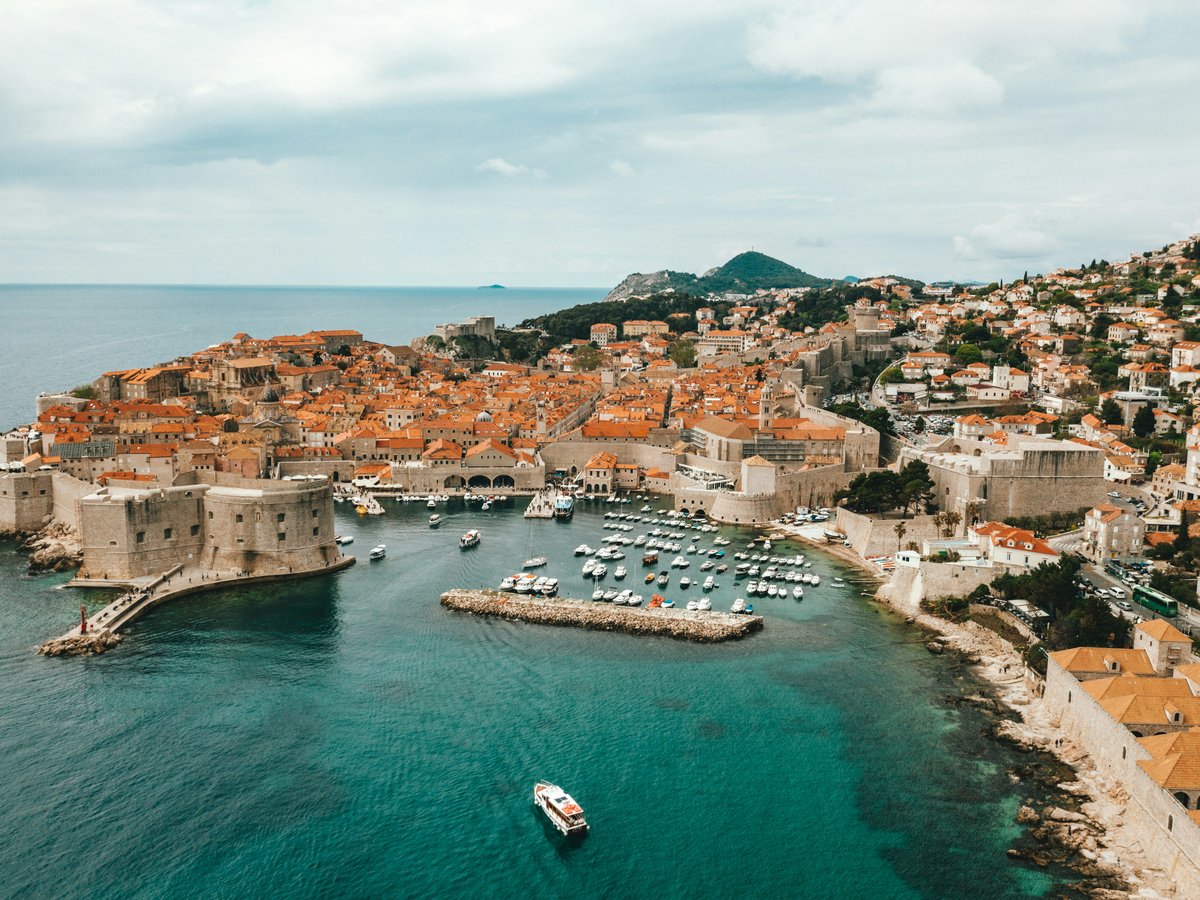
Stay in Dubrovnik in March
75 hotels in the Trip.com pool for Dubrovnik, from US$54 a night.
Opens Trip.com on Fri 5 Mar to Sun 7 Mar 2027; change the dates there.
March in Dubrovnik is rainy and quiet. That's the honest starting point. With roughly 230mm of rainfall spread across about 13 days, this ranks as one of the city's wettest months, trailing only November's 370mm. Daytime highs reach around 14°C (58°F), and nights settle near 6°C (44°F). The cold bora wind from the northeast can push that wind chill lower still. Many tourist-facing businesses in Stari Grad stay shuttered until late March or April, and Lokrum Island's ferry service typically hasn't resumed yet.
That said, there's a real appeal to walking the Stradun when it's nearly empty. The limestone paving reflects the lanterns after a rain, and the sound of your own footsteps off the medieval facades is something you'd never hear in July. You might find 5 other people on the City Walls instead of the 300 who crowd them in peak season. Hotel rates in Lapad and Ploče drop to a fraction of their summer prices. If you can handle layers, an umbrella, and the likelihood of at least one rained-out afternoon, March offers an intimate, locals-pace version of the city.
To be fair, March sits in an awkward gap between deep winter and the spring warmth that arrives in April and May. The almond trees on the hillsides above Gruž tend to bloom in late February through early March, adding some fleeting color. But this is still a month where you'll plan around the weather rather than the other way around. You're trading access and sunshine for solitude and savings, and whether that trade-off works depends entirely on what kind of traveler you are.
Why visit in March
- Stari Grad without cruise-ship crowds. July sees upwards of 500,000 cruise passengers per month, while March brings a tiny fraction of that total. The City Walls, Rector's Palace, and Stradun feel like a private city.
- Hotel rates in Lapad and Ploče drop 50-70% compared to July and August peaks. A double room that runs 200-300 EUR per night in summer might go for 70-100 EUR in March.
- Almond blossoms line the hillsides above Gruž and along the road toward Trsteno in late February and early March, offering some of the year's most photogenic days before leaves fill in.
- Restaurants in Stari Grad that do stay open through winter serve at an unhurried pace with no reservation pressure. You'll likely get the owner's attention and a longer conversation about the menu.
Worth knowing
- Roughly 230mm of rain across about 13 days. Some of these bring sustained downpours that can cancel outdoor plans entirely, not brief afternoon showers.
- Many restaurants, shops, and guesthouses inside Stari Grad close for the winter season and don't reopen until the last week of March or early April. Your dining options narrow considerably.
- Lokrum Island ferry and most excursion boats don't run until April. Island day trips to Mljet and the Elafiti group operate on a limited winter timetable or not at all.
- The bora wind blows from the northeast and can drop the perceived temperature well below the 14°C reading on the thermometer. It tends to arrive without much warning and makes exposed walkways on the City Walls genuinely cold.
Best for
Think twice if
March in Dubrovnik feels like late winter trying to become early spring. You'll get stretches of 2-3 mild, partly sunny days followed by a day or two of heavy rain. The air carries the damp, mineral smell of wet limestone and salt spray. Mornings tend to be chilly enough for a proper jacket, especially if the bora wind is up. By early afternoon on clear days, the sun warms the south-facing walls of Stari Grad enough to sit comfortably outside with a coffee. Evenings cool off quickly after sunset, which currently falls around 18:00.
Seasonal caution
- The bora wind can arrive suddenly from the northeast, dropping wind chill well below the 14°C air temperature and making exposed spots like the City Walls and Tvrđava Lovrijenac uncomfortable. On strong bora days, the City Walls may close for safety. Check conditions at the Pile Gate ticket office before climbing up.
- March is the 3rd wettest month of the year at 230mm. Individual storms can be heavy. The stone steps throughout Stari Grad and particularly on the City Walls become slippery when wet. Wear shoes with proper grip and use handrails.
Year-round climate
Averages from the last 5 years.
| Month | Avg high (°C) | Avg low (°C) | Rainfall (mm) |
|---|---|---|---|
| Jan | 12 | 5 | 249 |
| Feb | 13 | 5 | 170 |
| Mar | 14 | 7 | 230 |
| Apr | 17 | 9 | 140 |
| May | 22 | 14 | 160 |
| Jun | 28 | 19 | 48 |
| Jul | 31 | 22 | 42 |
| Aug | 30 | 21 | 73 |
| Sep | 26 | 17 | 156 |
| Oct | 21 | 13 | 178 |
| Nov | 17 | 9 | 370 |
| Dec | 14 | 6 | 209 |
Holidays and festivals in March
Public holidays
- Easter Sunday(Uskrs i uskrsni ponedjeljak)28 March 2027
- Easter Monday(Uskrs i uskrsni ponedjeljak)29 March 2027
Best things to do in March
Walk the Gradske Zidine (City Walls) in near-solitude
sightseeingThe 2km circuit of Dubrovnik's medieval City Walls is one of the most photographed walks in the Mediterranean. The full loop takes about 90 minutes and passes above Stari Grad's rooftops, along the seaward fortifications, and past Tvrđava Minčeta at the highest point. Views stretch across to Lokrum Island and down the coast toward Cavtat.
In July, you share the walls with hundreds of people moving at a shuffle. In March, you might have entire stretches to yourself. The overcast skies produce soft, even light that photographers prefer over the harsh midday glare of summer.Booking tipCheck the Pile Gate ticket office for current winter hours on the day you visit. Websites sometimes show outdated schedules. Arrive right at opening for the emptiest experience.
Explore the Franjevački samostan (Franciscan Monastery) and its 14th-century pharmacy
cultureThe Franciscan Monastery near the Pile Gate houses one of Europe's oldest continuously operating pharmacies, founded in 1317. The Romanesque cloister has double columns with carved capitals, and the pharmacy museum displays ceramic jars, mortars, and manuscripts from 700 years of operation. The interior smells faintly of old stone and dried herbs.
Without summer crowds, you can examine the pharmacy museum displays at your own pace. The cloister's acoustics, usually drowned by tour-group chatter, become noticeable. Rain on the cloister garden creates an atmosphere that suits the medieval setting.Hike the Napoleonica trail above Ploče
outdoorThis coastal trail follows a path built during the Napoleonic occupation above the eastern approach to the city. It runs along the steep hillside with views down to the rocky shoreline and across to Lokrum Island. The terrain is rocky and exposed in places, with patches of rosemary and sage growing wild alongside the path.
March temperatures of 14°C (58°F) are ideal for hiking. The same trail in July at 31°C (88°F) with no shade is genuinely dangerous. Early spring wildflowers, including crocuses and wild orchids, begin appearing along the route in the second half of the month.Booking tipNo booking needed. Start from the Ploče Gate area and bring water. The trail is exposed to wind, so layer up on bora days.
Day trip to Ston for oysters and salt pans
day tripThe medieval walled town of Ston, about 60km northwest on the Pelješac peninsula, has been producing salt and farming oysters since the 14th century. The 5.5km defensive walls are the longest in Europe after the Great Wall. Mali Ston Bay's oyster farms let you eat them straight off the boat. The Solana (salt works) still operates using the same solar evaporation method it has for 700 years.
March oysters from Mali Ston are at peak quality, plump and clean-tasting in the cool water. Without summer tourists, you'll likely have the wall walk and salt pans nearly to yourself. The drive along the coast passes through olive groves and vineyards that are starting to show early green growth.Booking tipRent a car from the airport for the day. The drive takes about 75 minutes. No reservations needed for the oyster tastings in March. Several small restaurants along the Mali Ston waterfront serve them raw or grilled.
Visit War Photo Limited
cultureThis gallery in Stari Grad shows rotating exhibitions of conflict photography from international photojournalists. The space occupies a renovated stone building on Antuninska ulica and runs thoughtful, often difficult exhibitions that change 2-3 times per year. It's one of the few galleries in the world dedicated entirely to war photography.
The gallery tends to open for its new season in March, often with a fresh exhibition. In summer, visitors rush through between other Old Town attractions. In March, you can spend a full hour with each photograph in a quiet room.Booking tipCheck their website or social media before visiting, as hours in March may differ from the published summer schedule.
Climb Mount Srđ on foot from Bosanka
outdoorThe zigzag trail from the village of Bosanka to the 412m summit of Mount Srđ takes about 90 minutes and rewards with a panorama of the Old Town, Lokrum, and the Elafiti islands. The summit holds the Napoleonic-era Fort Imperial, which now houses a museum about the 1991-92 siege of Dubrovnik. The trail passes through scrubby Mediterranean maquis with wild rosemary and thyme underfoot.
Cool March temperatures make this climb comfortable rather than punishing. In summer, the shadeless trail in 31°C heat is a serious dehydration risk. The cable car to Srđ may be running limited winter hours or closed for maintenance in March, making the hiking trail the more reliable option.Browse the morning market at Tržnica Gruž
foodThe daily produce market in the Gruž neighborhood, near the main port, is where Dubrovnik residents shop. Stalls sell seasonal vegetables, Adriatic fish landed that morning, local cheeses, olive oils from Pelješac peninsula farms, and dried herbs. The fish section smells sharply of salt and brine, with the day's catch laid out on ice.
In March you'll see the first wild asparagus and early greens arriving from the countryside. The market in March is entirely local. No tourist-oriented stalls, no cruise-ship overflow. Prices reflect local economics rather than tourist markup.Booking tipGo before 10:00 for the best fish selection. The market is in Gruž, about 3km from Stari Grad. Bus 1A runs frequently from Pile Gate.
Rainy-day circuit of Knežev dvor (Rector's Palace) and Sponza Palace
cultureRector's Palace served as the seat of government for the Dubrovnik Republic and now houses the city's cultural history museum. The atrium with its arched colonnade is one of Dubrovnik's finest Renaissance spaces. Sponza Palace, across the square at the eastern end of the Stradun, dates to 1516 and holds the Memorial Room of the Dubrovnik Defenders from the 1991-92 siege.
These are ideal March activities because they're indoors and open year-round. Plan to visit them on rainy days, which you'll have plenty of. Without summer crowds, you can read every exhibit panel and sit in the Rector's Palace atrium listening to the echo of the courtyard fountain.What to eat in March
On menus now
Zelena menestra
Dubrovnik's signature winter stew of mixed greens, smoked pork, and cabbage is still very much in season during March. Each family has a slightly different recipe. The dish traces back to the Dubrovnik Republic era and tends to disappear from menus by late April. The texture is dense and deeply savory, with the smokiness of the cured meat running through every spoonful.
Fresh Adriatic anchovies (inćuni)
March brings solid anchovy catches from the waters around the Elafiti islands. You'll find them grilled whole at konobas in Gruž, or marinated in vinegar, garlic, and parsley as a cold starter. The flesh is firm and briny, nothing like the tinned version.
Rožata
Dubrovnik's local take on crème caramel, flavored with rozulin (rose liqueur) rather than vanilla. Served at nearly every konoba year-round, but it's especially welcome as a rich end to a rainy March lunch. The texture sits somewhere between flan and panna cotta, smooth and cool, with a slightly floral bitterness from the liqueur.
Stonske oštrige (Ston oysters)
Mali Ston Bay, about 60km northwest of Dubrovnik, has farmed oysters since Roman times. March water temperatures keep the oysters plump and briny. A day trip to Ston in the off-season means you can eat them dockside for 1-2 EUR each without summer markups or waits.
In markets
Divlje šparoge (wild asparagus)
Dalmatian foragers start finding wild asparagus on the hillsides around Dubrovnik in late March. The thin, intensely flavored stalks appear on konoba menus scrambled with eggs (fritaja) or tossed with pasta and olive oil. They taste sharper and more grassy than cultivated asparagus.
Marmelada od gorke naranče (bitter orange marmalade)
The ornamental bitter orange trees lining the Stradun and scattered through Stari Grad fruit in late winter. Local producers make small-batch preserves from them through February and March. Look for jars at Tržnica Gruž or in the handful of specialty shops on Prijeko ulica.
Regular events in March
Međunarodni dan žena (International Women's Day)Free
March 8 is widely observed across Croatia. In Dubrovnik, women traditionally receive flowers from colleagues and family. Some restaurants and cafes in Stari Grad and Lapad offer special menus or discounts. The day has a genuine cultural weight in Croatian society that goes beyond token gestures.
March 8Dubrovački simfonijski orkestar (Dubrovnik Symphony Orchestra) season concerts
The city's symphony orchestra performs chamber and full orchestral programs through the winter and spring season. Concerts sometimes take place in the Rector's Palace atrium or the Revelin Fort, depending on the program. The repertoire leans toward Central European classical tradition, with Croatian composers included.
Various dates throughout March, typically Friday or Saturday eveningsBlagovijest (Feast of the Annunciation)Free
March 25 is a Catholic feast day observed at churches across Dubrovnik, including the Cathedral (Katedrala Uznesenja Blažene Djevice Marije). Special masses are held, and the day carries particular significance in a city where Catholic traditions remain woven into daily life. The Cathedral's interior is lit for the occasion.
March 25Best places this March
Gradske Zidine (City Walls)
landmarkThe 2km wall circuit is Dubrovnik's signature experience, and March is one of the few months when you'll have long stretches of the ramparts to yourself. The western section above Pile offers the best views of Tvrđava Lovrijenac and the open sea. Winter hours apply, typically 10:00-15:00, though this may extend later in the month.
Stari GradTvrđava Lovrijenac (Fort Lovrijenac)
landmarkThe fortress perched on a 37m cliff outside the western walls is at its most dramatic in March. Waves crash against the rocks below during storms, and the exposed position catches the full force of the wind. Entry is often included with the City Walls ticket. The terrace on top provides one of the best angles back toward Stari Grad.
PileLazareti
artsThis row of former quarantine buildings east of Ploče Gate now serves as Dubrovnik's main arts and culture complex. It hosts exhibitions, workshops, and occasional live music events through the winter months when the larger summer festival venues are closed. Check the posted schedule on the doors for current programming.
PločeTržnica Gruž (Gruž Market)
marketThe covered and open-air market near the Gruž port is the city's real daily market, not a tourist attraction. In March, local vendors sell winter greens, citrus, fresh fish from the morning boats, and the first wild asparagus of the season. It smells of raw seafood, damp earth, and citrus peel. Stall holders tend to be friendlier when they're not overwhelmed by summer crowds.
GružPark Gradac
parkThis shaded park sits on a bluff above the sea, west of the Old Town near the Pile Gate. In March, it's green and relatively lush from winter rains, with pine trees and agaves framing views of Tvrđava Lovrijenac and the coastline. Benches along the seaward path are a good spot for a coffee break on clear days. The park is quiet year-round but especially peaceful in the off-season.
PilePomorski muzej (Maritime Museum)
museumLocated inside the Tvrđava Svetog Ivana (St. John's Fortress) at the Old Port, this museum covers Dubrovnik's seafaring history from the Republic era through the 20th century. Model ships, navigational instruments, and paintings of the Ragusan merchant fleet fill the upper floors. Open year-round, and you'll likely have the galleries to yourself in March.
Stari GradBosanka and the Srđ trail
viewpointThe small village of Bosanka above the city is the starting point for the zigzag hiking trail up Mount Srđ. In March, the trail is flanked by early spring wildflowers and the maquis scrubland smells of rosemary after rain. The panorama from the 412m summit covers the entire Old Town, Lokrum, and the Elafiti archipelago. The Fort Imperial museum at the top documents the 1991-92 siege.
Bosanka
Your packing checklist
Tick items off as you pack. Your progress saves in this browser.
All packed — have a great trip.
Insider tips
Tržnica Gruž runs every morning and is where Dubrovnik residents buy their produce and fish. In late March, look for the first bundles of wild asparagus (divlje šparoge) from foragers who bring them down from the surrounding hills. The same asparagus shows up on restaurant menus for 3-4 times the market price.
If the bora wind is blowing hard, eat at the south-facing restaurants along Prijeko ulica inside Stari Grad. They're sheltered by the buildings to the north. The north-facing terrace spots along the Old Port and near Ploče Gate will be genuinely unpleasant, with gusts strong enough to blow napkins and menus off tables.
Several konobas in Stari Grad that close for winter reopen during the last 2 weeks of March to trial-run their spring menus before the April rush. You might encounter soft-opening dishes at lower prices, and the staff tend to be more attentive when they're still finding their rhythm.
The City Walls ticket office at Pile Gate posts the actual current hours on a board outside. Trust that board over any website, including the official one, which sometimes lags by weeks in updating the winter-to-spring schedule transition.
For a rainy afternoon with a drink, the bars along Buničeva Poljana (the small square behind the Cathedral) stay open through winter. They're popular with off-duty restaurant workers and university students, not tourists, and the prices reflect that.
Avoid these mistakes
- Booking accommodation inside Stari Grad in early March without confirming it's open. Many Old Town guesthouses and boutique hotels close from November through late March. Lapad and Gruž have more reliable year-round hotel options, and both are well connected to the Old Town by bus.
- Planning outdoor activities for every single day of a week-long trip. With rain expected on roughly half the days in March, you need indoor alternatives (Rector's Palace, Franciscan Monastery, Maritime Museum, War Photo Limited) ready for at least 3 of every 7 days. Front-load outdoor plans on clear mornings.
- Assuming the cable car to Mount Srđ runs on its summer schedule. In March, it may operate on reduced winter hours or be closed for annual maintenance. The 90-minute hiking trail from Bosanka is the reliable alternative, and in 14°C weather it's a comfortable walk rather than the punishing climb it becomes in July.
- Not checking ferry and catamaran schedules before booking island day trips. Services to Lokrum, Mljet, and the Elafiti islands run on a minimal winter timetable. Lokrum's ferry typically doesn't resume until April. Rough seas from the bora can cancel even scheduled services with little notice.
Practical tips for March
Book accommodation in Lapad or Gruž rather than inside the Old Town walls for March, since more properties there stay open year-round and you'll have easier access to supermarkets and restaurants that don't depend on tourist season. The bus system (Libertas Dubrovnik) runs year-round, with Route 6 connecting Lapad to Pile Gate in about 15 minutes. Carry cash in kuna, though Croatia adopted the euro in January 2023 so EUR is the currency. Airport arrivals in March are light, but check flight schedules in advance because some routes only operate from April onward. Croatia Airlines and seasonal carriers like easyJet and Ryanair reduce their Dubrovnik frequencies considerably in winter. Car rental from the airport is straightforward and cheaper than summer, running under 30 EUR per day. Having a car opens up the Ston day trip and the drive along the Pelješac peninsula. Dress in layers for any restaurant visit since indoor heating in older Stari Grad buildings can be inconsistent. Some churches require covered shoulders, though in March your jacket likely handles that. The Dubrovnik Card, which covers City Walls entry and bus rides, is still available in March and still represents decent value if you plan 2 or more museum visits alongside the walls.
FAQ
Is March a good time to visit Dubrovnik?
It's fair, not good. March is one of the rainiest months (230mm across about 13 days), temperatures hover around 14°C (58°F) during the day, and many tourist services are still on winter hiatus. The genuine upside is that you'll have the Old Town largely to yourself and pay 50-70% less for hotels than in summer. If you prioritize low prices and empty streets over sunshine and full services, March works. If you want warm weather and everything open, wait until May or June.
What is the weather like in Dubrovnik in March?
Cool and frequently rainy. Average highs reach 14.4°C (58°F) with lows around 6.5°C (44°F). Expect about 230mm of rain across 13 days, with humidity around 69%. The bora wind from the northeast can make it feel colder than the thermometer suggests. You'll get stretches of 2-3 pleasant days between wet spells. Pack waterproof layers, grippy shoes, and an umbrella. This is not beach weather by any standard.
Is Dubrovnik crowded in March?
Not at all. March is deep low season. Cruise ship traffic is minimal compared to the peak months of July and August, when the Old Town can receive thousands of day visitors at once. You might encounter a handful of other tourists on the City Walls rather than the hundreds typical of summer. Restaurants that are open won't need reservations. The trade-off is that the city can feel very quiet, particularly in the evenings.
Are restaurants and attractions open in Dubrovnik in March?
Some are, but many are not. The City Walls, Rector's Palace, Franciscan Monastery, and the Cathedral stay open year-round, though often on reduced winter hours. A significant number of restaurants, cafes, and guesthouses inside Stari Grad close for the winter and don't reopen until late March or April. Gruž and Lapad have more reliable year-round options. Always call or check the door before walking to a specific restaurant, because online hours may not reflect March reality.
Can you swim in Dubrovnik in March?
Not comfortably. The Adriatic Sea temperature in March sits around 14°C (57°F), which is cold enough to be unpleasant for all but the most committed cold-water swimmers. Banje Beach and the Lapad coastline are still scenic for walks, but you won't see anyone in the water. If swimming matters to your trip, wait until late May or June when sea temperatures reach 20°C (68°F) or higher.
Things to Do in Dubrovnik in March
 Free cancellation
 Small Group Blue Cave and Sunj Beach Boat Tour from Dubrovnik
Outdoor experience: 4 hours, free cancellation.
via Viator Free cancellation
 Montenegro Day Trip from Dubrovnik with Optional Boat Trip
Day trip: free cancellation.
via Viator Free cancellation
 Kravice Waterfalls, Mostar and Pocitelj Day Trip from Dubrovnik
Day trip: free cancellation.
via Viator Free cancellation
 Dubrovnik: 7 Caves & Blue Cave Speedboat Tour (4h)
Outdoor experience: 4 hours, free cancellation.
via Viator Free cancellation
 Dubrovnik Old Town History - Small Group Walking Tour
City tour: 1.5 hours, free cancellation.
via Viator Free cancellation
 Dubrovnik Sea Kayaking Tour of Lokrum Island and Betina Cave
Outdoor experience: 2 hours, free cancellation.
via ViatorFind a flight to Dubrovnik
Live fares to Dubrovnik appear here once cookies are accepted.
Last verified by automated review (v1.7.2) on . What is automated review?