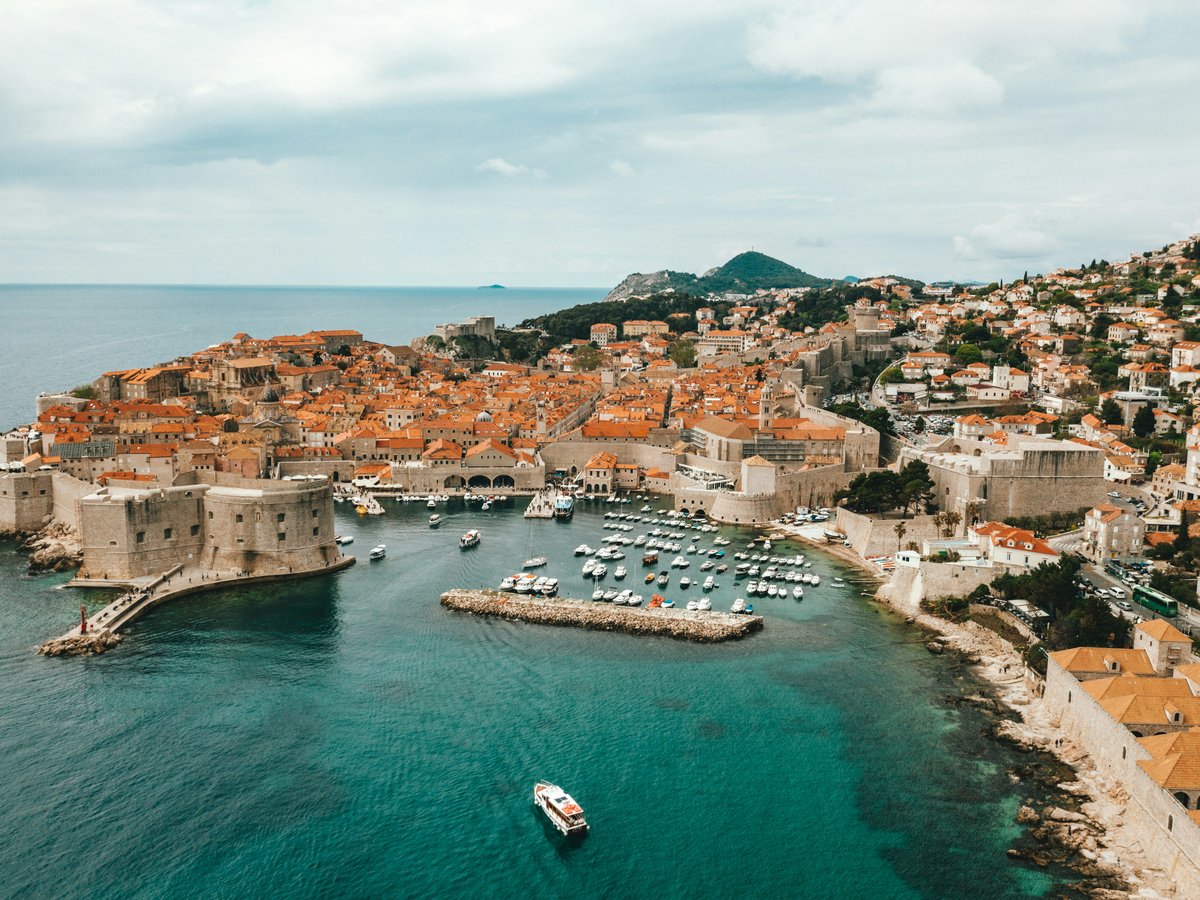
Stay in Dubrovnik in September
75 hotels in the Trip.com pool for Dubrovnik, from US$54 a night.
Opens Trip.com on Fri 3 Sep to Sun 5 Sep 2027; change the dates there.
September might be the smartest month to visit Dubrovnik. The Adriatic Sea reaches its warmest temperature of the year at 23-24°C (73-75°F), right as cruise ship traffic and summer tour groups start thinning out. Daytime air temperatures average 25.7°C (78°F), which makes walking the 1,940-metre City Walls far more bearable than July's 31°C furnace. The trade-off is rain. September delivers 156mm across about 8 rainy days, more than double August's 73mm. These tend to arrive as intense Mediterranean downpours in the afternoon rather than grey all-day drizzle. You can be stretched out on Banje Beach at 2pm and ducking under an awning by 3pm.
The Dubrovačke ljetne igre (Dubrovnik Summer Festival) wraps up in late August, so September lacks that cultural draw. Restaurants along the Stradun and bars throughout Stari Grad still keep extended summer hours through at least mid-month, though. Pile Gate is walkable without the 20-minute queues that form in July. Kayak rental spots along the Ploče coastline have boats available for same-day booking.
Pricing shifts across September's 4 weeks in a way that rewards patience. The first 7-10 days still carry near-peak rates, as Italian and German tourists squeeze in a final summer week. By the third week, hotels in Lapad and Babin Kuk typically drop 20-30% from July highs. Apartment rentals across the city follow a similar curve, with a 2-bedroom in Gruž running closer to its April rate than its August one.
Why visit in September
- The Adriatic is at its annual peak temperature of 23-24°C (73-75°F), warmer than June or July, making September the best month for swimming at Banje Beach, Lokrum Island, and the Elafiti Islands.
- Cruise ship arrivals drop from August's peak of 8-10 vessels per day to 4-6 by mid-month, and down to 2-3 by late September, making Stari Grad's narrow streets walkable again.
- Hotel rates in Lapad, Gruž, and Babin Kuk drop 20-30% from July peaks by the third week of September, while all restaurants and attractions remain fully operational.
- September is grape harvest (berba) season on the Pelješac peninsula and in Konavle, opening access to vineyard tastings and harvest-day events at wineries that are closed to visitors the rest of the year.
- Temperatures averaging 25.7°C (78°F) sit in the sweet spot for sightseeing on foot. The City Walls circuit, Mount Srđ hike, and Old Town exploration are all comfortable without July's dehydration risk.
Worth knowing
- Rainfall reaches 156mm across 8 rainy days, more than double August's 73mm. These Mediterranean downpours can be heavy enough to clear beaches and shut down the City Walls for an hour or two.
- Early September pricing in Stari Grad and Ploče hotels still runs within 10-15% of peak July rates. The real discounts only appear from the second or third week onward.
- The Dubrovačke ljetne igre (Summer Festival) ended in late August, removing the single biggest cultural event from the calendar. September has no comparable trip-defining festival.
- The jugo wind occasionally brings 2-3 consecutive days of rain, overcast skies, and rough seas that can disrupt ferry services to Lokrum and the Elafiti Islands.
Best for
Think twice if
September mornings in Dubrovnik tend to start clear and warm around 20-22°C (68-72°F), building to an average high of 25.7°C (78°F) by early afternoon. Evenings cool to 17.4°C (63°F), enough that you'll reach for a light layer at dinner outside. The 156mm of rainfall across 8 days arrives mostly as sharp afternoon downpours, often triggered by the jugo wind from the southeast. These storms can be intense but typically clear within an hour or two. Humidity sits at 68%, noticeable but not oppressive compared to August's stickier days. The Adriatic holds its peak summer warmth at 23-24°C (73-75°F), making September the best swimming month of the year in Dubrovnik.
Seasonal caution
- The jugo wind from the southeast can bring 2-3 consecutive days of rain and rough seas, occasionally disrupting Jadrolinija ferry services to Lokrum Island and the Elafiti Islands. If island day trips are central to your plans, build in schedule flexibility and check ferry updates from Gruž port.
Year-round climate
Averages from the last 5 years.
| Month | Avg high (°C) | Avg low (°C) | Rainfall (mm) |
|---|---|---|---|
| Jan | 12 | 5 | 249 |
| Feb | 13 | 5 | 170 |
| Mar | 14 | 7 | 230 |
| Apr | 17 | 9 | 140 |
| May | 22 | 14 | 160 |
| Jun | 28 | 19 | 48 |
| Jul | 31 | 22 | 42 |
| Aug | 30 | 21 | 73 |
| Sep | 26 | 17 | 156 |
| Oct | 21 | 13 | 178 |
| Nov | 17 | 9 | 370 |
| Dec | 14 | 6 | 209 |
Best things to do in September
Sea kayaking along the Old Town walls
water sportPaddle along the base of Dubrovnik's medieval fortifications, passing under Fort Bokar and around to the seaward side below Buža Bar. Most operators run a 3-hour route that includes a stop at Betina Cave beach and an optional crossing to Lokrum Island. September's calm mornings and warm 23°C water make for more comfortable paddling than the choppier conditions that arrive in October.
The Adriatic is at peak temperature and morning winds are typically light. Group sizes drop from August's 12-15 paddlers to 6-8, and same-day availability returns from mid-September.Booking tipBook morning sessions starting at 9am. Afternoon winds tend to pick up and the chance of rain rises after 2pm.
Walking the City Walls (Gradske zidine)
sightseeingThe full 1,940-metre circuit takes about 90 minutes and passes above terracotta rooftops, Fort Lovrijenac, Lokrum Island, and the harbour. September's average of 25.7°C is roughly 5 degrees cooler than July, making the shadeless western section bearable without the real risk of heatstroke that exists in midsummer.
Temperatures drop from July's 31°C to 25.7°C, and the 8am opening slot is no longer sold out days in advance. By mid-September you can start the circuit without queuing at the Pile Gate entrance.Booking tipEnter at the Ploče Gate side instead of Pile Gate. Even in early September, Pile gets the bulk of the cruise-ship foot traffic. The circuit is the same distance either way.
Day trip to Pelješac peninsula wineries
food and drinkThe Pelješac peninsula, about 60km north of Dubrovnik, produces Croatia's most acclaimed red wine. Dingač, made from the Plavac Mali grape grown on steep south-facing slopes above the Adriatic, has held a protected geographical designation since 1961. September's grape harvest (berba) opens several wineries near Potomje and Viganj for tastings and vineyard tours that aren't available outside harvest season.
September is harvest season (berba) for Plavac Mali. Wineries actively pressing grapes offer harvest-day tours and barrel tastings of the new vintage, a seasonal experience that shuts down by mid-October.Booking tipArrange a driver or rent a car. Pelješac has minimal public transit and the wine road between Potomje and Dingač involves narrow switchbacks that are easier with a designated driver.
Swimming at Lokrum Island
beach and natureA 15-minute ferry from Dubrovnik's Old Port, Lokrum has rocky swimming coves along its eastern shore and a landlocked saltwater pool called Mrtvo More (Dead Sea) in the island's interior. The botanical garden near the Benedictine monastery ruins shows late-summer blooms, and the resident peacocks roam freely between the swimming areas and the cafe.
Peak sea temperature of 23-24°C combined with lighter crowds from mid-September onward. By the last week of September you might have an entire swimming cove to yourself, a scenario impossible in July or August.Booking tipTake the first ferry at 9am to reach Mrtvo More before the main wave of day-trippers. The last return ferry shifts earlier in late September, so confirm the timetable at the Old Port ticket booth.
Sunset drinks at Buža Bar
nightlifeA cliff-side bar set into the outer walls of Stari Grad on the seaward side, Buža serves drinks on concrete terraces perched above the open Adriatic. The lower terrace has swimming-access ladders if you want to cool off between rounds. September sunsets happen around 7pm, roughly an hour earlier than July.
Late September evenings at 17-20°C are warm enough for outdoor drinks without the midsummer sweat. The queue to get in, which can stretch 30+ minutes in August, drops to 10-15 minutes by mid-September.Booking tipNo reservations. Arrive 45 minutes before sunset for a lower-terrace seat with an unobstructed sightline. Cash only at some of the terraces.
Hiking Mount Srđ
outdoorThe 412-metre peak directly behind Dubrovnik offers panoramic views across the Old Town rooftops, Lokrum, and the Elafiti Islands stretching northwest. You can take the cable car to the summit and walk down via the zigzag trail through scrubland, or do the full ascent from the Bosanka trailhead. The Imperial Fortress (Fort Imperial) at the top houses a small museum on the 1991-1995 siege.
September's 25°C average makes the climb viable without the dehydration risk of a July ascent, when exposed rock and scrubland can push felt temperatures above 40°C. Clear September mornings produce the sharpest visibility across the islands.Booking tipStart the hike by 8am to finish before afternoon heat builds and rain becomes possible. The cable car typically runs until 8pm or later in September.
Day trip to the Elafiti Islands
day tripThe three main Elafiti Islands sit northwest of Dubrovnik. Koločep (car-free, 20 minutes by ferry) has quiet swimming coves. Lopud has Šunj Bay, a rare sandy beach on this part of the Croatian coast. Šipan, the largest, has olive groves, a handful of konobas, and almost no tourist infrastructure beyond the ferry dock. All three are reachable from Gruž port via Jadrolinija ferry.
Ferry services still run on near-summer frequency through mid-September. The sea is warm enough for swimming at Šunj Bay on Lopud, and the islands are noticeably quieter than August. By late September, ferry frequency drops and the window for comfortable beach days narrows.Booking tipCheck the Jadrolinija timetable before committing to a specific island. After mid-September, some afternoon return services are cut, which can strand you if you're not paying attention.
Exploring Stari Grad on foot without peak crowds
sightseeingDubrovnik's Old Town feels like a different city when you can walk the Stradun without being shoulder-to-shoulder. By mid-September you can linger in the cloisters of the Dominican Monastery, browse the 14th-century pharmacy inside the Franciscan Monastery, sit in Gundulićeva Poljana watching the market without competing for bench space, and photograph the Sponza Palace facade without waiting for tour groups to clear the frame.
Cruise ship arrivals drop after the first week of September, and the departure of European school-holiday families frees the narrow side streets (Prijeko, Od Puča, Žudioska) that are impassable in August.Booking tipVisit Knežev dvor (Rector's Palace) and the Dominican Monastery before 10am on any day, even in early September. Morning light through the cloister arches is worth the early start.
What to eat in September
In season: fruit
Smokve (fresh figs)
September is peak fig season across Dalmatia. Both the green bijelica and purple petrovača varieties flood the stalls at Gundulićeva Poljana market, brought in daily by Konavle farmers. The classic Dalmatian pairing is fresh figs with pršut (dry-cured ham) and Paški sir cheese. Arrive before 9am for the best selection.
Grožđe (table grapes)
Grape harvest (berba) runs through September across Pelješac and Konavle. Table grapes appear at the Gruž and Gundulićeva Poljana markets by early September, and the Plavac Mali wine grape is being picked and pressed at vineyards around Potomje and Dingač. Some konobas serve fresh grape must (slatko) as a seasonal drink.
On menus now
Salata od hobotnice (octopus salad)
A Dalmatian staple that peaks in early autumn when octopus is at its tenderest. The salad is dressed simply with olive oil, lemon, garlic, capers, and boiled potatoes. You'll find it on nearly every konoba menu in Stari Grad, Gruž, and along the Lapad waterfront. The best versions use octopus caught within hours off the Elafiti Islands.
Srdele na gradele (grilled sardines)
Late summer and early autumn sardines from the Adriatic are plump and oily, ideal for grilling. Served whole on the grill with a side of blitva (Swiss chard) and boiled potatoes dressed in olive oil, this is Dalmatian comfort food at its simplest. Konobas in Gruž near the fish market tend to have the freshest catches.
Pašticada
Dalmatia's signature braised beef stew, slow-cooked with prošek (dessert wine), dried plums, and root vegetables, then served over njoki (gnocchi). September's cooler 17°C evenings make this rich dish appealing again after the summer months when it feels too heavy. The preparation takes 24-48 hours, so restaurants that serve it well tend to list it as a daily special.
What to drink
Prošek
A traditional Dalmatian dessert wine made from sun-dried grapes, primarily Plavac Mali and Maraština varieties. September is when the grapes are harvested and laid out on straw mats to dry before pressing. Wineries in Konavle and on Pelješac sometimes offer early-season prošek tastings alongside the fresh harvest. The flavour sits somewhere between port and Sauternes, with notes of dried fig and caramel.
Regular events in September
Dani europske baštine (European Heritage Days)Free
Part of the Council of Europe's pan-European programme, this weekend event opens select heritage sites across Dubrovnik at free or reduced admission. In past years, participating sites have included fortifications, churches, and palaces normally behind a paywall. Croatia has participated since the programme's expansion in the early 2000s.
Third weekend of September (typically September 20-21)Folklorni ansambl Linđo performances
Dubrovnik's Linđo Folklore Ensemble performs traditional Croatian folk dances and music at the Lazareti cultural centre near Ploče Gate. The ensemble, founded in 1964, continues its performance schedule into September with weekend evening shows featuring Dalmatian klapa singing and the Linđo circle dance that gives the group its name.
Weekend evenings through SeptemberPelješac wine harvest festivals
Wineries along the Pelješac peninsula hold harvest-season open days and tasting events as the berba (grape harvest) for Plavac Mali and other local varieties gets underway. Events are scattered across the peninsula, with concentrations near Potomje, Viganj, and Ston. Some include vineyard tours, barrel tastings of new pressings, and traditional harvest meals.
Throughout late SeptemberBest places this September
Lokrum Island
islandThe 15-minute ferry ride from the Old Port drops you on a car-free island with rocky swimming coves, the landlocked Mrtvo More saltwater pool, a botanical garden near Benedictine monastery ruins, and roaming peacocks. September's peak sea temperature and lighter ferry crowds make it the ideal month for a full day here. The island closes to visitors at sunset.
Accessible from Stari Grad Old PortGradske zidine (City Walls)
landmarkThe 1,940-metre circuit of medieval walls, towers, and fortresses encloses Stari Grad. September's 25.7°C average makes the shadeless walk far more comfortable than midsummer. The views from the Minčeta Tower at the northern apex are the most photographed in the city. Two entry points at Pile Gate and Ploče Gate.
Stari GradGundulićeva Poljana market
marketThe daily open-air produce market fills this small square behind the Jesuit Church. September brings peak-season smokve (figs), table grapes, olive oil, and lavender sachets from Hvar. The Konavle farmers with the best figs set up on the eastern side of the square. Arrive before 9am for the full selection.
Stari GradTrsteno Arboretum
gardenAbout 18km northwest of Dubrovnik, this Renaissance garden dates to 1492 and centres on two Oriental plane trees estimated at over 500 years old. The terraced gardens run down to the Adriatic with a Neptune fountain and an aqueduct. September's softer light and the first hints of colour change in the canopy make it a more photogenic visit than midsummer's harsh overhead sun.
TrstenoPark Gradac
parkA shaded public park above Pile Gate with views across to Fort Lovrijenac and the open Adriatic. Pine trees and Mediterranean cypresses provide natural shade. September's comfortable temperatures make this a good spot for a late-afternoon picnic after the Stradun heat builds. The park connects to the coastal path running toward Danče beach.
PileBuža Bar
barA cliff-side bar built into the seaward face of the Old Town walls, accessible through a small door in the stone near the Jesuit Church. Drinks are served on concrete terraces above the rocks, with swimming-access ladders below. September's warm evenings and shorter queues make it far more pleasant than the packed summer months. Sunset views face west across open sea.
Stari GradLazareti
cultural venueFive arched quarantine buildings from the 16th century, originally used to isolate arriving merchants and goods. Now a cultural centre hosting Linđo Folklore Ensemble performances, art exhibitions, and occasional concerts. The vaulted stone interiors stay cool on warm September days. Located outside Ploče Gate on the eastern approach to Old Town.
PločeGruž Tržnica (Gruž Market)
marketThe main local market near Gruž port, larger and cheaper than the Gundulićeva Poljana tourist market. September produce includes figs, grapes, pomegranates, fresh herbs, and olive oil from the surrounding hills. Locals shop here for daily groceries, and the adjacent fish market has the morning catch from Adriatic boats. Open daily until early afternoon.
Gruž
Your packing checklist
Tick items off as you pack. Your progress saves in this browser.
All packed — have a great trip.
Insider tips
The morning market at Gundulićeva Poljana has the best September figs in Dalmatia, but arrive before 9am. Konavle farmers sell out of the sweetest petrovača (purple fig) variety by mid-morning, and by 10am the remaining stalls are mostly lavender sachets and tourist souvenirs.
Swim at Šulić Beach below Buža Bar instead of Banje Beach. Same 23°C water, a fraction of the people, and better cliff-jumping spots. Access is through a gap in the seaward wall near the Jesuit Church, the same area as Buža Bar but lower down.
Check the Port of Dubrovnik cruise ship schedule online before planning your Stari Grad day. On days with 3 or more ships, which still happens in early September, the Stradun between Pile Gate and Luža Square can feel like peak August by 10am. On 0-1 ship days, the difference is dramatic.
The konobas in Gruž and along the Lapad coastal promenade serve the same quality Dalmatian food as Old Town restaurants at roughly 30-40% lower prices. Locals rarely eat dinner inside the walls. Grilled fish and octopus salad at a Gruž waterfront konoba is a more honest Dubrovnik meal than most Stari Grad restaurants offer.
The Jadrolinija ferry ticket office at Gruž port sells inter-island day passes that are cheaper than buying individual return tickets. If you're planning to visit both Lopud and Koločep in one day, ask for the island pass at the counter.
Avoid these mistakes
- Scheduling outdoor activities for the afternoon without checking the forecast. September's rain tends to hit between 2pm and 5pm. The City Walls, kayaking, and island ferries are all better booked for morning. An afternoon storm can strand you on Lokrum if the last ferry gets cancelled due to rough seas.
- Arriving on a 3-ship cruise day and expecting a quiet Old Town experience. Early September still has heavy cruise traffic on certain days. The difference between a 0-ship Tuesday and a 3-ship Wednesday is like visiting two different cities. Check the port schedule and plan your Stari Grad day around it.
- Packing only summer clothes because it is still technically summer. September evenings drop to 17°C, and a jugo wind day can feel surprisingly cool and damp at 19-20°C with overcast skies. At least one pair of long trousers and a light jacket will save you from an uncomfortable evening.
- Waiting until mid-September to book Pelješac winery visits. Harvest season is the most popular time for vineyard tours, and the smaller family wineries near Potomje take limited numbers. Contact wineries at least a week in advance, especially for weekend visits.
Practical tips for September
September splits into 2 distinct halves in Dubrovnik. The first 10 days feel like peak summer, with strong tourist numbers, restaurants along the Stradun keeping extended hours until 11pm, and ferry services running on summer timetables. By September 15, some seasonal beach bars in Lapad close for the year, and the last Lokrum Island ferry shifts to an earlier return time. Book accommodation in Stari Grad or Ploče for the first week at least 4-6 weeks in advance. Mid-to-late September is more forgiving, with same-week availability common at guesthouses in Gruž and along the Lapad peninsula. The Jadrolinija ferry schedule to the Elafiti Islands (Koločep, Lopud, Šipan) reduces frequency after mid-September in most years, so confirm timetables before planning island day trips. Dress codes for churches remain enforced year-round, with covered shoulders and knees required at the Dubrovnik Cathedral and the Franciscan Monastery. ATMs inside the Stari Grad walls tend to charge higher withdrawal fees than those near Gruž port or in Lapad. Croatia uses the euro as of January 2023, so currency exchange from kuna is no longer needed.
FAQ
Is September a good time to visit Dubrovnik?
September is one of Dubrovnik's top 3 months for visitors. The Adriatic reaches its annual peak temperature at 23-24°C, daytime air temperatures average a comfortable 25.7°C (78°F), and summer crowds thin noticeably by mid-month. The main drawback is rain. September's 156mm across 8 days is more than double August's 73mm, arriving as sharp afternoon downpours rather than all-day drizzle. If you can tolerate an occasional wet afternoon and pack a rain jacket, September offers better value and a less congested Old Town than July or August.
What is the weather like in Dubrovnik in September?
Expect daytime highs around 25.7°C (78°F) and nighttime lows near 17.4°C (63°F). The sea temperature is at its warmest, around 23-24°C (73-75°F), warm enough for comfortable extended swimming. Rainfall reaches 156mm across about 8 rainy days, typically as intense but short afternoon storms. Humidity averages 68%. Mornings tend to be clear and warm, making them the best window for outdoor sightseeing. The jugo wind from the southeast occasionally brings longer stretches of 2-3 days of rain and overcast skies.
Is Dubrovnik still crowded in September?
Early September (roughly the first 10 days) still feels busy, with cruise ships bringing 4-6 vessels per day and European tourists extending their summer holidays. The Stradun and City Walls can feel congested between 10am and 4pm during that first week. By mid-September the shift is obvious. Cruise ship dockings drop, tour groups thin out, and you can walk through Pile Gate without queuing. Late September feels like a different city from August, with restaurant reservations becoming unnecessary and beaches like Banje and Šunj Bay on Lopud having open space.
Can you swim in the sea in Dubrovnik in September?
September is arguably the best swimming month in Dubrovnik. The Adriatic has absorbed an entire summer of heat and peaks at 23-24°C (73-75°F). Banje Beach, Šulić Beach below the Old Town walls, and the swimming spots at Mrtvo More on Lokrum Island are all comfortable for extended time in the water. By late September the sea begins cooling toward 21-22°C, still pleasant for most swimmers. Beach facilities at Banje and Copacabana Beach in Babin Kuk remain open through the entire month.
Is September cheaper than peak summer for visiting Dubrovnik?
The discount depends on timing within the month. The first week of September carries near-peak hotel rates, especially in Stari Grad and Ploče, running within 10-15% of July prices. By the third week, hotels in Lapad, Gruž, and Babin Kuk typically drop 20-30% from summer highs. Apartment rentals follow a similar pattern. Flights from major European cities also drop in price after the first week. Restaurant and attraction prices remain constant year-round. Overall, a late-September trip can run 15-25% cheaper than a July visit when accommodation and transport savings are factored in.
Things to Do in Dubrovnik in September
 Free cancellation
 Small Group Blue Cave and Sunj Beach Boat Tour from Dubrovnik
Outdoor experience: 4 hours, free cancellation.
via Viator Free cancellation
 Full-Day Elaphite Islands Cruise from Dubrovnik with Lunch
Day trip: 8 hours, free cancellation.
via Viator Free cancellation
 Montenegro Day Trip from Dubrovnik with Optional Boat Trip
Day trip: free cancellation.
via Viator Free cancellation
 Mostar and Kravice Waterfalls Semi-Private Tour from Dubrovnik
Day trip: 10.5 hours, free cancellation.
via Viator Free cancellation
 Blue Cave, Lopud, and Sunj Beach Speedboat Tour from Dubrovnik
Outdoor experience: 4 hours, free cancellation.
via Viator Free cancellation
 Dubrovnik Elaphiti Islands Cruise with Lunch, Drinks and Swim
Day trip: free cancellation.
via ViatorFind a flight to Dubrovnik
Live fares to Dubrovnik appear here once cookies are accepted.
Last verified by automated review (v1.7.2) on . What is automated review?