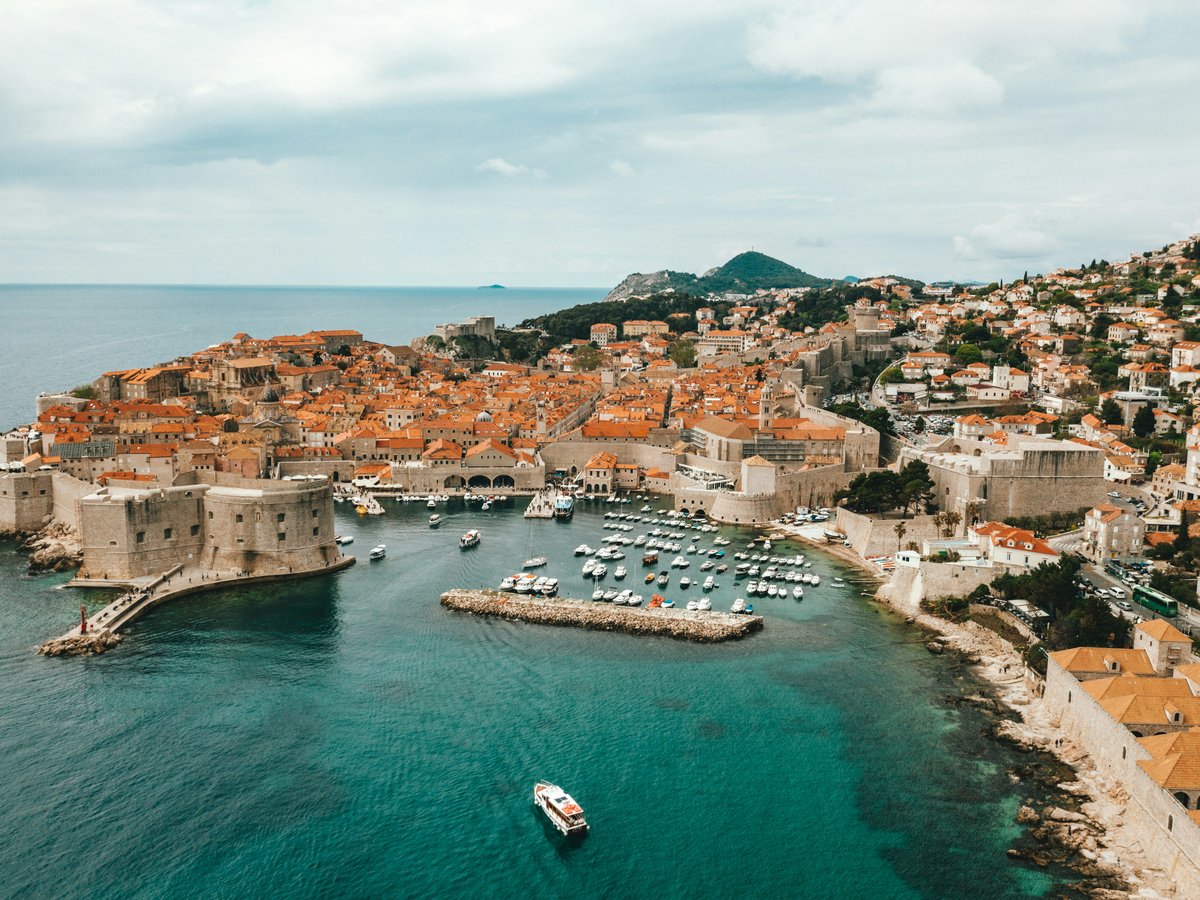
Stay in Dubrovnik in April
75 hotels in the Trip.com pool for Dubrovnik, from US$54 a night.
Opens Trip.com on Fri 2 Apr to Sun 4 Apr 2027; change the dates there.
April in Dubrovnik is a bet on timing. The city sits at an inflection point between the quiet, rain-soaked winter and the expensive, shoulder-to-shoulder summer that runs from June through September. Average highs reach 17.4°C (63°F), which sounds pleasant on paper, but mornings in Stari Grad still hover around 9°C (49°F), and the 140mm of rain spread across roughly 12 days means you will get rained on at some point. The Adriatic is too cold for swimming at around 15-16°C (59-61°F). None of that is a dealbreaker, though.
The real draw is what April is not. It is not July, when cruise ships deposit 6,000-8,000 passengers per day onto the Stradun and the Old Town's population temporarily triples. Hotel rates in April tend to run 30-50% below the July peak, and you can walk the Gradske zidine (City Walls) at 10am without queueing for 45 minutes. Restaurants in Pile and Ploče that require reservations two weeks ahead in August will likely have open tables on a Tuesday night. The trade-off is real, though. Some seasonal restaurants and island ferry routes are still ramping up, and you might find a handful of places in Lapad with shortened hours or closed for pre-season renovation.
April also marks the period when Dubrovnik's gardens and surrounding hillsides start to green up after the heavy winter rains. Trsteno Arboretum, about 18km northwest of the city, tends to hit a particularly good stretch of spring bloom. Wild asparagus appears at the Gruž market, and the light over the Adriatic takes on that particular Dalmatian clarity that drew Renaissance painters south. To be fair, you will want a rain jacket more than sunscreen this month. But if you prefer a quieter, cooler, cheaper version of a city that can feel overwhelming in high summer, April is a legitimate window.
Why visit in April
- Crowd levels are a fraction of summer. The Stradun in April feels like a real street, not a theme park corridor. You can linger at Onofrio's Fountain without being in someone's selfie backdrop.
- Hotel rates run 30-50% below July and August peaks. A room in Ploče that costs 250 EUR per night in August might go for 140-160 EUR in April.
- The City Walls walk (Gradske zidine) is genuinely comfortable at 17°C. In July's 31°C heat, the exposed stone walkway becomes punishing, especially the western stretch above Fort Bokar with no shade for 400 metres.
- Wild asparagus (šparoge) season peaks in April across Dalmatia, and Dubrovnik's restaurant menus shift to reflect it. Gruž market stalls stock bundles of it for 15-25 kuna equivalent.
- Spring light on the Adriatic is softer and lower-angled than summer's harsh midday glare, which tends to produce better photographs from Mount Srđ and Fort Lovrijenac.
Worth knowing
- Rain is a real factor. 140mm across 12 days means roughly 2 in every 5 days will see meaningful rainfall. Some of those days bring Adriatic squalls that can last several hours, not quick showers.
- The Adriatic is too cold for comfortable swimming at 15-16°C (59-61°F). If beach time is a priority, you are 2 months early.
- Some seasonal operators are still opening. Lokrum Island ferry service typically starts in April, but early in the month the schedule might be limited to weekends only. A few restaurants in Stari Grad remain closed until May.
- Evenings can feel chilly. Once the sun sets around 19:45 in early April, temperatures drop quickly toward 9°C (49°F), and outdoor dining without a heater or jacket becomes uncomfortable.
Best for
Think twice if
April brings mild but unsettled conditions to Dubrovnik. Expect a mix of bright, calm days and Adriatic rain systems that can roll in quickly from the southwest. Temperatures feel comfortable in direct sun during the afternoon, but mornings and evenings carry a noticeable chill, especially near the harbour in Gruž. Wind off the sea adds a bite on exposed stretches like the City Walls' western face. You might get a run of 4-5 dry days followed by 2-3 wet ones. The rain tends to be heavier per event than a typical drizzle, often 10-15mm in a single afternoon.
Year-round climate
Averages from the last 5 years.
| Month | Avg high (°C) | Avg low (°C) | Rainfall (mm) |
|---|---|---|---|
| Jan | 12 | 5 | 249 |
| Feb | 13 | 5 | 170 |
| Mar | 14 | 7 | 230 |
| Apr | 17 | 9 | 140 |
| May | 22 | 14 | 160 |
| Jun | 28 | 19 | 48 |
| Jul | 31 | 22 | 42 |
| Aug | 30 | 21 | 73 |
| Sep | 26 | 17 | 156 |
| Oct | 21 | 13 | 178 |
| Nov | 17 | 9 | 370 |
| Dec | 14 | 6 | 209 |
Best things to do in April
Walk the Gradske zidine (City Walls)
sightseeingThe full 2km circuit takes 60-90 minutes and covers the entire perimeter of Stari Grad, passing above Fort Bokar, Minčeta Tower, and the old port. The route is almost entirely exposed to sun and wind, with steep stone staircases at several points.
At 17°C, the Walls are comfortable rather than punishing. In July and August, the exposed limestone radiates heat and there is no shade on the western stretch. April also means fewer people on the narrow walkway, so you can stop to photograph without blocking traffic.Booking tipTickets cost around 35 EUR. The Pile Gate entrance gets busier after 10am. Enter from the Ploče side for a quieter start.
Day trip to Lokrum Island
day tripA 15-minute ferry from Dubrovnik's old port reaches this forested island with a Benedictine monastery ruin, a botanical garden, a small saltwater lake called Mrtvo More (Dead Sea), and resident peacocks. Trails loop the island in about 2 hours.
The ferry service to Lokrum typically resumes in April. Early-month sailings may be weekend-only, but by mid-April the schedule usually runs daily. The island's Mediterranean pine forest is fragrant in spring, and you will share it with a fraction of the summer visitors.Booking tipCheck the Lokrum ferry schedule at the old port ticket booth. Mid-April onwards is more reliable for daily departures.
Hike or cable car to Mount Srđ summit
hikingThe summit sits 412 metres above the city and offers a direct view down over the terracotta rooftops of Stari Grad, the harbour, and Lokrum. You can take the cable car (about 4 minutes) or hike the zigzag trail from behind Bosanka village, which takes roughly 45-60 minutes uphill.
April temperatures make the exposed switchback trail tolerable. In summer heat, the trail is brutal after 9am with no shade. The spring vegetation along the hillside is green rather than the dried brown of August. Visibility over the Adriatic tends to be good before the summer haze sets in.Booking tipThe cable car runs from around 9am. For the hike, start by 8am to catch the cooler morning. Bring at least 1 litre of water.
Visit Trsteno Arboretum
gardensAn estate garden 18km northwest of Dubrovnik, dating to the late 15th century. It contains one of the oldest plane trees in Europe (over 500 years old, roughly 60 metres tall), Renaissance-era aqueducts, and a collection of Mediterranean and exotic plants spread across terraced slopes above the sea.
April is peak spring bloom at Trsteno. Wisteria, bougainvillea early-starters, and citrus blossoms overlap. The gardens smell of orange blossom and damp earth after rain. Summer visits are hotter and drier, with less flowering.Booking tipTake bus 12 or 15 from Dubrovnik's main bus station. Entry is around 7 EUR. Allow 2 hours for the full grounds.
Explore Knežev dvor (Rector's Palace) and the Dubrovnik museums
cultureThe Gothic-Renaissance palace served as the seat of the Rector of the Republic of Ragusa. It now houses the Cultural History Museum. The same ticket typically covers the Maritime Museum in Fort St. John and the ethnographic collection in the Rupe Granary.
April's variable weather means you will want indoor options for rainy afternoons. The combined museum ticket is better value when you have time to linger in each space, rather than rushing through between beach sessions as summer visitors tend to do.Booking tipThe combined museum ticket covers several sites and saves about 30% versus individual entry. Pick it up at Knežev dvor.
Walk the Elaphiti Islands (Koločep, Lopud, Šipan)
day tripThree inhabited islands northwest of Dubrovnik, reachable by Jadrolinija ferry from Gruž harbour. Koločep is car-free and walkable in 2-3 hours. Lopud has Šunj Beach (empty in April) and a ruined Franciscan monastery. Šipan is the largest, with olive groves and two small villages.
The ferry schedule from Gruž expands in April compared to winter. The islands are nearly empty of tourists this month, which is a stark contrast to July when day-trippers fill Lopud's beach. Wildflowers cover Koločep's trails in spring.Booking tipJadrolinija ferries run from Gruž harbour. The morning departure lets you visit 2 islands in a day if you plan connections. Check the schedule the evening before, as early-April sailings can change.
Evening passegiata on the Stradun
cultureDubrovnik's main limestone-paved street, roughly 300 metres long, serves as the social spine of Stari Grad. The evening walk is a Dalmatian tradition. Locals and visitors mix between the Pile Gate end and the Clock Tower at the Ploče end, passing Sponza Palace, churches, and cafe terraces.
April evenings around 12-14°C are comfortable for walking with a light layer. The Stradun is quiet enough to feel like a local ritual rather than a crowd-management exercise. By July, the density on this narrow street makes the passegiata feel more like rush hour.What to eat in April
On menus now
Fritaja od šparoga
The classic Dalmatian spring dish. Wild asparagus folded into eggs with olive oil and sometimes sheep cheese. Simple, seasonal, and on nearly every traditional menu in Stari Grad during April.
Pašticada prep-season lamb
Spring lamb from the Dalmatian hinterland reaches Dubrovnik's restaurants in April, often roasted under a peka (iron bell) with potatoes and herbs. The meat tends to be more tender than the older lamb served later in summer.
Stonska torta (Ston cake)
This unusual pasta-and-almond cake from nearby Ston, about 60km north, uses macaroni, walnuts, chocolate, and citrus. Available year-round, but the spring citrus from the Neretva valley is still fresh in April, and bakeries in Gruž sometimes stock a seasonal version.
Fresh Adriatic squid
April is still within the cooler-water squid season along the Dalmatian coast. Grilled whole over charcoal and dressed with olive oil and lemon, squid at waterfront restaurants in Lapad tends to be fresher and cheaper before the summer demand spike.
In markets
Šparoge (wild asparagus)
Wild asparagus foraging peaks across Dalmatia in April. Locals gather thin, intensely flavoured spears from hillsides outside the city. You will find them scrambled with eggs (fritaja od šparoga) at most traditional konobas, and sold in small bundles at the Gruž open market.
Regular events in April
Du Motion - Dubrovnik Runners' Days
A running festival with a half marathon, 5km, and 10km race routes that pass along the Adriatic coast and through parts of the Old Town. The event draws several thousand participants, mostly from Croatia and neighbouring countries.
Late April (usually the last weekend)Dubrovnik FestiWine
A wine-tasting event held inside Stari Grad, typically in the Lazareti complex or Revelin Fortress, featuring Croatian winemakers from Dalmatia, Pelješac Peninsula, Istria, and Slavonia. Attendance usually runs a few hundred per evening session.
Mid to late AprilEaster processions and servicesFree
When Easter falls in April, Dubrovnik's Catholic community holds processions through Stari Grad, centred on the Cathedral of the Assumption (Katedrala Velika Gospa). The processions on Good Friday and Easter Sunday follow traditional routes along the Stradun. Attendance is high among locals.
Varies by year (Easter Sunday can fall between late March and late April)Best places this April
Stari Grad (Old Town)
neighborhoodThe walled medieval core, a UNESCO World Heritage Site since 1979. April's lower visitor count makes it possible to wander the side streets off the Stradun, like Od Puča and Prijeko, without feeling herded. The limestone paving stones are slippery when wet, so watch your step after rain.
Stari GradGradske zidine (City Walls)
landmarkThe 2km fortification circuit, with walls up to 25 metres high and 6 metres thick in places. Minčeta Tower at the northern apex gives the highest vantage point. The walk is exposed to weather, which in April means bring a layer and check the forecast.
Stari GradGruž harbour and market
marketThe working harbour northwest of the Old Town is where ferries depart for the Elaphiti Islands and Mljet. The open-air market (Gruška tržnica) operates daily, selling seasonal produce, wild asparagus in April, honey, olive oil, and lavender from Hvar.
GružFort Lovrijenac
landmarkA freestanding fortress on a 37-metre cliff west of the Pile Gate, sometimes called Dubrovnik's Gibraltar. It served as a filming location for the Red Keep in Game of Thrones. In April, it is typically open but may have shorter hours early in the month compared to summer.
PileTrsteno Arboretum
gardenA 28-hectare garden estate 18km northwest of Dubrovnik, established by the Gučetić-Gozze noble family in 1498. The Renaissance garden layout, 500-year-old plane trees, and Neptune fountain make it worth the 30-minute bus ride, especially during April's bloom period.
TrstenoLokrum Island
islandA 72-hectare island 600 metres offshore, covered in Aleppo pine and Mediterranean scrub. The ruined Benedictine monastery dates to 1023. The botanical garden contains subtropical species. April is the first month with reliable ferry service, and visitor numbers are low.
Lapad peninsula
neighborhoodA residential neighbourhood west of Gruž with a tree-lined promenade, several pebble beaches, and a concentration of hotels. The Lapad Bay promenade is a good sunset walk in April, and the area's restaurants tend to open for the season earlier than some Old Town spots.
LapadPloče neighbourhood and Banje Beach
neighborhoodThe area east of the Old Town, between the Ploče Gate and Hotel Excelsior, has some of Dubrovnik's best views back toward the walls. Banje Beach is right below. The water is too cold for swimming in April, but the beach bar area sometimes opens on warm weekends.
Ploče
Your packing checklist
Tick items off as you pack. Your progress saves in this browser.
All packed — have a great trip.
Insider tips
The City Walls ticket office at the Ploče Gate entrance (near the Dominican Monastery) typically has a shorter queue than the main Pile Gate entrance, especially between 10am and noon. Same ticket, same price, fewer people.
Gruž market is where locals shop. The produce stalls closest to the harbour tend to be cheaper than the ones nearest the bus station. April's wild asparagus bundles here cost roughly half what Old Town restaurant menus charge for a fritaja.
If you are staying in Lapad or Babin Kuk, the number 6 bus runs to Pile Gate every 15-20 minutes and costs around 2 EUR with a transit card versus 2.50 EUR cash. Buy the rechargeable card at any Tisak newsstand.
The cable car to Mount Srđ gets busy between 11am and 2pm even in April. Go after 4pm for better light on the Old Town below and smaller groups in the observation area. Sunset from the summit is around 19:30 in early April, 19:50 by month's end.
For a quiet coffee with a direct view of the Old Town walls, try the cafes along the path between Pile Gate and Fort Lovrijenac. They sit below the main tourist flow and face east toward the walls, catching the morning sun.
Avoid these mistakes
- Packing only summer clothes based on the assumption that 'Croatia equals Mediterranean warmth.' April's 9°C mornings and rain-driven wind chill catch people off guard. You will see tourists in shorts and sandals shivering at outdoor tables while locals wear jackets and scarves.
- Assuming all restaurants and attractions are fully operational. Some Old Town restaurants do not open until late April or May. Check ahead if you have a specific place in mind, especially waterfront spots along the old harbour that cater to summer cruise traffic.
- Booking a beach hotel in Lapad or Babin Kuk expecting to swim. The Adriatic is 15-16°C in April. That is wetsuit territory, not bikini weather. If beaches are the point of your trip, come in July or August instead.
- Trying to visit the Walls, Lokrum, and Mount Srđ all in one day. Each takes 2-3 hours including transit, and the rain risk means at least one will likely get disrupted. Spread these across separate days so a rainy afternoon does not cancel all three.
Practical tips for April
Book accommodation 3-4 weeks ahead for the Easter period if it falls in April, as Dubrovnik's hotel inventory is smaller than you might expect and Easter brings domestic Croatian visitors. Outside Easter week, 1-2 weeks is usually sufficient for April. Most museums and churches in Stari Grad operate on reduced winter hours until late April or early May, typically closing by 16:00 or 17:00 rather than the summer 20:00. Check the Dubrovnik Card options, which bundle City Walls entry, bus transport, and museum access at a discount of roughly 20%. The airport bus (Atlas shuttle) runs to Pile Gate and Gruž, but in April the schedule is thinner than summer, sometimes only 3-4 departures per day timed to flight arrivals. Restaurants in Stari Grad generally do not add a service charge, but tipping 10-15% in cash is appreciated. Croatia uses the euro as of January 2023. ATMs are plentiful near Pile Gate and in Gruž, though some charge 2-3% withdrawal fees.
FAQ
Is April a good time to visit Dubrovnik?
April is a solid shoulder-season choice. You trade beach weather and guaranteed sunshine for significantly lower prices (30-50% below peak), manageable crowds, and comfortable temperatures for sightseeing. The 140mm of rain across 12 days is the main drawback. If your priorities are the Old Town, the City Walls, and day trips rather than swimming and sunbathing, April works well. It ranks around 6th out of 12 months overall, behind June, September, May, October, and July.
What is the weather like in Dubrovnik in April?
Expect average highs of 17.4°C (63°F) and lows of 9.2°C (49°F). Rainfall averages 140mm over about 12 days, with humidity around 69%. Days can be clear and bright in the morning, then turn to rain by afternoon. The Adriatic sea temperature sits around 15-16°C (59-61°F), too cold for comfortable swimming. Pack layers, a waterproof jacket, and sturdy shoes for the slippery limestone streets.
Is Dubrovnik crowded in April?
Compared to July and August, when cruise ships bring 6,000-8,000 day visitors and the Stradun becomes a slow-moving queue, April is noticeably calmer. You will share the Old Town with other tourists, and Easter week brings a bump, but the Walls and major sites are walkable without long waits. Du Motion running festival at month's end adds a few thousand visitors, mostly staying in Lapad and Gruž rather than the Old Town.
Can you swim in the sea in Dubrovnik in April?
Not comfortably. The Adriatic is around 15-16°C (59-61°F) in April, which most people find too cold without a wetsuit. Banje Beach and the beaches along Lapad are accessible, and you will see the occasional hardy swimmer, but this is not beach season. The water does not reach a comfortable 22-24°C until late June.
What should I budget for a trip to Dubrovnik in April?
April is shoulder season, so prices sit between winter lows and summer highs. A mid-range double room in Ploče or Lapad runs roughly 100-160 EUR per night, compared to 200-300 EUR in July. A meal at a traditional konoba in Stari Grad typically costs 15-25 EUR per person for a main course. The City Walls ticket is around 35 EUR. The Dubrovnik Card (1-day or 3-day) bundles walls entry, buses, and museums at roughly 20% savings.
Things to Do in Dubrovnik in April
 Free cancellation
 Small Group Blue Cave and Sunj Beach Boat Tour from Dubrovnik
Outdoor experience: 4 hours, free cancellation.
via Viator Free cancellation
 Full-Day Elaphite Islands Cruise from Dubrovnik with Lunch
Day trip: 8 hours, free cancellation.
via Viator Free cancellation
 Montenegro Day Trip from Dubrovnik with Optional Boat Trip
Day trip: free cancellation.
via Viator Free cancellation
 Mostar and Kravice Waterfalls Semi-Private Tour from Dubrovnik
Day trip: 10.5 hours, free cancellation.
via Viator Free cancellation
 Dubrovnik Elaphiti Islands Cruise with Lunch, Drinks and Swim
Day trip: free cancellation.
via Viator Free cancellation
 Kravice Waterfalls, Mostar and Pocitelj Day Trip from Dubrovnik
Day trip: free cancellation.
via ViatorFind a flight to Dubrovnik
Live fares to Dubrovnik appear here once cookies are accepted.
Last verified by automated review (v1.7.2) on . What is automated review?