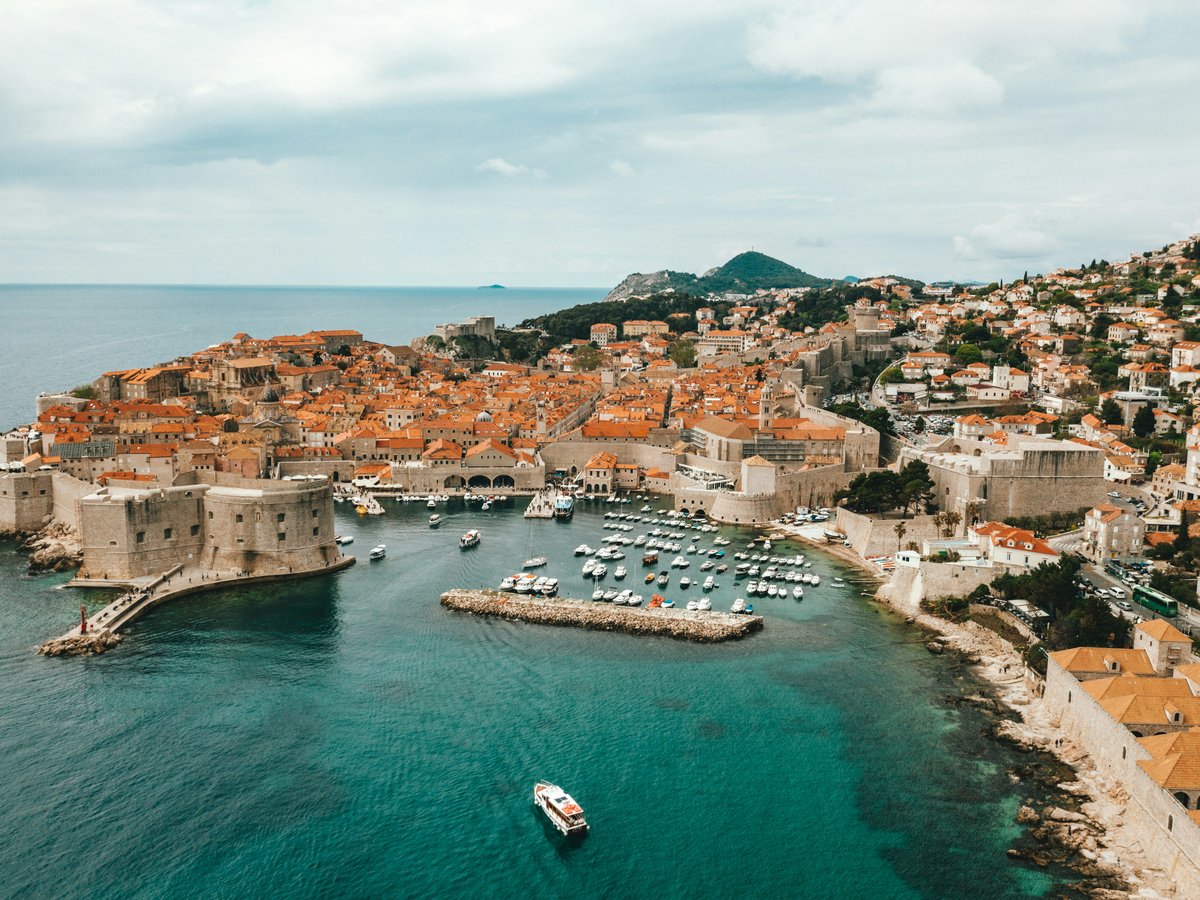
November is Dubrovnik's wettest month. That single fact shapes everything about a visit. The city receives roughly 370mm of rain across 15 days, more than any other month by a wide margin. Daytime temperatures hover around 16.6°C (62°F), comfortable enough for walking, but the frequent downpours can pin you indoors for hours at a stretch. The Old Town, which in July and August feels like it might buckle under the weight of 10,000 daily cruise passengers, is now close to empty. The Stradun on a weekday afternoon might have more pigeons than people.
This quiet has a cost. A significant number of restaurants in Stari Grad close for the season sometime in late October or early November. Several tour operators stop running day trips to the Elaphiti Islands and Mljet. Lokrum Island, the wooded escape a 15-minute ferry ride from the Old Port, shuts its ferry service for winter, typically ceasing in early November. You'll find the city walls still open, though on reduced hours, and the cable car to Srđ still runs, but the options narrow considerably compared to shoulder months like May or October.
That said, November has its own appeal if you arrive with the right expectations. Hotel rates drop to a fraction of their summer peak. The Neretva Valley mandarin harvest fills Gruž Market with crates of sweet, thin-skinned citrus. Fresh olive oil from the season's pressing appears on restaurant tables across the city. The Dubrovnik Winter Festival typically launches in the final week of November, and the first Christmas lights go up along the Stradun. You'll likely have the Rector's Palace and Sponza Palace nearly to yourself. But you need to be comfortable with rain, early sunsets around 16:30, and the possibility that your first-choice restaurant is shuttered until April.
Why visit in November
- Hotel rates drop dramatically from July and August peaks, often by half or more. Ploče and Lapad properties that command premium summer rates become genuinely affordable in November.
- The Old Town is remarkably uncrowded. On most November days, cruise ship arrivals drop to zero or one per week, compared to 6-8 per day in high summer.
- Fresh Neretva Valley mandarins and new-press olive oil from Konavle are at their peak. November is arguably the best eating month for Dalmatian seasonal ingredients.
- The Dubrovnik Winter Festival typically begins in the last week of November, with the first Christmas market stalls and light installations appearing on the Stradun and around Brsalje.
- Mild temperatures around 16°C (62°F) are comfortable for walking the city walls and climbing to Lovrijenac Fortress without the brutal summer heat.
Worth knowing
- November is the wettest month in Dubrovnik's calendar at 370mm of rainfall across roughly 15 rainy days. Multi-day stretches of grey skies and heavy showers are normal, not exceptional.
- Many restaurants, cafes, and tour operators in Stari Grad close for winter between late October and early November. Your dining options narrow to perhaps a third of the summer selection.
- Lokrum Island's ferry service shuts down for the season, removing one of the city's best half-day escapes. Day trips to the Elaphiti Islands become difficult to arrange without a private boat.
- Daylight is limited to roughly 9.5 hours, with sunset around 16:30. That leaves a narrow window for outdoor sightseeing, especially on overcast days.
Best for
Think twice if
November in Dubrovnik feels like a proper Adriatic autumn, though wetter than most visitors expect. Daytime highs tend to sit around 16.6°C (62°F), dropping to about 9.2°C (49°F) at night. The air carries a damp chill that makes 9°C feel colder than the number suggests, especially when the bura wind picks up from the northeast. Rainfall reaches 370mm across roughly 15 days, making this the single wettest month of the year. The rain often arrives in heavy bursts rather than steady drizzle, with the occasional 2-3 day stretch of persistent grey. Humidity hovers around 76%. The sea temperature drops to about 18°C (64°F), too cold for most swimmers. Clear days do happen, and when the sun breaks through, the light on the limestone walls of the Old Town is particularly warm and golden.
Seasonal caution
- November is Dubrovnik's wettest month at 370mm, nearly double the annual monthly average. Flash flooding on the steep streets leading down to Stari Grad can occur during heavy downpours. The limestone pavements on the Stradun become slippery when wet.
- The bura, a cold northeast wind, can arrive suddenly in November and bring wind gusts that occasionally close the Srđ cable car and make the city walls uncomfortable to walk. The bura typically lasts 1-3 days and is strongest in the morning.
Year-round climate
Averages from the last 5 years.
| Month | Avg high (°C) | Avg low (°C) | Rainfall (mm) |
|---|---|---|---|
| Jan | 12 | 5 | 249 |
| Feb | 13 | 5 | 170 |
| Mar | 14 | 7 | 230 |
| Apr | 17 | 9 | 140 |
| May | 22 | 14 | 160 |
| Jun | 28 | 19 | 48 |
| Jul | 31 | 22 | 42 |
| Aug | 30 | 21 | 73 |
| Sep | 26 | 17 | 156 |
| Oct | 21 | 13 | 178 |
| Nov | 17 | 9 | 370 |
| Dec | 14 | 6 | 209 |
Best things to do in November
Walk the Dubrovnik city walls
sightseeingThe 1.94km circuit around the Old Town fortifications passes Minčeta Tower, Fort Bokar, and Fort St. John, with views over terracotta rooftops and the grey-blue Adriatic. November's reduced hours typically mean opening from 9:00 to 15:00 or 10:00 to 15:00, so check on arrival.
The walls are nearly empty compared to summer's shoulder-to-shoulder crowds. On clear November mornings, the low sun casts long shadows across the stone and the Adriatic light has a soft, golden quality.Booking tipNo advance booking needed in November. Arrive within the first hour of opening for the best light and emptiest walkways.
Explore the Rector's Palace and Cultural History Museum
cultureThe Gothic-Renaissance palace on Pred Dvorom served as the seat of the Ragusan Republic's rector, who was effectively locked inside for his 1-month term. The ground floor has the original jail cells. The museum upstairs holds period furniture, pharmacy jars, and paintings from the Ragusan school.
You'll likely share the rooms with only a handful of other visitors. The palace's interior is a welcome retreat on rainy November afternoons.Cable car to Mount Srđ
sightseeingThe 778m ride to the summit of Srđ takes about 4 minutes and delivers panoramic views over the Old Town, Lokrum Island, and the Elaphiti archipelago. The Fort Imperial museum at the top documents Dubrovnik's 1991-1992 siege with photographs, maps, and shell fragments.
Clear November days offer exceptional visibility across the Adriatic. The bura wind can close the cable car, but when it runs on a still day, the views extend to the Pelješac peninsula and sometimes as far as the Italian coast.Booking tipCheck the cable car's operating status on the day, as bura closures are more common in November. Morning tends to be calmer than afternoon.
Visit Gruž Market during mandarin season
foodDubrovnik's main open-air market sits along the waterfront in Gruž, about 3km northwest of the Old Town. November transforms the stalls with crates of Neretva mandarins, pomegranates from Konavle, and bottles of fresh olive oil. The fish section has the day's Adriatic catch laid out on ice.
The mandarin harvest peaks in November, and the market's citrus selection is at its most abundant. The smell of ripe mandarins and fresh herbs fills the covered hall.Day trip to Ston and the Pelješac peninsula
day_tripSton, about 55km northwest of Dubrovnik, has the second-longest defensive walls in Europe at 5.5km. The town is famous for its oyster farms in Mali Ston Bay, where you can taste oysters pulled from the water that morning. The Pelješac peninsula beyond produces Croatia's best Dingač and Postup red wines from the Plavac Mali grape.
November is oyster season in Mali Ston, and the cooler weather makes walking Ston's walls far more pleasant than in summer heat. The Pelješac wine cellars are quiet enough that you might get a personal tour from the winemaker.Booking tipRent a car or arrange a private transfer. Public bus service to Ston runs but is infrequent in November, typically 2-3 departures daily from Dubrovnik's main bus station.
Franciscan Monastery and Europe's third-oldest pharmacy
cultureThe 14th-century monastery on the western end of the Stradun houses a pharmacy that has been operating since 1317, making it one of the oldest in Europe. The cloister garden, with its double columns and orange trees, is one of Dubrovnik's most peaceful spaces.
November's bitter oranges are ripening in the cloister garden, and the pharmacy still sells creams and remedies based on original medieval recipes. Without summer crowds, you can actually linger in the cloister.Wine tasting at a Konavle estate
foodThe Konavle valley south of Dubrovnik, running along the Montenegrin border, is home to a handful of small wine producers growing Plavac Mali, Malvasija Dubrovačka, and other indigenous varietals. Several estates offer tastings paired with local olive oil and pršut.
November is harvest season for olives in Konavle, so tastings often include fresh-pressed oil alongside the wine. The valley's vineyards are turning autumn colours, and the estates are unhurried enough for longer conversations with the producers.Booking tipContact estates directly a day or two ahead. Most are family-run and appreciate advance notice, especially off-season. A car is necessary to reach the valley.
Explore the War Photo Limited gallery
cultureThis 2-floor gallery on Antuninska street in the Old Town shows rotating exhibitions of conflict photography from wars around the world. The permanent Dubrovnik collection documents the 1991-1992 siege with photographs that are difficult to look at but impossible to forget.
The gallery typically stays open through November, though hours may be reduced. It's an indoor activity well-suited to a rainy afternoon, and the subject matter adds weight to the visible shell damage still marking some Old Town facades.What to eat in November
In season: fruit
Neretva Valley mandarins
The Neretva Delta, about 100km north of Dubrovnik, produces Croatia's sweetest mandarins. November is the heart of the harvest. You'll find them piled in crates at Gruž Market, with a flavour that's noticeably more intense than supermarket citrus. The skin is thin and peels easily.
On menus now
Brudet (Dalmatian fish stew)
This thick, slow-simmered stew of mixed Adriatic fish, tomatoes, onion, and wine vinegar is a cold-weather staple across the Dalmatian coast. November's rough seas concentrate the fishermen on nearshore catches like scorpionfish and monkfish, which are the traditional base. Served with polenta at konobas in Stari Grad.
Arancini (candied orange peel)
A Dubrovnik specialty with roots in the Ragusan Republic's spice trade. Bitter orange peel is slow-cooked in sugar syrup and dried. November is when the bitter oranges ripen on trees throughout the Old Town. You'll find arancini at Gruž Market and in a few traditional sweet shops along Prijeko.
Pršut and Paški sir
Dalmatian dry-cured ham paired with Pag Island sheep's cheese appears on nearly every konoba menu. In November, the cooler air tends to sharpen the flavours of the cured pršut. The combination with a glass of local Plavac Mali is a reliable rainy-afternoon ritual.
In markets
Novo ulje (new olive oil)
November is when the season's first cold-pressed olive oil appears. The Konavle region south of Dubrovnik produces some of Croatia's finest. The new oil is peppery, green, and slightly bitter. Restaurants in Stari Grad typically serve it with fresh bread as a starter, and you might catch the scent of crushed olives drifting from a nearby mill.
Regular events in November
Dubrovnik Winter Festival openingFree
The festival typically launches in the last week of November with the lighting of Christmas decorations along the Stradun and around Brsalje square. Early market stalls begin selling local crafts, arancini, and mulled wine. The full programme of concerts and performances builds through December.
Late November (usually the final weekend)Feast of St. Blaise preparationsFree
While the main Festa Svetog Vlaha falls on February 3, November marks the beginning of preparations in Dubrovnik's parishes. St. Blaise (Sveti Vlaho) is Dubrovnik's patron saint, and his image appears on the city's coat of arms, above the Pile Gate, and atop Orlando's Column.
Throughout NovemberBest places this November
Stradun (Placa)
landmarkDubrovnik's 300m limestone-paved main street runs from Pile Gate to the Clock Tower. In November, without the summer crush, you can actually hear your footsteps on the polished stone and notice details in the Baroque facades that crowds obscure. The large Onofrio Fountain at the western end still draws a trickle of visitors filling water bottles.
Stari GradRector's Palace
museumThe seat of the Ragusan Republic's government, rebuilt multiple times after gunpowder explosions and earthquakes. The Gothic arches on the ground floor frame views of the cathedral across the square. The atrium hosts occasional chamber concerts even in November.
Stari GradLovrijenac Fortress
landmarkThe fortress perched on a 37m cliff outside the western walls was built to prevent Venice from constructing a fortification on the same spot. The inscription above the entrance reads 'Non bene pro toto libertas venditur auro' (Freedom is not sold for all the gold in the world). Game of Thrones fans might recognise it as the Red Keep.
PileSponza Palace
museumOne of the few buildings to survive the 1667 earthquake largely intact, the 16th-century Sponza Palace served as the customs house and mint of the Ragusan Republic. It currently houses the Memorial Room of Dubrovnik Defenders, commemorating those killed in the 1991-1992 siege.
Stari GradGruž Market
marketThe city's primary fresh market operates daily along the Gruž harbour waterfront. November mornings bring crates of mandarins, pomegranates, persimmons, fresh fish, and bottles of the season's first olive oil. The covered section smells of dried herbs and lavender sachets from Hvar.
GružDominican Monastery
museumThe 14th-century monastery at the eastern end of the Stradun houses a notable collection of 15th and 16th-century paintings, including works by Nikola Božidarević. The cloister's Gothic-Renaissance arches frame a garden with a 500-year-old well. November's quiet means you can study the altarpieces without interruption.
Stari GradMount Srđ and Fort Imperial
viewpointThe 412m summit above the Old Town, reached by cable car or a steep 1-hour hike up the old zigzag path. Fort Imperial at the top took heavy damage during the 1991-1992 siege and now serves as a museum documenting that period. On clear November days, the view from the terrace extends across the entire southern Dalmatian coast.
Srđ
Your packing checklist
Tick items off as you pack. Your progress saves in this browser.
Insider tips
The Stradun's polished limestone reflects the Old Town's facades when wet, creating mirror-like puddles on rainy November afternoons. Photographers sometimes prefer overcast days for this effect, shooting from a low angle near the large Onofrio Fountain.
Buža Bar, the cliff-side bar outside the southern walls, typically closes for winter by early November, but the smaller Buža II sometimes stays open on warm days through mid-November. Worth checking on arrival if you want the cliff-top drink experience without summer crowds.
The Gruž Market fish section is busiest between 7:00 and 9:00 in the morning, when fishermen bring in the overnight catch. November's rougher seas mean the selection varies more day to day than in calm summer months, but scorpionfish and John Dory appear regularly.
If the bura closes the cable car, the hiking path to Mount Srđ from behind Buža Gate is still accessible, though it's a steep 1-hour climb and exposed to wind. The trail is marked but not maintained to a high standard, so proper shoes matter.
Konoba Dalmatino on Miha Pracata and Nishta on Prijeko (a vegetarian restaurant, unusual for Dubrovnik) tend to stay open through November when many Stari Grad restaurants close. Checking opening hours by phone or in person the morning of your visit saves wasted trips.
The Dubrovnik Card, which bundles entry to the city walls, several museums, and local bus rides, still operates in November and offers better value than buying individual tickets, especially since you'll likely have time to visit more sites without the summer queues.
Avoid these mistakes
- Assuming restaurants will be open without checking. Perhaps two-thirds of Stari Grad's dining options close between late October and early November. Walk through the Old Town on your first morning to note which places show signs of life, or ask your hotel for current recommendations.
- Packing only light layers because 16°C sounds mild. The combination of 76% humidity, sea wind, and rain makes November's 9-16°C range feel considerably colder than the numbers suggest, particularly after sunset.
- Planning a Lokrum Island visit without checking dates. The ferry typically stops running in early November, and there's no alternative public transport to the island. If Lokrum is important to you, confirm the ferry schedule before booking your trip.
- Booking accommodation far from the Old Town to save money, then discovering that local bus frequency drops in November. Lapad and Babin Kuk still have service, but intervals stretch to 20-30 minutes on some routes, and the last buses run earlier than in summer.
- Scheduling every outdoor activity on the same day. With only about 9.5 hours of daylight and a high probability of rain on any given day, it's better to spread outdoor plans across your stay and keep 1-2 indoor alternatives ready for each day.
Practical tips for November
Dubrovnik's Old Town bus stop is at Pile Gate, served by routes 1a, 1b, 3, and 6 from Lapad, Babin Kuk, and Gruž. November schedules run less frequently than summer, so check the Libertas Dubrovnik website or the timetables posted at stops. The city walls typically open at 9:00 or 10:00 and close by 15:00 in November, a much shorter window than summer's 8:00-19:30. Buy your wall ticket at the Ploče Gate entrance on the eastern side to avoid the small queue that sometimes forms at Pile Gate, even in low season. Most museums in the Old Town keep winter hours from November 1, which generally means closing by 16:00. Supermarkets like Konzum and Tommy in Lapad and at Gruž stay open on regular schedules and are useful for self-catering if restaurant options are limited. Croatia uses the euro as of January 2023, so you won't need to exchange for kuna. ATMs are available at Pile Gate, on the Stradun, and in Gruž. A SIM card from Hrvatski Telekom or A1 can be picked up at their shops in Gruž for mobile data.
FAQ
Is November a good time to visit Dubrovnik?
It depends on what you're after. If you want low prices, no crowds, and don't mind rain, November can be rewarding. The Old Town is beautifully quiet, and cultural sites like the Rector's Palace and Franciscan Monastery are easy to explore. But 370mm of rainfall across 15 days means you need to be genuinely comfortable with wet weather, and a significant number of restaurants and activities shut down for winter. The Dubrovnik Winter Festival starting in late November adds some festive atmosphere toward the end of the month.
Can you swim in Dubrovnik in November?
The sea temperature sits around 18°C (64°F), which is too cold for most people. Banje Beach and the beaches in Lapad are largely deserted. You might see the occasional local swimmer, but this is not a beach month. If swimming matters to you, October is a better bet when the sea still holds summer warmth around 20-21°C.
Are the Dubrovnik city walls open in November?
Yes, the walls remain open year-round, but November hours are significantly reduced. Expect opening at 9:00 or 10:00 and closing by 15:00, compared to 8:00-19:30 in summer. The bura wind can occasionally make the exposed northern sections uncomfortable, though the walls themselves don't close for weather.
What is there to do in Dubrovnik when it rains in November?
The Rector's Palace, Sponza Palace, Dominican Monastery museum, Franciscan Monastery pharmacy, and War Photo Limited gallery are all within the Old Town and collectively fill a full rainy day. The Maritime Museum in Fort St. John covers Dubrovnik's naval history. For a longer indoor stretch, a wine and olive oil tasting at a Konavle estate makes a good half-day trip. Several konobas in the Old Town stay open and a slow lunch with pršut, local cheese, and Plavac Mali is a legitimate way to spend a November afternoon.
Is the Dubrovnik Winter Festival worth planning around?
The festival typically begins in the last week of November with the Stradun Christmas lights and early market stalls. At that point it's still building toward its December peak, so you'll catch the opening atmosphere but not the full programme of concerts and events. If the festival is your main draw, early-to-mid December offers the complete experience. Late November gives you a taste alongside the off-season pricing and quiet.
How do I get from Dubrovnik Airport to the Old Town in November?
Dubrovnik Airport (DBV) sits about 20km southeast of the city near Čilipi. The Atlas airport shuttle bus runs to the Pile Gate bus stop and takes about 30-40 minutes, though November schedules may have fewer departures than summer. A taxi or pre-booked transfer takes a similar time. The airport bus drops you right at the western entrance to the Old Town, which is convenient if your accommodation is in Stari Grad.
Things to Do in Dubrovnik in November
 Free cancellation
 Small Group Blue Cave and Sunj Beach Boat Tour from Dubrovnik
Outdoor experience — 4 hours, free cancellation.
via Viator Free cancellation
 Full-Day Elaphite Islands Cruise from Dubrovnik with Lunch
Day trip — 8 hours, free cancellation.
via Viator Free cancellation
 Elaphiti Islands Full-Day Cruise from Dubrovnik with Lunch
Day trip — 8 hours, free cancellation.
via Viator Free cancellation
 Montenegro Day Trip from Dubrovnik with Optional Boat Trip
Day trip — free cancellation.
via Viator Free cancellation
 Mostar and Kravice Waterfalls Semi-Private Tour from Dubrovnik
Day trip — 10.5 hours, free cancellation.
via Viator Free cancellation
 Blue Cave, Lopud, and Sunj Beach Speedboat Tour from Dubrovnik
Outdoor experience — 4 hours, free cancellation.
via ViatorLast verified by automated review (v1.7.2) on . What is automated review?