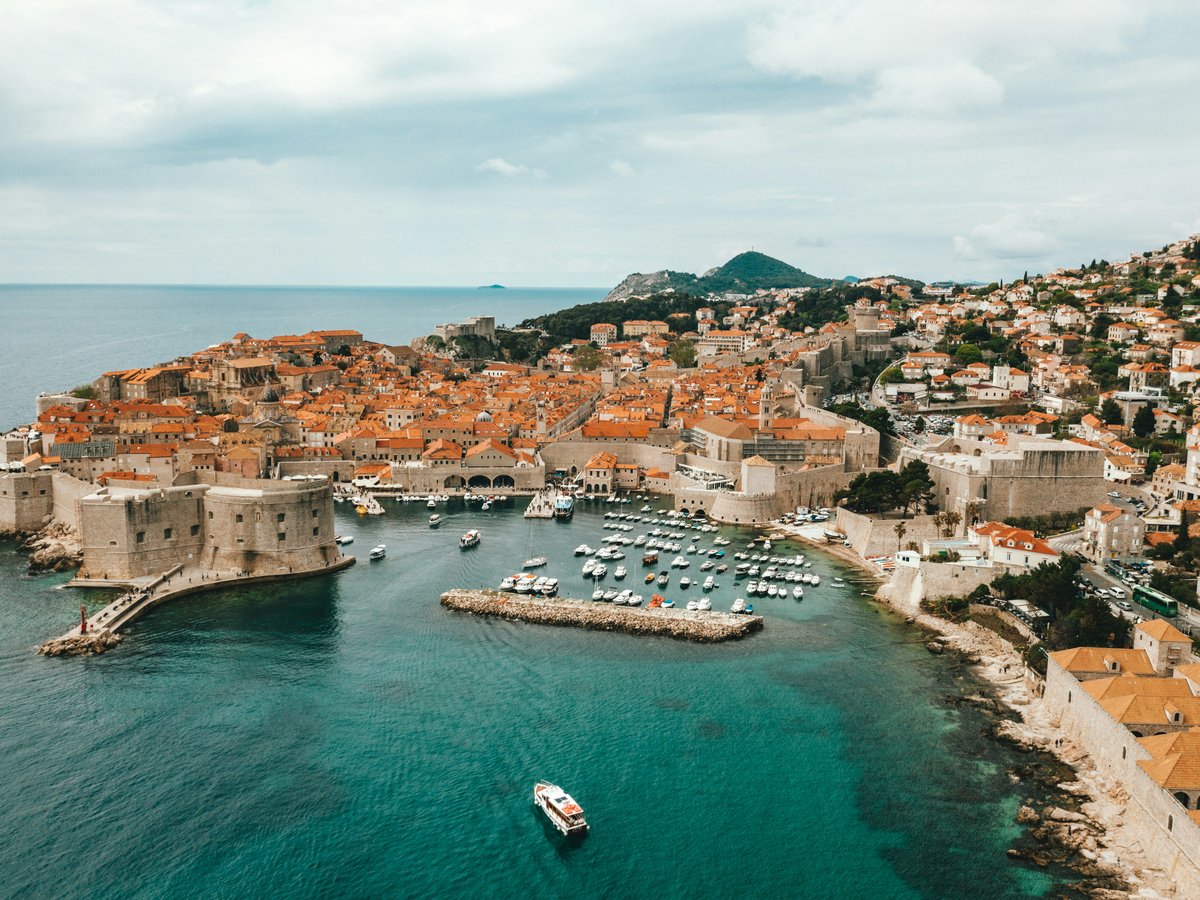
Is Dubrovnik safe?
Dubrovnik rates 8.5/10 for solo safety (see the TTDI Solo-Safety Index), and assaults on tourists are rare. The risks that catch people are physical: polished limestone on the Stradun, midday July heat on the City Walls, cruise-morning crowds at Pile Gate, and cliff jumps after drinks at the Buža bars.
Dubrovnik's crime risk follows the cruise calendar more than the clock, and the city currently caps calls at two cruise ships a day. On those mornings the 200 m lane from Pile Gate to the Onofrio fountain slows to a shuffle by 10am, and that squeeze is where phones leave back pockets. We'd wear a zipped crossbody bag in front from the drawbridge down the Stradun to the Clock tower, and keep it there on Libertas buses 1A, 1B and 3, which run packed between Pile and Gruž at the same hours. Muggings inside the walls are close to unheard of, and from June through September the Stradun stays lit and full past midnight, café chatter echoing off the stone until the Clock tower strikes one. The touts on Prijeko are the more common irritation, pushy but not dangerous, with menus that tend to run pricier than konobas a lane away in Pustijerna.
Most Dubrovnik injuries come from the ground, not from people. Centuries of feet have polished the Stradun's limestone smooth as soap, and after an October shower it's slick enough to put visitors on their backs outside Sponza Palace. Rubber soles beat sandals, and the City Walls circuit runs roughly 2 km with almost no shade. By 1pm in July the stone throws heat you can feel through your shoes, so we'd start at the 8am opening with a litre of water. Below the walls, the two Buža bars sit on cliff ledges where people jump into the Adriatic after a couple of drinks, and the rocks are closer to the surface than they look from 10 m up. Over on Lokrum, black sea urchins cluster on the shallow shelves, and water shoes, roughly €15 in Gruž shops, earn their pack space.
After dark, we'd call the walled city and Lapad the two easiest areas for a solo walk home. Lapad's pedestrian Šetalište kralja Zvonimira smells of grilled fish and sunscreen until well past 11pm, and in summer bus 6 runs from Pile out to Babin Kuk late into the night. Walking between the two takes about 45 minutes, partly on Ulica Branitelja Dubrovnika, where the pavements are narrow and the traffic is fast, so after 10pm we'd take the bus or a Bolt. The dimmest part of the old core is the stepped lanes climbing north to Prijeko and Peline under the walls; in places one lamp covers 30 steps, so keep a hand on the rail. Culture Club Revelin, inside the fortress by Ploče Gate, draws the rowdiest crowd in town after 1am, so keep your glass in your hand. At 1am on 27 September it was 18.8°C and clear, cool enough for a light layer.
For a solo traveller in Dubrovnik, the friction is cost more than danger. Single rooms inside the walls are scarce and many guesthouses charge the full double rate, so Lapad and Gruž tend to offer private rooms for less. Tables on Prijeko are set for pairs, but the counters around Gundulić Square seat one diner easily, and the square's morning market sells figs and lavender sachets from about 7am. Two nearby day trips cross into Bosnia and Herzegovina: Trebinje's Arslanagić Bridge (built 1574) and the Vjetrenica cave. Carry a passport for the Ivanica border crossing, and pick a small-group tour over a 50-seat coach if you want company. At €0.877 to the dollar, a Bolt from Pile to Lapad costs around US$12 to $17. Dubrovnik General Hospital is on Roka Mišetića in Lapad; dial 112 for any emergency, 192 for police and 194 for an ambulance.
Emergency number: 112
Official travel advisories
Normal precautions the most cautious of 3 government assessments
- Government of CanadaLevel 1Take normal security precautions View advisory
- UK Foreign OfficeLevel 1No FCDO travel restriction View advisory
- US State DepartmentLevel 1Exercise Normal Precautions View advisory
Verified from the issuing governments' own feeds.
Areas to avoid
- Buža bar cliff ledges for jumping after drinking
- Ulica Branitelja Dubrovnika on foot after 10pm (narrow pavements, fast traffic)
Common concerns
- Pickpocketing between Pile Gate and the Stradun on cruise-ship mornings
- Crowded Libertas buses 1A, 1B and 3 between Pile and Gruž
- Slippery polished limestone on the Stradun after rain
- Heat exposure on the unshaded City Walls circuit in July and August
- Sea urchins on Lokrum's rocky shelves
- Restaurant touts and inflated menus on Prijeko
- Poorly lit stepped lanes toward Prijeko and Peline at night
- Passport needed for day trips to Trebinje and Vjetrenica in Bosnia and Herzegovina
Last verified by automated review (v1.7.2) on . What is automated review?