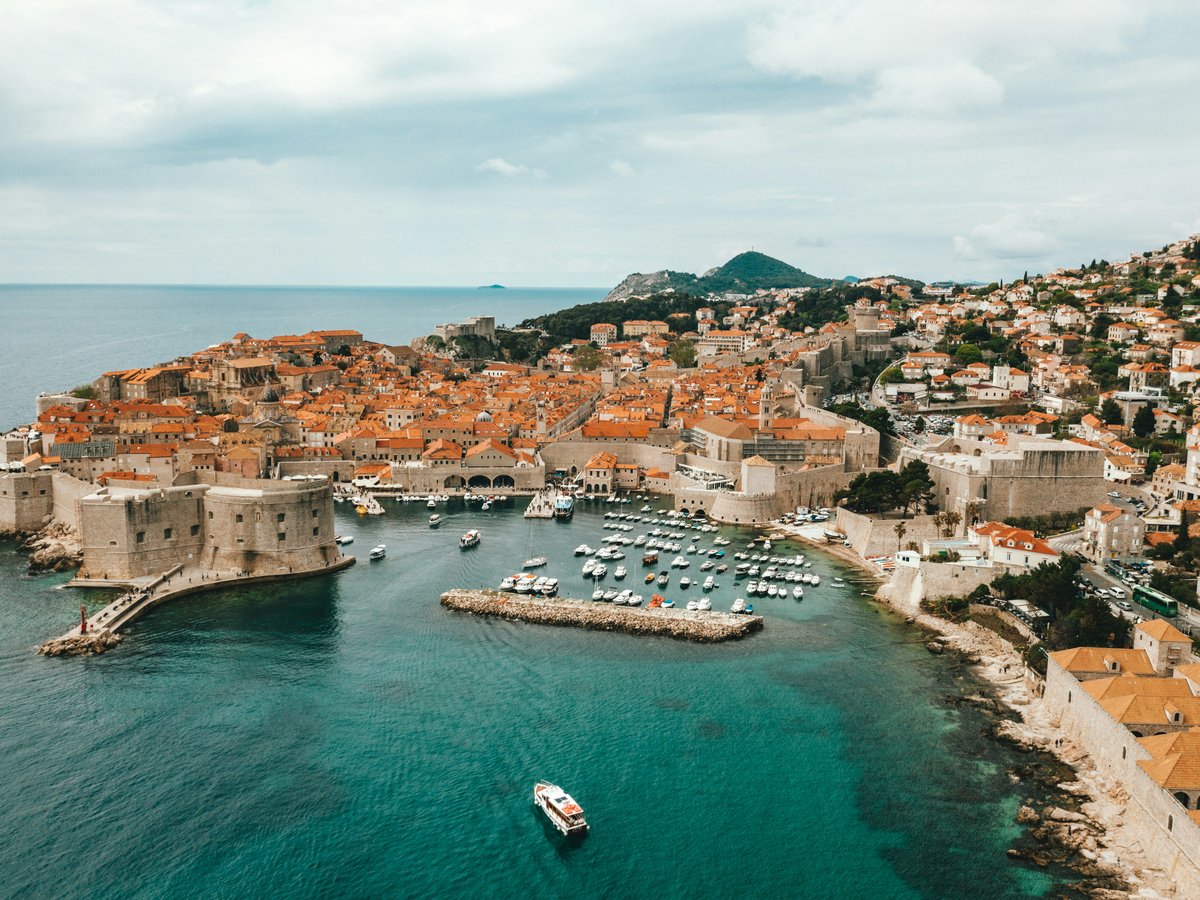
Stay in Dubrovnik in October
75 hotels in the Trip.com pool for Dubrovnik, from US$54 a night.
Opens Trip.com on Fri 1 Oct to Sun 3 Oct 2027; change the dates there.
October in Dubrovnik is the last comfortable window before the Adriatic autumn sets in properly. Daytime temperatures hover around 21°C (71°F), dropping to 13°C (55°F) after dark. The cruise ship crowds that overwhelm Stari Grad from June through September have thinned noticeably, though you'll still share the Stradun with day-trippers on sunny mornings. The real factor to weigh is rain. October averages 178mm across roughly 9 rainy days, which tends to arrive in concentrated bursts rather than all-day drizzle. You might get 4 perfect days in a row, then 2 days of steady downpour driven by the jugo wind off the southern Adriatic.
That said, the rain has a silver lining. It clears the Old Town walls of foot traffic. On a wet Tuesday in mid-October, you can walk the full 1,940-metre circuit with maybe 30 other people, a fraction of the 2,000+ who pack the ramparts on a July afternoon. Hotel rates have dropped meaningfully from summer peaks, and restaurant staff in Pile and Ploče seem visibly more relaxed. The olive harvest is underway across the Konavle Valley south of the city, and the first bottles of novo ulje (new olive oil) start appearing at markets and konoba tables.
October is also when Dubrovnik feels more like a real city and less like a film set. Locals reclaim the limestone streets of Stari Grad. The Good Food Festival typically runs in mid-October, showcasing Dalmatian producers. Croatian Independence Day falls on October 8, and you might notice flags along the Stradun. It is a good month for Dubrovnik, not the best, but honest and unhurried.
Why visit in October
- Crowd levels drop sharply from summer. The City Walls, which see over 2,000 visitors per day in July, are genuinely walkable in October with a fraction of the traffic.
- Temperatures around 21°C (71°F) make walking the steep streets of Stari Grad comfortable without the July heat that regularly exceeds 30°C (86°F).
- Hotel rates fall 30-50% from peak summer pricing. A room in Lapad or Babin Kuk that runs over 200 EUR per night in August might drop below 100 EUR in late October.
- The olive and wine harvest is underway across the Pelješac peninsula and Konavle region. You can taste novo ulje (new-press olive oil) within days of pressing at local konobas.
- The Adriatic Sea is still swimmable at around 20-21°C (68-70°F), warm enough for a proper swim on sunny afternoons at Banje Beach or the rocks below Buža.
Worth knowing
- Rain is a real factor. At 178mm over roughly 9 days, October is the 4th wettest month in Dubrovnik. The jugo wind from the south can bring 2-3 consecutive grey, rainy days that limit outdoor plans.
- Daylight shrinks noticeably. Sunset moves from about 18:30 at the start of October to 17:15 by month's end, cutting into evening plans at outdoor spots.
- Some seasonal businesses start closing. The Lokrum Island ferry service typically stops running by late October, and several restaurants in Stari Grad shift to reduced hours or close for the season.
- The Elafiti Islands ferries run on reduced winter schedules from mid-October, limiting day-trip flexibility to Koločep, Lopud, and Šipan.
Best for
Think twice if
October brings the tail end of mild Adriatic weather. Mornings start cool at 13°C (55°F), climbing to a comfortable 21°C (71°F) by early afternoon. Humidity sits around 73%, noticeable but not oppressive. Rain arrives in bursts, often tied to the jugo wind from the south, which can bring 2-3 days of steady precipitation before clearing to blue skies. Early October still feels like late summer on sunny days. By the last week, the air carries a distinctly autumn chill after sunset, and you will want a proper jacket for evenings along the Stradun.
Seasonal caution
- The jugo (sirocco) wind from the south can bring 2-3 consecutive days of heavy rain and rough seas in October. Ferries to Lokrum and the Elafiti Islands may be cancelled during strong jugo episodes. Check ferry status the morning of any planned island trip.
- Wet limestone is genuinely hazardous. The polished stone streets of Stari Grad and the City Walls become very slippery in rain. Rubber-soled shoes with tread are a safety issue, not a comfort preference.
Year-round climate
Averages from the last 5 years.
| Month | Avg high (°C) | Avg low (°C) | Rainfall (mm) |
|---|---|---|---|
| Jan | 12 | 5 | 249 |
| Feb | 13 | 5 | 170 |
| Mar | 14 | 7 | 230 |
| Apr | 17 | 9 | 140 |
| May | 22 | 14 | 160 |
| Jun | 28 | 19 | 48 |
| Jul | 31 | 22 | 42 |
| Aug | 30 | 21 | 73 |
| Sep | 26 | 17 | 156 |
| Oct | 21 | 13 | 178 |
| Nov | 17 | 9 | 370 |
| Dec | 14 | 6 | 209 |
Best things to do in October
Walk the City Walls without summer crowds
sightseeingThe 1,940-metre circuit atop Dubrovnik's 13th-century walls is the city's defining experience. The route takes roughly 90 minutes and climbs steeply on the northern side above the Minčeta Tower. In October, you might share the walls with a few dozen people rather than the 2,000+ daily visitors logged in peak summer.
Crowd levels drop sharply after September. October temperatures around 21°C make the exposed, shadeless wall walk far more comfortable than the 31°C July average.Booking tipArrive right at opening (8:00 or 9:00 depending on the month's schedule) for the emptiest experience. The Pile Gate entrance is less crowded than the Ploče entrance in morning.
Day trip to Pelješac for the wine and olive harvest
food_and_drinkThe Pelješac peninsula, about 90 minutes northwest of Dubrovnik, is Croatia's premier wine region. October is harvest season for both grapes and olives. Small family wineries along the Dingač and Postup slopes offer tastings. The drive along the coastal road past Ston's 5.5km medieval walls is worth the trip alone.
October is the grape and olive harvest. You can see (and sometimes participate in) the picking. Novo ulje is only available fresh in October and November.Booking tipContact wineries at least 3-4 days ahead for tastings. Most are family operations without walk-in hours. Renting a car is essential as public transport to the vineyards is limited.
Kayak the coastline below the walls
outdoorSea kayaking along the southern face of Dubrovnik's walls offers a perspective you cannot get from land. The route typically passes below Bokar Fortress, rounds Lovrijenac, and continues toward Betina Cave. The Adriatic is still around 20-21°C (68-70°F) in early October.
Water temperatures remain swimmable in early October, while summer kayaking tours (which often run 20+ boats in a convoy) thin out to groups of 6-8. You see the coastline rather than the back of another kayaker's head.Booking tipMorning departures tend to have calmer seas. Book at least 2 days ahead as operators reduce their daily departure slots from October.
Hike or cable car to Srđ summit
outdoorMount Srđ rises 412 metres directly above the Old Town. The panoramic view from the summit takes in the terracotta rooftops, Lokrum Island, and the Elafiti archipelago. You can take the cable car or hike the old zigzag trail (about 45 minutes up). The Imperial Fortress at the top houses a small museum on the 1991-1995 siege.
October's 21°C average makes the steep, exposed hiking trail far safer and more pleasant than the 31°C July heat. Autumn light in late afternoon produces the warmest tones on the Old Town below.Booking tipCheck cable car operating hours, which are reduced from October. The last descent is earlier than in summer. If hiking, start by 14:00 to allow for a sunset viewing and cable car descent.
Visit Trsteno Arboretum
natureThis Renaissance garden estate sits 18km northwest of Dubrovnik along the coastal road. Founded by the Gučetić-Gozze noble family in 1492, it holds a collection of Mediterranean and subtropical plants, a 15th-century aqueduct, and two massive Oriental plane trees over 500 years old. The gardens featured as the Tyrell gardens in Game of Thrones.
Autumn colours begin appearing on deciduous species while Mediterranean evergreens remain lush. The crowds thin dramatically after summer, and the temperature is comfortable for a long stroll through the terraced gardens. The late-afternoon light through the canopy is at its best in October.Booking tipReachable by the local bus 12 or 15 from Dubrovnik's Gruž bus station. Allow 2-3 hours for a thorough visit.
Swim at Banje Beach on a warm October afternoon
beachBanje is the main public beach below Ploče, directly east of the Old Town walls. It is a pebble beach with clear water and a view of Lokrum Island. In October, the beach club setup is mostly packed away, leaving the actual beach more open and less commercialized than summer.
Sea temperatures around 20-21°C still allow proper swimming in early to mid-October. The beach is mostly empty on weekdays, a stark contrast to July when every square metre of pebble is claimed by 08:00.Oyster tasting in Mali Ston
food_and_drinkMali Ston sits at the base of the Pelješac peninsula, about 60km from Dubrovnik, behind the second-longest defensive wall in Europe (after the Great Wall of China). The town's bay has cultivated oysters for over 500 years. You can eat freshly shucked flat oysters at waterfront restaurants for a fraction of Dubrovnik prices.
October marks the start of prime oyster season (the traditional rule is months with an 'R'). The water cools and the oysters firm up. You can pair them with the first Pelješac wines of the season.Booking tipCombine with a Pelješac wine trip. Ston is the gateway to the peninsula. A long lunch in Mali Ston makes a natural midday stop.
Explore Lokrum Island before the ferry stops
natureLokrum lies 600 metres off Dubrovnik's Old Town harbour. The island is a nature reserve with a Benedictine monastery ruin, a botanical garden, a small saltwater lake (Mrtvo More, literally 'Dead Sea'), and a colony of peacocks. No one lives on the island, and no overnight stays are permitted.
October is typically the last month the regular ferry operates. The island empties out from summer crowds, and on a quiet October weekday you might have the monastery gardens nearly to yourself. Check the ferry schedule carefully, as service can end mid-to-late October depending on demand.Booking tipFerry departures run from the Old Town harbour (Gradska Luka). Check for the current season's final operating date. The crossing takes about 15 minutes.
What to eat in October
In season: fruit
Mandarine (Neretva Valley mandarins)
October marks the start of mandarin season in the Neretva River delta, about 2 hours north of Dubrovnik. These small, intensely sweet citrus fruits appear at the Gruž market by mid-month. They are a regional obsession, and locals eat them by the kilogram. The Neretva Valley produces tens of thousands of tonnes annually.
Nar (pomegranate)
Pomegranate trees grow across the Dubrovnik Riviera and the fruit ripens in October. You will see them splitting open on trees in private gardens throughout Ploče and Lapad. Fresh pomegranate juice appears at market stalls and a few cafes near the Gruž pijaca (market).
On menus now
Mali Ston oysters
The oyster beds in the Malostonski zaljev (Mali Ston Bay) on the Pelješac peninsula produce some of the best flat oysters in the Mediterranean. October's cooler water temperatures mark the start of prime oyster season, which runs through March. A plate of 6 at the waterfront in Mali Ston costs a fraction of what you would pay in Dubrovnik's Old Town.
Pašticada
This slow-braised beef stew marinated in wine vinegar, prunes, and local red wine is Dalmatia's signature meat dish. It simmers for hours and is typically served with homemade gnocchi (njoki). October's cooler evenings make it appealing again after months when lighter fish dishes dominate the menus.
What to drink
Young Pelješac red wine
The grape harvest on Pelješac wraps up in early October, and small producers sometimes offer tastings of young, barely fermented wine. Plavac Mali is the dominant red grape. The Dingač and Postup appellations on the steep south-facing slopes of Pelješac produce Croatia's most recognized reds.
In markets
Novo ulje (new-press olive oil)
The olive harvest runs through October across the Konavle Valley and Pelješac peninsula. Freshly pressed oil appears at markets and konoba tables within days of milling. It has a peppery, green intensity that mellows over the following months. Locals drizzle it over bread, grilled fish, and fresh cheese. Ask for it by name at any serious restaurant in Stari Grad.
Regular events in October
Croatian Independence Day (Dan neovisnosti)Free
National holiday on October 8 marking Croatia's 1991 declaration of independence from Yugoslavia. Flags line the Stradun, and some official ceremonies take place. Government offices and banks close, but restaurants and tourist sites remain open.
October 8Festival dobre hrane (Good Food Festival)
A multi-day food festival typically held in mid-October in and around Stari Grad. Local producers, restaurants, and winemakers showcase Dalmatian cuisine. Tastings, cooking demonstrations, and prix-fixe menus at participating restaurants. The exact dates shift year to year.
Mid-October (varies by year)Festa sv. Luke (Feast of St. Luke)Free
October 18 marks the feast day of St. Luke, the patron saint of nearby Konavle. A local celebration with traditional folk music, Konavle embroidery displays, and communal feasts in the villages south of Dubrovnik. Worth a visit if you are in the area.
October 18Best places this October
Stradun (Placa)
landmarkThe limestone-paved main street of Stari Grad runs 300 metres from Pile Gate to the Clock Tower. In October, the evening korzo (promenade) feels more local. The polished stone reflects the streetlights after rain, which makes for some of the best night photography of the year. Onofrio's Large Fountain sits at the western end near Pile Gate.
Stari GradLovrijenac Fortress
fortressThis detached fortress sits on a 37-metre cliff west of the Old Town, outside the city walls. It served as the Red Keep in Game of Thrones. In October, you can often stand on the upper terrace with a handful of other visitors. The views east toward the Old Town and Srđ are the best angle for photography in late-afternoon autumn light.
PileGruž Pijaca (Gruž Market)
marketThe open-air market in the Gruž harbour area is where locals shop. October brings mandarins from the Neretva Valley, pomegranates, figs (the last of the season), and newly pressed olive oil. It operates every morning but is busiest on weekends. The cruise port is nearby, but the market itself draws relatively few tourists even in summer.
GružKnežev dvor (Rector's Palace)
museumA Gothic-Renaissance palace on Pred Dvorom street in Stari Grad, now housing the Cultural History Museum. The atrium hosts occasional classical concerts. In October, the palace is far less crowded than summer, and you can spend genuine time with the exhibits on Dubrovnik's maritime republic history rather than being shuffled through by tour groups.
Stari GradBuža (cliff bar)
barA simple open-air bar cut into the rocks on the seaward side of the southern city walls. You sit on cushions wedged into the limestone cliff face, with nothing between you and the open Adriatic. October is likely the last month it operates before closing for winter. On a sunny October afternoon, you might get a seat without the 30-45 minute wait that is typical in July.
Stari GradWar Photo Limited
galleryA photography gallery on Antuninska ulica in Stari Grad dedicated to conflict photojournalism. It covers the 1991-1995 Croatian War of Independence and other global conflicts. The gallery typically closes for winter at the end of October or early November, so this may be your last chance until the following spring.
Stari GradLapad Bay promenade
promenadeThe tree-lined waterfront walk along Lapad Bay stretches about 1km from Uvala Lapad beach past several small coves. In October, locals take evening walks here as the summer tourist density drops. The cafes along the promenade keep shorter hours but the pine-scented air and quiet Adriatic lapping at the pebble coves give it a different character than the Old Town.
Lapad
Your packing checklist
Tick items off as you pack. Your progress saves in this browser.
All packed — have a great trip.
Insider tips
The Pile Gate entrance to the Old Town gets congested when cruise ships dock. Walk 5 minutes north to Buža Gate (the side entrance through the walls near the Dominican Monastery) for a quieter entry. Cruise ship schedules are posted on the Dubrovnik Port Authority website, so you can plan around the big arrival days.
For the best value meal in the Old Town, skip the Stradun-facing restaurants and walk one street uphill. Prijeko ulica (the parallel street above the Stradun) has a stretch of competing restaurants that offer similar food at lower prices than the main drag. The quality varies, but locals generally eat even further off the tourist track, in Gruž or Lapad.
If the jugo wind brings rain, head for the Franciscan Monastery pharmacy on the Stradun. It has operated since 1317 and claims to be the third-oldest functioning pharmacy in Europe. The small museum behind the counter is uncrowded even in summer, and in October you might be the only visitor.
Take the local bus 10 to Cavtat (about 45 minutes south) for a quieter, less expensive version of the Dubrovnik waterfront experience. Cavtat has a harbour-front promenade, the Račić Family Mausoleum by sculptor Ivan Meštrović, and several restaurants with Dubrovnik-quality food at noticeably lower prices.
The City Walls ticket is valid for a single entry, but you can re-enter Stari Grad through the walls after completing the circuit. If you want golden-hour photos from the walls, enter about 90 minutes before the October closing time and walk counter-clockwise to reach the seaward side as the light drops.
Avoid these mistakes
- Packing only summer clothes because 21°C sounds warm. The number is a daytime average. Mornings, evenings, and rainy days regularly feel 10 degrees cooler with wind chill, especially on the exposed City Walls and Srđ summit. Travelers in shorts and sandals at sunset on the walls in late October look cold.
- Assuming Lokrum Island ferry runs all month. Service typically ends in mid-to-late October. If Lokrum is on your list, go in the first half of the month and confirm the schedule on the day. Missing the last ferry back is not possible (they count passengers), but finding out service ended yesterday is a real disappointment.
- Booking a full day of outdoor activities without a rain backup plan. With 9 rainy days on average, at least 2-3 of a week-long visit will likely see significant rain. Have indoor alternatives ready. War Photo Limited, the Rector's Palace museum, and the Franciscan Monastery are all within 5 minutes of each other in Stari Grad.
- Skipping Pelješac and Konavle to stay in the Old Town all week. Dubrovnik's Old Town is compact. You can see its major sites in 2 days. The surrounding region, from the Pelješac wine country to the Konavle Valley to Cavtat, is where the food, wine, and uncrowded landscapes are. Rent a car for at least 1-2 days.
Practical tips for October
Book accommodation in Lapad or Gruž rather than inside the Old Town walls if you want to save money. October rates in these neighbourhoods run significantly lower than Stari Grad, and the bus ride to Pile Gate takes 10-15 minutes. Ferry schedules to Lokrum and the Elafiti Islands reduce or stop in the second half of October, so check timetables before planning island day trips. Restaurant hours in Stari Grad start shifting in October. Many places that served until 23:00 in summer close their kitchens by 21:00 or 21:30. A few close entirely for the season after mid-month. The City Walls have shorter opening hours than summer (typically closing at 17:30 instead of 19:30), so plan your wall walk for morning or early afternoon. Croatian Independence Day on October 8 closes banks and government offices but not tourist sites or restaurants. If you need a pharmacy, ATM, or post office, go the day before. The Dubrovnik Card, which bundles City Walls entry with bus travel and museum admissions, is still available in October and worth calculating against your planned visits. The 1-day card typically covers the walls plus 2-3 museums.
FAQ
Is October a good time to visit Dubrovnik?
October is a good, though not the best, time to visit. Temperatures around 21°C (71°F) are comfortable for walking the Old Town and City Walls. Crowds are significantly thinner than summer. The main trade-off is rain. October averages 178mm across 9 rainy days, so you will likely encounter at least 1-2 wet days in a week-long stay. If you can handle some rain and want to avoid the summer crush, October offers strong value. June and September are typically better overall for combining warm weather with moderate crowds.
What is the weather like in Dubrovnik in October?
October averages a high of 21.4°C (71°F) and a low of 13.0°C (55°F) with 73% humidity. Rainfall averages 178mm over roughly 9 days. Rain tends to arrive in multi-day bursts driven by the jugo (sirocco) wind rather than brief afternoon showers. Sunny spells between rain episodes can feel warm enough for swimming, especially in early October when the Adriatic is still around 20-21°C. By late October, the evenings feel distinctly autumnal.
Is Dubrovnik crowded in October?
Moderately. October is noticeably less crowded than the June-September peak, but cruise ships still call at Gruž harbour through the month. On days with 2-3 large ships in port (carrying 3,000-5,000 passengers each), the Old Town and City Walls get busy between 10:00 and 15:00. On days with no ships, October can feel wonderfully quiet. Check the cruise ship schedule online and plan your Old Town time around low-ship days.
Can you still swim in Dubrovnik in October?
In early October, yes. The Adriatic Sea temperature is typically around 20-21°C (68-70°F) in the first half of the month, warm enough for a proper swim on sunny afternoons at Banje Beach or the rocky coves below the Old Town. By late October, water temperatures drop to 18-19°C (64-66°F), which is still possible for cold-water-tolerant swimmers but no longer comfortable for most visitors.
Are restaurants and attractions open in Dubrovnik in October?
Most major attractions remain open in October, including the City Walls, Rector's Palace, Sponza Palace, and War Photo Limited, though several operate on reduced hours. The City Walls typically close around 17:30 instead of the summer 19:30. Restaurants in Stari Grad are mostly open in early October but some start closing for winter by mid-to-late October, especially smaller family-run places. Restaurants in Lapad and Gruž that serve locals tend to stay open year-round. The Lokrum Island ferry may stop running in the second half of October.
Things to Do in Dubrovnik in October
 Free cancellation
 Small Group Blue Cave and Sunj Beach Boat Tour from Dubrovnik
Outdoor experience: 4 hours, free cancellation.
via Viator Free cancellation
 Full-Day Elaphite Islands Cruise from Dubrovnik with Lunch
Day trip: 8 hours, free cancellation.
via Viator Free cancellation
 Elaphiti Islands Full-Day Cruise from Dubrovnik with Lunch
Day trip: 8 hours, free cancellation.
via Viator Free cancellation
 Montenegro Day Trip from Dubrovnik with Optional Boat Trip
Day trip: free cancellation.
via Viator Free cancellation
 Mostar and Kravice Waterfalls Semi-Private Tour from Dubrovnik
Day trip: 10.5 hours, free cancellation.
via Viator Free cancellation
 Blue Cave, Lopud, and Sunj Beach Speedboat Tour from Dubrovnik
Outdoor experience: 4 hours, free cancellation.
via ViatorFind a flight to Dubrovnik
Live fares to Dubrovnik appear here once cookies are accepted.
Last verified by automated review (v1.7.2) on . What is automated review?