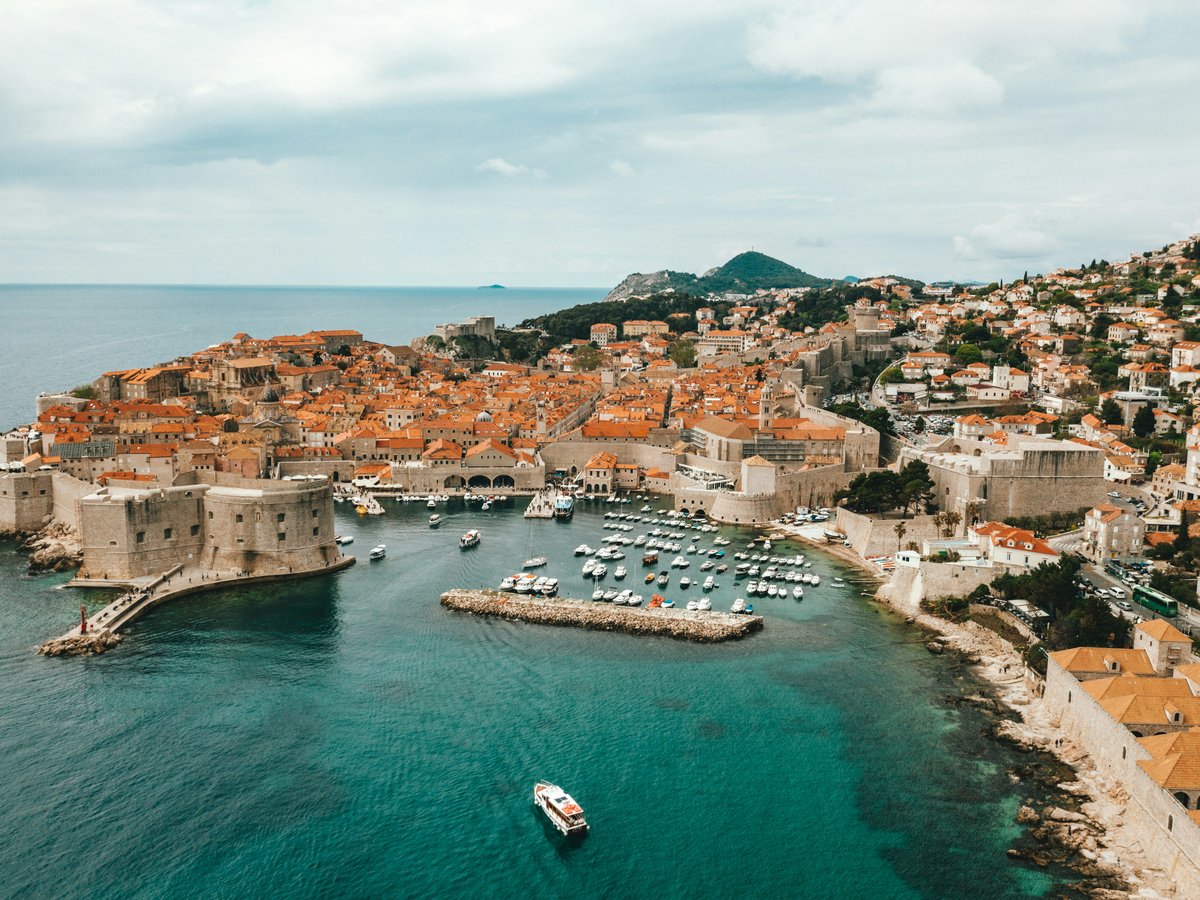
Stay in Dubrovnik in August
75 hotels in the Trip.com pool for Dubrovnik, from US$54 a night.
Opens Trip.com on Fri 6 Aug to Sun 8 Aug 2027; change the dates there.
August in Dubrovnik is a tale of two forces pulling in opposite directions. On one hand, the Dubrovačke ljetne igre (Dubrovnik Summer Festival) fills Fort Lovrijenac and Knežev dvor with theatre, opera, and classical concerts through August 25, and the Adriatic sits at a bathwater-warm 25°C (77°F). On the other hand, this is the single most crowded and expensive month of the year. Cruise ships unload 5,000 to 8,000 passengers per day into Stari Grad, a walled district roughly 300 metres across, and daily highs hover around 30.4°C (87°F) with that particular Adriatic humidity that clings to your skin by mid-morning.
To be fair, August is not a bad month in the way that November's 370mm of rain makes November bad. The sun is reliable, the sea is perfect, and the cultural calendar is at its peak. But you will pay 50-80% more for a hotel room than in May, you will queue 45 minutes for a walk on the City Walls that takes 20 minutes in shoulder season, and you will share Stradun with a density of people that makes actual sightseeing difficult between 10am and 5pm. The Old Town can feel less like a medieval city and more like a theme park at capacity.
If you have flexibility, June or September offer nearly the same weather at a fraction of the crowds and cost. If August is your only option, you can still have a rewarding trip. You'll need to plan around the cruise-ship schedule, commit to early mornings, and accept that spontaneity is a luxury this month does not easily afford.
Why visit in August
- The Dubrovnik Summer Festival runs through August 25, with nightly performances in open-air venues like Fort Lovrijenac and the atrium of Knežev dvor. Tickets for headline opera performances typically sell out weeks ahead.
- Sea temperature reaches 25°C (77°F), the warmest of the year, making beach days at Banje, Šulić, and Sveti Jakov genuinely comfortable without a wetsuit.
- Daylight stretches past 8pm, giving you a long window for the cable car up Srđ at golden hour without rushing dinner.
- Rainfall drops to 73mm across roughly 7 days. Most of those are brief afternoon showers that clear within an hour, so you rarely lose a full day to weather.
- Figs, peaches, and local grapes hit peak ripeness at the Gruž market, and the fish catch is at its most varied. Late-summer stonkfish and dentex appear on menus alongside sardines.
Worth knowing
- Peak cruise-ship season. Between 10am and 4pm, Stari Grad can see 6,000+ day-trippers funnelled through the Pile Gate. The City Walls become a slow-moving queue, not a walk.
- Hotel rates reach their annual maximum. A room that costs 120 EUR in May might run 200-250 EUR in August, and availability in Stari Grad and Ploče books out by early June.
- Heat plus crowds inside the Walls creates an oppressive combination. The limestone streets radiate stored heat, and shade is scarce on Stradun after noon.
- Wildfire risk rises along the Dalmatian coast in August. You might catch a day or two of haze drifting from fires on the islands or in Herzegovina, though it rarely reaches dangerous air-quality levels in the city itself.
Best for
Think twice if
August is the second-hottest month after July, with clear skies dominating. Expect around 30.4°C (87°F) for the high and 21.3°C (70°F) overnight. Humidity sits at a moderate 59%, which feels noticeable in direct sun but not tropical. The 73mm of rain falls across roughly 7 days, typically as sharp afternoon thunderstorms that pass quickly. The Adriatic is calm and warm. Wind is light, though the occasional maestral breeze picks up in the afternoon along the coast, which provides welcome relief on Lapad beaches.
Seasonal caution
- Radiant heat off Dubrovnik's limestone streets and walls can push the perceived temperature 3-5°C above the measured air temperature within Stari Grad. Carry water and plan shade breaks.
- Wildfire smoke from inland Croatia, Herzegovina, or the islands occasionally drifts over the city in August. Days with visible haze are infrequent but possible, and those with respiratory conditions should monitor local air-quality reports.
Year-round climate
Averages from the last 5 years.
| Month | Avg high (°C) | Avg low (°C) | Rainfall (mm) |
|---|---|---|---|
| Jan | 12 | 5 | 249 |
| Feb | 13 | 5 | 170 |
| Mar | 14 | 7 | 230 |
| Apr | 17 | 9 | 140 |
| May | 22 | 14 | 160 |
| Jun | 28 | 19 | 48 |
| Jul | 31 | 22 | 42 |
| Aug | 30 | 21 | 73 |
| Sep | 26 | 17 | 156 |
| Oct | 21 | 13 | 178 |
| Nov | 17 | 9 | 370 |
| Dec | 14 | 6 | 209 |
Holidays and festivals in August
Public holidays
- Victory and Homeland Thanksgiving Day and the Day of Croatian defenders(Dan pobjede i domovinske zahvalnosti i Dan hrvatskih branitelja)5 August 2027
- Assumption Day(Velika Gospa)15 August 2027
Headline events
Dubrovačke ljetne igre (Dubrovnik Summer Festival)
July 10 through August 25
Croatia's premier performing-arts festival, running since 1950, stages opera, theatre, ballet, and classical concerts in open-air venues across the Old Town. Fort Lovrijenac hosts the flagship Hamlet production most years, and the courtyard of Knežev dvor (Rector's Palace) becomes a concert hall under the stars. Over 80 performances across 70+ days.
Best things to do in August
Walk the City Walls at opening time (8am)
sightseeingThe 1,940-metre circuit atop the medieval walls offers views across terracotta rooftops to Lokrum Island and the open Adriatic. The walk takes about 90 minutes at a comfortable pace, with the Minčeta Tower as the high point. By 10am the cruise passengers arrive and the walls become a congested shuffle.
August's clear skies give the sharpest morning light for photography, and the 8am start lets you finish before the heat and crowds peak.Booking tipBuy tickets online the night before to skip the Pile Gate ticket queue. Entry is currently around 35 EUR for adults.
Swim at Šulić Beach and Buža cliff bars
beachBelow the Old Town's eastern walls, Šulić Beach is a small rocky platform with ladder access to deep, clear water. Nearby, the cliff-side Buža bars (sometimes called Buža I and Buža II) serve drinks on platforms carved into the rocks outside the walls. The water below is 6-8 metres deep and safe for jumping from the lower ledges.
Sea temperature reaches its annual peak of 25°C in August. The combination of warm water and the cliff-bar setting only works properly from July through early September.Booking tipNo reservations. Arrive before 11am for a spot at Buža II with a direct sea view. Cash only at both bars.
Kayak around the Old Town walls at sunset
water sportsSeveral operators in Pile launch guided sea-kayak tours that circle the entire walled perimeter, passing under Fort Bokar and along the base of Fort Lovrijenac. The route continues to Betina Cave beach on Lokrum's north shore before the return paddle.
August's calm seas and late sunsets (past 8pm) make the sunset kayak slot viable. The still water and low-angle light on the walls are why this has become Dubrovnik's signature activity photo.Booking tipBook at least a week ahead for the sunset departure. Morning slots are usually available with 2-3 days notice.
Day trip to Lokrum Island
day tripA 15-minute ferry from the Old Port drops you on Lokrum, a forested island with a Benedictine monastery ruin, a saltwater lake called Mrtvo More (Dead Sea), botanical gardens planted by Archduke Maximilian, and rocky swimming spots along the south shore. Peacocks wander freely.
August heat makes the shade of Lokrum's Aleppo pine forest and the cool saltwater lake feel like a rescue mission from the baking Old Town.Booking tipFerries run every 30 minutes from 9am. No overnight stays are permitted. Bring water and snacks, as the single cafe has limited options and a captive-audience markup.
Cable car to Srđ summit for sunset
sightseeingThe Dubrovnik Cable Car climbs 405 metres to the summit of Mount Srđ in under 4 minutes. The viewing platform looks straight down onto the Old Town, the harbour, and the Elafiti Islands. The hilltop also holds the Fort Imperial museum, a Napoleonic-era fortress converted into an exhibit on the 1991-1992 siege.
August's long twilight and clear skies make the golden-hour views from Srđ particularly sharp. The fort museum provides context for the war damage still visible on some rooftops below.Booking tipBuy a return ticket. The last car down runs around 9pm in August. Avoid the 6-7pm rush by going up at 5pm.
Evening performance at Fort Lovrijenac
performing artsThe fortress perched on a 37-metre cliff west of Pile Gate becomes the Summer Festival's most dramatic stage. Hamlet, performed here since 1952, uses the fortress walls as the backdrop. Other productions rotate annually. The open-air seating holds around 150, and the Adriatic crashes against the rocks below during pauses in dialogue.
The Summer Festival's August programming at Lovrijenac is the peak of the cultural calendar. Some productions run only in August before the festival closes on the 25th.Booking tipBook festival tickets through the official Dubrovačke ljetne igre website as soon as the programme is announced, usually in April. Lovrijenac performances sell out first.
Snorkel or dive at the Elafiti Islands
water sportsThe three inhabited Elafiti Islands, Koločep, Lopud, and Šipan, sit 30-60 minutes northwest of Gruž harbour by ferry. The underwater visibility in August reaches 20-30 metres, and the rocky coastlines harbour octopus, moray eels, and schools of damselfish. Lopud's Šunj Beach has the sandiest bottom for casual snorkelling.
August's water temperature (25°C) and visibility conditions are the year's best for underwater activity without a thick wetsuit. The calm seas make boat-based dive trips to outer reefs reliable.Booking tipDive operators in Gruž and Babin Kuk run daily boats to Elafiti dive sites. Book 3-4 days ahead for weekend slots.
Wine tasting on the Pelješac peninsula
food and drinkThe Pelješac peninsula, about 90 minutes north of Dubrovnik by car, produces Croatia's most regarded reds. Dingač and Postup, both from the Plavac Mali grape, grow on impossibly steep south-facing slopes above the sea. Several family cellars along the peninsula road offer tastings.
August is harvest-approach season for Plavac Mali. The vines are heavy with fruit, the tasting rooms are fully staffed, and you can see the terraced vineyards at their most photogenic before the September pick.Booking tipRent a car or join a small-group tour. Public transport to the vineyard areas is minimal. Book tasting appointments 2-3 days ahead.
What to eat in August
In season: fruit
Fresh figs (smokve)
Dalmatian figs reach peak sweetness in August. You'll find green and purple varieties at the Gruž open market, often sold still warm from the morning sun. Locals pair them with pršut and young goat cheese.
Watermelon and stone fruit
Croatian watermelons from the Neretva valley, peaches, and nectarines flood the Gruž market stalls in August. The melon tends to be sweeter and cheaper than anything you'll find in the tourist restaurants.
On menus now
Grilled sardines (sardele na žaru)
Sardine season peaks in late summer along the Adriatic coast. Restaurants in Gruž harbour and along the Lapad waterfront grill them over open charcoal, served with nothing more than olive oil, coarse salt, and lemon.
Stonski makaruli (Ston macaroni)
A hand-rolled pasta from the nearby town of Ston, traditionally served with a slow-cooked meat sauce. August is also prime oyster season in the Mali Ston channel, and several Dubrovnik restaurants feature both.
Rožata
Dubrovnik's answer to crème caramel, flavoured with rose liqueur from the Pelješac peninsula. A fixture on summer dessert menus, served chilled, which feels exactly right in August heat.
Pršut with Pelješac wine
Dalmatian dry-cured ham, sliced thin, paired with a glass of Dingač or Postup from the Pelješac vineyards 60km north. August evening temperatures make terrace wine-and-pršut the default pre-dinner ritual.
Regular events in August
Feast of the Assumption (Velika Gospa)Free
A national public holiday on August 15. Churches across Dubrovnik hold special services, and many shops and some restaurants close for the day. The Dubrovnik Cathedral (Katedrala Uznesenja Marijina) holds the main service, and some locals travel to the island of Lopud for a smaller, traditional observance.
August 15Dubrovnik Summer Festival closing ceremony
The final evening of the Dubrovačke ljetne igre features a formal closing concert, typically at the Rector's Palace courtyard or in front of the Cathedral, followed by a fireworks display over the Old Port. The programme varies by year.
August 25Linđo Folklore Ensemble summer performances
The Linđo ensemble performs traditional Dalmatian folk dances in the open-air Lazareti venue outside Ploče Gate. Performances run several times weekly through August and feature the linđo circle dance native to the Dubrovnik region.
Multiple dates throughout August, typically Tuesday and Friday eveningsDubrovnik Street Food FestivalFree
Held along the Gruž waterfront, this late-summer food event brings together local restaurants and producers. Dalmatian pršut, grilled seafood, Pelješac wines, and Konavle valley cheeses feature prominently.
Late August, typically last weekendBest places this August
Stari Grad (Old Town)
historic districtThe walled medieval core and UNESCO World Heritage site. In August, visit before 9am or after 6pm to experience the limestone streets and the Stradun promenade without the cruise-ship crowds. The early morning light on the Onofrio Fountain and the Franciscan Monastery cloister is worth the early alarm.
Stari GradLokrum Island
islandA 15-minute ferry ride from the Old Port. The botanical garden, the monastery ruins, and the Mrtvo More saltwater lake offer shade and cooler temperatures that Stari Grad cannot match in August. The rocky south shore has the best swimming spots.
Gruž Market (Tržnica Gruž)
marketDubrovnik's main open-air market operates every morning in the Gruž harbour area. August brings peak-season figs, Neretva valley watermelons, local honey, and lavender from the islands. Prices are lower than the small market inside the Old Town at Gundulićeva Poljana.
GružSveti Jakov Beach
beachA 20-minute walk east from Ploče Gate, down a steep staircase. This pebble beach sits below the Hotel Bellevue and faces back toward the Old Town, giving you the best swimming-with-a-view angle in the city. It is less crowded than Banje because the stairs deter casual visitors.
PločeLapad Bay promenade
waterfrontThe tree-lined waterfront path from the Kompas Hotel area down to the Lapad peninsula tip is where Dubrovnik residents walk in the evenings. In August, the Copacabana Beach at the peninsula's north end fills with local families. It feels distinctly less touristic than anything within walking distance of Pile Gate.
LapadWar Photo Limited
museumA small gallery on Antuninska street in Stari Grad, showing rotating exhibitions of conflict photography. It provides a counterweight to the Old Town's sometimes theme-park atmosphere, with work from the Balkans and global conflicts. Open daily in August.
Stari GradFort Imperial (Tvrđava Imperial)
museum and viewpointAtop Mount Srđ, accessible by cable car or a steep 1-hour hike. The Napoleonic-era fort now houses a museum on the 1991-1992 Siege of Dubrovnik, with shell-damage still visible on the exterior walls. The rooftop panorama covers the entire coastline from Cavtat to the Elafiti Islands.
SrđGundulićeva Poljana
square and marketThe small square behind the Cathedral hosts a morning market selling lavender sachets, local olive oil, and seasonal fruit. In August evenings, outdoor restaurant seating fills the square. It's one of the few Old Town spaces that retains some neighbourhood character even in peak season.
Stari Grad
Your packing checklist
Tick items off as you pack. Your progress saves in this browser.
All packed — have a great trip.
Insider tips
Check the cruise-ship schedule on the Port of Dubrovnik website before planning your Old Town day. On days with 3+ ships docked (common in August), visit Stari Grad only before 9am or after 5pm. On rare no-ship days, you'll have the Walls almost to yourself even at noon.
The Gruž market has better prices and better produce than the Gundulićeva Poljana market inside the walls. Locals shop at Gruž. The tourist market sells the same figs for double.
For the cheapest meal with the best view, buy pršut, bread, and wine at a Gruž deli and eat on the rocks below the Lovrijenac fortress at sunset. No restaurant in Dubrovnik offers a comparable setting at any price.
The Pile Gate entrance to the Walls is where every tour group starts, creating a bottleneck. Enter instead at the Ploče Gate side (near the Dominican Monastery) and walk the circuit counter-clockwise. You'll face fewer crowds for the first 30 minutes.
Avoid Stradun restaurants for dinner. Walk 2-3 minutes off the main street into the side alleys near Prijeko street, or better yet, eat in Gruž or Lapad where the same seafood costs 30-40% less and the clientele is mostly local.
Avoid these mistakes
- Walking the City Walls at midday. There is almost no shade on the entire 1,940-metre circuit, and the stone absorbs and radiates heat. In August, the wall surface temperature can exceed 45°C by early afternoon. Go at 8am opening or accept the risk of heat exhaustion.
- Booking a hotel inside Stari Grad without checking cruise-ship dates. On heavy days, you will struggle to even reach your hotel entrance through the pedestrian traffic between 10am and 4pm. Ploče, Lapad, or Gruž offer easier daily access and lower prices.
- Assuming you can walk in and find a table for dinner on Stradun. August evenings in the Old Town require reservations at any restaurant worth eating at, and even mediocre spots fill up. Book lunch and dinner a day ahead.
- Skipping the 1991 siege history. Many visitors treat Dubrovnik purely as a Game of Thrones set or beach destination. The Fort Imperial museum on Srđ and the war-damage markers on Old Town buildings tell the recent story of a city that was shelled within living memory. It takes 90 minutes and changes how you see the place.
Practical tips for August
Book accommodation and Summer Festival tickets by May at the latest. August in Dubrovnik does not reward spontaneity. Airport transfers fill up on peak arrival days (Saturday and Sunday), so pre-book or take the Atlas shuttle bus to Gruž and taxi from there. The Dubrovnik Card (available for 1, 3, or 7 days) bundles the City Walls, several museums, and local bus rides at a discount, but only pays for itself if you visit at least 3 museums. August 15 (Velika Gospa) is a national holiday, so expect many shops, banks, and some restaurants to close. Stock up on cash and supplies on the 14th. Dress code matters for church visits, particularly the Cathedral. Shoulders and knees must be covered. Carry a light scarf or long-sleeve top in your bag. The local bus system (Libertas) connects Gruž, Lapad, and Pile Gate reliably, but buses in August are standing-room-only by mid-morning. Consider the 15-minute walk from Lapad to Pile instead. Tap water is safe throughout the city.
FAQ
Is August a good time to visit Dubrovnik?
It depends on your priorities. August has the warmest sea (25°C), the Summer Festival is still running, and the weather is reliably sunny. But it is also the single most crowded and expensive month. If you value atmosphere, affordability, and the ability to wander without feeling herded, June or September will give you a better overall experience. If August is your only window and you plan around the crowds, you can still have a rewarding trip, though it will require more advance booking and discipline about timing your Old Town visits.
What is the weather like in Dubrovnik in August?
Expect average highs of 30.4°C (87°F) and lows around 21.3°C (70°F). Rainfall totals about 73mm across 7 days, mostly as brief afternoon thunderstorms. Humidity sits at 59%, which feels warm but manageable in shade. Inside the Old Town walls, radiant heat off the limestone can make it feel 3-5°C hotter. Evenings cool to a comfortable 22-24°C, which is why outdoor dining and waterfront walks are the default post-sunset activity.
Is Dubrovnik crowded in August?
Yes. August is peak season. On days when multiple cruise ships dock (which is most days), Stari Grad receives 6,000-8,000 day-trippers on top of the hotel and apartment guests already in the city. The City Walls become a slow queue, Stradun is shoulder-to-shoulder, and popular restaurants need advance reservations. The crowd pressure eases sharply after 5pm when the cruise passengers return to their ships. Early mornings (before 9am) are the other window of relative calm.
How far in advance should I book accommodation for August in Dubrovnik?
Three to four months ahead is a reasonable minimum for a good selection. Properties inside Stari Grad and in the Ploče neighbourhood book out earliest, often by April. Lapad and Babin Kuk apartments tend to have availability a bit longer, into May or early June. Last-minute August bookings are possible but limit you to overpriced leftovers or locations far from the Old Town.
What should I avoid doing in Dubrovnik in August?
Avoid the City Walls between 11am and 4pm, when heat and crowds are at their worst. Avoid booking restaurant-free evenings in Stari Grad, because walk-in dining is unreliable. Avoid staying inside the Old Town walls if you are noise-sensitive, as summer nightlife echoes off the stone. And avoid planning tight itineraries that depend on moving quickly through the Old Town during cruise-ship hours, because pedestrian congestion will break your schedule.
Things to Do in Dubrovnik in August
 Free cancellation
 Small Group Blue Cave and Sunj Beach Boat Tour from Dubrovnik
Outdoor experience: 4 hours, free cancellation.
via Viator Free cancellation
 Full-Day Elaphite Islands Cruise from Dubrovnik with Lunch
Day trip: 8 hours, free cancellation.
via Viator Free cancellation
 Montenegro Day Trip from Dubrovnik with Optional Boat Trip
Day trip: free cancellation.
via Viator Free cancellation
 Mostar and Kravice Waterfalls Semi-Private Tour from Dubrovnik
Day trip: 10.5 hours, free cancellation.
via Viator Free cancellation
 Blue Cave, Lopud, and Sunj Beach Speedboat Tour from Dubrovnik
Outdoor experience: 4 hours, free cancellation.
via Viator Free cancellation
 Dubrovnik Elaphiti Islands Cruise with Lunch, Drinks and Swim
Day trip: free cancellation.
via ViatorFind a flight to Dubrovnik
Live fares to Dubrovnik appear here once cookies are accepted.
Last verified by automated review (v1.7.2) on . What is automated review?