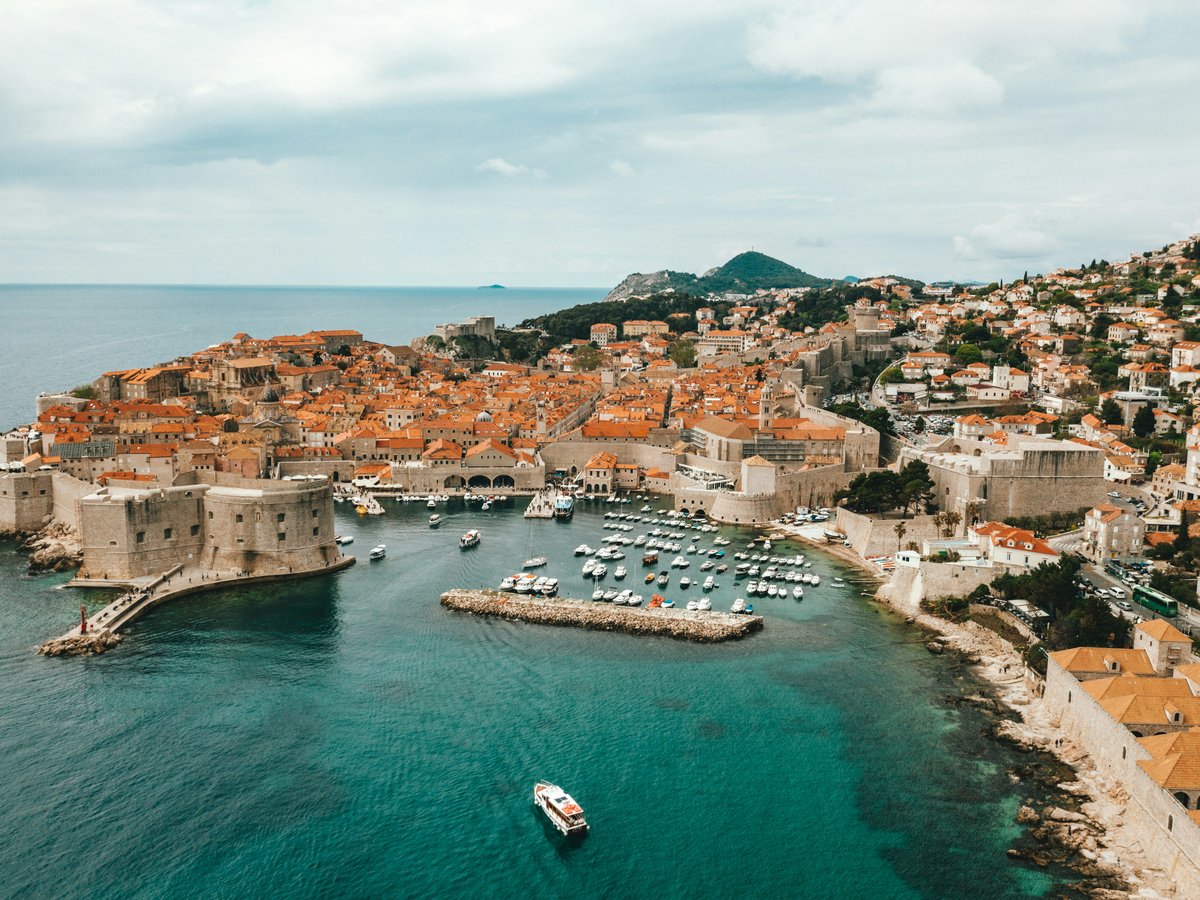
Dubrovnik's nightlife runs on a different clock than its daytime crowds might suggest. By 10 PM, most of the cruise ship visitors have retreated to their cabins, and the Old Town limestone takes on a warm amber glow under the streetlamps. The city is small, roughly 42,000 residents, and that intimacy shapes how people go out here. Locals tend to start with a long dinner around 9 PM, drift toward a bar by 11, and let the night unspool from there. In summer, from late May through September, the energy shifts noticeably as seasonal bars open along the coastline and the population temporarily doubles. But even in peak July, Dubrovnik after dark feels more like a Mediterranean town settling into its evening than a party destination trying to prove something. You'll find the drinks lean toward Croatian wines and rakija, the music drifts between house and Dalmatian pop, and the Adriatic is never more than a 5-minute walk away. Worth noting, noise ordinances inside the Old Town walls push closing times earlier than you might expect, often by 1 or 2 AM, which means the later hours migrate outside the walls or toward Lapad.
The Bar Scene in Dubrovnik
The cocktail bar culture in Dubrovnik has been growing steadily since around 2018, though it still feels like a young scene compared to Zagreb or Split. Inside the Old Town walls, you'll find a handful of places mixing proper cocktails with Croatian spirits. Travarica, the herb-infused rakija, turns up in a surprising number of house drinks. Expect to pay between 10 and 15 euros for a well-made cocktail in the walled city, sometimes more in the spots right on Stradun. The cliff bars might be the most distinctive drinking experience in Croatia. Cut into the seaward walls on the south side of Old Town, these open-air perches sit on bare rock above the Adriatic. The smell of salt and pine carries on the breeze, and the sound of waves hitting the rocks below competes with whatever playlist the bartender has chosen. They tend to open around mid-morning and stay busy through sunset, but the golden hour between 7 and 8 PM in summer is when the light turns the water a deep copper. Mind you, drinks here are not cheap, and the seating is essentially concrete ledges and cushions. No table service at most of them. Wine bars have a natural advantage in Dubrovnik. The Pelješac peninsula, about 50 kilometers northwest, produces Dingač and Postup, two of Croatia's most respected red appellations from the Plavac Mali grape. A glass of Dingač in the Old Town runs around 8 to 12 euros. For whites, Pošip from Korčula appears on nearly every list. The better wine bars carry bottles from smaller Dalmatian producers that you might not see outside the region. Dive bars exist, but they tend to cluster in Gruž near the ferry port and along the backstreets of Lapad. The atmosphere is smokier, the beer cheaper, around 3 to 4 euros for an Ožujsko or Karlovačko on draft. These places fill with locals watching Hajduk Split or Dinamo Zagreb matches, and the conversation volume rises accordingly. Rooftop bars are fewer than you might assume for a coastal city. A couple of hotel rooftops in the Ploče district east of Old Town offer views back toward the walls, and the drinks tend to start around 14 euros for cocktails. The panorama at sunset is worth it once, but locals rarely return at those prices.
Clubbing in Dubrovnik
Dubrovnik is not a clubbing city in the way that Hvar or Novalja might be. The scene is small, seasonal, and heavily dependent on the summer tourist influx. That said, there are a few reliable spots. The clubs that operate inside or near the Old Town tend to be compact spaces, sometimes carved out of medieval stone cellars. The ceilings are low, the stone walls sweat when 200 people pack in, and the bass reverberates in a way that larger venues cannot replicate. Genres lean toward commercial house and techno on weekends, with occasional turbo-folk nights that pull a younger Croatian crowd. Thursdays and Saturdays tend to be the busiest. Dress codes are loose by European standards. Smart casual works at most places. Clean trainers, no flip-flops, no beachwear. Some of the hotel-affiliated spots along Ploče or Lapad might expect slightly more effort, but nobody is turning away a well-dressed tourist. Bouncers at Old Town spots can be selective during peak summer weekends in July and August, though it seems to be more about capacity than exclusivity. Entry norms vary. Smaller clubs inside the walls often charge no cover before midnight, then around 10 to 20 euros after, which sometimes includes a drink. The open-air seasonal venues along the coast might charge 15 to 30 euros on nights with guest DJs. Tables and bottle service exist at a few places but feel more like an afterthought than a business model. Peak hours start late. Before midnight, most clubs feel half-empty. Things pick up around 1 AM and can run until 4 or 5 AM at venues outside the Old Town walls. Inside the walls, noise restrictions mean many places wind down by 2 AM. The after-party crowd tends to migrate toward Lapad or the beach clubs east of Ploče. To be fair, the overall scale is modest. On a Tuesday in October, you might find one place open with 30 people inside.
Live Music After Dark
Dubrovnik has a stronger classical and jazz tradition than a rock one, which makes sense given the Dubrovnik Summer Festival. That festival runs from mid-July to late August and has been staging performances since 1950, making it one of the oldest cultural festivals in southeastern Europe. Concerts happen in the Rector's Palace courtyard, on Lokrum island, and atop the Lovrijenac fortress. These are ticketed events, often 20 to 50 euros, and they sell out. Outside festival season, live music takes a quieter form. A few bars in the Old Town host acoustic acts on weekend nights, typically a guitarist or a small ensemble playing Dalmatian klapa harmonies. Klapa is Croatia's UNESCO-recognized tradition of a cappella singing, and hearing 4 or 5 voices bouncing off the stone walls of a narrow Stradun side street is genuinely striking. The harmonies are tight, the lyrics melancholic, and the sound carries in a way that amplified music never quite matches. Jazz appears intermittently. A couple of venues in the Old Town and Lapad book small combos, usually on Friday or Saturday nights through the summer months. Cover charges for these tend to be minimal or nonexistent, though drink prices might edge up slightly. Rock and indie acts occasionally pass through, but Dubrovnik sits at the end of a long coastal road, and most touring bands play Zagreb or Split instead. For electronic music, the occasional beach party or outdoor event pops up along the Babin Kuk coastline during July and August. These feel informal, closer to a house party with a sound system than a proper festival stage. Check local event listings or ask bartenders, as promotion tends to happen through Instagram stories and word of mouth rather than formal ticketing platforms.
Nightlife neighborhoods
-
Stari Grad (Old Town)
Amber-lit limestone alleys, the clink of wine glasses echoing off 13th-century stone, and the faint pulse of bass leaking from cellar bars. The crowd after 10 PM is a mix of well-dressed tourists and off-duty hospitality workers decompressing. The smell of grilled fish from late-serving konobas mixes with cigarette smoke at outdoor tables. Noise restrictions push closing times to 1 or 2 AM, which keeps the energy at a steady simmer rather than a boil.
- Best for
- Cocktails, wine bars, early-evening drinks, and couples who want atmosphere without chaos. Best on Friday and Saturday from June through September.
-
Buža (South Walls / Cliff Bars)
Bare rock ledges above the open Adriatic, the sound of waves below, cold drinks in plastic cups. No Wi-Fi, limited shade, and seating that amounts to stone shelves with thin cushions. The sunset crowd arrives around 6 PM and lingers until dark. It feels like a secret even though it has not been one since roughly 2010. Bring cash, as card machines can be unreliable.
- Best for
- Sunset drinks, travelers who want a drink with a view, and people comfortable with minimal amenities. Afternoons through early evening, May to October.
-
Lapad Peninsula
A residential neighborhood about 4 kilometers west of Old Town that takes on a casual, local-leaning energy after dark. Hotel bars along the waterfront promenade serve the tourist crowd, but the side streets behind Šetalište kralja Zvonimira hold a few spots where you'll hear more Croatian than English. The pace is slower, the prices are lower, and the last-call culture stretches later since noise restrictions are less strict than inside the walls.
- Best for
- Budget-conscious drinkers, locals' bars, late-night options past 2 AM. Any night of the week in summer, weekends in shoulder season.
-
Ploče
East of the Old Town's Ploče Gate, this district includes the Banje Beach area and a few upscale hotel bars with views back toward the city walls. The crowd tends older and better dressed than Lapad. Cocktails start around 12 to 15 euros, and the terraces catch the evening breeze off the open sea. Some seasonal beach bars here operate through summer with DJ sets on weekend nights.
- Best for
- Upscale drinks, hotel rooftop bars, date nights with a view of the illuminated walls. Thursday through Saturday, June through September.
-
Gruž
Dubrovnik's working harbor, where ferries depart for the Elafiti islands and Korčula. The bar scene here is functional rather than scenic. A few spots near the Gruž market cater to ferry workers, fishermen, and locals who want a 3-euro beer without the Old Town markup. The atmosphere is unpolished, the TVs show football, and the rakija pours heavy. It feels like an actual Croatian port town, which in the walled-city context passes for authenticity.
- Best for
- Cheap drinks, local atmosphere, a pint before or after a ferry. Weekday evenings year-round.
Safety after dark
Dubrovnik is generally safe after dark, and violent crime against tourists is uncommon. The Croatian Ministry of Interior's statistics consistently rank Dubrovnik-Neretva County among the lower-crime regions in the country. That said, a few things are worth keeping in mind.
Pickpocketing picks up in the Old Town during peak summer months, particularly in crowded spots along Stradun and near the Pile Gate entrance. Keep your phone and wallet in a front pocket after dark, especially in crowded bar areas.
Drink spiking, while not a widespread problem, has been reported occasionally across Croatian tourist cities. The standard precautions apply. Keep your drink in hand, do not accept drinks from strangers, and watch your glass being poured. If you feel suddenly and disproportionately intoxicated, tell a friend or ask bar staff for help.
Getting home is straightforward in the compact city center. The Old Town is entirely walkable, and Lapad is a 15-minute taxi ride or a 40-minute walk along the coast road. Uber operates in Dubrovnik, and local taxis are metered. A ride from Old Town to Lapad typically runs 10 to 15 euros after midnight. Agree on the fare or confirm the meter is running before departure. The local bus system runs until around 11 PM on most routes, which makes it useful for getting to the bars but not for returning from them.
One scam to watch for involves unofficial taxi drivers near the Pile Gate area late at night quoting inflated fares to tourists who have been drinking. Use a ride-hailing app or walk to the official taxi stand near the Old Port.
The steep, polished limestone streets inside the walls get slippery when wet or when morning dew settles. Wearing flat shoes with decent grip saves your dignity and possibly your ankles on the walk home at 2 AM.
Practical tips
- Tipping
- Croatia does not have a strong tipping culture compared to North America. Rounding up the bill or leaving 10% at a bar is appreciated but not expected. For cocktails, leaving the small change from a 10 or 20-euro note is standard. At table-service spots in the Old Town, 10 to 15% is generous and will be noticed.
- Cover charges
- Most bars in Dubrovnik do not charge a cover. Clubs sometimes charge 10 to 20 euros on weekend nights in July and August, often with one drink included. Special event nights with guest DJs might run higher. Outside peak summer, cover charges are rare. If a place charges more than 25 euros with no lineup listed, it is likely overcharging tourists.
- Cash versus card
- Croatia adopted the euro on 1 January 2023, which simplified things considerably. Most bars in the Old Town accept cards, but the cliff bars and some smaller spots in Gruž and Lapad still prefer cash. Carry at least 30 to 40 euros in small bills for the first night out. ATMs inside the Pile Gate and on Stradun charge variable fees, so withdraw from a bank-affiliated machine in Lapad or Gruž if possible.
- When to go out
- Dubrovnik runs late by northern European standards. Arriving at a bar before 10 PM means you'll have the place largely to yourself. The dinner-to-bar transition happens around 10:30 to 11 PM. Clubs fill up after midnight and peak around 1:30 to 2 AM. Sunday through Wednesday, expect a quieter scene. Thursday marks the start of the weekend for many locals.
- What to drink
- Ordering a rakija shows you have done your homework. Travarica, the herb variety, is the Dalmatian standard. Orahovac, made with green walnuts, tastes like a bitter-sweet dessert spirit and appears on most menus. For wine, ask for Plavac Mali from Pelješac or Pošip from Korčula. Ožujsko is the ubiquitous Croatian lager at around 3 to 4 euros a draft. Craft beer has arrived but remains a niche interest.
- Seasonal closures
- Dubrovnik's nightlife is heavily seasonal. From November through March, a significant number of bars and nearly all clubs close entirely. The cliff bars shut down around mid-October when the weather turns. If you visit in winter, focus on the year-round spots in the Old Town and Lapad. The city feels genuinely quiet after dark in January, with perhaps 4 or 5 places open past 10 PM.
FAQ
What time do bars close in Dubrovnik's Old Town?
Most bars inside the walls close between 1 and 2 AM due to noise ordinances enforced by the city. In summer, a few places might stretch to 2:30 AM on weekends, but don't count on it. For later nights, head to Lapad or the venues outside the walls where restrictions are looser and closing times can extend to 4 or 5 AM.
Is Dubrovnik's nightlife good outside of summer?
It is limited but not dead. From October through April, the seasonal venues close and the cruise crowds disappear. A handful of bars in the Old Town and Lapad operate year-round, and they tend to feel more local during the off-season. Friday and Saturday nights in the shoulder months of May and October still have decent energy. December brings a winter festival to Stradun with outdoor stalls and mulled wine, which creates its own kind of evening atmosphere.
Do I need to dress up for bars and clubs in Dubrovnik?
Generally no. Smart casual works at almost every venue in the city. Clean shoes, no beachwear, and you'll be fine in 95% of places. The hotel bars in Ploče might expect slightly more effort. The cliff bars are the opposite extreme, where shorts and sandals are standard. Dubrovnik does not have the door culture of cities like Berlin or London.
How do I get home safely after a night out in Dubrovnik?
The Old Town is compact and entirely walkable, so if you're staying inside or near the walls, you can walk. For Lapad or Babin Kuk, Uber operates in Dubrovnik and is generally reliable. Official taxis queue near the Old Port and Pile Gate. A late-night ride to Lapad costs around 10 to 15 euros. Avoid unofficial drivers who approach you near the gates, as they tend to quote inflated prices.
What is the legal drinking age in Croatia?
The legal drinking age in Croatia is 18. ID checks are inconsistent at bars but more common at clubs, especially in summer when the tourist crowd skews younger. Carry a passport or a photo of your passport's ID page if you look under 25.
Can I buy alcohol late at night in Dubrovnik?
Croatia restricts off-premises alcohol sales between 11 PM and 6 AM, though enforcement varies. Convenience stores and supermarkets in the Old Town typically stop selling alcohol at 11 PM. Some shops in Lapad and Gruž might be less strict, but don't count on finding a bottle of wine after midnight outside of a bar or restaurant.
Last verified by automated review (v1.7.2) on . What is automated review?