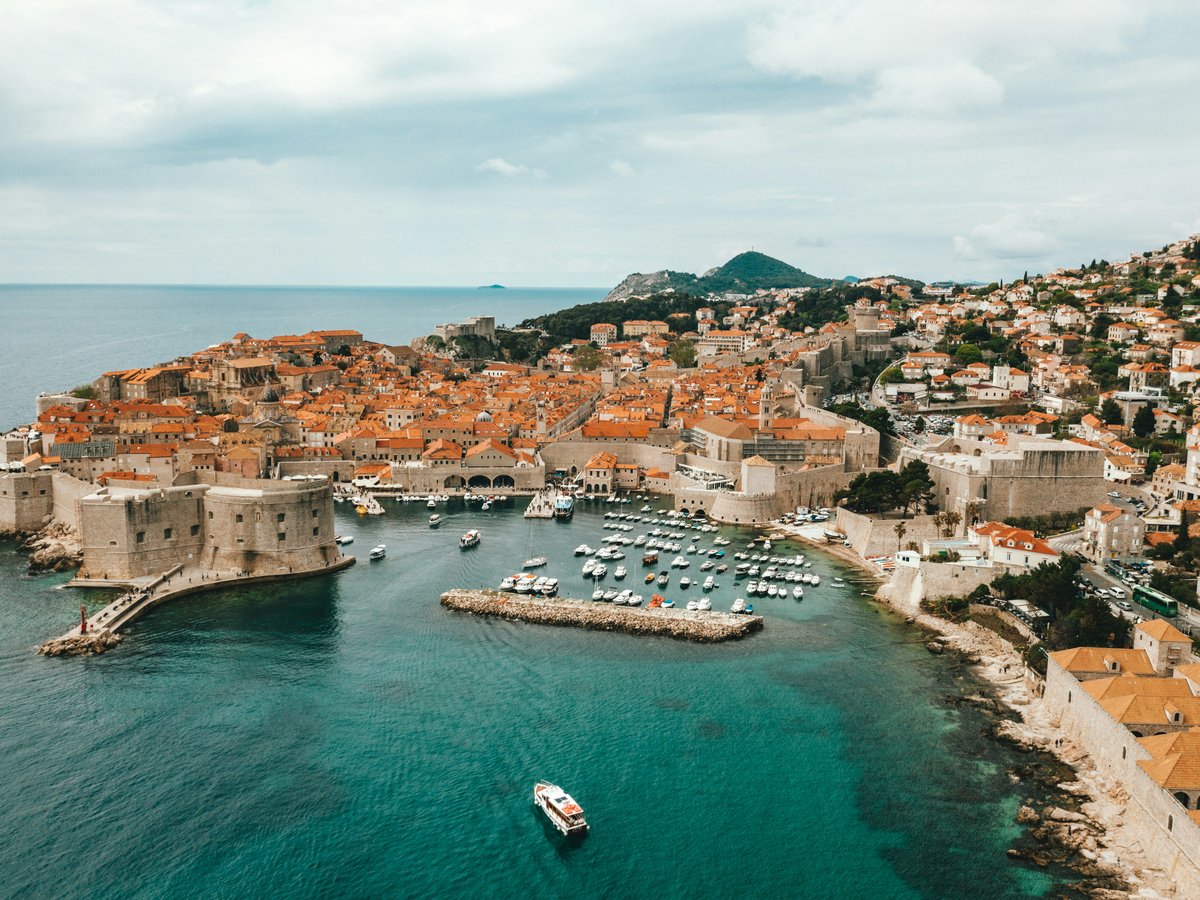
Dubrovnik is not a city you visit for bargain hunting. The Old Town, ringed by its 13th-century walls, tilts heavily toward tourism, and prices reflect that. Most of what you'll find along the Stradun tends toward the generic, the kind of lavender sachets and Game of Thrones magnets you could pick up in Split or Hvar without noticing the difference. That said, if you know where to look, there's a quieter layer of local craft underneath. Coral jewelry from the Adriatic has been worked in this part of Croatia for centuries, and Dubrovnik still has a handful of goldsmiths carrying on the tradition. Embroidered linens from the Konavle valley, south of the city, show up at the Gunduliceva Poljana market most mornings. Local liqueurs, particularly rozata-flavored ones and herb-infused rakija from the Peljesac peninsula, tend to be the souvenirs that get consumed rather than collecting dust. Worth noting, Dubrovnik is a compact city for shopping. You can cover the main areas on foot in a single afternoon.
Shopping districts
-
Stradun (Placa)
highThe limestone-paved main street runs roughly 300 meters from Pile Gate to the Clock Tower. It's the first thing every visitor walks, and the shops know it. You'll find international brands alongside souvenir stalls selling dried lavender, ceramic tiles, and Croatian football jerseys. Rents here are the highest in the city, so independent shops have mostly been pushed out over the past decade. The foot traffic is constant from about 9 a.m. onward in summer, and the polished stone underfoot gets slippery after rain. A few jewelry shops near the Sponza Palace end still carry locally made coral and silver pieces, though you'll want to ask whether the coral is Adriatic-sourced or imported.
Best for: Browsing, mainstream souvenirs, coral jewelry if you choose carefully
-
Od Puca and Prijeko Side Streets
mid-range to highStep off the Stradun into the narrow side streets running north toward Prijeko, and the atmosphere shifts. Od Puca in particular has a cluster of smaller shops selling Croatian wines, olive oils from Korcula and Peljesac, and handmade cosmetics using Dalmatian herbs. The stone walls keep these alleys cool even in July, and you'll hear less English spoken here than on the main drag. A couple of galleries along Od Puca show work by local Dubrovnik artists. Prices sit a notch below Stradun-level, though still firmly tourist-facing.
Best for: Croatian wines, olive oil, artisan cosmetics, local art
-
Gruz (Obala Stjepana Radica)
budget to mid-rangeThe Gruz neighborhood sits about 2 kilometers northwest of the Old Town, near the main port where cruise ships dock and the ferry terminal connects to the islands. Locals do their real grocery shopping here. Konzum and Tommy supermarkets anchor the area, and the waterfront promenade has a few clothing shops and pharmacies. Prices drop noticeably compared to inside the walls. The Gruz open-air market operates daily and is where Dubrovnik residents buy their produce. The smell of fresh figs and dried herbs hits you before you see the stalls.
Best for: Everyday shopping, local food products, seeing where residents spend their money
-
Lapad Peninsula
mid-rangeLapad is the hotel district, stretching along a bay about 4 kilometers west of the Old Town. Setaliste Kralja Zvonimira, the main pedestrian promenade, has a string of small shops selling beachwear, sunscreen, and Croatian-made sandals. It's not a destination for serious shopping, but if you're staying in Lapad, you'll find a few boutiques with locally designed clothing between the ice cream stands. The vibe is relaxed and residential, more flip-flops than fine goods.
Best for: Casual beachwear, convenience shopping if staying in the Lapad hotel zone
-
DOC Mall (Dubrovnik Old City periphery)
budget to mid-rangeSituated near the Pile Gate entrance, this small commercial area has a Billa supermarket and a few shops selling electronics and everyday items. It's where visitors pick up water bottles before entering the walls and where locals grab supplies without paying Old Town markup. Nothing glamorous, but functional. The air conditioning is a relief after walking the walls in 35-degree August heat.
Best for: Practical supplies, snacks, and avoiding Old Town prices on basics
Markets
-
Gunduliceva Poljana Market
food and artisanThis open-air market fills the square behind St. Blaise's Church every morning. Farmers from the Konavle valley and nearby villages lay out seasonal produce, dried figs, local honey, homemade rakija, lavender bundles, and embroidered tablecloths. The quality of the Konavle embroidery varies. Some pieces are genuinely handworked and might take weeks to produce, while others are machine-made imitations. Asking the seller about the origin tends to sort it out quickly. The citrus fruits in winter months are particularly good. By early afternoon the stalls are mostly packed up.
Daily, roughly 7 a.m. to 1 p.m., strongest selection on Saturday mornings
-
Gruz Market (Trznica Gruz)
foodThe larger, less photogenic sibling of Gunduliceva Poljana. Gruz market sits near the port and ferry terminal. This is where Dubrovnik residents do their weekly fruit and vegetable shopping. You'll find whole wheels of Pag cheese, smoked meats from the interior, seasonal produce at local prices, and occasionally wild-caught fish from the morning boats. The covered section has butchers and cheese vendors. It smells like stone fruit in summer and woodsmoke in winter. Prices here run about 30 to 40 percent lower than inside the walls for the same products.
Daily, roughly 6 a.m. to 2 p.m., busiest on weekday mornings
-
Lazareti Craft Market
artisanThe Lazareti complex, a row of 17th-century quarantine buildings east of Ploce Gate, periodically hosts artisan markets and cultural events. Local craftspeople sell ceramics, jewelry, leather goods, and textiles. The schedule is irregular and tends to cluster around summer months and the Dubrovnik Summer Festival period (July through August). The stone arched interiors stay cool, and the setting itself is worth seeing even if nothing catches your eye. Check local event listings before making the walk.
Irregular, most frequent June through September, often tied to festival programming
-
Antique and Flea Stalls near Boninovo
fleaNot a formal market, but a small, somewhat sporadic gathering of vendors selling secondhand goods, old postcards, Yugoslav-era coins, vintage jewelry, and miscellaneous bric-a-brac. It appears most reliably on weekends during the warmer months along the road near Boninovo. The selection is unpredictable. Some weekends you'll find 3 sellers, other times closer to 10. Bargaining is expected here, and sellers seem to enjoy the back-and-forth.
Weekends, roughly April through October, weather-dependent and inconsistent
Souvenirs worth bringing home
The Konavle embroidery is probably the most distinctive thing you can bring back from Dubrovnik. Genuine pieces use silk thread on linen and the geometric patterns are specific to villages south of the city. A real handworked runner might cost upward of several hundred kuna's equivalent in euros. Croatian coral jewelry has a longer history. Dubrovnik's coral dates back to the Republic of Ragusa, and a few workshops near the Old Town still shape raw Adriatic coral into pendants, earrings, and brooches. Prices vary enormously depending on quality and whether the silver setting is handworked. Olive oil from the Peljesac peninsula and the island of Korcula tends to be excellent, and small-batch bottles make good gifts if you can get them home without breakage. Lavender products are everywhere, but they're more of a Hvar specialty that migrated up the coast. Rakija, especially herb-infused travarica or the walnut-based orahovica, is a legitimate local spirit. Bottles from small Konavle or Peljesac producers taste nothing like the mass-produced versions. Pag cheese, a hard sheep's milk cheese from the island of Pag, appears at both Dubrovnik markets and keeps well for travel. Tie-shaped souvenirs nod to the cravat's Croatian origins, though that tradition is more strongly associated with Zagreb. Avoid anything stamped 'King's Landing' unless you genuinely want a Game of Thrones fridge magnet.
Practical tips
- Bargaining
- Fixed prices in most shops, and haggling in a boutique or jewelry store on the Stradun would feel out of place. At open-air markets like Gunduliceva Poljana, sellers might round down slightly on larger purchases of produce or lavender, but aggressive negotiation is not the norm in Croatia. The flea stalls near Boninovo are the one spot where back-and-forth on price is genuinely expected.
- Tax Refunds (PDV)
- Croatia's VAT rate is 25 percent. Non-EU residents can claim a refund on purchases over a certain threshold (currently around 100 euros) from shops displaying the Tax Free sign. Ask for the Tax Free form at the time of purchase, get it stamped at customs before your flight, and process it at the refund counter or drop box at Dubrovnik Airport (Cilipi). Keep your receipts and the goods in your carry-on until after the customs stamp.
- Opening Hours
- Old Town shops catering to tourists typically open by 9 or 10 a.m. and stay open until 8 or 9 p.m. in summer. Off-season hours shrink considerably, with some shops closing by 5 p.m. or shutting entirely from November through March. The Gruz supermarkets keep longer and more consistent hours year-round, often 7 a.m. to 9 p.m. Monday through Saturday. Sunday hours are shorter across the board, and some smaller shops close entirely.
- Payment Methods
- Croatia adopted the euro in January 2023, so you no longer need to deal with kuna conversions. Card payments are widely accepted in shops and restaurants throughout the Old Town and Gruz. Market vendors at Gunduliceva Poljana and Gruz are more likely to prefer cash, though some have started accepting cards. Contactless payment works in most established shops. ATMs (bankomats) are plentiful near Pile Gate and along the Stradun.
- Cruise Ship Timing
- Dubrovnik receives up to 4 or 5 cruise ships on peak summer days, and passengers flood the Old Town between roughly 10 a.m. and 4 p.m. If you want a calmer shopping experience inside the walls, aim for early morning before 9 a.m. or after 5 p.m. The Gruz market is busiest when ships dock nearby, but it's still more manageable than the Stradun at midday.
- Carrying Purchases Home
- Olive oil and rakija bottles need to go in checked luggage if flying, and wrapping them in clothes or bubble wrap from a Gruz stationery shop is worth the 5 minutes. Dubrovnik Airport is small, so the duty-free selection is limited. If you're buying Pag cheese, vacuum-sealed portions travel better and most market sellers can point you to sealed options.
FAQ
Is Dubrovnik a good city for shopping compared to Split or Zagreb?
Honestly, not particularly. Zagreb has a much larger retail scene with more variety and lower prices. Split falls somewhere in between. Dubrovnik's Old Town shops lean heavily toward tourist souvenirs, and the city's compact size limits the range. Where Dubrovnik does stand out is in Konavle embroidery and Adriatic coral jewelry, both of which have deeper roots here than in other Croatian cities. For fashion or electronics, Zagreb is the better bet.
Are Game of Thrones souvenirs worth buying in Dubrovnik?
They're everywhere, from T-shirts to replica swords to 'King's Landing' maps. The quality ranges from decent screen-printed cotton to flimsy plastic. None of it is traditionally Croatian, and most is manufactured outside the country. If you want one as a fun keepsake, fine, but it won't tell you much about Dubrovnik's actual culture. The filming locations themselves are free to walk through.
Where can I buy Croatian wine to bring home?
Several shops along Od Puca and the side streets off the Stradun specialize in Croatian wines. Look for bottles from the Peljesac peninsula, particularly Dingac and Postup reds made from the Plavac Mali grape. A decent bottle runs in the range of 15 to 40 euros depending on the producer and vintage. The Gruz market occasionally has wine from small local producers at lower prices. If you're visiting Ston or Korcula on a day trip, buying directly from a vineyard is cheaper still.
Do shops in Dubrovnik close for a midday break?
Some smaller, family-run shops still close for an hour or two in the early afternoon, particularly outside peak summer season. The larger souvenir shops and jewelry stores on the Stradun tend to stay open straight through. In July and August, almost everything stays open continuously to catch the tourist flow. The Gruz supermarkets do not close for midday breaks.
Is it safe to buy coral jewelry in Dubrovnik?
Legitimate coral jewelry is legal to buy and export from Croatia. The concern is more about authenticity than legality. Some shops sell dyed bone or plastic marketed as coral. Genuine Mediterranean red coral has a specific weight and cool-to-the-touch feel. Buying from established workshops near the Old Town, particularly those that can explain where the coral was harvested, reduces the risk. Prices for authentic Adriatic coral pieces start around 30 to 50 euros for small pendants and rise steeply for larger worked pieces.
Last verified by automated review (v1.7.2) on . What is automated review?