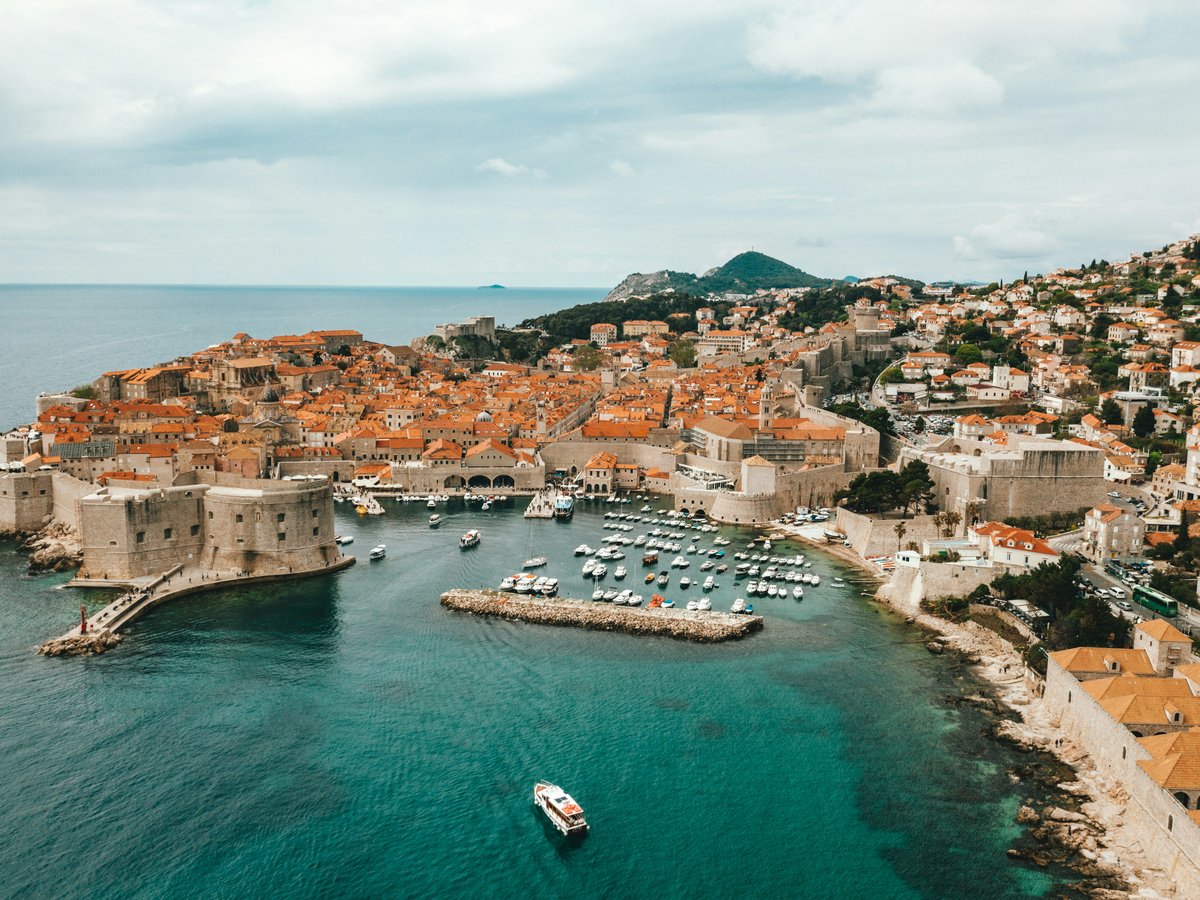
Is Dubrovnik good for digital nomads in 2026?
Dubrovnik works for focused nomads who avoid summer crowds. Hrvatski Telekom fiber delivers 50-100 Mbps in Lapad and Gruž apartments for €900-1,400/month in shoulder season. Coworking is limited to 2-3 spaces city-wide. Croatia's Digital Nomad Visa grants non-EU workers 1 year with €2,540/month income proof. Skip June-August when cruise ship crowds push rents up 40-50%.
Dubrovnik's appeal for remote workers hinges entirely on timing. This is a city of 42,000 people that receives over 1.2 million cruise passengers per year. From June through August, the Stradun fills by 10am, apartment rents in Lapad climb to €1,800/month for a 1-bedroom, and the smell of sunscreen and warm limestone hangs in the air from Pile Gate to Ploče. Come in shoulder season instead. April through May and September through October bring temperatures of 18-24°C, dry Adriatic air where you can work with the windows open and hear fishing boats puttering across the harbor. Rents drop 30-40% in these months. Hrvatski Telekom and A1 deliver 50-100 Mbps fiber to most apartments in Lapad and Gruž, with newer buildings in Ploče occasionally hitting 200 Mbps. Older properties have limestone walls 50-60cm thick that weaken wifi signals badly. Always ask your landlord for a Speedtest screenshot taken at the desk, not next to the router.
For stays of 2 weeks to 3 months, Lapad is the default neighborhood. The peninsula has 2-3 grocery stores (Tommy and Konzum) within a 10-minute walk, a pharmacy on the main road, and bus line 6 to Old Town in 20 minutes. Apartments here feel residential. You hear the metallic scrape of shutters opening at 7am, kids in the courtyard, the heavy sweetness of jasmine drifting from ground-floor gardens. One-bedrooms run €900-1,200/month in shoulder season. Gruž, around the harbor and ferry port, is rougher but cheaper at €700-1,000/month. The Gruška tržnica market runs every morning with local produce, fish still glistening, and Paški sir cheese from Pag island at about €25/kg. The tradeoff is port noise and fewer cafes. Skip Old Town for long stays entirely. No proper grocery store inside the walls, no laundromat, stone steps everywhere that turn slippery in rain, and the nearest Tommy sits outside Ploče Gate, a 7-minute uphill walk on polished stone.
Dubrovnik's coworking scene is thin. This is not Lisbon or Chiang Mai. The city has 2-3 dedicated spaces. Coworking Dubrovnik in Lapad offers hot-desks for around €150/month with air conditioning, which matters by late May when apartments without AC turn into ovens by 2pm. The Lazareti cultural center on Frana Supila hosts occasional coworking pop-ups, though hours shift by season and you should check locally before counting on it. Most nomads end up working from apartment wifi. When the walls close in, D'Vino Wine Bar on Palmotićeva has a quiet upstairs room with passable wifi for a 2-hour afternoon session. The city library on Između Polača offers free wifi and stone-wall coolness that feels 5°C below street temperature, but it closes at 15:00 on weekdays and the wooden chairs will punish your lower back after 90 minutes.
Monthly budget for a single nomad in shoulder season. Apartment in Lapad, €1,000-1,400. Coworking or cafe budget, €150-200. Groceries and home cooking, €300-350 (Konzum prices run roughly 10-15% below Western European averages). Eating out 3 evenings a week at places like Nishta on Prijeko for vegetarian plates at €12-15 or Azur near the Dubrovnik Cathedral for Asian-Mediterranean dishes at €18-25, budget €200-250. Local bus pass from Libertas, €40/month. Weekend ferry to Lokrum Island (€15 return, 15-minute crossing from Old Town port) or the bus to Cavtat (30 minutes south, €5 each way), €50-100. Health insurance, €80-120. The total lands around €1,900-2,400, or roughly $2,200-2,750 at June 2026 rates. Summer inflates this by 40-50%. Croatia adopted the euro on January 1, 2023, so arrivals from other eurozone countries skip conversion fees entirely. ATMs from Erste Bank and PBZ charge no foreign withdrawal fee on most EU debit cards.
The thing nobody tells you about nomad life in Dubrovnik is the scale. The community runs maybe 50-80 people in shoulder season, fewer in winter. If you need weekly meetups and coworking happy hours, Split sits 3.5 hours north by FlixBus (€15-20 one-way, population 170,000) with 3 times the coworking density. What Dubrovnik gives instead is focus. Quiet Lapad evenings, salt air through the window, the low hum of a fishing boat motor. Your phone works on A1 or Hrvatski Telekom 4G/5G at 30-80 Mbps, a solid backup when apartment wifi drops. Pick up a prepaid SIM at the A1 shop on Vukovarska for about €15/month with 20 GB. Power outages happen during summer storms, maybe once or twice per season. When you hear thunder rolling over the Elafiti Islands, save your work. A USB-C laptop power bank runs about €40 on Amazon and holds enough for 2-3 full charges on a MacBook Air M2.
Composite of cafe + coworking download speeds and reliability.
Apartment, coworking membership, food, and transit at a comfortable level.
Coworking spaces
- Coworking Dubrovnik, Lapad (~€150/month hot-desk)
- Lazareti Cultural Center, Frana Supila (seasonal coworking pop-ups)
- Dubrovnik City Library, Između Polača (free wifi, closes 15:00 weekdays)
Visa options
Croatia's Digital Nomad Visa (launched January 2021) grants non-EU citizens up to 1 year, tax-exempt on foreign income. Requires €2,540/month income proof, health insurance, clean criminal record. Processing takes 30-60 days. Not extendable, but reapply after 6 months outside Croatia. EU/Schengen citizens work freely since Croatia joined Schengen January 1, 2024.
Last verified by automated review (v1.7.2) on . What is automated review?