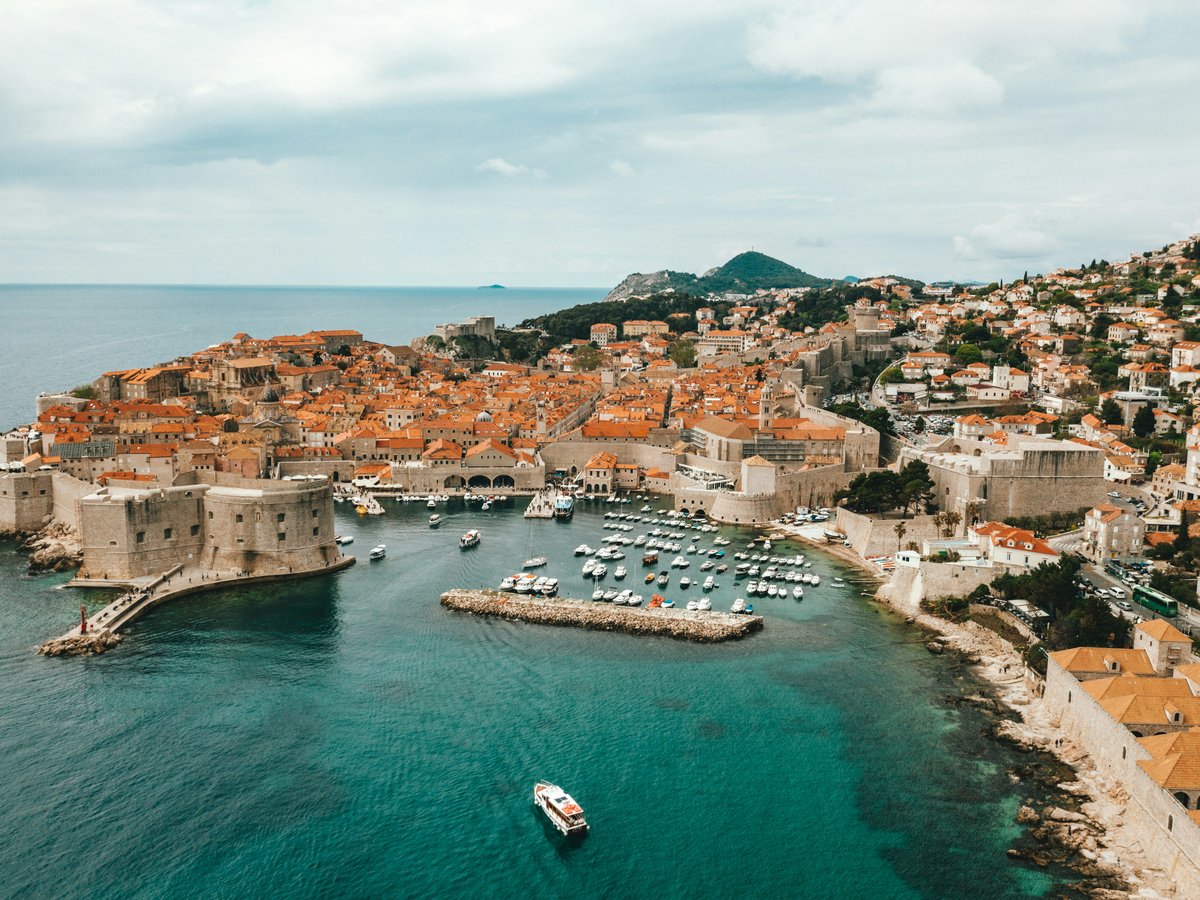
Stay in Dubrovnik in July
75 hotels in the Trip.com pool for Dubrovnik, from US$54 a night.
Opens Trip.com on Fri 2 Jul to Sun 4 Jul 2027; change the dates there.
July in Dubrovnik is a month of extremes. The Adriatic is warm, the skies are reliably clear, and the Dubrovačke ljetne igre (Dubrovnik Summer Festival) fills Lovrijenac Fortress and Rector's Palace with world-class theater and classical music. That said, this is also when the city hits its breaking point. Cruise ships deposit 8,000 to 10,000 passengers a day into a walled Old Town that measures roughly 300 meters across. Daytime temperatures reach 30.9°C (88°F) on average, and the limestone of Stradun radiates stored heat well into the evening.
To be fair, July does deliver on one thing better than any other month. The water is finally warm enough for long swims, rainfall drops to about 42mm across 3 rainy days, and the evenings cool to a comfortable 21.8°C (71°F). You'll find the Adriatic hitting 24-25°C by mid-July, perfect for the rocky coves around Lapad and Babin Kuk. But you're paying a steep premium for that privilege. Hotel rates in July typically run 50-80% above the annual average, and a waterfront dinner in Stari Grad carries a heavy markup compared to the same plate in Gruž.
The honest assessment is this. If you have flexibility, come in late May, June, or September instead. You'll get 90% of the swimming weather, 30% of the crowds, and save substantially on accommodation per night. If July is your only option, you can still have a genuinely good trip, but it requires early mornings, strategic planning around cruise ship schedules, and a willingness to eat and explore beyond the Old Town walls.
Why visit in July
- The Dubrovačke ljetne igre (Dubrovnik Summer Festival) runs from roughly July 10 through late August, staging 70+ performances of drama, opera, and chamber music inside real 15th-century fortresses and palaces.
- Adriatic sea temperatures reach 24-25°C (75-77°F) by mid-July, making this the warmest and most comfortable month for swimming along Dubrovnik's coastline.
- Rainfall is at its annual low. July averages 42mm across about 3 rainy days, so outdoor plans rarely get disrupted.
- Daylight lasts until nearly 8:45pm, giving you long evenings to walk the city walls or catch sunset from the Srđ cable car without rushing.
- Ferry connections to the Elafiti Islands (Koločep, Lopud, Šipan) and Lokrum run at peak frequency, with departures every 30-60 minutes from Gruž harbour.
Worth knowing
- Cruise ship crowds flood Stari Grad daily, particularly between 10am and 4pm. On peak days, 3 to 4 ships dock simultaneously at Gruž port, and the Pile Gate entrance becomes a bottleneck.
- Hotel and apartment prices hit their annual ceiling. A mid-range double room in Ploče or Lapad will cost significantly more than the same property charges in shoulder season months like May or October.
- The heat is real but rarely dangerous. Average highs sit around 31°C (88°F), though the radiated warmth off Old Town's stone streets can push the felt temperature above 35°C (95°F) at midday.
- Restaurant quality in Old Town's tourist-facing spots tends to drop during peak season. Kitchens are stretched thin serving volume, and markup on the Stradun frontage runs 40-60% above comparable meals in Lapad or Gruž.
Best for
Think twice if
July is Dubrovnik's driest and second-hottest month. Clear skies dominate, with an average of 3 rainy days producing about 42mm total. Humidity sits around 57%, which feels moderate by coastal Mediterranean standards. Mornings tend to start warm at 22°C (72°F), climbing to 31°C (88°F) by early afternoon. Worth noting, the limestone and stone architecture of Old Town absorbs and re-radiates heat, so the felt temperature at street level inside the walls can run 3-4°C above the reported air temperature. Evenings cool enough for comfortable outdoor dining by around 8pm.
Seasonal caution
- The UV index in Dubrovnik in July regularly reaches 9-10 (very high). Sunburn is possible within 15 minutes of unprotected midday exposure, particularly with reflection off the Adriatic and the white limestone surfaces.
- Old Town's stone streets and walls create a heat-island effect. While the reported air temperature averages 31°C (88°F), the felt temperature at street level inside the walls can reach 35°C (95°F) or higher between 11am and 3pm. Carry water and take shade breaks.
Year-round climate
Averages from the last 5 years.
| Month | Avg high (°C) | Avg low (°C) | Rainfall (mm) |
|---|---|---|---|
| Jan | 12 | 5 | 249 |
| Feb | 13 | 5 | 170 |
| Mar | 14 | 7 | 230 |
| Apr | 17 | 9 | 140 |
| May | 22 | 14 | 160 |
| Jun | 28 | 19 | 48 |
| Jul | 31 | 22 | 42 |
| Aug | 30 | 21 | 73 |
| Sep | 26 | 17 | 156 |
| Oct | 21 | 13 | 178 |
| Nov | 17 | 9 | 370 |
| Dec | 14 | 6 | 209 |
Headline events
Dubrovačke ljetne igre (Dubrovnik Summer Festival)
July 10 through August 25
Croatia's oldest and most prestigious performing arts festival, running since 1950. Over 70 performances of theater, opera, ballet, and classical music staged in open-air historic venues across the city. The opening ceremony at Lovrijenac Fortress, with the Libertas flag-raising, is the cultural highlight of Dubrovnik's year. Shakespeare's Hamlet performed on the fortress walls above the Adriatic has become a signature production.
Best things to do in July
Walk the Old Town walls at 8am opening
sightseeingThe 1,940-meter circuit atop Dubrovnik's medieval fortifications offers views across terracotta rooftops to Lokrum island. The full loop takes 60-90 minutes, with the steepest climb on the northern Minčeta Tower section. At 8am in July, you'll share the walls with maybe 40-50 other early risers rather than the 2,000+ who pack it by midday.
The 8am opening aligns with early summer sunrise light, and the stone hasn't yet absorbed the day's heat. By 10am the walls become an oven with no shade.Booking tipBuy tickets online the evening before to skip the Pile Gate ticket queue entirely.
Sea kayaking around Lokrum island
water sportsGuided kayak tours depart from Pile beach below the western walls, paddling south along the cliff face to Lokrum island, roughly 600 meters offshore. The water is glassy calm most July mornings before the afternoon maestral wind picks up. You'll paddle past the Bokar Fortress and into sea caves at the base of the walls that you can't reach on foot.
July's calm seas and water temperatures around 24°C make this the safest and most comfortable month for open-water paddling along the exposed southern coast.Booking tipBook the 8am or 9am departure. The afternoon wind and cruise ship wake make the return paddle noticeably harder after noon.
Sunset from Mount Srđ via cable car
sightseeingThe Dubrovnik Cable Car climbs 405 meters from Ploče to the summit of Srđ in under 4 minutes. The panorama from the top takes in the entire Old Town, Lokrum, the Elafiti archipelago, and on clear evenings, the Italian coastline 100km across the Adriatic. The summit also holds the Croatian War of Independence museum in the old Napoleonic fort.
July sunsets fall around 8:30-8:40pm, meaning you can ride up after the worst afternoon heat has broken. The last downhill car runs at 10pm in summer.Booking tipAvoid the 6-7pm rush when cruise passengers head up. Go at 7:30pm instead and stay for the full colour change.
Day trip to Lopud island and Šunj beach
beachLopud sits 40 minutes by ferry from Gruž harbour. The island has no cars. A 20-minute walk through olive groves and abandoned 15th-century Ragusan villas leads to Šunj, a rare sandy beach on an otherwise rocky coastline. The sand is fine and golden, the water stays shallow for 30 meters out, and a single beach bar serves cold Ožujsko beer under tamarisk trees.
Ferry frequency peaks in July with departures every 30-60 minutes. The water at Šunj reaches 25°C, and the sheltered south-facing bay stays calm even when the maestral disturbs exposed Dubrovnik beaches.Booking tipTake the first morning ferry to arrive before the day-trip boats from Old Town harbour. Return on the last evening departure to get the beach nearly to yourself after 5pm.
Evening performance at Lovrijenac Fortress
cultureThe Dubrovnik Summer Festival stages its flagship productions, typically Shakespeare or Držić, inside this 11th-century detached fortress perched on a 37-meter cliff west of Old Town. The audience of roughly 200 sits on stone benches with the Adriatic behind the stage. The salt air and the sound of waves against the cliff base become part of the performance.
The festival opens around July 10, and the Lovrijenac performances tend to cluster in the first 3 weeks. Outdoor staging requires dry evenings, which July delivers with only 3 average rain days.Booking tipTickets for Lovrijenac shows sell out weeks in advance. Check the festival website in early June when the full program publishes.
Swim at Banje Beach at dawn
beachDubrovnik's most central beach sits directly below the Ploče Gate, 200 meters from the Old Town walls. The eastern exposure means morning sun hits the beach from around 6:30am. At that hour the loungers are empty, the water is at its calmest, and you're swimming with the fortress walls and Lokrum as your backdrop. The pebbles are smooth and flat underfoot.
July water temperatures of 24-25°C make dawn swimming comfortable rather than bracing. The beach gets fully claimed by mid-morning, so the early window is the only uncrowded one.Explore the Gruž green market (Tržnica Gruž)
food and drinkDubrovnik's main produce market fills the waterfront at Gruž harbour every morning from around 6am. In July the stalls overflow with Neretva valley watermelons, Pelješac peninsula peaches, local honey from Konavle, and lavender bundles from Hvar shipped over by morning ferry. The fishmonger section at the harbour end has the morning catch laid out on ice by 7am.
Peak summer harvest means maximum variety. Figs, stone fruit, tomatoes, and peppers from the Dubrovnik-Neretva county all hit simultaneously in July.What to eat in July
In season: fruit
Fresh figs (smokve)
Dalmatian fig season starts in late June and peaks through July. You'll find green and purple figs at the Gruž market, often still warm from the tree. Locals pair them with pršut (Dalmatian dry-cured ham) and young sheep's cheese from Pag island. The combination of sweet, salty, and creamy is hard to improve on.
On menus now
Grilled Adriatic squid (lignje na žaru)
July is peak season for smaller, tender squid pulled from the waters around the Elafiti Islands. Restaurants in Gruž and along the Lapad coastline grill them whole over charcoal, served with blitva (Swiss chard) and potatoes drizzled in olive oil. The char on the tentacles gives off a smell that drifts across every harbour-facing terrace after sundown.
Rozata (Dubrovnik crème caramel)
This Dubrovnik-specific custard dessert flavored with rose liqueur from the Pelješac peninsula appears on nearly every restaurant menu year-round, but July brings versions made with local seasonal egg yolks at their richest. The texture sits somewhere between flan and panna cotta, with a burnt caramel bitterness on top.
Stonsko malostonske kamenice (Mali Ston oysters)
The oyster beds at Mali Ston, 55km northwest of Dubrovnik, produce year-round but July's warm waters yield a particular plumpness. Day-trip boats from Gruž harbour run to the Pelješac peninsula, where you can eat them raw with lemon at waterside stalls.
Regular events in July
Dubrovnik Street Food FestivalFree
A week-long open-air food market on the Gruž waterfront featuring Dalmatian street food vendors, live music, and local craft beer. Runs alongside the early Summer Festival period.
Mid-JulyFeast of St. James (Sveti Jakov)Free
The parish church of Sv. Jakov in Višnjica (eastern Dubrovnik) hosts a local patron saint celebration with outdoor mass, traditional klapa singing, and neighbourhood feasting around July 25.
July 25Best places this July
Lokrum island
natureA forested island nature reserve 600 meters offshore, reachable by a 10-minute ferry from Old Town harbour. Botanical gardens planted by Archduke Maximilian in the 1860s, a saltwater lake called the Dead Sea (Mrtvo More) for swimming, and peacocks wandering the Benedictine monastery ruins.
offshoreLovrijenac Fortress
historic siteAn 11th-century detached fortress on a 37-meter sea cliff, 200 meters west of Pile Gate. Known as Dubrovnik's Gibraltar. Houses Summer Festival performances and offers views directly down onto the western harbour and the Old Town walls from above. The inscription above the gate reads 'Non Bene Pro Toto Libertas Venditur Auro' (Freedom is not sold for all the gold in the world).
PileRector's Palace (Knežev dvor)
museumA 15th-century Gothic-Renaissance palace on Pred Dvorom street, originally the seat of the Republic of Ragusa's government. The atrium with its arched colonnade hosts chamber music concerts during the Summer Festival. The museum inside holds the original keys to the city gates and Ragusan pharmacy jars from the 14th century.
Stari GradBanje Beach
beachThe closest beach to Old Town, sitting directly below Ploče Gate with a view of Lokrum island. Smooth pebbles, clear water reaching 24-25°C in July, and a beach bar built into the cliff. Morning is the only time you'll have any space.
PločeWar Photo Limited gallery
museumA 2-floor photography gallery on Antuninska street in Old Town dedicated to conflict photography from the Croatian War of Independence and global conflicts. The building still shows shrapnel damage from the 1991-92 siege. Open seasonally, May through September.
Stari GradTrsteno Arboretum
gardenA Renaissance garden 18km northwest of Dubrovnik, originally planted in 1492 by the Gučetić noble family. Two 500-year-old Oriental plane trees with 60-meter canopies mark the entrance. The Neptune fountain, baroque aqueduct, and terraced olive groves overlook the sea. Featured as the Tyrell gardens in Game of Thrones.
Trsteno (day trip)
Your packing checklist
Tick items off as you pack. Your progress saves in this browser.
All packed — have a great trip.
Insider tips
The Dubrovnik Card (1-day, 3-day, or 7-day versions) bundles the walls, Rector's Palace, Lokrum ferry, and city bus transport into one ticket. In July, the time savings alone from skipping individual queues makes it worthwhile even if you only visit 3 of the included sites.
Check the Port of Dubrovnik website or the Dubrovnik Cruise Port app each evening for the next day's ship schedule. Days with 0-1 ships mean Old Town is manageable by 9am. Days with 3-4 ships are best spent on Lopud, Lokrum, or the Lapad beaches instead.
The city walls allow entry from 3 gates (Pile, Ploče, and the Maritime Museum near St. John's Fortress), but almost everyone enters at Pile. Walking clockwise from the Ploče entrance gives you the best views first and a less crowded start.
Buža Bar (the cliff bar) has 2 locations. Buža I on the southern wall is smaller and quieter. Buža II is the famous one everyone queues for. Both charge the same for drinks, but Buža I has better swimming access off the lower rocks.
The number 6 bus from Pile Gate to Lapad runs every 12-15 minutes and costs the same flat fare as any city route. Lapad's seaside promenade has 8-10 restaurants with waterfront tables serving the same Dalmatian menu as Stari Grad, at considerably lower prices and no reservations needed in most cases.
Water taxi boats to Lokrum depart from the Old Port every 15-20 minutes in July, but the LAST return boat leaves Lokrum at 7pm. Missing it means an expensive private boat call or a very creative solution.
Avoid these mistakes
- Attempting Old Town sightseeing between 10am and 4pm on a multi-ship cruise day. The narrow streets around Stradun become genuinely impassable, and the walls walk queue at Pile Gate can exceed 45 minutes. Shift to mornings or late evenings.
- Booking accommodation inside the Old Town walls without realizing that July heat turns the stone buildings into ovens, most lack proper air conditioning, and luggage must be hand-carried up steep limestone steps from the nearest gate.
- Skipping sunscreen for the walls walk because it is overcast. The UV index in Dubrovnik in July remains high even under cloud cover, and the 90-minute exposed circuit with no shade can produce serious burns.
- Eating dinner on Stradun or Prijeko street without checking reviews. These blocks have the highest foot traffic and the least incentive to earn repeat customers. The food is often reheated and marked up heavily. Walk 5 minutes to Od Puča street or take the bus to Gruž.
- Trying to visit Lokrum, the walls, the cable car, and a beach all in one day. Each requires 2-3 hours minimum including transit and queues in July. Two activities per day is realistic. Three is exhausting in the heat.
Practical tips for July
Book Dubrovnik Summer Festival tickets and any sea kayaking excursions at least 2-3 weeks ahead of your July dates. Restaurant reservations at popular spots like Nautika, Proto, or Pantarul in Lapad should be made 3-5 days in advance. The city walls open at 8am and the Srđ cable car runs until 10pm through July and August. Gruž harbour ferries to the Elafiti Islands depart from around 9am, with the last return typically at 7:30pm. City buses (Libertas Dubrovnik) serve Lapad, Babin Kuk, and Ploče every 12-20 minutes but get crowded between 5-7pm. Swimming shoes are genuinely useful on the rockier beaches south of the Old Town, particularly Sveti Jakov and Bellevue, where sea urchins sit in the shallows.
FAQ
Is July too crowded to enjoy Dubrovnik?
It depends on your tolerance and planning. The Old Town between 10am and 4pm on cruise ship days is genuinely unpleasant, with narrow streets packed shoulder-to-shoulder. But early mornings (before 9am), evenings (after 6pm), and days with fewer ships docked are still manageable. Basing yourself outside the walls in Lapad or Babin Kuk and treating Old Town as a targeted visit rather than your home base makes the biggest difference.
Can you swim in the sea in Dubrovnik in July?
The Adriatic reaches 24-25°C by mid-July, which is warm enough for long comfortable swims. Banje Beach below Ploče Gate is the closest to Old Town, Sveti Jakov is a quieter alternative 15 minutes east on foot, and the Lapad peninsula has multiple pebble coves. Šunj beach on Lopud island (40 minutes by ferry) is one of the few sandy options. Jellyfish are uncommon but not unknown in July.
How hot does it get inside the Old Town walls?
The official average high is 30.9°C (88°F), but the polished limestone streets, high stone walls, and lack of tree cover create a localised heat-island effect. Street-level felt temperature between 11am and 3pm commonly reaches 35°C (95°F). The narrow side streets off Stradun offer some shade, and Onofrio's Fountain provides cold drinking water near the Pile Gate entrance.
What time should I walk the city walls to avoid crowds?
8am when the gates open. By 9:30am the first cruise ship passengers begin arriving at Pile Gate, and by 11am the walls are heavily trafficked. The full circuit takes 60-90 minutes. If you miss the morning window, try 5-6pm when cruise passengers have returned to their ships and the light softens. Avoid midday entirely as there is zero shade on the exposed ramparts.
Is it worth going to the Dubrovnik Summer Festival?
If you have any interest in theater, classical music, or opera, it is the highlight of Croatian cultural life. Performances run in venues like Lovrijenac Fortress, the Rector's Palace atrium, and various church courtyards around Old Town. The setting is genuinely extraordinary. Tickets for headline shows (particularly Hamlet at Lovrijenac) sell out well in advance, but smaller chamber music concerts and fringe events often have same-week availability.
Things to Do in Dubrovnik in July
 Free cancellation
 Small Group Blue Cave and Sunj Beach Boat Tour from Dubrovnik
Outdoor experience: 4 hours, free cancellation.
via Viator Free cancellation
 Full-Day Elaphite Islands Cruise from Dubrovnik with Lunch
Day trip: 8 hours, free cancellation.
via Viator Free cancellation
 Montenegro Day Trip from Dubrovnik with Optional Boat Trip
Day trip: free cancellation.
via Viator Free cancellation
 Mostar and Kravice Waterfalls Semi-Private Tour from Dubrovnik
Day trip: 10.5 hours, free cancellation.
via Viator Free cancellation
 Blue Cave, Lopud, and Sunj Beach Speedboat Tour from Dubrovnik
Outdoor experience: 4 hours, free cancellation.
via Viator Free cancellation
 Dubrovnik Elaphiti Islands Cruise with Lunch, Drinks and Swim
Day trip: free cancellation.
via ViatorFind a flight to Dubrovnik
Live fares to Dubrovnik appear here once cookies are accepted.
Last verified by automated review (v1.7.2) on . What is automated review?