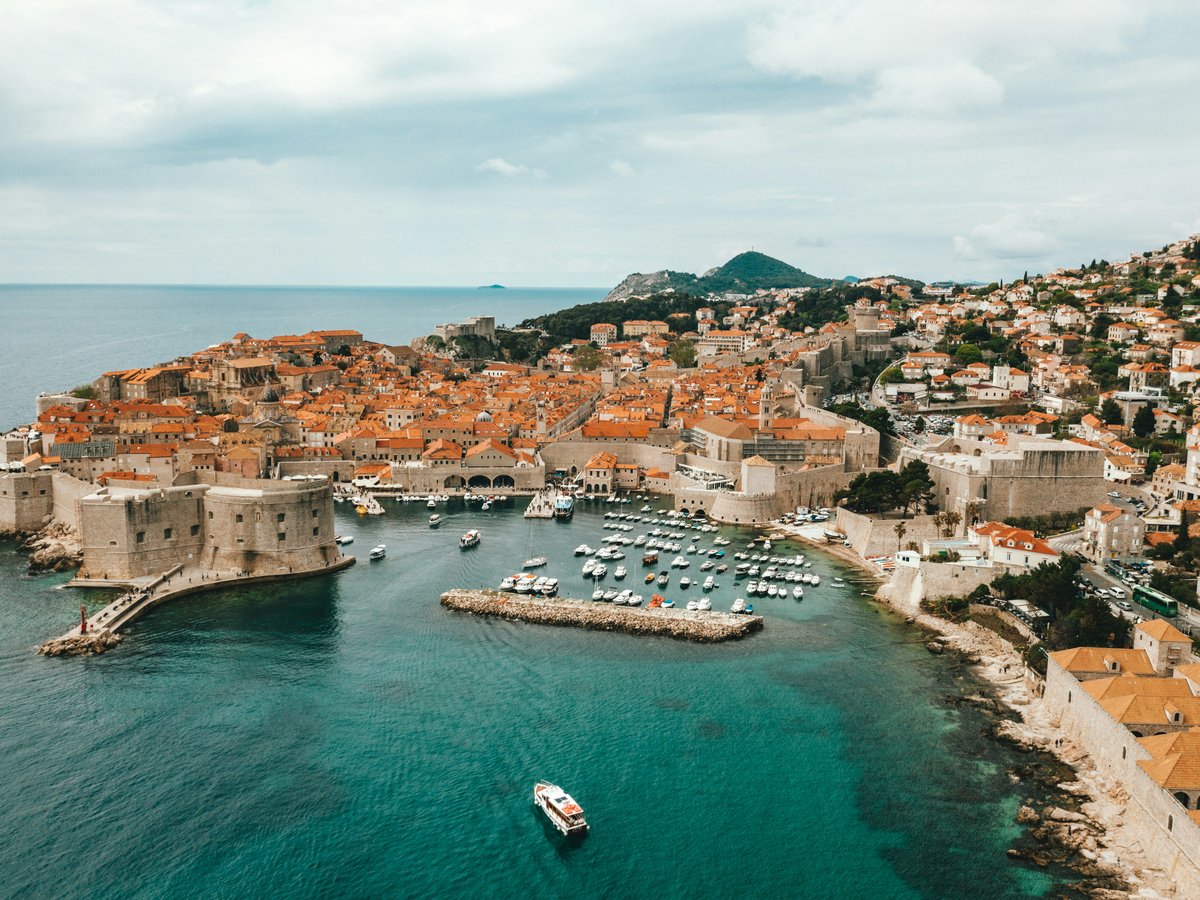
Stay in Dubrovnik in February
75 hotels in the Trip.com pool for Dubrovnik, from US$54 a night.
Opens Trip.com on Fri 5 Feb to Sun 7 Feb 2027; change the dates there.
February in Dubrovnik belongs to the locals. The city's patron saint festival, Festa Svetog Vlaha, falls on February 3rd and has been a UNESCO Intangible Cultural Heritage event since 2009. For that single day and the ceremonies around it, the Old Town fills with processions, traditional costumes, and a warmth that has nothing to do with the weather. The rest of the month? Expect daytime highs around 13°C (56°F) that drop to near 5°C (41°F) after dark, with about 170mm of rain spread across 9 days. A good number of restaurants and hotels in Stari Grad close from November through March, so you'll find shuttered storefronts along the Stradun.
That said, there's a case for February if you know what you're getting into. This is Dubrovnik at its cheapest and emptiest. You can walk the Gradske Zidine (City Walls) with maybe a dozen other people instead of the 4,000-per-day summer crowds. Hotel rates tend to sit 50-60% below July and August prices. The light is different too, softer and lower, and the limestone of the Old Town takes on a pale gold tone you won't see under the hard summer sun.
Mind you, this is not a beach month. The Adriatic sits around 14°C (57°F) in February, and the bura wind can make even a sunny afternoon feel raw. Several boat excursions to the Elafiti Islands and Lokrum run limited schedules or stop entirely until April. If you need warm water and outdoor dining on every corner, wait until June. But if you're after quiet exploration, good food in the konobas that stay open, and a genuine local celebration on the 3rd, February has more to offer than most people assume.
Why visit in February
- Festa Svetog Vlaha on February 3rd is a genuine UNESCO-listed celebration with street processions, flag-throwers from across Dalmatia, and free concerts on the Stradun. You won't find this atmosphere any other month.
- Hotel rates drop 50-60% below peak season. A room in Lapad that runs 200-300 EUR per night in July might go for 80-120 EUR in February.
- The City Walls, Knežev Dvor (Rector's Palace), and Franjevački Samostan (Franciscan Monastery) are nearly empty. No queues, no cruise ship crowds, no shuffle-pace walking on the walls.
- February gets about 170mm of rain, which is less than November (370mm), January (249mm), or March (230mm). It's one of the drier winter months, though 9 rainy days still means you'll get wet.
Worth knowing
- Roughly 40-50% of restaurants and shops in the Old Town close for winter. Gruž and Lapad have more year-round options, but the dining scene is a fraction of what it is in summer.
- Lokrum Island is closed to visitors from November through March. Several boat tours to the Elafiti Islands either stop running or operate only on weekends with weather-dependent cancellations.
- The bura wind, a cold northeasterly, can blow hard enough to make the 13°C air temperature feel closer to 5°C. It tends to come in sharp bursts lasting 1-3 days, and when it's blowing, outdoor sightseeing on the walls or at Tvrđava Lovrijenac becomes genuinely uncomfortable.
- Daylight is limited to about 10.5 hours, with sunset around 5:30 PM. Afternoon plans get cut short.
Best for
Think twice if
February sits in the middle of Dubrovnik's wet season, though it's drier than the months on either side of it. Expect cool, changeable days. A typical pattern might be 2-3 overcast or rainy days followed by a stretch of crisp sunshine. Morning fog sometimes fills the harbour at Gruž before burning off by 10 AM. The bura wind can arrive without much warning and drop the wind chill by 8-10 degrees. Humidity at 71% makes the cold feel heavier than the thermometer suggests. You'll likely get a few genuinely pleasant afternoons with temperatures touching 15°C in sheltered spots along the Stradun.
Seasonal caution
- The bura wind can produce gusts over 100 km/h (62 mph) in exposed areas, particularly along the City Walls and at the Pile Gate entrance. On bura days, the walls may close for safety. Check with the ticket office at Pile or Ploče before heading up.
- Wet limestone surfaces throughout the Old Town, especially the Stradun's polished stone, become dangerously slippery during and after rain. Falls are common enough that the local hospital sees a noticeable uptick in winter.
Year-round climate
Averages from the last 5 years.
| Month | Avg high (°C) | Avg low (°C) | Rainfall (mm) |
|---|---|---|---|
| Jan | 12 | 5 | 249 |
| Feb | 13 | 5 | 170 |
| Mar | 14 | 7 | 230 |
| Apr | 17 | 9 | 140 |
| May | 22 | 14 | 160 |
| Jun | 28 | 19 | 48 |
| Jul | 31 | 22 | 42 |
| Aug | 30 | 21 | 73 |
| Sep | 26 | 17 | 156 |
| Oct | 21 | 13 | 178 |
| Nov | 17 | 9 | 370 |
| Dec | 14 | 6 | 209 |
Headline events
Festa Svetog Vlaha (Feast of St. Blaise)
February 3 (with ceremonies on February 2 and continuing February 4)
Dubrovnik's patron saint celebration, held continuously since 972 AD and inscribed on UNESCO's Intangible Cultural Heritage list in 2009. The procession carries the relics of Sveti Vlaho (St. Blaise) through the Old Town, with trombunjeri (traditional musket bearers) firing blanks, flag-throwers performing on the Stradun, and delegations arriving from towns across Dalmatia and Herzegovina. The preceding day features a ceremonial release of white doves at Orlando's Column. Free concerts and folk performances fill Luža Square through the evening.
Best things to do in February
Walk the Gradske Zidine (City Walls) without crowds
sightseeingThe 1,940-metre circuit of the City Walls is Dubrovnik's defining experience, and in February you might share it with 20-30 people instead of the 4,000-plus daily visitors in July. The full loop takes about 90 minutes at a comfortable pace. The views toward Lokrum and down into the terracotta rooftops are sharper in winter's clear post-rain light. Stop at the Minčeta Tower, the highest point, for a 360-degree panorama.
Crowd levels drop to roughly 1% of peak summer. No waiting, no shuffling, and you can stop for photographs without blocking foot traffic.Booking tipCheck the winter opening hours before heading up. The walls typically open at 9 AM and close at 3 PM in February, much earlier than the 7:30 PM summer closing.
Attend the Festa Svetog Vlaha procession
culturalThe February 3rd procession starts at the Cathedral (Katedrala Uznesenja Blažene Djevice Marije), winds through the Stradun past the Sponza Palace, and ends at the Church of St. Blaise on Luža Square. Trombunjeri fire muskets, flag-throwers perform choreographed routines with heavy silk banners, and the archbishop carries the reliquary containing the saint's skull, throat bones, and arms. Locals in traditional dress line the route. The atmosphere is more solemn than carnival, though food stalls and music follow in the evening.
It happens on February 3rd, every year without exception since 972 AD. This is Dubrovnik's most important annual event and it only occurs in February.Booking tipNo tickets needed. Arrive at the Stradun by 9:30 AM to get a good viewing position along the procession route. The ceremony at the Cathedral starts at 10 AM.
Day trip to Mali Ston for oysters
food_and_drinkMali Ston sits at the base of the Pelješac Peninsula, about 55 km from Dubrovnik. The town's sheltered bay has produced oysters for over 2,000 years. February falls in peak harvest season, and several waterfront restaurants serve them raw or baked with breadcrumbs and cheese. You can also walk a restored section of the 5.5-km Walls of Ston, often called Europe's second-longest defensive wall, with almost no one else on them. The bus from Dubrovnik takes about 75 minutes.
February water temperatures in Malostonski Bay produce the fattest, most flavorful oysters of the year. The cold water concentrations of glycogen in the oyster tissue give them a richer sweetness than summer harvests.Booking tipThe bus from the Gruž bus station runs 2-3 times daily in winter. Check the Libertas Dubrovnik schedule ahead of time, as departures can shift.
Explore Knežev Dvor (Rector's Palace) and the city museums
culturalThe Rector's Palace, a 15th-century Gothic-Renaissance building on Pred Dvorom, served as the seat of the Republic of Ragusa. The ground floor atrium with its carved capitals is worth the entrance alone. In February, the museum rooms, including the original Rector's chambers and a collection of Ragusan-era clocks and portraits, are yours to wander through slowly. The combined museum ticket also covers the Ethnographic Museum in the Rupe granary and the Maritime Museum in Tvrđava Svetog Ivana.
Summer visits to the Rector's Palace are crowded and rushed, with groups cycling through every 15-20 minutes. In February, you can spend a full hour studying the stonework details and reading the exhibition texts without pressure.Booking tipThe winter combined museum ticket (valid for 7 days at multiple sites) costs less than the summer single-entry price. Buy it at the Rector's Palace ticket office.
Hike Srđ Hill via the Serpentina trail
outdoorThe zigzag footpath from the Old Town up to the 412-metre summit of Srđ takes about 45 minutes. February's cooler temperatures make the exposed, shadeless switchbacks far more comfortable than the brutally hot summer climb. At the top, the Napoleonic-era Fort Imperial houses the Croatian War of Independence Museum, and the terrace offers a view straight down into the walled city and out across the Elafiti archipelago. On clear February days, you can see the coast of Italy.
Summer temperatures on the exposed Serpentina trail regularly top 38°C (100°F), making the hike unpleasant or dangerous. February's 10-13°C (50-56°F) range is close to ideal hiking temperature for this steep, sun-exposed route.Booking tipThe Dubrovnik Cable Car to the summit may operate on limited winter hours or close for maintenance in February. Check the official schedule before counting on it. The hiking trail from behind the Buža Gate is always open.
Dubrovnik Carnival (Karneval)
culturalIn the weeks before Lent, Dubrovnik holds its own modest Carnival celebrations. The tradition dates back to the Republic of Ragusa era, and while it's a fraction of the scale of Venice or Rijeka, it includes masked parades through the Stradun, children's costume events in Pile, and the burning of the Carnival effigy (Vlaho the Carnival King) on Shrove Tuesday. Local families turn out in force, and the atmosphere feels genuinely communal rather than performative.
Carnival falls in February or early March depending on the liturgical calendar. In 2026, Shrove Tuesday falls on February 17th, placing the main Carnival events in mid-February.Booking tipNo advance booking needed. Events center on the Stradun and Luža Square, mostly between 10 AM and 8 PM on the weekend before Shrove Tuesday.
Visit the Franciscan Monastery pharmacy and library
culturalThe pharmacy inside Franjevački Samostan (Franciscan Monastery), near the Pile Gate entrance to the Old Town, has operated continuously since 1317, making it one of the oldest functioning pharmacies in Europe. The attached museum displays medieval pharmaceutical instruments, hand-painted ceramic apothecary jars, and the monastery's library collection. February's quiet means you can examine the 14th-century cloister columns, each carved with a different design, without tour groups blocking the view.
In summer, the narrow cloister fills with 200-300 visitors per hour. In February, you might find yourself alone with the carved columns and the monastery cat.Booking tipOpen mornings only in winter, typically 9 AM to 2 PM. Confirm hours at the monastery entrance before walking over.
What to eat in February
In season: fruit
Neretva Valley mandarins
The Neretva River delta, about 100 km northwest of Dubrovnik, produces Croatia's mandarin orange crop. February catches the tail end of the season. You'll find them at the Gruž market (Gradska Tržnica) for 1-2 EUR per kilogram, noticeably sweeter than imported citrus.
On menus now
Pašticada
Dalmatia's signature slow-braised beef stew, marinated in wine vinegar and prošek (local dessert wine) for 24 hours before cooking with dried plums, root vegetables, and cloves. It's a cold-weather dish that the konobas in Stari Grad and Gruž keep on the menu from October through March. February's chill makes it especially welcome after a morning on the walls.
Zelena menestra (green menestra)
A hearty Dubrovnik-specific stew made from multiple types of smoked pork (often including a local sausage called kobasica) with kale and other greens. It's traditionally a winter dish, closely associated with the Festa Svetog Vlaha celebrations on February 3rd. The recipe varies by family, and several Old Town restaurants serve their own version through winter.
Rozata
Dubrovnik's version of creme caramel, flavored with rose liqueur (ružica) from the Dubrovnik Republic-era recipe. It's available year-round, but February's quieter restaurants tend to give it more care. The texture should wobble, and the caramel should have a faint bitterness against the rose. The restaurant at Knežev Dvor has been serving a version for decades.
In markets
Stonske kamenice (Ston oysters)
Mali Ston, about 60 km north of Dubrovnik, has been farming oysters since Roman times. February is peak harvest season in the cold, nutrient-rich waters of Malostonski Zaljev (Mali Ston Bay). The oysters tend to be plumper and more briny in winter than summer. Several konobas in Gruž serve them fresh, typically 8-12 EUR per dozen.
Festival food
Fritule
These small fried dough balls, flavored with rakija-soaked raisins, lemon zest, and sometimes orange peel, appear at Carnival season markets and the Festa Svetog Vlaha stalls. They're served warm in paper cones, dusted with powdered sugar. February is when you'll find them freshest, made to order at temporary stands near Luža Square.
Regular events in February
Dubrovnik Carnival (Karneval)Free
The pre-Lenten carnival runs for approximately 10 days before Shrove Tuesday, with masked processions on the Stradun, children's events at various Old Town squares, street food stalls selling fritule and krostule, and the climactic burning of the Carnival effigy. Smaller in scale than Rijeka's carnival but distinctly Ragusan in character.
Early to mid-February (10 days before Shrove Tuesday, which falls on February 17 in 2026)Dubrovnik Symphony Orchestra winter concert series
The Dubrovnik Symphony Orchestra (Dubrovački Simfonijski Orkestar) holds chamber concerts at the Knežev Dvor (Rector's Palace) atrium and occasionally at the Church of St. Blaise during the winter months. Programs tend toward Baroque and Croatian classical composers. The acoustics in the Rector's Palace atrium, a stone-walled space, are surprisingly warm.
Weekend evenings throughout February, schedule published monthlyDan Državnosti preparation events (Statehood Day)Free
While Croatian Statehood Day itself falls on May 30, February sees commemorative lectures, documentary screenings, and small exhibitions at the Croatian War of Independence Museum on Srđ Hill tied to the 1991-1995 conflict. These tend to be organized by local veterans' associations and are sobering, respectful affairs.
Various dates through FebruaryBest places this February
Stari Grad (Old Town)
neighborhoodThe walled city is at its most atmospheric in February. Without the summer cruise crowds, the narrow limestone side streets, Prijeko, Od Puča, and Žudioska, feel like a living neighborhood rather than a theme park. Laundry hangs from upper windows, cats sleep on doorsteps, and you can hear your own footsteps on the polished stone. The morning light between 8 and 10 AM turns the Stradun a deep gold.
Stari GradGradska Tržnica (Gruž Market)
marketThe daily open-air market at the Gruž harbour is where locals buy groceries year-round. February offerings include Neretva Valley mandarins, local olive oil from the previous autumn's press, fresh kale and chard, smoked meats from the Konavle valley, and seasonal cheeses. It's louder and more genuine than any Old Town tourist shop. Saturday mornings are busiest.
GružTvrđava Lovrijenac (Fort Lovrijenac)
landmarkThis 37-metre-high fortress perches on a cliff west of the Pile Gate, separated from the walls by a rocky promontory. In summer it's a Game of Thrones photo queue. In February, you'll likely have the upper terrace to yourself, with views across the mouth of the Old Port and back toward the Bokar Tower. The inscription above the inner gate reads 'Non bene pro toto libertas venditur auro' (Freedom is not sold for all the gold in the world). Entry is often included with the City Walls ticket.
PileLazareti (Quarantine Complex)
culturalThis 16th-century quarantine complex, east of the Ploče Gate, was built to isolate arriving merchants during plague outbreaks. The long stone arches now house art studios, occasional exhibitions, and the Lazareti club, which hosts live music and DJ nights on weekends even in winter. It's one of Dubrovnik's few nightlife spots that stays open year-round, and the crowd skews local.
PločeLokrum Island viewpoint from Ploče
viewpointLokrum itself is closed November through March, but the viewpoint from the Ploče promenade gives you a clear line of sight to the island's Benedictine monastery ruins and dense holm-oak forest. On calm February mornings, the water between Ploče and Lokrum is so still it looks like dark green glass. Bring binoculars if you have them. The peacocks on Lokrum are sometimes visible from shore.
PločeWar Photo Limited
museumThis gallery on Antuninska Street in the Old Town shows rotating exhibitions of conflict photography from wars around the world, with a permanent focus on the 1991-1995 siege of Dubrovnik. The photographs are affecting and the curation is thoughtful. It's particularly powerful in February's quiet, when the damaged rooftops you've been walking past all day suddenly have context. Check winter opening hours, as the gallery sometimes reduces to weekends only in deep off-season.
Stari GradBabin Kuk coastal walk
walkThe walking path along the rocky shore of the Babin Kuk peninsula, past the larger resort hotels, offers 3 km of seafront with pine trees and sheltered coves. In February, the path is empty and the air smells like salt and Aleppo pine resin. It's a good 45-minute walk if you want to stretch your legs without the intensity of the Srđ climb. The sunset views toward the Elafiti Islands are worth timing your walk for.
Babin Kuk
Your packing checklist
Tick items off as you pack. Your progress saves in this browser.
All packed — have a great trip.
Insider tips
The Stradun is at its most beautiful between 7:30 and 8:30 AM in February, when low-angle sunlight hits the eastern facades and the street is empty except for locals walking dogs or heading to the Gruž market. Photographers know this window well.
Several konobas in the Gruž neighborhood stay open year-round and serve better food at lower prices than the tourist-oriented Old Town restaurants that bother opening in winter. Look along Obala Stjepana Radića, the harbour-front road, for places with Croatian-language-only menus in the window. That's usually a reliable sign.
If the bura wind picks up (you'll know because flags on the walls go horizontal and the harbor water turns choppy), skip the City Walls that day. The exposed northern section near Minčeta Tower gets genuinely dangerous wind gusts, and the ticket office sometimes closes access without warning. Use a bura day for museums instead.
The Buža bars (Buža I and Buža II), the cliff-side drinking spots outside the southern walls, typically close from November through March. Don't count on them in February. The Gradska Kavana Arsenal on Pred Dvorom stays open year-round and has an acceptable espresso.
For the Festa Svetog Vlaha on February 3rd, locals gather early at Luža Square from about 9 AM. The best vantage point is on the steps near Orlando's Column, facing the Church of St. Blaise. Arrive by 9:15 to get a spot.
Avoid these mistakes
- Booking accommodation inside the Old Town walls without checking if nearby restaurants are open. In February, your closest dinner option might be a 15-minute walk to Gruž or Lapad. Staying in Lapad or Gruž gives you more year-round dining options within walking distance.
- Assuming the Dubrovnik Cable Car to Srđ is running. It frequently closes for maintenance or weather in January and February. If the cable car is central to your plans, check the operator's website the week of your visit. The Serpentina hiking trail from behind Buža Gate is always available as a backup.
- Planning a full-day island-hopping itinerary. Winter ferry schedules are drastically reduced, Lokrum is closed entirely, and rough seas cancel crossings to the Elafiti Islands with less than a day's notice. Have indoor alternatives ready.
- Not bringing proper rain gear because the forecast showed 'partly cloudy.' Adriatic weather in February shifts fast. A morning forecast of partial sun can become a horizontal rain squall by 2 PM. Always carry a jacket and umbrella, regardless of what your weather app says at breakfast.
Practical tips for February
Book accommodation in Gruž or Lapad rather than inside the Old Town walls, since more restaurants and shops stay open year-round in those neighborhoods. Many Old Town attractions shift to winter hours in February (typically 9 AM to 2 or 3 PM), so plan your museum and monument visits for mornings. The City Walls close at 3 PM in winter, and ticket offices stop selling at 2:30 PM. Public buses run between Pile, Gruž, and Lapad throughout the year, but frequency drops to every 20-30 minutes in the off-season. The Dubrovnik Card (1, 3, or 7-day versions) covers the walls, major museums, and public transport, and the winter price is lower than summer. Dubrovnik Airport has fewer direct routes in February. Zagreb, Istanbul, and a handful of European cities maintain year-round service. Domestic connections via Croatia Airlines to Zagreb run daily. Dress in layers and carry rain protection every day. Reserve your February 3rd restaurant dinner by January if you're visiting for the Festa Svetog Vlaha, as the places that are open fill up.
FAQ
Is February a good time to visit Dubrovnik?
It depends on what you want. February is Dubrovnik at its quietest, cheapest, and most local-feeling. The Festa Svetog Vlaha on February 3rd is a genuine highlight, and exploring the Old Town without crowds has real appeal. But about half the city's restaurants and shops close for winter, the weather is cool and rainy (13°C highs, 170mm of rain), beach activities are off the table, and island excursions are limited. It's a fair month for history-focused or budget-conscious travelers. It's a poor month if you want the full Mediterranean holiday experience.
What is the weather like in Dubrovnik in February?
Expect daytime highs around 13°C (56°F) and overnight lows near 5°C (41°F). February averages about 170mm of rainfall across 9 rainy days, with humidity around 71%. Rain tends to arrive in short, sharp squalls rather than all-day downpours, though grey stretches of 2-3 days happen. The bura wind can make it feel significantly colder. You'll likely get some sunny days too, and when the sun is out and the wind is calm, 13-15°C in the sheltered Old Town streets feels pleasant enough for outdoor sightseeing.
Is Dubrovnik crowded in February?
Not at all. February is Dubrovnik's lowest-traffic month alongside January. The cruise ships that bring 4,000-10,000 day-trippers in summer have largely stopped calling. You'll share the City Walls with a handful of visitors. The exception is February 3rd, when the Festa Svetog Vlaha draws thousands of locals and some domestic tourists. Even then, the crowds are a fraction of summer levels and are gone by the evening of the 4th.
Are restaurants open in Dubrovnik in February?
Many Old Town restaurants close from roughly November through March or April. On a February evening, you might find 10-15 restaurants operating inside the walls compared to 80-plus in summer. The Gruž harbour area and Lapad peninsula have better year-round options, since those neighborhoods serve local residents, not seasonal tourists. For February 3rd (Festa Svetog Vlaha), the open restaurants fill up, so booking dinner a week or two ahead is sensible.
Can you visit Lokrum Island in February?
No. Lokrum Island closes to all visitors from November 1 through March 31. The Nature Reserve management shuts the ferry service for the entire winter period. You can see the island clearly from the Ploče promenade and the City Walls, but you cannot visit until April. The Elafiti Islands (Koločep, Lopud, Šipan) remain accessible by ferry from Gruž, though the winter schedule is reduced to 1-2 crossings per day.
Things to Do in Dubrovnik in February
 Free cancellation
 Small Group Blue Cave and Sunj Beach Boat Tour from Dubrovnik
Outdoor experience: 4 hours, free cancellation.
via Viator Free cancellation
 Montenegro Day Trip from Dubrovnik with Optional Boat Trip
Day trip: free cancellation.
via Viator Free cancellation
 Kravice Waterfalls, Mostar and Pocitelj Day Trip from Dubrovnik
Day trip: free cancellation.
via Viator Free cancellation
 Dubrovnik: 7 Caves & Blue Cave Speedboat Tour (4h)
Outdoor experience: 4 hours, free cancellation.
via Viator Free cancellation
 Dubrovnik Old Town History - Small Group Walking Tour
City tour: 1.5 hours, free cancellation.
via Viator Free cancellation
 Dubrovnik Elafiti Islands Cruise with Lunch, Drinks and Pickup
Day trip: free cancellation.
via ViatorFind a flight to Dubrovnik
Live fares to Dubrovnik appear here once cookies are accepted.
Last verified by automated review (v1.7.2) on . What is automated review?