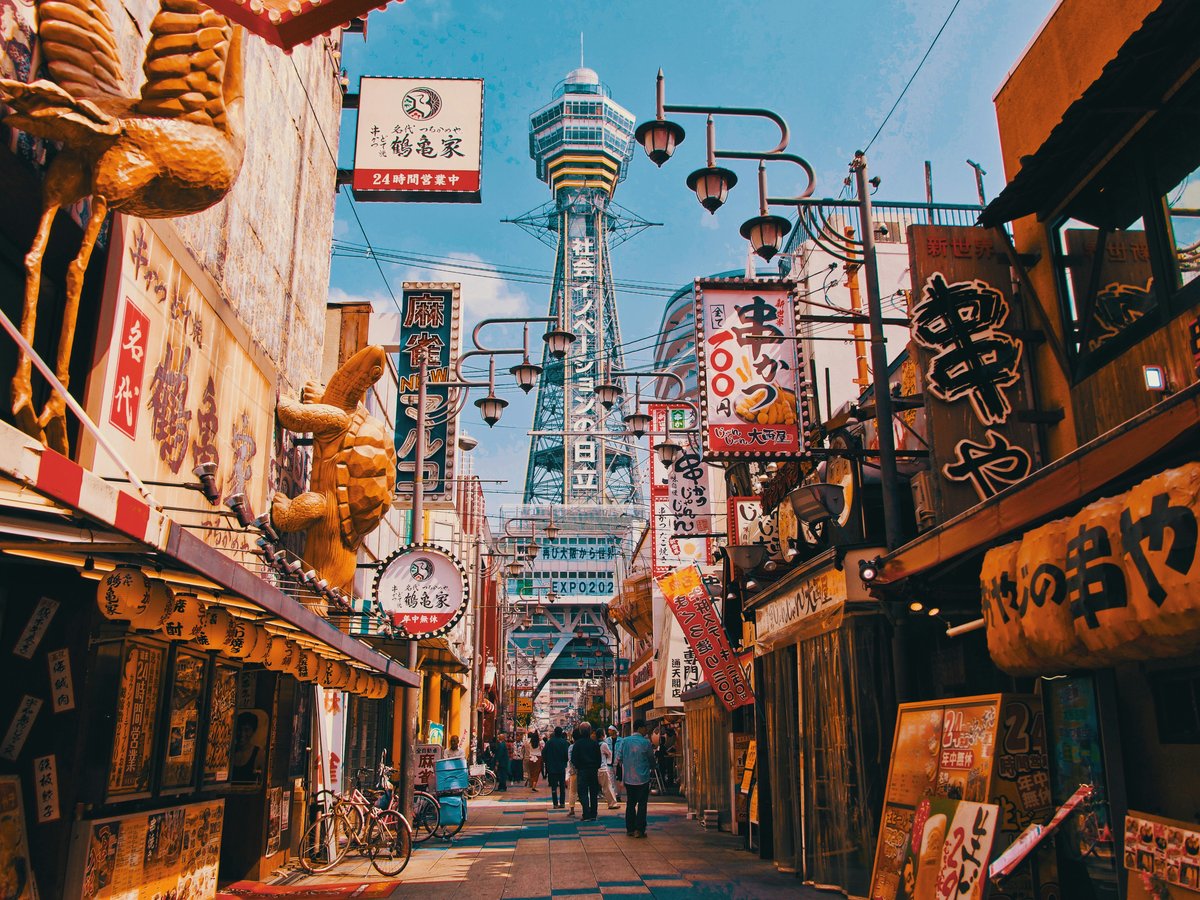
Osaka's must-see list runs mostly on age and lineage, with a few modern landmarks between them. Shitennō-ji Temple dates from AD 593, Ōsaka Tenmangū from AD 949, and the Tsūtenkaku observation tower from 1955. Three of these twelve places are outside the city, and you should know that before you plan your days: Hōryū-ji Temple and the Buddhist Monuments in the Hōryū-ji Area are in Nara Prefecture, and the Church of the Light, designed by Tadao Ando, is in Ibaraki. The rest sit in or close to the city proper, covering two Shinto shrines, a castle park that is a Special Historic Site, a national puppet stage, a 1963 cathedral, and one theater whose audience is mostly devoted fans. This list is for travellers who will give a temple a full morning, and who would rather read a heritage register than a queue board. Where a place has no street address on record, we give its map coordinates. Paste them into your phone and they will get you to the gate.
-
1 Hōryū-ji Temple
奈良県生駒郡斑鳩町法隆寺山内1-1A Buddhist temple dating from AD 607 that forms part of a UNESCO World Heritage Site
The gates of Hōryū-ji Temple open at 08:30 between late February and early November, and at 08:00 the rest of the year, onto a site that dates from AD 607. Plan for this before you book anything: it is a Buddhist temple in Nara Prefecture, not Osaka, so it takes a day out rather than a spare afternoon. It is part of a UNESCO World Heritage Site. Closing time is 17:00 in the long season and 16:30 in winter, so leave early and arrive with hours in hand. Skip the half-day coach packages that squeeze it between other stops. This place rewards a slow morning and a second lap of the grounds.
Dates from AD 607 · Part of a UNESCO World Heritage Site
-
2 Shitennō-ji Temple
大阪府大阪市天王寺区四天王寺1丁目11-18A 5-story pagoda, statues and turtle ponds at a temple built in AD 593
Shitennō-ji Temple was founded in AD 593, which puts it ahead of Hōryū-ji's 607 date and makes it one of the oldest places you can stand in Japan without leaving Osaka. The 5-story pagoda and the statues draw most of the attention, but we'd slow down at the turtle ponds and stay there. Skip the timed-entry rush at the city's headline sights and give this place a long, idle hour instead: watch the turtles, look up at the pagoda, then do another loop. Check the temple's official site, shitennoji.or.jp, before you go, and paste 34.6539, 135.5164 into your map for the walk in.
Dates from AD 593
-
3 Tsūtenkaku
大阪府大阪市浪速区恵美須東一丁目18番6号An observation tower from 1955, registered as a Tangible Cultural Property of Japan and open until 21:30 every day
Tsūtenkaku opens at 08:30 and stays open until 21:30 every day of the week. The tower dates from 1955 and is a Registered Tangible Cultural Property of Japan, a designation that tells you the country treats this mid-century landmark as heritage, not kitsch, and you should too. Skip the midday crowds: the late closing is what makes this place worth planning around, and the view after dark is the one worth climbing for. Show your driver the address, 恵美須東一丁目18番6号 in 浪速区, and check tsutenkaku.co.jp for anything that changes on the day.
Dates from 1955 · Registered Tangible Cultural Property of Japan
Hours: Mo-Su 08:30-21:30
-
4 Church of the Light
A chapel by Tadao Ando
Tadao Ando designed the Church of the Light, a chapel in Ibaraki in Osaka Prefecture, and this is the stop for people who travel for architecture, though it asks some effort of them. The church keeps its own website at ibaraki-kasugaoka-church.jp, and we'd read it before setting out, because this is a chapel first and a design pilgrimage second. Rather than trusting a romanised address, give your phone 34.8186, 135.5369 and let it route you. Skip the photo-stop drive-bys that architecture tours sell: you come here to sit inside the room, and a glance from the kerb gives you none of that.
-
5 Sumiyoshi Taisha
大阪府大阪市住吉区住吉二丁目9-89A Shinto shrine designated an Important Cultural Property of Japan
Designated an Important Cultural Property of Japan, Sumiyoshi Taisha is a Shinto shrine in Osaka Prefecture. There are two Shinto shrines on this list, and this is the one we'd cross town for. Don't let a packed afternoon push you into giving it the last hour; a shrine read in a hurry is a shrine you did not see. Come with time, walk the precinct slowly, and let it set the pace. To get there, paste 34.6125, 135.4929 into your map, and check sumiyoshitaisha.net for anything happening on the day.
Important Cultural Property of Japan
-
6 Osaka Castle Park
A 1931 park designated a Special Historic Site
Inside Osaka Castle Park, you are walking on a Special Historic Site, and the park dates from 1931. Its map pin, 34.6874, 135.5258, sits within a hair of Ishiyama Hongan-ji's at 34.6874, 135.5257, so the park and a historical Buddhist temple share one small patch of map. That is the reason to slow down rather than treat the grounds as a corridor to somewhere else: walk them and think about what stood here before the lawns. The official site, osakacastlepark.jp, carries the current notices.
Dates from 1931 · Special Historic Site
-
7 Ishiyama Hongan-ji
A historical Buddhist temple whose coordinates match those of Osaka Castle Park
Of everything on this list, Ishiyama Hongan-ji asks the most of your imagination, because it is recorded as a historical Buddhist temple in Osaka. Its coordinates, 34.6874, 135.5257, match Osaka Castle Park's latitude to the fourth decimal. Read it as a lens for the park, not as a separate errand: it won't satisfy you if you want a gate to photograph, but if you like knowing what a piece of ground used to be, stand at that pin, look around, and let the history do the work.
-
8 Buddhist Monuments in the Hōryū-ji Area
A UNESCO World Heritage Site covering the monuments around Hōryū-ji
Read this entry as the frame around Hōryū-ji Temple: the Buddhist Monuments in the Hōryū-ji Area form a UNESCO World Heritage Site in Nara Prefecture. The listing's pin, 34.6143, 135.7342, sits next to the temple's own 34.6144, 135.7342, so you are making one trip, not two. Skip the grab-a-photo-and-leave approach. The name says area, so plan to walk an area: combine it with the temple entry above, start when the gates open, and give the surrounding monuments the same patience you gave the main precinct.
UNESCO World Heritage Site
-
9 National Bunraku Theatre
A national bunraku stage that has operated since 1984
Start at the National Bunraku Theatre's official page, ntj.jac.go.jp, because this is a working theater and its calendar decides your evening. The house dates from 1984. A ticket here is the most direct way to see the art form named over the door, and it beats the dinner-show spectacles pitched at tour groups: this is a national stage, and the audience came for the performance. Book first, then build the rest of the day around the curtain. For the walk in, paste 34.6675, 135.5086 into your map.
Dates from 1984
-
10 NMB48 Theater
大阪市中央区難波千日前, 大阪市, 大阪府 542-0075The home stage listed on nmb48.com, at 難波千日前
In postal code 542-0075, the NMB48 Theater is listed at 大阪市中央区難波千日前. The name and the address are the whole case for this stop: the stage carrying the NMB48 name is in 難波千日前, and its page lives on nmb48.com. Not worth the trip for the merely curious. For fans, this address is the reason they came to Osaka. Check the theater's page before you set out, then paste 34.6646, 135.5031 into your map, or show a driver the postal code and street listing above.
-
11 Ōsaka Tenmangū
A Shinto shrine dating from AD 949 and registered as a Tangible Cultural Property of Japan
In AD 949, Ōsaka Tenmangū began as a Shinto shrine, giving it more than a thousand years in the city's story, and it is a Registered Tangible Cultural Property of Japan. Skip the bus-tour habit of ticking off shrines from the window. This one deserves a slow walk through the precinct and a few quiet minutes. Check osakatemmangu.or.jp for anything scheduled on the day, then paste 34.6960, 135.5126 into your phone and go on foot.
Dates from AD 949 · Registered Tangible Cultural Property of Japan
-
12 Grand Cathedral of the Virgin Mary of Osaka
Osaka's 1963 cathedral
Completed as a church building in 1963, the Grand Cathedral of the Virgin Mary of Osaka is the newest place of worship on this list, and it earns a visit as a counterweight to the temples and shrines: a Christian cathedral here tells a different part of the city's story. Skip the wedding-chapel imitations built for photo shoots. This is a working parish with its own website, tamatsukuri-catholic.com, so check it before you go, especially around service times. To find it, paste 34.6787, 135.5269 into your map.
Dates from 1963
Last verified by automated review (v1.7.2_fame1017b-1015-1105-20261016224644) on . What is automated review?