Stay in Split in March
71 hotels in the Trip.com pool for Split, from US$21 a night.
Opens Trip.com on Fri 5 Mar to Sun 7 Mar 2027; change the dates there.
March in Split belongs to the locals. The summer infrastructure that turns this Dalmatian city into one of the Mediterranean's busiest ports is still months from switching on. Daytime highs reach about 14.8°C (59°F), dropping to 6.9°C (44°F) after dark, and about 110mm of rain falls across 10 of the month's 31 days. The bura wind off the Dinaric Alps occasionally pushes all of this cooler. Beach bars at Bačvice sit with stacked chairs, restaurant awnings along the Riva are rolled up, and the waterfront moves at a pace that would be unrecognizable in July.
That said, the trade-off has a real upside for the right traveler. Diocletian's Palace, which absorbs upward of 10,000 cruise passengers on a peak summer day, might have a few dozen visitors on a March morning. You can stand in the Peristil without being elbowed, hear your footsteps in the Podrumi basement halls, and smell the coffee from the handful of occupied cafe tables lining the square. The green market at Pazar still runs daily. The Cathedral of Saint Domnius is open. Hiking trails on Marjan are lined with the first wildflowers of spring.
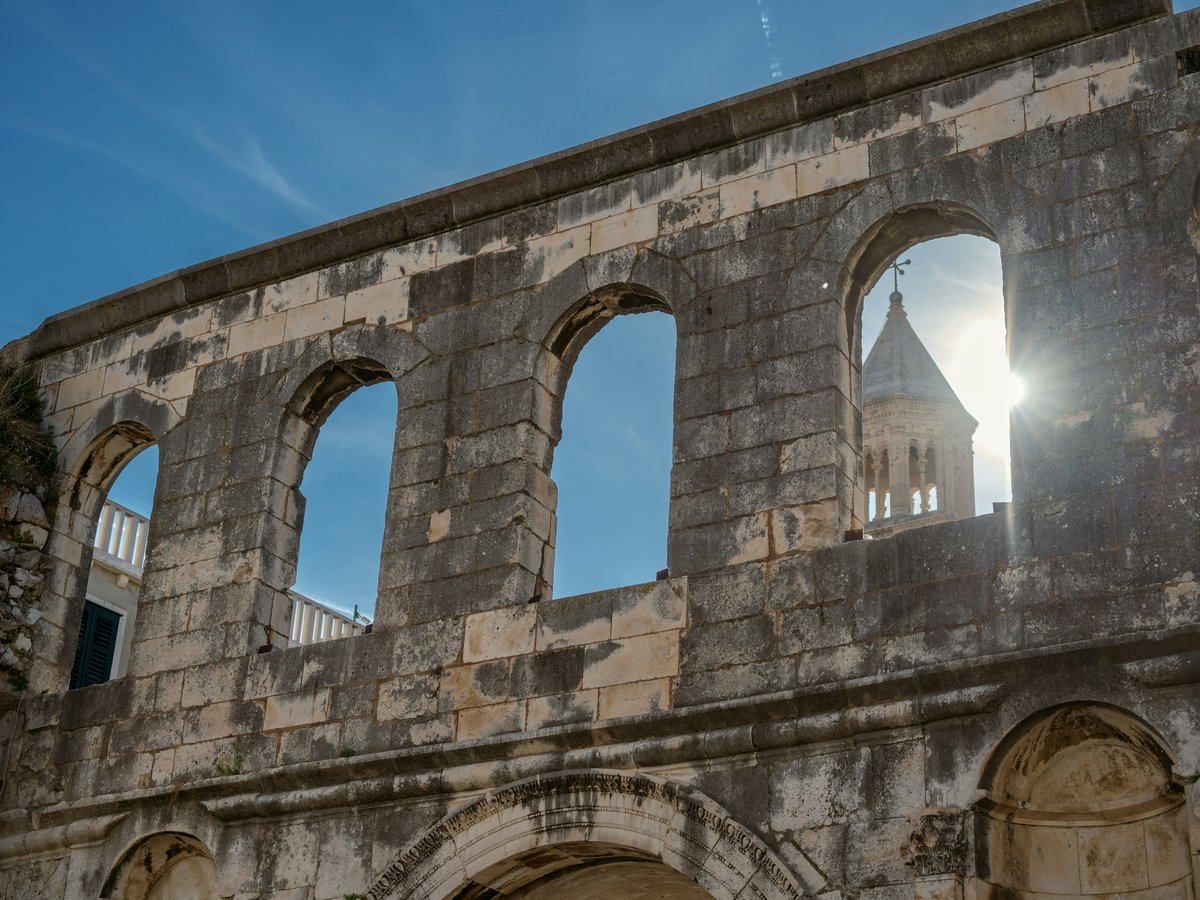
To be fair, March rewards a particular kind of visitor. If you want to see a Mediterranean city between performances, living its actual daily life rather than staging one for tourists, this is the month. If you need beaches, packed nightlife, or the full range of Dalmatian dining, wait until June. The palace courtyard, built beginning in 293 CE for Emperor Diocletian, looks different in March. Without cruise ships in the harbor, the Cathedral bell tower has the skyline to itself.
Why visit in March
- Diocletian's Palace and the Peristil hold a fraction of their summer crowds. On weekday mornings in March, you might share the courtyard with 10 other visitors rather than 10,000.
- Hotel rates typically run 50-60% below the July and August peak, making March one of the most affordable months to visit.
- Temperatures in the mid-teens make the Marjan ridge trail and the open-air ruins at Salona far more comfortable than in summer heat, when both sites offer little shade.
- The Pazar green market, neighborhood bakeries in Radunica, and year-round konobe in Varoš serve locals rather than tourists, and the pace reflects it.
- Wild asparagus (divlje šparoge) appears at market stalls and on restaurant menus in the second half of the month, a short-season Dalmatian ingredient worth timing a trip for.
Worth knowing
- Many konoba restaurants in Grad and along the Riva stay closed from November through mid-April, narrowing your dining options to the year-round establishments.
- Rainy spells arrive as multi-day stretches of grey drizzle rather than brief afternoon showers, and you should expect to lose 2-3 full days to weather that makes outdoor sightseeing unpleasant.
- Ferry service to Hvar, Vis, and Brač runs on reduced winter schedules with limited daily departures and occasional bura-related cancellations.
- The Adriatic hovers around 14°C (57°F), ruling out swimming. Beach infrastructure along the coast won't reopen until late spring.
Best for
Think twice if
Split's March weather tends toward changeable. Clear, bright stretches of 3-4 days alternate with periods of grey drizzle that blow in from the southwest. The bura, a cold katabatic wind from the northeast, can drop the perceived temperature by 5-8°C on exposed areas like the Riva and on ferry crossings. On clear afternoons, the sun is warm enough for comfortable walking in a light jacket. After 17:00, temperatures slip and sitting still at an outdoor cafe calls for an extra layer. The air after a rain spell carries salt from the harbor and pine resin from Marjan.
Seasonal caution
- The bura (a cold northeastern katabatic wind) can arrive without warning and reach gusts above 100 km/h along exposed coastal areas. During bura episodes, Jadrolinija may cancel island ferry services on short notice, and exposed seafront walks become uncomfortable and potentially unsafe. Monitor weather alerts if planning any boat travel.
Year-round climate
Averages from the last 5 years.
| Month | Avg high (°C) | Avg low (°C) | Rainfall (mm) |
|---|---|---|---|
| Jan | 12 | 5 | 162 |
| Feb | 13 | 5 | 81 |
| Mar | 15 | 7 | 110 |
| Apr | 18 | 10 | 109 |
| May | 23 | 15 | 110 |
| Jun | 29 | 20 | 49 |
| Jul | 32 | 23 | 23 |
| Aug | 31 | 22 | 76 |
| Sep | 26 | 18 | 137 |
| Oct | 22 | 14 | 110 |
| Nov | 16 | 9 | 258 |
| Dec | 13 | 7 | 157 |
Holidays and festivals in March
Public holidays
- Easter Sunday(Uskrs i uskrsni ponedjeljak)28 March 2027
- Easter Monday(Uskrs i uskrsni ponedjeljak)29 March 2027
Best things to do in March
Walk Diocletian's Palace without crowds
sightseeingThe palace is a UNESCO-listed Roman complex that forms the living heart of Split's old town. In March, you can walk the Decumanus and Cardo streets at your own pace, examine the stonework on the Golden Gate, and sit in the Peristil without competing for a bench. The scale of the structure is easier to appreciate when you are not navigating tour groups.
Summer days bring 10,000+ cruise passengers into the palace; a March morning might see a few dozen. The difference in experience is total.Hike the Marjan peninsula
outdoorsThe Marjan ridge trail stretches 3.5 km west from Varoš through Aleppo pine forest. The path rises to Telegrin at 178 meters, passing 12th-century chapels including Sv. Jere, with views over the harbor and the islands of Brač and Šolta. The smell of rosemary and pine resin stays with you the whole way.
Mid-teens temperatures are ideal for a sustained uphill walk. The same trail in July means heat exhaustion risk and no shade on exposed sections. Spring wildflowers start appearing on the lower paths.Booking tipNo booking needed. Bring water and a light jacket for the wind at the summit.
Day trip to Salona
day_tripThe ruins of Salona, ancient Roman capital of Dalmatia, spread across an open archaeological site in present-day Solin, about 5 km northeast of Split. The amphitheater, early Christian basilicas, and city wall remnants take 2-3 hours to walk through. Few visitors come in any season, and in March you may have the site entirely to yourself.
An open-air site with almost no shade structures. Cool, overcast March conditions make the walking circuit comfortable rather than punishing.Booking tipReachable by local bus from Split in about 15 minutes. No advance booking needed.
Climb the Cathedral of Saint Domnius bell tower
sightseeingThe Cathedral, originally Emperor Diocletian's mausoleum, was consecrated as a church in the 7th century. Its 57-meter bell tower offers a panoramic view over the rooftops, harbor, and the island of Brač on clear days. The stone stairway is narrow and steep. Worth the effort.
Summer waits for the bell tower regularly exceed 30 minutes. In March, you walk straight up. Clear March days produce particularly sharp light for photography from the top.Booking tipTickets available at the cathedral entrance. Open mornings and afternoons with a midday break.
Coffee ritual on the Riva
cultureSplit's signature social habit is the extended morning or mid-afternoon coffee along the waterfront Riva promenade. The ritual is about seeing and being seen. A single macchiato can stretch to 2 hours without anyone raising an eyebrow. You sit, you watch, you overhear conversations in rapid-fire Dalmatian dialect.
The social ritual runs year-round, but without tour-group overflow, the atmosphere feels more local. You will notice regulars at the same tables on consecutive days.Day trip to Trogir
day_tripThe UNESCO-listed old town of Trogir sits on a small island 27 km west of Split. Regular bus service from the main station takes about 45 minutes. Kamerlengo Castle (built 1420) guards the western end, and Trogir Cathedral (founded 1213) holds a carved Romanesque portal by the sculptor Radovan, completed around 1240.
Trogir's narrow stone streets feel claustrophobic in peak season with tour groups filing single-file. In March, you can stand back and look up at the facades and the Venetian-era details.Booking tipNo booking needed. Buses run several times daily from Split's main station. Check the return schedule, as winter service ends earlier than summer.
Explore the Podrumi (palace basement halls)
sightseeingThe substructure beneath Diocletian's Palace is one of the best-preserved Roman building complexes anywhere in the Mediterranean. The vaulted chambers mirror the layout of the imperial apartments that once stood above them. The echo in the central hall is striking when the space is empty.
Without summer crowds, you can hear the acoustics of the vaulting and take in the engineering at walking pace rather than being shuffled through.Booking tipEntrance via the southern basement door near the Riva. Modest admission fee.
Attend a Hajduk Split match at Stadion Poljud
sportStadion Poljud, built in 1979 on the northern shore of the Marjan peninsula, hosts Hajduk Split's home matches. The Torcida supporters, active since 1950 and considered one of Europe's oldest organized fan groups, fill the stands with chanting and pyrotechnics. The atmosphere is worth experiencing regardless of your interest in football.
The HNL season is in full swing by March after the winter break, and early-spring fixtures tend to carry a particular intensity as the table starts to take shape.Booking tipTickets are available at the stadium box office. Arrive 30-45 minutes early for a good unreserved seat.
What to eat in March
In season: fruit
Neretva mandarins
The tail end of mandarin season from the Neretva Delta, about 120 km southeast. Early March stalls at Pazar still carry them, sweet and fragrant with thin skins. By late March they are typically gone.
On menus now
Pašticada
Dalmatia's signature slow-braised beef, cooked with dried figs, prunes, and prošek wine until the sauce turns dense and sweet-sour. Cooler March weather makes this rich, warming plate feel right. Home-cooked versions tend to be richer than restaurant preparations.
Buzara (na buzaru)
Mussels or shrimp cooked in white wine, garlic, olive oil, and breadcrumbs. The cooler months are when Adriatic shellfish tends to be at its cleanest and most flavorful. Ask for crusty bread to soak the broth.
Street food peaks
Soparnik
A thin chard pie from the Poljica region above Split, baked between two sheets of dough and drizzled with olive oil. Market vendors and a few Varoš bakeries carry it through spring. UNESCO-listed as Croatian intangible heritage since 2007.
In markets
Divlje šparoge (wild asparagus)
Foragers harvest these thin, bitter wild shoots on the slopes of Marjan and Mosor from mid-March onward. Restaurants across Varoš serve them in fritaja (frittata) and risotto. The window is short, typically 4-6 weeks.
Regular events in March
Dan žena (International Women's Day)Free
Croatia observes International Women's Day as a social occasion carried from the Yugoslav era. Women receive small gifts, typically flowers or chocolates. Some Split cafes and restaurants run promotional menus or discounts for the occasion.
March 8Blagdan sv. Josipa (Feast of St. Joseph)Free
A Catholic feast day observed across Croatia. Some businesses close or reduce hours, and churches in Grad and Varoš hold special services. The day carries particular significance in traditionally Catholic Dalmatia.
March 19Korizmeni koncerti (Lenten Concert Series)Free
Sacred and classical music performances held in churches across Split during the Lenten period. The Cathedral of Saint Domnius and smaller churches in Varoš host weekly evening concerts. Programs vary year to year, but organ and choral works are typical.
Throughout Lent (most of March, depending on the liturgical calendar)Best places this March
Marjan
parkThe pine-covered peninsula west of the old town. In March, the lower trails are dotted with early spring wildflowers, and the 12th-century chapels (Sv. Jere, Sv. Nikola) scattered through the forest are atmospheric in the quiet season. The smell of pine and rosemary is strongest after rain.
Pazar (Green Market)
marketSplit's main outdoor produce market, set against the eastern wall of the palace. March brings wild asparagus in its first weeks, the last of the Neretva mandarins, and bundles of fresh blitva (Swiss chard). The vendors here are Split lifers. Come before 09:00 for the best selection.
GradPeristil
squareThe open-air heart of the palace. Egyptian granite columns line the east and west sides, and a sphinx from ancient Egypt sits at the southern entrance near the Cathedral. In March mornings, the square catches direct sunlight that warms the stone benches. A small but noticeable comfort at this time of year.
GradVaroš
neighborhoodThe old fishermen's quarter climbing the slope between the palace walls and Marjan. Narrow stone stairways, hanging laundry, cats on windowsills. A few small galleries and studios stay open year-round. In March, this is the neighborhood that feels most like Split living its ordinary life.
VarošHNK Split (Croatian National Theatre)
theatreFounded in 1893, the theatre runs opera, drama, and ballet through the winter cultural season. March typically features several performances, and tickets are considerably easier to get than during the busier autumn programme. The building itself, on Trg Gaje Bulata, is worth seeing from the outside.
GradKlis Fortress
fortressA medieval fortress built into a cliff pass 12 km north of Split, above the town of Klis. Used as a filming location for Game of Thrones (Meereen). March temperatures make the uphill walk to the ramparts comfortable, and the views down over Solin and the Adriatic coast are clear on dry days.
Your packing checklist
Tick items off as you pack. Your progress saves in this browser.
All packed — have a great trip.
Insider tips
The fish market (Peškarija), tucked behind the eastern wall of the palace in Grad, runs from about 06:30 to 12:00. Arrive before 08:00 for first pick of the day's catch. The stalls closest to the entrance tend to price 10-15% higher than those deeper inside, where the regulars shop.
Locals drink coffee on the Riva not for the view but for the social ritual. Sitting for 2 hours over a single macchiato is completely normal. If you order and leave in 15 minutes, you have missed the entire point of the exercise.
For a better viewpoint than the Cathedral bell tower, walk the Marjan stairs from Varoš to the Telegrin summit. The 178-meter vantage gives you the palace, the harbor, and the islands in one frame, and in March you will likely have it to yourself.
Small bakeries on Radunica street east of the palace sell burek that is fresher and cheaper than anything in the tourist-facing shops around Peristil. Go in the morning when the first batch comes out.
Avoid these mistakes
- Booking a day trip to Hvar without checking the winter ferry schedule first. March sailings via Jadrolinija often run only once or twice daily, and the bura can cancel them with limited advance warning. Check the schedule the evening before and have a backup plan.
- Packing only summer clothes because it is the Mediterranean. March nights regularly dip below 7°C, and the bura adds a real chill factor. Shorts and sandals will leave you cold by late afternoon.
- Assuming every restaurant will be open and building a food-focused itinerary with 8 or 10 stops. In March, many places on your list will still be closed for winter. Build a shorter list and ask your accommodation host what is currently serving.
- Skipping layers because the forecast reads 15°C and sunny. That temperature can feel like 8°C when the bura picks up, which it does without warning. Carry the jacket you were tempted to leave behind.
Practical tips for March
Most restaurants in Split don't serve lunch before 12:00 or dinner before 19:00, and in March some close entirely on Mondays or Tuesdays. Check ahead if a specific place matters to you. Croatia uses the euro. At current rates, 1 USD converts to approximately 0.86 EUR. Card payment is widely accepted in Grad and along the Riva, but Pazar and small neighborhood bakeries still prefer cash. Split Airport (SPU) has limited direct international connections in March, with most routes operating through Zagreb. The airport bus to the city center runs reliably and costs a fraction of a taxi. Dress modestly when entering the Cathedral of Saint Domnius or any active church, with shoulders and knees covered, though March temperatures tend to take care of that anyway. Croatia has progressed on LGBTQ+ legal protections, but Split's social climate tends to be more conservative than Zagreb's. The city scores 6 out of 10 for LGBTQ+ friendliness (sourced from TTDI's editorial rubric). Public affection between same-sex couples may attract stares in more traditional neighborhoods. Bus services from the main station near the harbor run on reduced winter schedules in March, with last departures to outlying areas ending earlier than the summer timetable.
FAQ
Is March a good time to visit Split?
March is fair for visiting Split, not ideal. You get cool but walkable weather, almost no crowds, and hotel prices well below summer rates. The honest downside is that many seasonal restaurants, beach bars, and island ferry routes operate on limited schedules or stay closed until April. It works well for travelers who want atmosphere and history over amenities and nightlife, and poorly for those who want the full Mediterranean beach experience.
What is the weather like in Split in March?
Changeable and cool. You will get stretches of clear, bright days followed by grey spells of drizzle. The bura wind from the northeast can make otherwise mild afternoons feel noticeably colder, especially along the waterfront and on ferry crossings. Pack for temperatures ranging from a chilly morning to a comfortable midday, with rain gear always accessible. The rain tends to come in multi-day spells rather than quick bursts.
Is Split crowded in March?
Not at all. March is one of the quietest months. You can walk through the palace without navigating tour groups, sit at a Riva cafe without waiting for a table, and photograph the Cathedral bell tower without other tourists in the frame. The trade-off is that the energy and nightlife of summer are absent, and some parts of the old town feel noticeably empty in the evenings.
Can you visit the islands from Split in March?
Yes, but with planning. Jadrolinija runs reduced schedules to Brač, Hvar, and Vis, sometimes with only 1-2 daily departures. Bura wind cancellations are possible, particularly on the Vis route which crosses more open water. Check schedules the night before and keep a mainland backup plan. Most island towns will be very quiet, with limited dining and accommodation options.
Is Split safe for solo travelers in March?
Split has a strong safety profile for solo visitors, as noted in the best-for recommendations. The compact old town is well-lit even in winter months, and tourist-targeted crime is rare. Standard city precautions apply around the main transport hub near the harbor after dark, but serious incidents involving tourists are uncommon. The quieter March atmosphere means more empty streets in the evening, but Grad and Varoš remain comfortable to walk through.
Things to Do in Split in March
 Free cancellation
 From Split: Krka Waterfalls, Food & Wine Tasting Tour
Day trip: 10 hours, free cancellation.
via Viator Free cancellation
 Blue Cave, Mamma Mia and Hvar, 5 Islands Speed boat Small group
Day trip: free cancellation.
via Viator Free cancellation
 From Split: Krka Waterfalls Tour, Boat Cruise & Swimming
Outdoor experience: 10 hours, free cancellation.
via Viator Free cancellation
 Blue Cave, Mama Mia and Hvar, 5 Island Speed boat Small group
Outdoor experience: free cancellation.
via Viator Free cancellation
 From Split: Plitvice Lakes National Park Guided Tour
Day trip: 11 hours, free cancellation.
via Viator Free cancellation
 Krka Waterfalls Day Tour with Boat Ride from Split and Trogir
Day trip: 8.5 hours, free cancellation.
via ViatorFind a flight to Split
Live fares to Split appear here once cookies are accepted.
Last verified by automated review (v1.7.2) on . What is automated review?