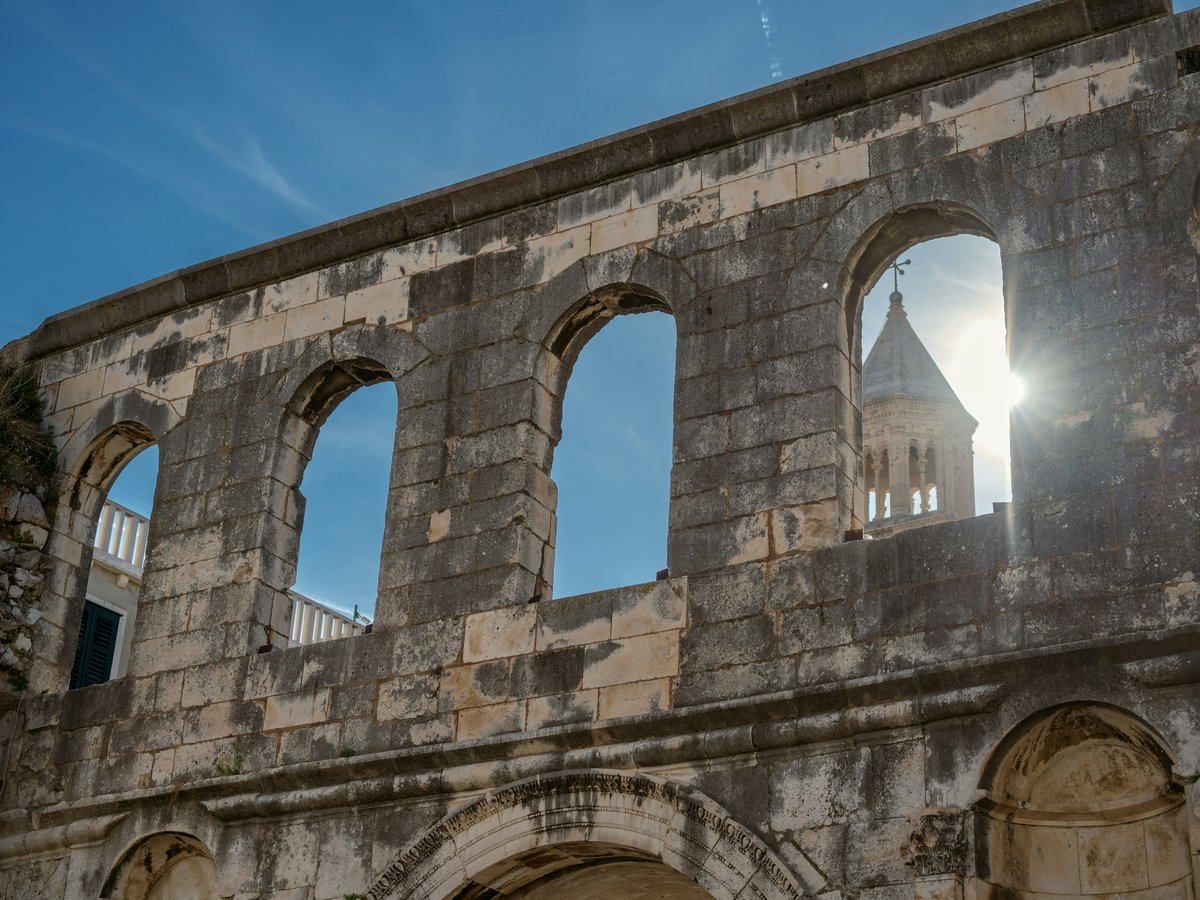
Split tends to surprise visitors who expect shopping on the scale of Zagreb or Dubrovnik. The interesting buying happens within a compact zone between the Riva waterfront and the hillside Varoš quarter, a 15-minute walk at most. Diocletian's Palace, where construction began in 293, still functions as a commercial district. Roman-era stone corridors hold independent shops selling jewelry, leather goods, and local art. Croatia adopted the euro in January 2023, so pricing feels straightforward for eurozone visitors. The real draws for shoppers are Dalmatian food products, lavender in various forms, local wines, and an open-air produce market that has run along the palace's eastern wall for well over a century.
Shopping districts
-
Marmontova ulica
mid-rangeSplit's main pedestrian shopping street runs roughly 300 meters from the Riva promenade northward toward Trg Republike. The street is named after Marshal Marmont from the Napoleonic administration of Dalmatia. It holds a mix of Croatian and international retail brands, mostly clothing, shoes, and accessories. Foot traffic builds from late morning and peaks during the evening passeggiata, when locals drift between the Riva and the shopfronts. The hum of conversation from cafe terraces breaks up the storefronts every 20 or 30 meters, and the pace feels slower than a typical European high street.
Best for: Everyday clothing, shoes, and accessories from Croatian and European brands
-
Diocletian's Palace (street-level shops)
tourist-premiumThe palace walls enclose a grid of narrow stone streets where small shops occupy ground-floor spaces that have been commercial since late antiquity. Souvenir sellers dominate at street level, but a few Croatian artisan workshops produce handmade jewelry and leather goods on site. Tourist pricing is the norm, with items typically running 20 to 40 percent above equivalent goods outside the walls. The Peristyle area sees the heaviest foot traffic. Below the streets, the Podrumi basement halls house their own vendor market, covered separately.
Best for: Souvenirs, handmade jewelry, and small gallery pieces within a Roman-era setting
-
Varoš quarter
moderateThe old neighborhood climbing the hillside west of the palace toward Marjan has fewer tourists and a different pace. Small ateliers and studios appear between residential buildings along stepped stone lanes, the kind of quarter where cats sleep on doorsteps and laundry dries overhead. You might find a ceramicist working from a ground-floor space or a painter selling Split harbor scenes directly from a converted room. Prices run noticeably below the palace-wall shops, in part because commercial rents in Varoš are lower. Most of the studios cluster within a 5-minute walk from the western gate of the palace.
Best for: Artisan work, ceramics, and original art bought directly from the maker
-
Mall of Split and City Center One Split
standard European retailTwo modern shopping centers sit on Split's eastern periphery, both reachable by city bus in about 15 minutes from the old town. Mall of Split opened in 2017 and carries the standard European chain-store mix. City Center One Split opened a few years earlier and tends to attract more local families for weekend shopping. Neither offers anything distinctively Dalmatian, but they're useful for practical purchases like clothes, electronics, or pharmacy items at standard European prices. Both include food courts and Croatian chain restaurants. If you're after Croatian brands specifically, look for Borovo footwear or Croata ties at either location.
Best for: Practical shopping, European chains, and air-conditioned browsing on hot days
Markets
-
Stari Pazar (Green Market)
food and produceThe daily open-air produce market fills the area along the eastern wall of the palace. Farmers from the Dalmatian hinterland bring seasonal fruit, vegetables, herbs, cheese, and honey. In August, the smell of ripe stone fruit hits before you turn the corner. Figs, peaches, and watermelons pile up in crates alongside bundles of fresh basil. Local women sell homemade fresh sir, a soft white cheese, alongside dried and aged variants. Lavender bundles tend to be cheaper here than in the tourist shops inside the walls. The market draws its biggest crowds between 7:00 and 10:00. By noon, most vendors have packed up.
Daily, roughly 6:00 to 14:00. Busiest on Saturday mornings.
-
Ribarnica (Fish Market)
food (seafood)Split's covered fish market sits near the waterfront on the western side of the old town. Concrete stalls display this morning's Adriatic catch on beds of crushed ice. Whole sea bream, sea bass, octopus, squid, and sardines glisten under fluorescent strips. The air smells sharply of brine. The fishmongers are local and the banter is loud. Even if you're not buying, the atmosphere is worth the 5-minute detour. Some vendors also sell marinated anchovies and shellfish. Prices are per kilogram and posted on handwritten signs, so there's no guesswork.
Daily mornings, typically 6:30 to 13:00. Best selection before 9:00.
-
Podrumi (Palace Basement Halls)
artisan and souvenirThe vaulted basement halls beneath Diocletian's Palace hold rows of vendor stalls running along corridors that have stood since the palace's original construction. Products lean toward the tourist end, with lavender sachets, olive oil, replica Roman coins, and Croatian souvenirs filling most tables. Worth noting, quality varies considerably. Some stalls carry genuinely Dalmatian products while others stock mass-produced imports labeled to look local. Ask where an item was made and watch how confidently the seller answers. The cooler underground temperature is a relief when the city hits 32°C in August.
Daily during palace opening hours, typically 8:00 to 20:00 in summer, shorter in winter.
Souvenirs worth bringing home
Lavender products are Split's signature souvenir, and for good reason. The lavender fields on Hvar, reachable by a 2-hour ferry from Split's port, supply much of what you see in the city's market stalls and shops. Sachets, essential oil vials, and lavender honey all pack flat and travel well.
Dalmatian pršut, the dry-cured ham aged in the coastal wind, makes a distinctive food gift. The best pieces have a nutty, slightly sweet flavor that's different from Italian prosciutto. Vacuum-sealed packages travel well in checked luggage. Pag cheese, a hard sheep's milk cheese from the island of Pag, is another strong choice. Both are available at the green market at lower prices than the old-town tourist shops.
Croatian wine is underrated abroad. Bottles of Plavac Mali from the Pelješac peninsula or Babić from the Primošten vineyards represent the region honestly and rarely appear in foreign wine shops.
The cravat has Croatian origins. The word itself derives from "Croat," and several Split shops sell silk neckties marketed as a piece of that heritage. For something smaller, look for hand-carved olive wood kitchen utensils or handmade soap at the produce market. Sea sponges, harvested from the Adriatic, show up at a few stalls and make a practical, genuinely local purchase.
Practical tips
- Bargaining
- Fixed prices are the norm in Split's shops, malls, and most established businesses. At the green market and fish market, gentle negotiation might get you a small discount on bulk purchases, but aggressive haggling is not part of Croatian market culture. If you're buying several bags of lavender or a few kilos of cheese, asking for a better price is reasonable. At souvenir stalls inside the palace, prices are typically firm despite the open-air setting.
- Tax refund (PDV)
- Croatia charges 25 percent VAT, locally called PDV, on most goods. Non-EU residents can claim a refund on single-retailer purchases over 100 EUR through the Tax Free Shopping scheme. Ask for the form at the point of sale and process it at the airport or border crossing when leaving the country. The actual refund is typically 12 to 15 percent of the purchase price after the processing fee.
- Opening hours
- Most shops in central Split open between 8:00 and 9:00 and close around 20:00 on weekdays, with shorter Saturday hours, often closing by 14:00 or 15:00. Sunday closures are common outside peak summer season. During July and August, many old-town shops extend hours until 21:00 or later to catch the evening crowd. Supermarkets like Konzum, Lidl, and Tommy keep longer hours year-round and often open Sundays.
- Payment methods
- Cards are widely accepted in shops, restaurants, and malls throughout Split. Visa and Mastercard work almost everywhere. Smaller market stalls and some older shops in Varoš still prefer cash. ATMs are plentiful around the Riva and the palace area. For visitors pricing in US dollars, 1 USD currently converts to about 0.86 EUR. Eurozone travelers won't need any currency exchange.
- Solo-shopper safety
- Split scores 8.2 out of 10 for solo-traveler safety (see the TTDI Solo-Safety Index). Shopping areas in the old town and along the Riva are well-lit and busy into the late evening during summer. The usual precautions apply for pickpockets in crowded tourist zones around the palace and the green market. Keep bags zipped and phones in front pockets during peak morning market hours.
FAQ
Is Sunday shopping available in Split?
Most smaller shops and boutiques close on Sundays, especially outside July and August. The malls on the eastern side of the city typically stay open Sundays year-round with reduced hours, roughly 9:00 to 15:00. During peak summer, some old-town shops open on Sundays to catch tourist traffic, but full availability is not guaranteed.
Can I bring Croatian food products home in my luggage?
Within the EU, food items move freely between member states, so packing pršut, cheese, or wine is straightforward. For travelers heading outside the EU, customs rules differ by country. Vacuum-sealed hard cheeses and sealed wine bottles typically clear without issues. Cured meats face stricter scrutiny in some countries, particularly the US and Australia, so check your destination's import regulations before buying.
Where do locals in Split buy their groceries?
Konzum is the most widespread Croatian supermarket chain, with several locations around the city center. Lidl and Kaufland cover the budget end. Tommy is another Croatian chain with stores across Split. For fresh produce, many locals still prefer the open-air market over supermarkets, especially for seasonal fruit, homemade cheese, and herbs from the Dalmatian hinterland.
Are credit cards accepted at Split's outdoor markets?
At the green market and fish market, most vendors operate on cash only. A few of the larger or more established stalls might accept cards, but you should not count on it. Bring small euro bills and coins for market shopping. The souvenir stalls in the palace basement halls are more likely to have card terminals, though cash is still preferred by many vendors there as well.
Last verified by automated review (v1.7.2) on . What is automated review?