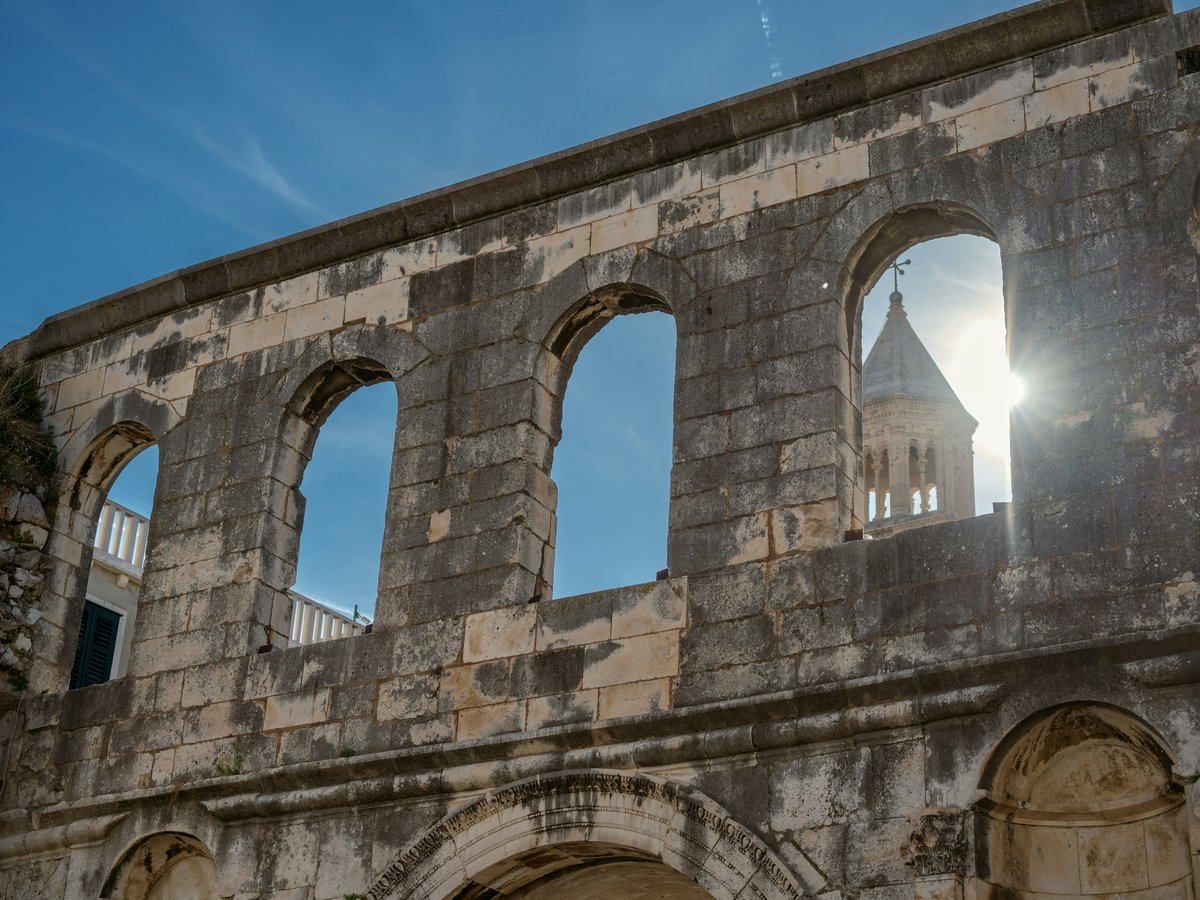
Split's nightlife runs on Dalmatian time. The Riva waterfront promenade fills with an after-dinner crowd around 9 PM, but bars inside the walls of Diocletian's Palace, originally completed in 293, rarely hit their stride before 11. On an August night, with temperatures still near 32°C past sunset, the action shifts almost entirely outdoors. Locals sip gemišt, the Dalmatian mix of white wine and sparkling water, at stone tables backed against walls that were Roman shop fronts 17 centuries ago. Split is Croatia's second-largest city, home to roughly 170,000 permanent residents, though in peak summer the ferries from Ancona and buses from Dubrovnik seem to double that count. The university crowd from the nearby Faculty of Economics and Split's law school mixes freely with seasonal workers and tourists still sun-flushed from Bačvice beach. Fjaka, the local word for a pleasant, heat-induced laziness, sets the pace. A cafe table on the Riva might stay occupied for 3 hours over a single round. The smoke from a dozen grills hangs in the warm salt air along the harbor, and conversations build slowly over bottles of Ožujsko lager. By 1 AM on a Saturday in July, streets that were empty at 10 feel packed.
Split's Bar Scene, from Cocktails to Dives
The densest concentration of bars sits inside and immediately around Diocletian's Palace. The old Roman basement halls, opened to the public in the 1960s, now neighbor small cocktail bars where bartenders work in spaces no wider than 3 meters. The limestone walls stay noticeably cooler than the night air outside, which matters when August nights barely dip below 28°C. Split's cocktail bars tend to lean Mediterranean in their ingredients. Expect fig-infused spirits, Maraschino liqueur from Zadar (about 150 km up the coast), and local herbs like lavender sourced from Hvar island. A well-made cocktail at a palace-area bar currently runs somewhere between 8 and 14 EUR. Worth noting, the price gap between a tourist-facing terrace on the Riva and a locals' spot on Radunica street can be 3 to 5 EUR per drink for essentially the same pour. Dalmatian wine bars have been growing in number over the past several years. You'll find pours of Plavac Mali, the dominant red grape from the Pelješac peninsula, alongside Pošip, a dry white from Korčula with mineral and citrus notes. A glass of either typically falls between 4 and 7 EUR. The rooftop bar scene is smaller than what you'd encounter in Zagreb or Belgrade. Split's old town buildings top out at 4 or 5 stories, so the views are intimate rather than sweeping. Several rooftop spots overlook the harbor and the islands of Brač and Šolta, which on a clear evening appear close enough to swim to. These tend to fill fast after sunset, so arriving by 7 PM helps. For something rougher around the edges, the side streets behind the green market (Pazar) hold a handful of no-frills bars where a half-liter of draft Karlovačko costs around 3 EUR and the crowd is mostly locals watching Hajduk Split on a mounted TV. The noise level rises sharply whenever Hajduk scores, and you can feel the vibration of 40 people stomping in a room built for 20.
Clubs and Late-Night Dancing
Split's club scene peaks between mid-June and mid-September, when open-air venues along the eastern beaches draw both locals and tourists. The music leans heavily toward house and tech-house, though you'll hear Croatian pop (zabavna glazba) and occasional turbo-folk at the more locally oriented spots. Dress codes are relaxed by European standards. Clean shorts and a decent shirt will get you past the door at most Split venues in summer. Flip-flops, though, are likely to get you turned away at the larger beach clubs. The bouncers at those spots also tend to be stricter about group composition. A group of 5 or 6 men arriving without women might face a longer wait or a quiet refusal, especially during July and August weekends. The rhythm runs late. Locals often pre-game on the Riva or at a friend's apartment until 11:30 or later, then head out to clubs that stay open until 4 or 5 AM. The peak hour sits around 1:30 to 2:30 AM on Fridays and Saturdays. Cover charges at the larger open-air clubs during summer tend to range from 10 to 25 EUR, sometimes with a drink included. Smaller indoor venues often have no cover at all, or charge a nominal 5 EUR on weekends. Mind you, prices can jump during festival weeks or special DJ bookings. Bottle service at the bigger beach clubs might start around 150 EUR for a basic spirits package. The indoor club options shrink after September. A few spots in the Lučac and Manuš neighborhoods maintain dance floors year-round, but the crowds thin considerably after October and don't really recover until late spring.
Live Music and Performance
Split has a long tradition of klapa, the Dalmatian a cappella singing style that UNESCO added to its Intangible Cultural Heritage list in 2012. You'll hear klapa groups performing on the Riva and in the Peristyle square on summer evenings, typically between 9 and 11 PM. The harmonies carry well off the limestone. Four or 5 voices, no instruments, singing about the sea and about Split itself. It sounds nothing like what you'd expect from a Mediterranean port city's bar district. The Croatian National Theatre in Split, operating since 1893, hosts orchestral and operatic performances through its regular season from the building on Trg Gaje Bulata at the northern edge of the old town. Evening performance tickets have been in the range of 15 to 50 EUR depending on the seating and production. During summer, the Split Summer Festival (Splitsko ljeto) runs from mid-July through mid-August. The Peristyle, the palace's central courtyard, becomes an open-air stage. To be fair, the acoustics can be uneven outdoors, but the setting compensates. For rock, indie, and jazz, a handful of bars along Radunica and in the Veli Varoš neighborhood host local bands on Thursday through Saturday nights. The Croatian rock scene draws dedicated local crowds, with most bands singing in Croatian. Fridays tend to be the strongest night for live sets in Split. The sound bleeds into the narrow streets through open doors and windows, tangling with the clatter of glasses from the cafe 2 doors down.
Nightlife neighborhoods
-
Diocletian's Palace and the Old Town
Bars carved into Roman-era stone, with narrow alleys that trap warmth and noise. String lights cast a yellow glow on limestone. The smell of grilled ćevapi drifts from nearby take-away windows past midnight. The crowd is a mix of tourists and locals navigating alleys barely wide enough for 2 people to pass.
- Best for
- First-time visitors wanting to drink in a 4th-century setting, couples, cocktail and wine enthusiasts
- Standouts
- Cocktail bars in the basement-level spaces along Dosud and Majstora Jurja streets. Wine bars clustered near the Peristyle.
-
The Riva
Split's 250-meter waterfront promenade lined with palms and cafe terraces facing the harbor. The evening passeggiata fills it from 8 PM onward. Warm stone underfoot, the slap of water against moored boats, a hundred conversations layered over each other.
- Best for
- Early-evening drinks, people-watching, the sunset hour from roughly 7:30 to 8:30 PM in summer
- Standouts
- Cafe-bars along the full stretch of the promenade, most serving beer, wine, and basic cocktails at terrace seating.
-
Bačvice Beach
The city's main beach turns into a late-night zone after swimmers leave. Beach bars push music toward the Adriatic, and the terrace seating fills with a mixed crowd of locals in their 20s and tourists still in swimwear. Sand between your toes, bass through the speakers, salt-heavy air cooling slightly around 2 AM.
- Best for
- Beach-club nightlife, groups, anyone who wants to dance outdoors near the water from June through September
-
Radunica
A narrow residential street east of the palace that has been filling up with small bars and wine spots over the past several years. Quieter, more local, less polished. The crowd skews toward Split residents in their late 20s and 30s who prefer conversation to loud music.
- Best for
- Low-key drinking with a local feel, wine and craft beer, weeknight outings
-
Veli Varoš
The old fishermen's quarter west of the palace, climbing up toward Marjan hill. Stone staircases, laundry lines overhead, cats on windowsills. A few bars and small restaurants have opened here, and the atmosphere leans intimate and unhurried. You can hear crickets between songs.
- Best for
- Quiet drinks away from the tourist center, couples, travelers who prefer a slower pace
-
Žnjan Beach
About 3 km east of the old town along the coastal road. Larger open-air club venues set up here during summer months and draw a younger crowd that arrives after midnight. The walk back to the center takes roughly 35 minutes along the seaside path, or a short taxi ride.
- Best for
- Late-night dancing and electronic music for the 18-to-25 crowd during July and August
Safety after dark
Split scores 8.2 out of 10 on TTDI's solo-traveler safety index (see the TTDI Solo-Safety Index), and the old town at 3 AM generally feels populated and safe in summer. That said, a few things are worth keeping in mind. Pickpocketing rises during the summer crush, particularly along the Riva and inside the palace during peak daytime hours. Keep your phone in a front pocket after dark, too. Drink spiking is rare but not unheard of in any European port city. Don't leave your glass unattended at a crowded terrace, and stick with drinks you watched being poured. Taxi overcharging is the most common complaint from visitors. Always confirm the driver will use the meter, or agree on a price before getting in. The ride from the old town to Split Airport at Kaštela, about 25 km west, should run roughly 30 to 40 EUR by metered taxi. Ride-hailing apps like Bolt operate in Split and tend to be more transparent on pricing. For late-night transport, Bolt is likely your most reliable option, though wait times can stretch past 15 minutes on busy Saturday nights. The local bus network stops running around 11 PM on most routes, so plan accordingly if you're staying outside the center. Avoid the poorly lit sections of the Marjan park trails after midnight. They're safe during the day but deserted and unlit at night. For a broader set of safety notes from other travelers, Wikivoyage's coverage at https://en.wikivoyage.org/wiki/Split#Stay_safe is also worth reading.
Practical tips
- Currency
- Croatia adopted the euro on January 1, 2023. As of mid-August 2026, 1 USD converts to approximately 0.86 EUR. Cards are widely accepted in bars and clubs across Split, though a few of the smaller no-frills spots behind Pazar still prefer cash.
- Tipping
- Tipping at bars in Croatia is not expected the way it is in North America. Rounding up to the nearest euro or leaving 5 to 10 percent on a larger tab is appreciated but not obligatory. At table-service cocktail bars, a euro or two per round is a gesture the staff will notice and remember.
- When to Go Out
- Locals rarely leave the house before 10:30 PM. If you show up at a bar at 9, you'll have plenty of space. The sweet spot for most bars is 11 PM to 1 AM. Clubs fill between midnight and 2 AM. Sunday through Wednesday nights are noticeably quieter, with many smaller bars closing by midnight.
- What Locals Drink
- Gemišt is the default warm-weather order across Split's bars. Rakija appears at the start or end of a night, especially travarica (herb-infused grape brandy) and orahovac (walnut). Ožujsko and Karlovačko are the two dominant Croatian lager brands. Craft beer has arrived in Split but has not displaced the staples.
- LGBTQ+ Visitors
- Split scores 6 out of 10 on TTDI's LGBTQ+ friendliness rubric (sourced from TTDI's editorial rubric). Croatia's Life Partnership Act took effect in 2014, and Split is more progressive than rural Dalmatia, but public displays of affection between same-sex couples may still draw stares outside the more cosmopolitan bar areas. The Split Pride march has been held annually since 2011.
- Noise and Closing Hours
- Split's municipal noise regulations currently require most outdoor terraces to quiet down by midnight or 1 AM, depending on the zone. Indoor venues can run later. Beach clubs along the coast sometimes push past these limits on weekends but tend to wind down by dawn at the latest.
FAQ
What time do bars and clubs close in Split?
Most old town bars wrap up between midnight and 2 AM. The summer beach venues run considerably later, with some serving drinks until the early morning hours on weekends. On weeknights from Sunday through Wednesday, expect earlier closures across the board.
Is Split's nightlife seasonal?
Heavily so. The peak runs from mid-June through mid-September, when the open-air clubs and beach bars operate at full capacity. From October through April, the scene contracts to a smaller core of indoor bars. University students keep a handful of spots active year-round, but the difference between an August Saturday and a February one is stark.
Do I need to book tables or get on guest lists?
For most bars, no. Walk-in is the norm across Split. At the larger summer beach clubs, booking a table or bottle service can help you bypass the queue on Friday and Saturday nights. Some clubs post guest list sign-ups on their Instagram pages during the week.
How do I get back to my hotel after 2 AM?
The Bolt app is the most reliable late-night option. Local buses stop running around 11 PM on most routes. Walking works within the central area, since most old town accommodations sit within a 10 to 15 minute walk of the main nightlife zones. If you're staying further out in neighborhoods like Žnjan or Solin, keep the Bolt app loaded and ready.
Is Split safe for solo travelers going out at night?
Generally, yes. The old town and Riva area remain well-populated past 2 AM in summer, and violent crime targeting tourists is uncommon in Split. Standard precautions apply, particularly around keeping valuables secure and avoiding unlit stretches of the Marjan trails after dark. The safety section above covers transport and taxi tips in more detail.
Where can I find more visitor information about Split?
Wikivoyage maintains a regularly updated traveler's guide at https://en.wikivoyage.org/wiki/Split covering arrival logistics, neighborhoods, and safety. Their section on bars and cafes at https://en.wikivoyage.org/wiki/Split#Drink is a good complement to this guide for additional venue-level detail.
Last verified by automated review (v1.7.2) on . What is automated review?