Split for families
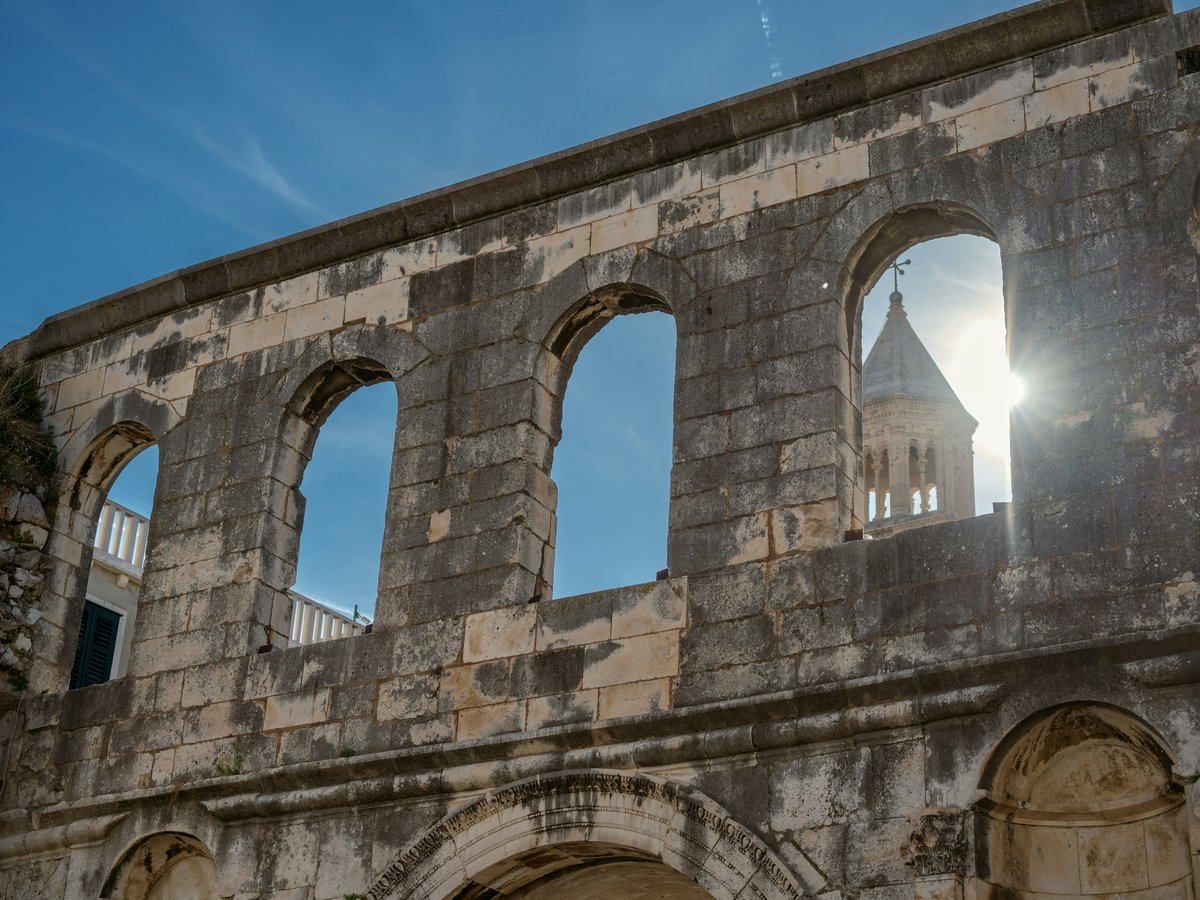
Diocletian's Palace is a living Roman palace that became the old town itself. Croatian National Theatre in Split is the city's civic stage, and the anchor of its most-used square.
Split for families with kids, in numbers
- Score for families
- 6.8 out of 10
- Picks on this page
- 27 places across 3 lists, led by Diocletian's Palace, Croatian National Theatre in Split, archbishop's palace of Split
Questions families with kids ask about Split
-
Family-friendly
Split scores 6.8/10 for family friendliness (see the TTDI Family-Friendliness Index). The Riva waterfront promenade and shallow Bačvice beach work well with toddlers, but Diocletian's Palace has narrow Roman-era corridors that defeat any stroller. Summer temperatures above 32°C mean ruins are a morning activity. Pizza, ćevapi, and gelato keep picky eaters fed.
Read the full answer → -
Is it safe?
Split is safe for solo travellers, scoring 8.2 out of 10 on our solo-safety index (see the TTDI Solo-Safety Index), and violent crime against visitors is rare. The risks worth planning around are drunk summer crowds at Bačvice after 2am, pickpockets in Peristil when cruise ships are in port, overcharging by airport taxis, and midday heat on Marjan. Dial 112 for any emergency.
Read the full answer → -
What to pack
Rubber-soled walking shoes that grip wet limestone are the priority. Split's stone streets turn slick after rain. Pack for 30°C+ summers with swimwear, a cover-up for the Cathedral of Saint Domnius, and water shoes for Bačvice's hot pebble shore. Buy sunscreen and toiletries locally at European drugstore prices, roughly 40% below US equivalents.
Read the full answer → -
Getting around
Walking covers 90% of Split. Diocletian's Palace and the Riva promenade are car-free, and Marjan hill is 15 minutes west on foot. Promet Split buses handle the suburbs and airport connection. Bolt is the dominant ridehail app, not Uber. Ferries to Brač and Hvar leave from the port beside the palace walls.
Read the full answer → -
Best time to visit
May, June, and September. July and August pack Diocletian's Palace with cruise-ship crowds by 10am, and hotel rates in neighborhoods like Varoš double. Late May brings 25°C days, water warm enough for Bačvice beach, and prices 40-50% below the August peak. September keeps similar warmth with noticeably thinned-out streets.
Read the full answer →
Curated for families with kids
-

Must-see attractions
Split's must-see list is built from stone and centuries, not from viewing decks. Diocletian's Palace, an ancient palace built for the Roman emperor Diocletian that dates from AD 293 and is part of a UNESCO World Heritage Site, anchors everything, and around it we've drawn together a cathedral, a Roman temple, and a synagogue, each on the Register of Cultural Goods of Croatia, plus a city wall that also dates from AD 293. Further out are Salona, an ancient Roman city on the Dalmatian coast, and Trogir Cathedral, a basilica dating from 1213. A theatre dating from 1893 and a cemetery dating from 1928 carry the story into the modern city. This list is for visitors who would rather read a doorway than queue for a selfie: people who walk slowly, go early, and want to know what they are standing in front of. It skips the boat parties and the novelty museums. Every entry here earns its place by being something you can only see in Split or within reach of it.
See the picks → -

Best free attractions
Split's free layer is geography, not architecture. A hill above the town at 43.5086, 16.4093, two mapped squares that function as public rooms, a peninsula where the city runs out of pavement, and a park most itineraries skip: none charge admission and none require a booking. What they require is time. This list is for the visitor who has already paid to walk inside the monuments and wants to see how Split arranges itself between its walls and its water. The five below are ranked less by fame than by what a slow walker can get from them in a morning or an evening; each earns the hour on its own terms. Free, in Split, means unmediated: no ticket window, no promoter, no queue.
See the picks → -

Best museums
Split's museums are not one museum. They are a loose federation of collections scattered from the Marjan waterfront to the ring road north of Diocletian's walls, and treating them as a single afternoon errand is how visitors miss the good ones. The city has an archaeological museum keeping national-tier Roman material; a fine-arts gallery in a civic square well outside the palace; an ethnographic collection tucked so deep into the palace substructure that finding the door is part of the visit; and a Meštrović gallery on the Marjan shore that argues, convincingly, that the twentieth century happened here too. Two of the ten entries below are in Trogir, a short coastal hop west and worth the detour on any museum-serious day. This list is ordered by editorial weight, not proximity, so read it as a map of what to prioritise rather than a walking route. Anyone visiting Split for the palace alone is under-using the city; anyone visiting the museums without a plan is over-walking it.
See the picks →