When's the best time to visit Split in 2026?
May, June, and September. July and August pack Diocletian's Palace with cruise-ship crowds by 10am, and hotel rates in neighborhoods like Varoš double. Late May brings 25°C days, water warm enough for Bačvice beach, and prices 40-50% below the August peak. September keeps similar warmth with noticeably thinned-out streets.
Late May through June is when Split rewards a first visit most. Daytime temperatures sit around 25-28°C, the Adriatic has warmed past 22°C for swimming at Bačvice (the city's main beach, about 500 metres east of the ferry port), and the summer cruise-ship surge has not started. You can walk the peristyle of Diocletian's Palace at 9am with maybe a dozen other visitors around you. By mid-July that number is closer to 200. Croatia switched to the euro in January 2023, so prices are straightforward. Hotels in Varoš, the residential quarter below Marjan hill, tend to run €80-120 per night in June. The same rooms reach €180-250 in August. Restaurants along the Riva promenade have their full summer menus by late May, and the Peškarija fish market east of the palace walls sells the morning catch until noon. By evening, the smell of grilled sardines drifts from the harbor restaurants. Worth noting, the Ultra Europe music festival in mid-July is when accommodation becomes nearly impossible to book at any price.
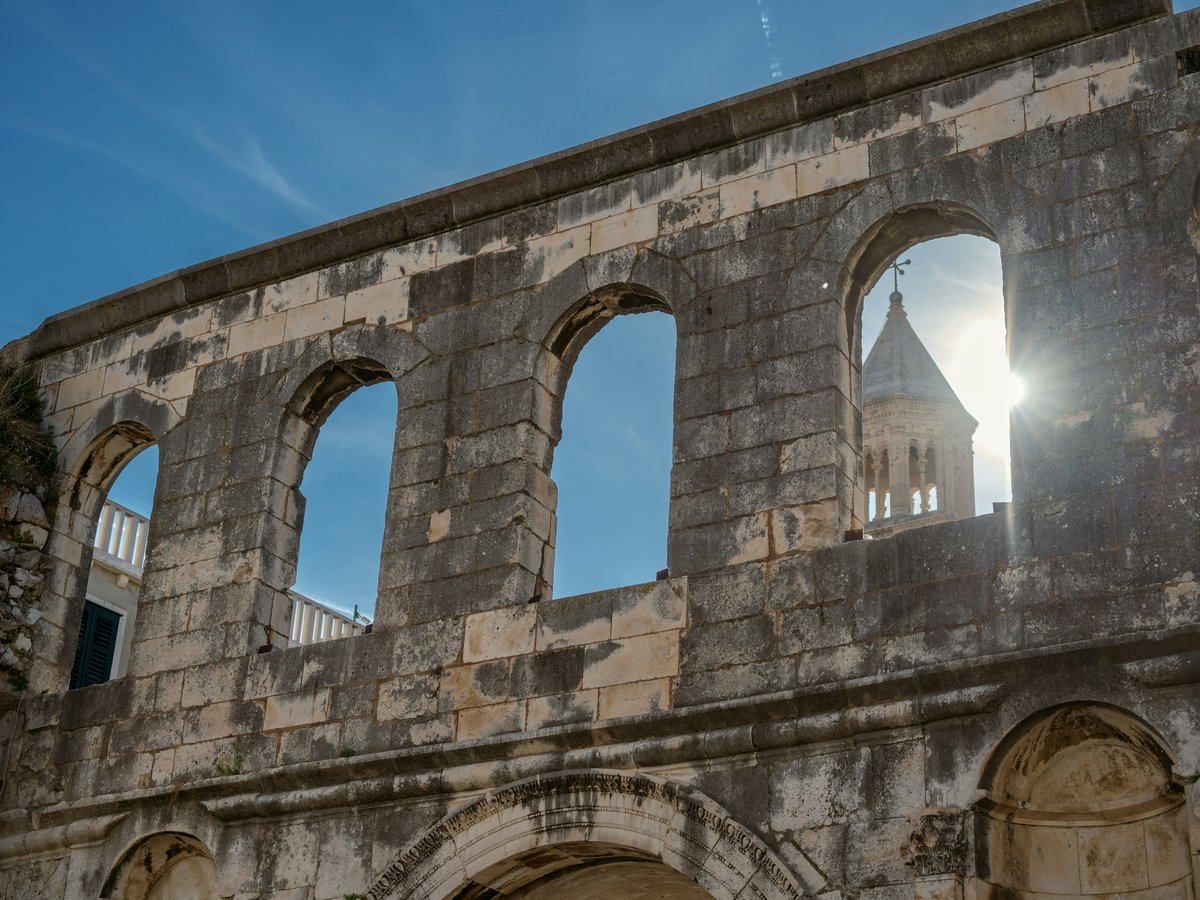
September has a strong case for being Split's best month. The crowds thin after the first week, but sea temperature holds around 24°C into early October. The light shifts. Late-afternoon sun catches the limestone of the Cathedral of Saint Domnius, built into Diocletian's mausoleum from 293, and turns it warm amber. You'll hear church bells mixing with the clink of rakija glasses at cafes wedged into the palace walls. At the Green Market on Stari Pazar, the bins shift from summer stone fruit to figs and late-season grapes, and dried lavender bundles hang over the vendor stalls. Restaurants lean into heavier Dalmatian dishes by mid-September. Pašticada, beef braised slowly in prune and wine sauce, appears at places like Konoba Matejuška near the fishing harbor, alongside soparnik, a thin chard pie from the Poljica hills south of town. Evenings settle to 20-22°C, warm enough for outdoor tables without a jacket.
To be fair about July and August. The heat is real. Temperatures reach 33-35°C with humidity around 60-65%, and the stone corridors inside the palace walls store warmth like a kiln. The narrow passages feel close and radiating by 2pm. Cruise ships dock 300 metres from the Bronze Gate, and each one releases 2,000-4,000 passengers between 9 and 10 in the morning. The Temple of Jupiter, roughly 3 metres wide at its entrance, becomes a slow queue rather than a visit. If August is your only window, go early. The palace is nearly empty at 7am. The climb up Marjan's stone steps takes about 40 minutes to the 178-metre summit, and before 9am the pine canopy still holds cool, resinous air while the views across to Brač and Šolta sit sharp against the morning light, not washed out in haze.
Winter in Split is milder than most visitors expect. January lows hover around 5-7°C, and rain falls roughly 11 days per month from November through February. The city does not shut down the way Hvar or Vis do. Locals reclaim the Riva for their evening korzo, the Dalmatian walking ritual, a slow back-and-forth along the waterfront with its own unspoken etiquette. Resident-run restaurants stay open year-round, and you'll find the palace corridors almost to yourself. That said, many island ferries drop to one or two daily sailings. Day trips to Salona, the Roman ruins 5 km northeast that once held 60,000 residents, feel stark under grey winter light. Some konobas in Varoš close entirely from December through March. The trade-off is genuine solitude against limited dining and shorter, damper days. Hotels drop below €50 per night, and flights from most European cities run under €60 return on Ryanair or easyJet.
Month-by-month outlook
- Jan Avoid
- Feb Avoid
- Mar Shoulder
- Apr Shoulder
- May Ideal
- Jun Ideal
- Jul Shoulder
- Aug Shoulder
- Sep Ideal
- Oct Ideal
- Nov Shoulder
- Dec Avoid
Year-round climate
Averages from the last 5 years.
| Month | Avg high (°C) | Avg low (°C) | Rainfall (mm) |
|---|---|---|---|
| Jan | 12 | 5 | 162 |
| Feb | 13 | 5 | 81 |
| Mar | 15 | 7 | 110 |
| Apr | 18 | 10 | 109 |
| May | 23 | 15 | 110 |
| Jun | 29 | 20 | 49 |
| Jul | 32 | 23 | 23 |
| Aug | 31 | 22 | 76 |
| Sep | 26 | 18 | 137 |
| Oct | 22 | 14 | 110 |
| Nov | 16 | 9 | 258 |
| Dec | 13 | 7 | 157 |
Mediterranean. Summer highs 33-35°C with 60% humidity. Winter lows 5-7°C, roughly 11 rainy days per month Nov-Feb. Sea peaks at 25°C in August, swimmable by late May at 22°C.
Last verified by automated review (v1.7.2) on . What is automated review?