Stay in Split in August
71 hotels in the Trip.com pool for Split, from US$21 a night.
Opens Trip.com on Fri 6 Aug to Sun 8 Aug 2027; change the dates there.
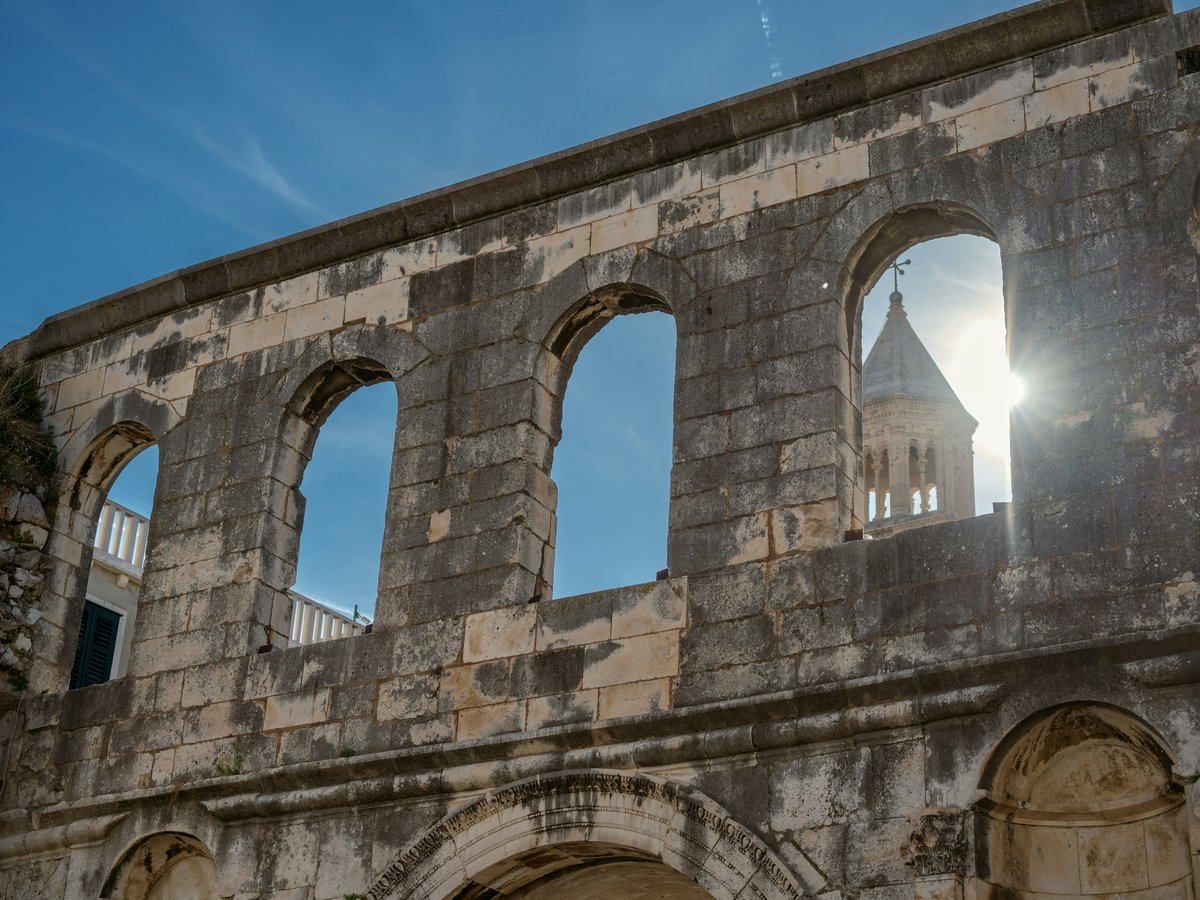
Split in August is the Dalmatian coast at full volume. This is the single busiest month of the year, and a city of roughly 170,000 permanent residents feels stretched to its limits. Expect daytime highs around 31°C (88°F), humidity that stays manageable near 52%, and Old Town streets barely 2 meters wide where you'll walk shoulder-to-shoulder with other visitors between 10 AM and early evening. The limestone walls of Diocletian's Palace, built in 293 for the retiring emperor, hold the day's heat well into the night.
To be fair, August earns its popularity. The Adriatic reaches 25-26°C, warm enough for long, unhurried swims. Rain falls on roughly 6 days, usually as brief afternoon showers that clear within the hour. The city's long-running summer arts festival fills palace courtyards with live opera and theatre most evenings. After dark, temperatures settle toward 22°C (72°F), and the Riva waterfront becomes one of the better open-air promenades in the Mediterranean.
There's a cost, though. Accommodation prices hit their annual ceiling. Ferries to Brač, Hvar, and Vis sell out days ahead. Restaurants in Varoš and along the waterfront fill by 7 PM. If your dates have any flex, June delivers similar warmth with noticeably fewer visitors, and early October still offers a swimmable sea. August rewards travelers who book ferries 4 days out, reserve dinner before noon, and don't flinch at peak-season pricing.
Why visit in August
- The Adriatic Sea is at its warmest point of the year, comfortable enough for extended open-water swimming, snorkeling off the Marjan rocks, and evening dips that last well past sunset without a chill.
- Daylight lasts past 8 PM in early August, with sunset around 7:45 PM by month's end. Long evenings mean you can finish a full beach day and still reach a waterfront restaurant with golden light on the harbor.
- The driest stretch of Split's year. Consecutive sunny days are the norm, and the brief afternoon showers that do come rarely last more than 30 minutes or disrupt plans.
- Open-air cultural performances in centuries-old settings fill the calendar, from opera on Roman-era stone seats to ballet against floodlit palace walls.
Worth knowing
- Peak tourist density in the Old Town, with cruise ships adding 3,000-4,000 day-trippers at a time to lanes originally built for a resident population of roughly 10,000. The palace interior between late morning and early evening moves at walking-mall pace.
- Accommodation prices hit their annual maximum. The same apartment or hotel room costs 60-80% more than it would in May or October.
- Limestone inside the palace complex absorbs and re-emits heat, making the perceived temperature 3-4°C higher than the official reading from the weather station on Marjan. Visitors who dressed for the forecast number feel it by noon.
- Popular ferry routes to nearby islands sell out 3-5 days ahead. Walk-up passengers get turned away regularly on morning departures.
Best for
Think twice if
Reliably hot and dry by central Adriatic standards. Strong sun from around 6:30 AM through evening, with the kind of intensity that catches visitors from northern climates off guard. Humidity stays moderate, which keeps the heat more tolerable than comparable temperatures in the eastern Mediterranean or Gulf regions. When rain does arrive, it tends to come as a dramatic but short-lived afternoon downpour, often with distant thunder rolling across the channel toward the islands. Clear skies return within the hour. The sea retains warmth from the long sunny days, staying comfortable for swimming from dawn through well after dark. A light maestral breeze typically picks up in the early afternoon, cooling the waterfront noticeably.
Seasonal caution
- Heat waves can push afternoon temperatures above 35°C (95°F) for 3-5 consecutive days, particularly in the first half of August. The stone walls of the Old Town trap radiant heat, making the palace interior significantly warmer than open areas or beaches.
- Occasional wildfire smoke from the Dalmatian hinterland or neighboring Bosnia-Herzegovina can temporarily reduce air quality during prolonged dry spells. This is uncommon but worth monitoring if you have respiratory sensitivities.
Year-round climate
Averages from the last 5 years.
| Month | Avg high (°C) | Avg low (°C) | Rainfall (mm) |
|---|---|---|---|
| Jan | 12 | 5 | 162 |
| Feb | 13 | 5 | 81 |
| Mar | 15 | 7 | 110 |
| Apr | 18 | 10 | 109 |
| May | 23 | 15 | 110 |
| Jun | 29 | 20 | 49 |
| Jul | 32 | 23 | 23 |
| Aug | 31 | 22 | 76 |
| Sep | 26 | 18 | 137 |
| Oct | 22 | 14 | 110 |
| Nov | 16 | 9 | 258 |
| Dec | 13 | 7 | 157 |
Holidays and festivals in August
Public holidays
- Victory and Homeland Thanksgiving Day and the Day of Croatian defenders(Dan pobjede i domovinske zahvalnosti i Dan hrvatskih branitelja)5 August 2027
- Assumption Day(Velika Gospa)15 August 2027
Headline events
Split Summer Festival (Splitsko ljeto)
Mid-July through mid-August
Croatia's oldest performing arts festival, first staged in 1954, transforms the city's historic sites into open-air stages for roughly 4 weeks each summer. The program spans opera, ballet, classical music, theatre, and contemporary dance, with Croatian and international performers. Audiences sit on Roman-era stone steps in the Peristyle courtyard, attend performances at the Croatian National Theatre (established 1893), and watch ballet against floodlit palace walls. A typical season includes 40-50 individual performances across a dozen venues.
Best things to do in August
Dawn hike on Marjan hill
outdoorThe 178-meter forested hill on Split's western peninsula has about 8 km of marked trails through Aleppo pine forest, with the scent of warm resin rising from the needles as morning sun heats the canopy. The summit at Telegrin offers views across the Adriatic to Brač, Šolta, and on clear mornings, Vis. A small zoo and the medieval Chapel of St. Nicholas sit along the main trail.
A start before 7 AM beats the heat that makes midday hiking miserable. The pine canopy keeps trail temperatures 5-6°C cooler than the exposed city streets below.Booking tipNo booking needed. Enter from Varoš via the stone staircase at the west end of the Šetalište Ivana Meštrovića promenade.
Sea kayaking around the Marjan peninsula
water sportsGuided kayak tours round the south side of the peninsula, passing sea caves, rocky swimming coves, and Kašjuni beach. The route typically covers 8-10 km over 3 hours, with stops for swimming and cliff jumping into water clear enough to see the bottom 5-6 meters down.
August's calm seas and warm water make this the most reliable month for kayaking. Morning sessions offer the smoothest paddling before the afternoon onshore wind picks up.Booking tipBook morning departures at least 3 days ahead. Afternoon slots are hotter, windier, and choppier.
Day trip to the Salona archaeological park
culturalThe ruins of the Roman provincial capital spread across open fields 5 km northeast of Split, with partial shade from olive and cypress trees. The amphitheatre, city walls, early Christian basilicas, and the necropolis give a sense of scale that the more compact palace in the city center cannot match. At its height, Salona held around 60,000 residents.
The open-air site draws a fraction of the palace crowds even in peak August. Morning visits before 10:30 AM, when tour buses arrive, are practically private.Booking tipTake bus 1 toward Solin from the bus area east of the Old Town. A taxi runs about 10 EUR each way.
Evening swimming at Bačvice beach
beachSplit's most central beach, a shallow sandy cove 5 minutes south of the Riva. Locals play picigin here, a traditional ball game in ankle-deep water that has been a Split institution since the 1920s. The slap of palms on the ball and the shouts of players carry across the beach. A pickup game at sunset costs nothing to watch or join.
Water at its annual warmest means comfortable swimming past 9 PM. The shallow bay retains afternoon heat long after the sun drops behind Marjan.Booking tipNo booking needed. Arrive by 6 PM for space on the sand. Beach bars behind the shore stay open until midnight.
Island day trip to Brač
day tripThe closest major island, reachable by catamaran in 50 minutes or car ferry in 75 minutes from Split's harbor. Zlatni Rat near the town of Bol is a shifting triangular pebble spit, one of Croatia's most photographed beaches. The island's interior holds stone villages, centuries-old olive groves, and the quarry that supplied white stone for the palace walls in Split.
Maximum ferry frequency with 5-6 daily catamarans. Peak sea conditions for the open-water crossing.Booking tipBook Jadrolinija or Kapetan Luka ferry tickets at least 4 days ahead. Morning departures sell out first.
Wine tasting along the Kaštela coast
food and drinkThe string of seaside towns between Split and Trogir is home to family wineries producing Crljenak Kaštelanski, the grape confirmed by UC Davis DNA research as genetically identical to California's Zinfandel. August tastings typically happen in courtyard settings among the vines, with views across the Kaštela bay.
Harvest approaches and grapes are nearly at peak ripeness. Some wineries offer pre-harvest vineyard walks unavailable in other months.Booking tipMost wineries require appointments. Contact directly 2-3 days ahead. Kaštel Štafilić and Kaštel Kambelovac have the densest concentration.
Open-air cinema at Ljetno Kino Bačvice
entertainmentAn outdoor screening venue behind the beach that shows Croatian and international films on summer nights. The program mixes recent releases with classics, usually with subtitles. Simple folding chairs on a terrace, with the sound of the sea filling the pauses between dialogue.
August's dry, warm evenings are ideal for outdoor screenings. The program runs its fullest schedule this month, with nightly showings.Booking tipTickets sold at the door. Arrive 30 minutes early for better seats toward the center.
What to eat in August
In season: fruit
Smokve (fresh figs)
Peak fig season on the Dalmatian coast. Vendors at the green market sell them by the kilogram, often picked that morning from hillside trees outside the city. The dark-skinned Petrovača variety ripens first, followed by larger green-skinned figs later in the month. Split locals eat them with pršut and young sheep's cheese.
Lubenica (watermelon)
Dalmatian watermelons from the Neretva River delta reach their sweetest in August. Sold whole from roadside stands along the coastal highway and sliced at beach bars. Neretva-grown melons tend to be denser than imports, with a higher sugar content from the delta's rich alluvial soil.
On menus now
Sardele na gradele (grilled sardines)
Summer sardine catches peak in the central Adriatic. Konobas grill them whole over charcoal, served with olive oil, coarse salt, and lemon. The simplicity is the point. The smell of sardines over coals is one of the defining scents of a Split August evening.
Street food peaks
Soparnik (Poljica chard pie)
A thin, unleavened pie filled with young chard, onion, garlic, and olive oil, traditionally baked on an outdoor hearth. Listed on Croatia's Intangible Cultural Heritage register. Summer farm stands sell the freshest versions, with chard leaves harvested before the late-summer heat turns them bitter. Sliced into rectangles and eaten with the hands.
What to drink
Bevanda
The traditional Dalmatian answer to the August heat. Local red wine mixed roughly 50-50 with cold water, served in homes and konobas across the region. It sounds wrong until you try it in the afternoon shade at 32°C. Lighter than a full glass of wine, more interesting than water.
Regular events in August
Sinjska AlkaFree
A traditional equestrian tournament held annually in Sinj, 35 km northeast of Split, since 1715. Riders in period armor gallop at full speed and attempt to spear a small iron ring (alka) with a lance. Inscribed on UNESCO's Intangible Cultural Heritage list in 2010. Reachable as a day trip by bus or car.
First Sunday of AugustDays of Diocletian (Dani Dioklecijana)Free
A festival inside the palace walls that stages Roman-era reenactments, costumed processions, gladiator demonstrations, and Roman food tastings. The closing ceremony draws large evening crowds to the central square.
Late August, typically the last weekVelika Gospa (Assumption of Mary)Free
National public holiday and one of the most significant dates in the Croatian Catholic calendar. Churches hold special services, and many local families travel inland to ancestral villages for the long weekend.
August 15Hajduk Split home matches at Stadion Poljud
The Croatian football league season runs through August, and Hajduk Split play at the distinctive shell-shaped Poljud stadium, built in 1979. The club's ultras, Torcida (formed 1950, among Europe's oldest organized fan groups), create an atmosphere worth experiencing regardless of your football interest. Match-day energy fills the surrounding Spinut neighborhood hours before kickoff.
Schedule varies, typically 2-3 home matches in AugustBest places this August
Kašjuni Beach
beachA pebble cove on the south side of the Marjan peninsula, reached by a steep path from the Meje neighborhood. Pine trees along the back provide natural shade that gets scarce at more central beaches. The water tends to be clearer here because it faces the open sea rather than the harbor.
MejeTemple of Jupiter
historical siteA Roman temple within the palace walls, later converted to a baptistry for the cathedral across the central square. The barrel-vaulted ceiling and an 11th-century baptismal font survive in good condition. Small enough to visit in 15 minutes, but the stonework detail rewards a slower look. Come early, before tour groups fill the narrow entrance.
GradSustipan Park
park and viewpointA cypress-lined promontory at the southwestern tip of Split's peninsula. The former cemetery, resting place of notable Split families since medieval times, has been partly converted into a public park with stone benches and unobstructed sunset views toward the islands of Šolta and Čiovo. Quiet even in August.
MejeMatejuška Harbor
harborA tiny traditional fishing harbor tucked beneath the western palace wall. Local fishermen still tie up wooden boats here. The scale is intimate, perhaps 30 vessels, and the weathered stone quay feels like a different century from the tourist density 200 meters away.
VarošPazar Green Market
marketThe open-air market on the eastern side of the palace walls where local producers sell seasonal fruit, vegetables, cheese, dried herbs, and lavender. August mornings bring crates of figs, watermelons, and tomatoes from the Kaštela coast. Prices run noticeably lower than restaurants targeting tourists.
LučacKamerlengo Castle and Trogir old town
historical site and day tripA Venetian fortress at the western tip of Trogir's island center, built in 1420. The rooftop terrace gives open views across the Trogir channel. Nearby, Trogir's cathedral, begun in 1213, has a portal by Master Radovan considered one of the finest Romanesque carvings on the Adriatic. The UNESCO-listed old town sits 25 km west of Split, reachable by local bus 37 in about 30 minutes.
TrogirCathedral of Saint Domnius
historical site and viewpointBuilt into the octagonal shell of Diocletian's mausoleum, likely the oldest cathedral building in continuous use worldwide. The Romanesque bell tower, added between the 12th and 16th centuries, offers a 360-degree panorama of the city, harbor, and Marjan from its top. The climb up narrow stone stairs in August heat is demanding. Go in the first hour after opening.
GradŽnjan Beach
beachA long pebble beach on Split's eastern coast, stretching about 1 km with significantly more space than Bačvice. Beach bars and food stalls line the promenade behind the shore. Families tend to prefer Žnjan for the gentler water entry and the room to spread out even at peak August capacity.
Firule
Your packing checklist
Tick items off as you pack. Your progress saves in this browser.
All packed — have a great trip.
Insider tips
Arrive at the green market behind the Silver Gate before 8:30 AM for the first pick of figs and stone fruit. By 11 AM the best produce is gone, and remaining vendors raise prices for latecomers.
For dinner without the wait, eat at local hours. The tourist rush fills restaurants between 6:30 and 8 PM. Locals eat around 9 PM. Konobas deeper in Varoš fill up last and tend to serve more traditional Dalmatian home-style cooking than the waterfront places.
That afternoon wind, the maestral, typically picks up between 1 and 2 PM and drops by sunset. Plan kayaking, paddleboarding, or sailing for morning sessions. The upside is that it makes waterfront cafes pleasantly cooler after lunch.
Beaches on Marjan's north side, like Bene and Kaštelet, catch full morning sun but fall into the hill's shade by mid-afternoon. If you burn easily, these are more forgiving than the south-facing beaches that stay in direct sun until evening.
Avoid these mistakes
- Touring the palace interior between 10 AM and 5 PM, when crowd density and heat radiating off stone make it genuinely exhausting. The same courtyards and alleyways before 8:30 AM or after 7 PM are calmer, cooler, and more photogenic in the low-angle light.
- Not booking island ferries in advance. The morning catamaran to Hvar and the Supetar car ferry to Brač sell out 3-5 days ahead in August. Walk-up passengers get turned away at the gangplank regularly.
- Renting a car for getting around Split itself. Street parking in the Old Town area is nearly impossible in August, garages charge premium daily rates, and every major attraction sits within a 20-minute walk of the Riva. A car makes sense for day trips to Krka National Park or the Makarska coast, not for the city.
- Failing to plan around the August 15 national holiday. Most shops, banks, and many restaurants close for the day. Stock up on cash and supplies on the 14th.
Practical tips for August
Book accommodation and island ferries at least 2-3 weeks before arrival, earlier if traveling in the first two weeks of August. Croatia uses the euro (EUR), with the current exchange rate sitting at roughly 1 USD to 0.86 EUR. A reasonable daily budget for mid-range travelers runs about 80-120 EUR excluding accommodation. Tap water throughout Split comes from the Jadro spring and is safe to drink. For LGBTQ+ travelers, Split's friendliness score is 6/10 (sourced from TTDI's editorial rubric). The tourist core around the palace and Riva is generally relaxed, though public displays of affection between same-sex couples may draw attention in more traditional neighborhoods outside the center. ATMs inside the palace walls tend to charge higher withdrawal fees than the machines on Marmontova street or near the ferry terminal. Pharmacies (ljekarne) stock sunscreen and basics but at tourist-area premiums. Bring consumables from home if you can.
FAQ
Is August a good time to visit Split?
August is a good but not ideal time. The weather is hot and reliably dry, the Adriatic is at its warmest, and outdoor cultural events fill the evenings. The trade-off is the year's heaviest crowds and highest prices. Travelers who prioritize swimming and nightlife over quiet sightseeing will get the most from an August trip. Those who value fewer crowds and better value might find another month more rewarding.
How crowded is Split in August?
Peak crowded. Split sees its highest visitor numbers of the entire year. Cruise ships dock regularly, adding thousands of day-trippers to a compact Old Town. Palace lanes move at shuffle pace from mid-morning through early evening. Beaches fill by 10 AM. Central restaurants need reservations or involve waits of 30-45 minutes at dinner. You can manage it by shifting to early-morning sightseeing and late dining, but the midday density is inescapable.
Is Split good for families with children in August?
Workable with planning, though not the city's strongest suit. Split scores 6.8/10 for family friendliness (see the TTDI Family-Friendliness Index). Žnjan beach offers the most family-appropriate setup, with gentle entry, space to spread out, and food stalls nearby. The heat demands careful attention to hydration and shade for younger children. Palace streets are stroller-difficult on uneven stone. Island ferries and the Marjan trails work well for older children.
Can you swim comfortably in the sea at Split in August?
Very comfortably. This is the warmest the Adriatic gets all year, and you can swim from early morning through well after dark without any chill. The shallow cove at Bačvice retains afternoon warmth especially well. For the clearest water, head to the beaches along the south side of Marjan, which face the open sea rather than the harbor.
What should I wear in Split in August?
Lightweight, breathable clothing in natural fabrics. Cotton and linen handle the heat better than synthetics. You will need a modest cover-up for entering churches, as bare shoulders and short shorts are not permitted inside. Evenings are warm enough for a T-shirt and shorts, though a thin layer helps if you sit near the water after midnight. Sturdy sandals with grip handle the polished stone streets more safely than flip-flops.
Things to Do in Split in August
 Free cancellation
 From Split: Krka Waterfalls, Food & Wine Tasting Tour
Day trip: 10 hours, free cancellation.
via Viator Free cancellation
 Blue Cave, Mamma Mia and Hvar, 5 Islands Speed boat Small group
Day trip: free cancellation.
via Viator Free cancellation
 Blue Lagoon & 3 Islands Cruise with Lunch, Wine & Swim from Split
Outdoor experience: 8 hours, free cancellation.
via Viator Free cancellation
 Blue Cave and Hvar Tour - 5 Islands Tour from Split and Trogir
Day trip: free cancellation.
via Viator Free cancellation
 From Split: Krka Waterfalls Tour, Boat Cruise & Swimming
Outdoor experience: 10 hours, free cancellation.
via Viator Free cancellation
 Blue Cave, Mama Mia and Hvar, 5 Island Speed boat Small group
Outdoor experience: free cancellation.
via ViatorFind a flight to Split
Live fares to Split appear here once cookies are accepted.
Last verified by automated review (v1.7.2) on . What is automated review?