Stay in Split in April
71 hotels in the Trip.com pool for Split, from US$21 a night.
Opens Trip.com on Fri 2 Apr to Sun 4 Apr 2027; change the dates there.
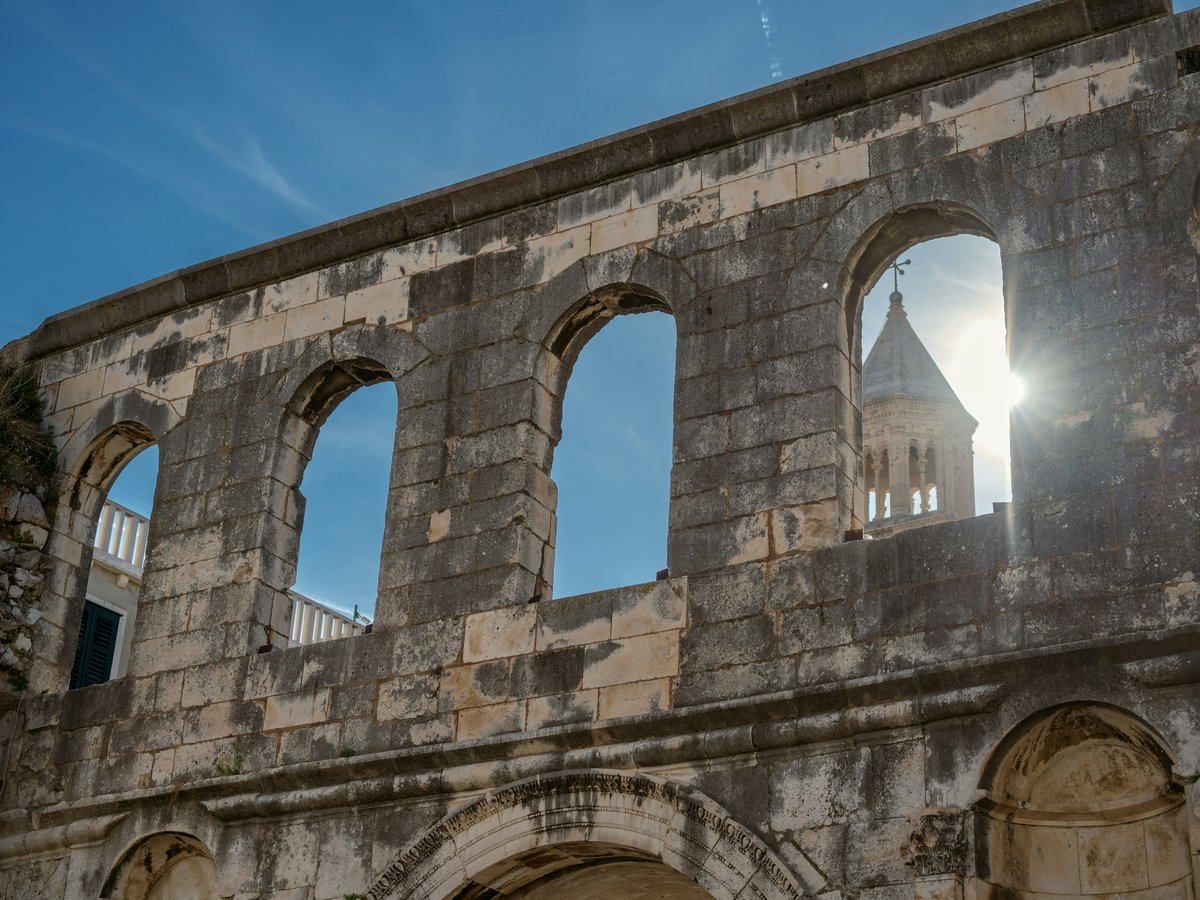
April is when Split wakes up from its quiet winter season, but the Adriatic hasn't caught up yet. Daytime highs reach about 18°C (64°F) and lows settle near 10°C (49°F), pleasant for walking the narrow limestone alleys of the old town and for the trails on Marjan, the forested peninsula on the city's western edge. The sea still hovers around 15°C (59°F), though. Most visitors won't get in. Diocletian's Palace, dating to 293, sits at the center of daily life here, and in April you can walk its 1,700-year-old peristyle without fighting through tour groups for a sightline.
The practical upside is real. Split's peak tourist season runs June through September, so April falls well before the crush. Hotel rates sit meaningfully below their summer ceiling, and neighborhoods like Varoš and Manuš still have wide-open availability. Restaurants along the Riva waterfront promenade set out their terrace seating in early April, still drawing a mostly local crowd. Mind you, some seasonal operators won't be running yet. Boat tours to the Blue Cave and the beach clubs along the western coast typically hold off until May.
Rain is the honest drawback. April accumulates about 109mm across roughly 9 rainy days, and when a weather system rolls in off the Adriatic, it tends to settle for hours rather than passing quickly. You might get 4 dry days of mild sunshine and then 2 days of steady drizzle that turns the Palace's polished stone surfaces slick. If guaranteed sun and beach conditions are non-negotiable, wait for June or July. Otherwise, pack layers and plan indoor alternatives for the wet spells. Sunset reaches close to 8 PM by the end of April, which still leaves solid evening daylight for the waterfront.
Why visit in April
- Diocletian's Palace and the peristyle are explorable without the dense summer crowds that make the narrow cardo and decumanus streets feel claustrophobic from June onward
- Spring wildflowers cover the trails on Marjan, and the comfortable temperatures make the coastal path and the climb to the summit genuinely enjoyable rather than a hot slog
- Hotel rates in Varoš and Manuš are noticeably below July and August pricing, with last-minute availability that disappears entirely by peak season
- Easter week, when it falls in April, fills the Grad quarter with traditional Catholic processions and an atmosphere that feels genuinely local rather than tourist-oriented
Worth knowing
- The Adriatic water temperature near 15°C (59°F) makes swimming uncomfortable for most visitors. Bačvice and the beaches along the Meje peninsula are effectively off-limits for water activities until late May.
- Rain arrives regularly through the month, and Adriatic weather systems tend to settle in rather than pass quickly. A rainy day in Split often means a rainy afternoon and evening.
- Some seasonal businesses remain closed until May, including Blue Cave boat tours and island beach clubs. The full Jadrolinija ferry schedule to Vis, Lastovo, and outer islands doesn't start until June.
- Evenings drop into single-digit temperatures. Visitors who pack for stereotypical Mediterranean summer weather find themselves underdressed by 7 PM.
Best for
Think twice if
Split in April feels like early spring rather than the Mediterranean warmth many visitors expect. Afternoons are pleasant in the sun, with a light breeze off the channel keeping humidity at a comfortable 65%. Mornings and evenings carry a genuine chill, and you'll want a layer for anything after dark. Rainfall comes in stretches rather than brief afternoon bursts, often arriving with cloud cover that can last a full day. The overall feel is mild and changeable, with enough sunny windows to spend most days outdoors.
Seasonal caution
- The bura wind, a cold, dry northeasterly, occasionally hits the Dalmatian coast in April. Exposed areas like the Riva and Marjan's western trails feel 5-8°C colder than the thermometer reads when it blows. Jadrolinija cancels ferry crossings during strong bura events, which can strand day-trippers on Brač or Hvar for an unplanned overnight.
Year-round climate
Averages from the last 5 years.
| Month | Avg high (°C) | Avg low (°C) | Rainfall (mm) |
|---|---|---|---|
| Jan | 12 | 5 | 162 |
| Feb | 13 | 5 | 81 |
| Mar | 15 | 7 | 110 |
| Apr | 18 | 10 | 109 |
| May | 23 | 15 | 110 |
| Jun | 29 | 20 | 49 |
| Jul | 32 | 23 | 23 |
| Aug | 31 | 22 | 76 |
| Sep | 26 | 18 | 137 |
| Oct | 22 | 14 | 110 |
| Nov | 16 | 9 | 258 |
| Dec | 13 | 7 | 157 |
Best things to do in April
Hike the Marjan peninsula trails
outdoorsThe 3.5km coastal path from Bene beach to the southern face passes through Aleppo pine forest and offers views across the channel to Brač, Šolta, and Čiovo. The Telegrin summit sits at 178 meters and has a small chapel. In April, the forest floor is covered with spring cyclamen, wild orchids, and asphodels.
Mid-teen temperatures are ideal for hiking. Summer pushes above 30°C, making the exposed summit uncomfortable. The spring wildflower season peaks in the second half of April.Booking tipNo booking needed. The trailheads at Bene and near the Institute of Oceanography are well-marked. Start before 10 AM on weekends when local joggers and families fill the paths.
Explore the Salona archaeological site
cultureThe ruins of the Roman provincial capital sit in Solin, roughly 5km northeast of Split's center. The amphitheatre once held 18,000 spectators, and the aqueduct that supplied Diocletian's Palace ran from springs near here. The site sprawls across open fields with almost no shade, making it more of a walk than a single-stop visit.
April's mild temperatures make the largely shadeless site comfortable. In summer, the lack of cover makes midday visits punishing. Spring grass and wildflowers also make the ruins more photogenic than the brown, dried-out summer landscape.Booking tipArrive early morning. Parking at the main entrance is limited. Bus 1 from Trg Gaje Bulata in Split stops in Solin.
Day trip to Trogir
day tripThe island old town of Trogir sits about 27km west of Split and holds a UNESCO-listed medieval core. Trogir Cathedral, founded in 1213, has a Romanesque portal by Master Radovan considered one of the finest on the Adriatic. Kamerlengo Castle, built in 1420, opens its ramparts for views across the channel. The town is small enough to cover on foot in 3-4 hours.
Trogir's narrow stone streets become uncomfortably packed from June through August. April lets you stop and examine the Radovan portal without a crowd pushing past. Several konobas on the waterfront open spring menus with local catch.Booking tipBus 37 runs from Split's main bus station to Trogir roughly every 20-30 minutes. The ride takes about 30 minutes. No need to book ahead.
Tour the Cathedral of Saint Domnius bell tower
cultureThe cathedral sits inside the Palace walls, built into what was originally the emperor's mausoleum. The separate bell tower offers 360-degree views over Split's rooftops, the harbor, and the Marjan peninsula. The climb involves roughly 183 steps up a narrow stone staircase with tight turns.
Shorter queues mean you can climb without the 30-45 minute wait common in peak season. April's clearer air, before the summer haze builds over the Adriatic, tends to produce sharper views toward the islands.Booking tipTickets sold at the entrance. Morning light is best for photography from the top.
Attend the Marulićevi dani theatre festival
cultureThis annual drama festival at the Croatian National Theatre in Split, founded in 1893, runs for about 10 days in the second half of April. It takes its name from Marko Marulić, the Renaissance writer often called the father of Croatian literature. The festival features new Croatian-language productions alongside invited international work, performed in the ornate 19th-century theatre on Trg Gaje Bulata.
The festival only happens in April. It's one of the few dedicated cultural events on the Dalmatian coast outside summer and draws Croatian theatre audiences who don't come during tourist season.Booking tipCheck the HNK Split website for program and ticket sales, which typically open 2-3 weeks before. Weekend performances sell out first.
Walk the Riva and Grad quarter without summer crowds
sightseeingThe Riva, Split's palm-lined waterfront promenade, connects the ferry port to the western edge of the old town. Behind it, the Grad quarter inside the Palace walls is a lived-in neighborhood where residents hang laundry between Roman columns and cats sleep on ancient stonework. The smell of fresh coffee drifts from doorway cafes at 8 AM.
The experience changes fundamentally between seasons. In July, the peristyle is a bottleneck packed 3-4 people deep. In April, you might have it nearly to yourself in the early morning, with the sound of pigeons instead of amplified tour-guide commentary.Visit the Temple of Jupiter
cultureTucked into a narrow street inside the Palace, this small Roman temple originally served the cult of Jupiter and was later converted into a Christian baptistery. The barrel-vaulted ceiling and the Egyptian sphinx flanking the entrance date to the late 3rd century. The interior is tiny, roughly 6 by 9 meters, which means it gets overcrowded fast in summer.
April's lower visitor numbers mean you can stand inside the temple and examine the coffered ceiling without being shuffled through. During peak season, you're lucky to get 2 minutes before the next group pushes in.Booking tipIncluded in the combined Diocletian's Palace ticket. Visit before 10 AM for the best light through the doorway.
What to eat in April
On menus now
Janjetina ispod peke (lamb under the bell)
Spring lamb slow-roasted under a cast-iron peka dome with potatoes, onions, and rosemary. The meat cooks for 2-3 hours under hot embers until it falls apart. April lamb is particularly prized because the animals have been grazing on fresh spring herbs. Traditional konobas in the Varoš quarter typically require 2-3 hours advance notice to prepare it.
Bob na salatu (broad bean salad)
Fresh broad beans arrive at the Pazar green market in April, tossed raw with olive oil, lemon, salt, and sometimes shaved sheep's cheese. The texture is grassy and slightly sweet. Nothing like dried beans.
Gregada
A traditional Dalmatian fish stew made with whatever white fish the morning catch brings, plus potatoes, white wine, capers, and olive oil. April's calmer seas improve the day-boat catch quality compared to stormier winter months. No tomato, which distinguishes it from the better-known brudet.
In markets
Divlje šparoge (wild asparagus)
The defining spring ingredient in Dalmatia. Locals forage thin, slightly bitter wild asparagus on the slopes around the city and along rural paths. Typically served in a frittata with eggs or tossed through pasta with olive oil and garlic. Peak foraging runs mid-March through late April.
Festival food
Pinca
A lightly sweet, citrus-scented bread baked across Dalmatia for Easter. Flavored with lemon zest and maraschino liqueur, scored with a cross on top. Bakeries in the Grad quarter start producing pinca about a week before Easter Sunday. Available year-round at some spots, but the Easter batches use better ingredients and sell out by mid-morning.
Regular events in April
Easter processions (Uskrs)Free
Catholic Easter brings solemn processions through the Grad quarter on Good Friday evening. Participants carry candles and wooden crosses through the narrow Palace streets. The procession typically begins at the Cathedral of Saint Domnius and winds through the old town. Easter Sunday mass fills the cathedral. Traditional Easter foods appear in bakeries and markets throughout Holy Week.
Date varies yearly. Falls in April in most years, occasionally late March.Marulićevi dani (Marulić Days)
Annual Croatian drama festival at the Croatian National Theatre in Split. Roughly 10 days of new Croatian-language productions and invited international performances.
Second half of April, typically April 15-25Hajduk Split football at Stadion Poljud
The Croatian Prva HNL football season runs through April, and Hajduk Split plays home matches at the 34,198-seat Stadion Poljud, opened in 1979. Match-day atmosphere is intense and genuinely local. The torcida (organized supporters) have a reputation as one of the oldest fan groups in European football.
Multiple match days throughout April, schedules released monthly by the HNSBest places this April
Marjan
natureThe forested hill on Split's western peninsula offers comfortable hiking conditions in April. The south-facing slopes above Kašjuni beach catch afternoon sun even on partly cloudy days, and the Aleppo pine forest provides welcome shade when the midday sun is direct. Quieter than summer by a wide margin.
MejePazar (Green Market)
marketSplit's open-air market sits on the eastern edge of the Palace walls. April brings the first serious spring produce. Wild asparagus, broad beans, artichokes, and young garlic pile up on the stalls. The vendors are local farmers from surrounding villages, and prices run well below tourist-restaurant markup.
GradSustipan
parkA park and historic cemetery at the tip of the peninsula south of the old fishing quarter. Shaded by Mediterranean pines and cypresses, it has stone benches overlooking the harbor channel and the island of Čiovo. In April, the park is genuinely quiet. Locals use it for morning walks.
VarošGalerija Meštrović (Ivan Meštrović Gallery)
museumThe sculptor's former villa on Šetalište Ivana Meštrovića houses a collection of his work in stone, bronze, and wood. The villa's garden overlooks the Adriatic and is planted with Mediterranean species that bloom in spring. April's mild weather makes the outdoor sculpture terrace more comfortable than the heat-exposed summer months.
MejeFirule coastal path
walkThe paved coastal walk through the Firule neighborhood offers views of the Marjan peninsula across the bay. Pine-shaded benches along the route are sheltered from the bura. Local families use this stretch for evening walks year-round. The swimming is off the table, but the perspective on the city is worth the 30-minute stroll.
FiruleHollow Church (Šuplja crkva)
historic siteA ruined church dating to roughly 1100 in Solin, near the larger Salona archaeological complex. Only the walls remain, giving it an open-air quality that feels different from the intact churches inside Split's Palace walls. Worth combining with a Salona visit since both sit along the same road.
Solin
Your packing checklist
Tick items off as you pack. Your progress saves in this browser.
All packed — have a great trip.
Insider tips
The Peškarija fish market on the northeastern wall of the Palace opens around 6:30 AM and is largely picked over by 9 AM. The best selection of whole fish, squid, and shrimp from the overnight boats arrives earliest. Restaurants buy here too, so what's gone is gone.
The evening šetnja (stroll) along the Riva between 5 and 7 PM is a real social ritual, not a tourist invention. It's not a show. It's how the city socializes. Ordering a single macchiato at a waterfront cafe and sitting for an hour is completely normal and expected. Nobody will rush you.
If the bura wind is forecast, check Jadrolinija ferry status before committing to an island day trip. The Brač crossing takes about 50 minutes, and a cancelled return ferry means an unplanned overnight. Wind forecasts from the Croatian Meteorological and Hydrological Service (DHMZ) are reliable 24-48 hours out.
LGBTQ+ travelers should know that Split scores 6/10 on the TTDI friendliness scale (sourced from TTDI's editorial rubric). Croatia legalized same-sex partnerships in 2014, but attitudes in Dalmatia tend to be more conservative than in Zagreb. Public affection between same-sex couples still draws attention outside the Grad quarter.
Avoid these mistakes
- Packing only summer clothes and sandals. April in Split is not the Mediterranean summer visitors imagine. Mornings and evenings are genuinely cool, rain is common, and the Palace's stone surfaces are hazardous in smooth-soled shoes when wet.
- Planning a full-day island itinerary without checking ferry frequency. Early April may still run a winter-adjacent schedule. The Split-Vis route, for example, might operate only once daily, and a missed return means rebooking accommodation.
- Booking a beachfront apartment at premium rates for a month when the water is too cold to swim. Apartments in the Varoš quarter or near the Pazar market offer better value and put you closer to what you'll do in April, which is cultural and food-focused rather than beach-oriented.
- Assuming restaurants serve the full summer menu. Some seafood-forward places limit their offerings in shoulder season based on what's available at the day market. This is a positive sign. It means they're cooking with what arrived that morning.
Practical tips for April
Croatia adopted the euro in January 2023, so there is no currency exchange hassle. At the current rate of roughly 1 USD to 0.86 EUR, estimating costs is straightforward. Most restaurants, museums, and transit accept contactless payment, though Pazar market vendors and some smaller konobas in Varoš still prefer cash. Book accommodation at least 3 weeks ahead if your visit overlaps with Easter, as Croatian domestic tourists fill Split's hotels during the long weekend. Ferry tickets to Brač and Hvar can typically be purchased on the day of travel in April, unlike summer when advance booking through Jadrolinija is necessary. The Split city bus system runs on a reduced April schedule compared to summer, with the last buses on some routes departing before 11 PM. Museums and churches in the Grad quarter generally open at 9 AM and close by 5 PM, shorter hours than the 8 AM to 8 PM summer window.
FAQ
Is April a good time to visit Split?
April is a solid shoulder-season choice if your priorities are sightseeing, food, and walking rather than beach and swimming. The Adriatic is too cold for comfortable swimming, and some seasonal businesses remain closed. But the trade-off is thinner crowds at the Roman-era sites, lower hotel rates, and a city that still feels like a place where people live rather than a tourism stage set. It ranks about 6th out of 12 months overall, behind the warmer shoulder months of May and October and the peak-weather months of June and September.
What is the weather like in Split in April?
Expect mild but changeable conditions. Sunny afternoons feel pleasant in a t-shirt, but mornings and evenings need a jacket. Rainy spells arrive regularly and tend to persist for hours rather than clearing quickly. The bura wind occasionally brings a sharp cold snap from the northeast that drops the perceived temperature significantly and can disrupt ferry crossings to the islands.
Is Split crowded in April?
No. April is low season by Split's standards. You won't encounter the tour-group congestion that fills the Palace peristyle from June through September. Restaurants don't need reservations on most nights. The Riva waterfront has open seats at peak hours. Easter weekend is the one exception, when Croatian domestic visitors drive a short spike in accommodation demand.
Can you swim at the beaches in Split in April?
Technically, yes. Practically, few people do. The sea temperature is around 15°C (59°F), which most swimmers find too cold without a wetsuit. Bačvice beach is open and walkable, but the picigin players (a local ball game played in knee-deep water) tend to be a hardier subset of the local population. Comfortable sea swimming in Split generally starts in late May.
What should I eat in Split in April?
Spring defines the menu. Wild asparagus, foraged from the hills around the city, appears in frittatas and pasta dishes at nearly every traditional konoba. Fresh broad beans arrive at the Pazar market tender and sweet. Spring lamb cooked under the peka bell is at its seasonal peak. If Easter falls during your visit, look for pinca, a citrus-scented sweet bread that bakeries produce in limited batches during Holy Week.
Things to Do in Split in April
 Free cancellation
 From Split: Krka Waterfalls, Food & Wine Tasting Tour
Day trip: 10 hours, free cancellation.
via Viator Free cancellation
 Blue Cave, Mamma Mia and Hvar, 5 Islands Speed boat Small group
Day trip: free cancellation.
via Viator Free cancellation
 From Split: Krka Waterfalls Tour, Boat Cruise & Swimming
Outdoor experience: 10 hours, free cancellation.
via Viator Free cancellation
 Blue Cave, Mama Mia and Hvar, 5 Island Speed boat Small group
Outdoor experience: free cancellation.
via Viator Free cancellation
 From Split: Plitvice Lakes National Park Guided Tour
Day trip: 11 hours, free cancellation.
via Viator Free cancellation
 Krka Waterfalls Tour from Split with Boat Ride and Swimming
Day trip: 7.5 hours, free cancellation.
via ViatorFind a flight to Split
Live fares to Split appear here once cookies are accepted.
Last verified by automated review (v1.7.2) on . What is automated review?