Stay in Split in September
71 hotels in the Trip.com pool for Split, from US$21 a night.
Opens Trip.com on Fri 3 Sep to Sun 5 Sep 2027; change the dates there.
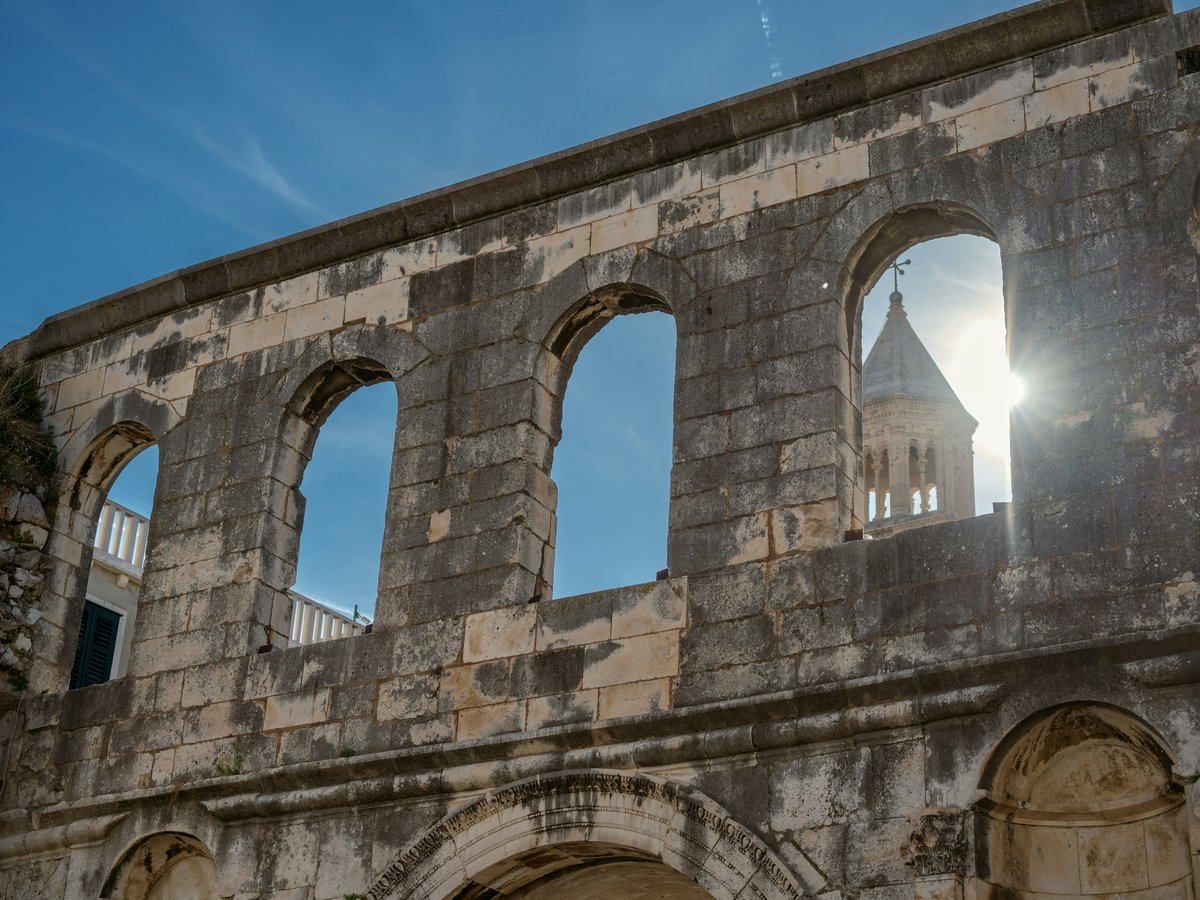
September in Split hits a sweet spot the peak-summer months cannot quite match. The Adriatic reaches its warmest point of the year, typically around 24°C (75°F), right as the August crowds begin draining away. Daytime highs average 26.2°C (79°F), a welcome drop from July's 32°C, and evenings cool to about 17.8°C (64°F), which means you can sleep without air conditioning for the first time since June. Walking through Diocletian's Palace, built in 293 for the Roman emperor, feels different when you are not competing for space in the Peristil courtyard or queuing 20 minutes for the basement halls. By the second week, cruise-ship day-trippers thin noticeably and the Riva waterfront returns to something closer to its local rhythm.
That said, September is also when the rain returns in earnest. Expect roughly 137mm across about 8 rainy days, nearly double August's 76mm and a sharp departure from July's bone-dry 23mm. These tend to arrive as intense, short-lived Mediterranean downpours rather than all-day gray. A morning might start bright and warm, then a storm rolls in off the sea around 3pm, dumps rain for 40 minutes, and clears to reveal wet stone and the smell of pine drifting down from Marjan hill. Worth noting, though. If you are planning a day trip to the exposed ruins at Salona, check the forecast that morning.
Pricing follows a clear two-act structure within the month. The first week, when northern European school holidays still overlap, runs close to August rates for apartments in Grad and along the Bačvice waterfront. By mid-September, accommodation costs drop meaningfully. The Split Film Festival typically lands around the middle of the month, filling screening venues including the Croatian National Theatre, a building that has operated since 1893, and it draws a noticeably different crowd from the summer beach tourists.
Why visit in September
- The Adriatic reaches its annual peak temperature in early September, often warmer than the evening air on shore, making this arguably the best swimming month of the year.
- Cruise ship traffic and package-tour groups drop after the first week, cutting queue times at the Cathedral of Saint Domnius and other palace sites by roughly half compared to July and August.
- Accommodation prices fall meaningfully from August levels by mid-month, with the steepest cuts appearing after September 15 for apartments in Grad and Varoš.
- Daytime temperatures are comfortable for walking and sightseeing without the July-August intensity that sends most visitors indoors between noon and 4pm.
Worth knowing
- Rainfall nearly doubles compared to August, and the sudden storms can cancel or complicate boat excursions to Brač, Hvar, and Vis with little warning.
- The first 7 to 10 days of September still carry near-peak crowds and pricing, especially around the palace and along the waterfront.
- Some seasonal restaurants and beach bars in Meje and along the western beaches begin closing for the year in the second half of the month, narrowing your evening options.
Best for
Think twice if
September marks the shift from dry Mediterranean summer to the wetter autumn pattern. The first half of the month often feels like a continuation of August, with bright, warm days and a sea still comfortable for long swims. As the month progresses, the short downpours become more frequent, typically arriving in the afternoon and clearing within the hour. Humidity sits around 63%, comfortable compared to the muggier stretches of high summer. Sea breezes off the Adriatic moderate the daytime warmth. The bura, a cold northeasterly wind, can make an early-season appearance in late September, dropping temperatures sharply for a day or two and turning the sea choppy on the north-facing coast.
Year-round climate
Averages from the last 5 years.
| Month | Avg high (°C) | Avg low (°C) | Rainfall (mm) |
|---|---|---|---|
| Jan | 12 | 5 | 162 |
| Feb | 13 | 5 | 81 |
| Mar | 15 | 7 | 110 |
| Apr | 18 | 10 | 109 |
| May | 23 | 15 | 110 |
| Jun | 29 | 20 | 49 |
| Jul | 32 | 23 | 23 |
| Aug | 31 | 22 | 76 |
| Sep | 26 | 18 | 137 |
| Oct | 22 | 14 | 110 |
| Nov | 16 | 9 | 258 |
| Dec | 13 | 7 | 157 |
Best things to do in September
Swimming at Kašjuni beach
beachKašjuni sits on the western slope of Marjan, a pebbly cove backed by pine forest with clear water and a west-facing aspect that catches late-afternoon sun. A concrete path descends from the Marjan forest park trail above.
Sea temperature peaks in early September, the warmest of the year, and this beach loses its August crowds after the first week. You might have stretches of shoreline to yourself by mid-month.Booking tipNo booking needed. Arrive before noon for the best spots near the tree shade along the north edge of the cove.
Hiking Marjan's north-face trails
outdoorMarjan, the forested hill forming Split's western peninsula, has a network of trails ranging from paved paths to rocky scrambles along the northern cliffs. The summit sits at 178 meters with views across Kaštela Bay to the Kozjak mountains.
The drop in temperature from summer's peak makes a full 2-hour circuit feasible without an early-dawn start to beat the heat. The pine-scented air after a rain shower is worth the trip alone.Day trip to Trogir
day tripTrogir sits 30 minutes west of Split by local bus, a compact island-town connected to the mainland by a stone bridge. The UNESCO-listed old town centers on Trogir Cathedral, whose construction began in 1213, and Kamerlengo Castle, a Venetian fortress dating to 1420. The entire old town loop takes about 2 hours on foot.
September's reduced tour-bus traffic means you can photograph Master Radovan's cathedral portal without a crowd blocking the frame. The castle ramparts are less packed too.Booking tipBus 37 from Split's suburban bus station runs every 20 minutes. No advance ticket needed.
Exploring Salona archaeological site
cultureThe ruins of Roman Salona spread across fields and olive groves in modern-day Solin, 5km north of central Split. The site includes a 2nd-century amphitheater, early Christian basilicas, and sections of city wall. It was the largest Roman city on the eastern Adriatic.
The site is almost entirely unshaded. Summer visits at 32°C with no cover are punishing. September's milder daytime temperatures make a 2-to-3-hour exploration comfortable rather than dangerous.Booking tipThe Solin bus from Split's center takes 20 minutes. Bring water regardless of the season.
Split Film Festival screenings
cultureThe festival screens independent and art-house films across several old-town venues, including open-air screenings in the Peristil courtyard when weather permits. International and Croatian selections run over 5 to 7 days with Q&A sessions after selected films.
The festival typically falls in mid-September. Outdoor screenings inside the 1,700-year-old palace courtyard are unique to this brief window before autumn weather makes them impractical.Booking tipCheck the festival website once dates are announced. Popular screenings sell out, but weekday matinees are usually available.
Wine tasting in the Kaštela vineyards
food and drinkThe Kaštela riviera, a string of 7 small towns between Split and Trogir, is surrounded by vineyards growing Crljenak Kaštelanski, the grape identified as the ancestor of California's Zinfandel. Several family wineries offer tastings by appointment.
September is grape harvest season. You might see the picking in progress, and wineries often pour samples of the year's first pressing alongside their finished bottles.Booking tipContact wineries at least 2 days ahead. Most are family-run operations without regular tasting-room hours.
Sea kayaking along Marjan's coast
outdoorKayak routes run along Marjan's southern shore, passing sea caves, small pebbly coves accessible only from the water, and views up to the hill's pine canopy. Most outfitters launch from Žnjan or the Meje shoreline.
Calm sea conditions tend to be more reliable in September than in the windier autumn months ahead, and the warm water means a capsize is refreshing rather than risky.Booking tipMorning departures are best for calm water. Book 2 to 3 days ahead on weekends.
What to eat in September
In season: fruit
Smokve (fresh figs)
Peak Dalmatian fig season. Both green and dark purple varieties appear at the morning market at Pazar, sold by the kilogram. The sweetest tend to come from the nearby islands, and vendors often let you sample before buying.
Grožđe (table grapes)
Harvest season brings table grapes to every morning market in Split. Local varieties tend to be smaller and sweeter than supermarket imports. Pazar vendors often set out open crates for sampling.
Šipci (early pomegranates)
Early-season pomegranates start appearing at the markets toward month's end, signaling the shift to autumn produce. They tend to be smaller and more tart than the later November fruit.
On menus now
Brudet
Dalmatian fish stew made from whatever the morning catch brings in. September's catch typically includes scorpionfish, monkfish, and small rockfish, simmered in tomato, wine, and olive oil. Konobas in the upper lanes of Varoš typically serve it with polenta on the side.
Peka
Meat or octopus slow-cooked under a metal bell covered in embers. September's cooler evenings make this heavy, smoky dish more appealing than it is in the August heat. Most konobas need 2 to 3 hours advance notice to prepare it.
What to drink
Mošt (young wine)
The first grape pressings of the season appear in late September. This cloudy, semi-fermented drink shows up at harvest gatherings and some traditional konobas, still sweet and slightly fizzy from active fermentation.
Regular events in September
Splitski filmski festival (Split Film Festival)
Independent and art-house film festival screening Croatian and international selections across old-town venues, including open-air projections in the palace courtyards when weather permits. Typically runs 5 to 7 days.
Mid-SeptemberEuropski dani baštine (European Heritage Days)Free
Pan-European heritage celebration. Split's participating sites, including spaces within Diocletian's Palace and across Solin normally closed to the public, open their doors for free guided tours and exhibitions.
Third weekend of SeptemberMala Gospa pilgrimage to SolinFree
Traditional Catholic pilgrimage to Gospa od Otoka (Our Lady of the Island) in Solin. Thousands of pilgrims walk from Split to the basilica site near the Hollow Church, a structure dating to approximately 1100, for an outdoor mass and procession passing the ancient ruins.
September 8Best places this September
Marjan
natureThe 178-meter forested hill west of the old town. September's temperatures make the full loop trail genuinely pleasant. The south-side viewpoints look out over the islands of Brač, Šolta, and Čiovo. Early mornings, you will share the paths mostly with Split's joggers and dog walkers. The air carries resin and salt in equal measure.
MejePazar (Green Market)
marketSplit's open-air produce market fills the eastern edge of the palace walls every morning. September brings the year's best fig selection, table grapes, early pomegranates, and the last of the summer tomatoes. By noon, vendors are packing up. The fish market, Peškarija, operates on the same schedule directly below.
GradVaroš
neighborhoodThe old fishermen's quarter climbs the hillside west of the palace in a maze of narrow stone steps and laundry lines. September evenings here, with the heat broken and the tourist noise dropped, are some of the most atmospheric in the city. Several konobas along the upper lanes have terrace seating looking out over the rooftops toward the harbor.
VarošBačvice beach
beachSplit's main city beach, a shallow sandy cove a 10-minute walk east of the ferry terminal. September afternoons are warm enough for long swims but the beach is no longer packed shoulder-to-shoulder. This is where locals play picigin, a traditional ball game in knee-deep water that has been played here since the 1920s.
BačviceCathedral of Saint Domnius bell tower
landmarkThe bell tower climb, roughly 200 steps up a narrow medieval staircase, rewards with a 360-degree view over the palace, the harbor, and Marjan. In September you will likely wait 5 to 10 minutes for the climb instead of the 30-to-45-minute queues common in high summer.
GradTemple of Jupiter
landmarkA small but remarkably intact Roman temple inside the palace walls, originally dedicated to Jupiter and later converted to a baptistery. September's thinner foot traffic in the narrow street leading to the entrance means you can pause inside rather than being shuffled through by the crowd behind you.
GradKašjuni beach
beachA pebbly cove on Marjan's western slope, backed by pine trees and reached by a path from the forest park or a steep access road. Less developed than the main city beach, with rougher facilities but notably cleaner water and a quieter atmosphere by mid-September. The pine shade keeps one end of the beach cool even in early afternoon.
Meje
Your packing checklist
Tick items off as you pack. Your progress saves in this browser.
All packed — have a great trip.
Insider tips
The morning market at Pazar operates on a sharp clock. Arrive before 9am for the best figs and the vendors who grow their own produce. After 10am, the selection thins and what remains has been picked over. The fish market below follows the same pattern.
Ferry tickets to the islands (Brač, Hvar, Vis) in early September should still be booked a day or two ahead, especially for vehicle spots. By late September, walk-on tickets are generally available same-day from the Jadrolinija window at the port.
The Peristil courtyard is at its most photogenic between 7 and 8am, when the light hits the eastern columns and the only other people present are residents walking to work. By 10am, the tour groups arrive and the light flattens.
Split's tap water is drinkable and comes from the Jadro river spring. Buying bottled water is unnecessary, and most restaurants will fill a carafe from the tap for free if you ask.
If the bura wind picks up (you will know because the harbor side goes flat and glassy while whitecaps form further out), boat excursions may cancel with little notice. Check meteo.hr that morning rather than relying on tour operator reassurances about afternoon improvements.
Avoid these mistakes
- Booking the first week of September expecting shoulder-season prices. The initial 7 to 10 days still run near peak-summer rates, and the old town is still crowded with the tail end of package-tour groups. Wait until after September 10 for the real pricing shift.
- Planning a full-day outdoor excursion without checking the rain forecast. September storms can strand you at Salona or on an exposed Marjan trail section with no cover. Check meteo.hr the morning of, not the night before, since Mediterranean storm patterns shift quickly.
- Underestimating the walk from the ferry terminal to upper Varoš or Meje with luggage. The old town has stone steps, not ramps. If your accommodation is in the upper lanes, a taxi to the nearest accessible street plus a short walk is worth the fare.
- Treating Solin as an uninteresting suburb on a map. The ruins there are more extensive than anything inside the palace walls, the bus ride takes 20 minutes, and most visitors never make the trip.
Practical tips for September
Ferry schedules to the islands shift from summer frequency to a reduced shoulder-season timetable around mid-September. Check jadrolinija.hr for current crossings rather than trusting summer schedules posted at hostels. The currency is the euro (1 USD currently converts to about 0.86 EUR). Most beach bars along the Meje shoreline and at Žnjan begin closing for the season in the second half of the month, so confirm hours before making the walk. The Split Card, available at the Peristil tourist office, covers public transit and museum entry at a discount for 24, 48, or 72 hours. Book any day-trip boat excursion for the morning slot when seas are typically calmer. Evening restaurant reservations in Grad and Varoš are still advisable on weekends through mid-September, though midweek tables are increasingly available without booking. Tipping is not customary in Croatia, but rounding up the bill by 5 to 10 percent is appreciated at sit-down restaurants. Public buses run on reduced Sunday schedules.
FAQ
Is September a good time to visit Split?
September ranks among Split's top 3 visiting months, behind June and May. The sea is at its warmest for swimming, crowds thin after the first week, and accommodation costs ease by mid-month. The main trade-off is a noticeable return of rainfall compared to the dry summer months, arriving as short Mediterranean storms rather than all-day drizzle. Early September still feels like summer. Late September starts tipping toward autumn.
What is the weather like in Split in September?
Think of it as the tail end of Mediterranean summer. Warm days, comfortable evenings, and the sea still at its annual warmest. The transition from dry summer to wetter autumn is noticeable, with showers arriving several days of the month, typically in intense bursts that clear within an hour. You can still spend full days at the beach in the first half. By late September, bring a sweater for after dark.
Is Split crowded in September?
The first week tends to carry the tail of peak-season visitor numbers, especially around Diocletian's Palace and the main city beach. After roughly September 10, crowds drop significantly. By the third week, you will notice shorter queues at sites, open tables at restaurants that were fully booked in August, and a general shift toward the city feeling more like a place where people live rather than a tourist set piece.
Can you still swim in Split in September?
Yes, and September is arguably the best month for it. The Adriatic is at its annual peak temperature, and the air is comfortable rather than oppressive. All public beaches remain open and staffed. By late September the water starts cooling, but it remains well above what most Northern Europeans consider swimmable.
Is Split safe for solo travelers in September?
Split scores 8.2/10 for solo-traveler safety (see the TTDI Solo-Safety Index). The old town and waterfront areas feel safe at all hours, and the reduced September crowds do not create the deserted-street feeling that deep-winter months sometimes carry. Standard urban precautions apply around the ferry terminal area late at night, as in any port city.
Things to Do in Split in September
 Free cancellation
 From Split: Krka Waterfalls, Food & Wine Tasting Tour
Day trip: 10 hours, free cancellation.
via Viator Free cancellation
 Blue Cave, Mamma Mia and Hvar, 5 Islands Speed boat Small group
Day trip: free cancellation.
via Viator Free cancellation
 Blue Lagoon & 3 Islands Cruise with Lunch, Wine & Swim from Split
Outdoor experience: 8 hours, free cancellation.
via Viator Free cancellation
 Blue Cave and Hvar Tour - 5 Islands Tour from Split and Trogir
Day trip: free cancellation.
via Viator Free cancellation
 From Split: Krka Waterfalls Tour, Boat Cruise & Swimming
Outdoor experience: 10 hours, free cancellation.
via Viator Free cancellation
 Blue Cave, Mama Mia and Hvar, 5 Island Speed boat Small group
Outdoor experience: free cancellation.
via ViatorFind a flight to Split
Live fares to Split appear here once cookies are accepted.
Last verified by automated review (v1.7.2) on . What is automated review?