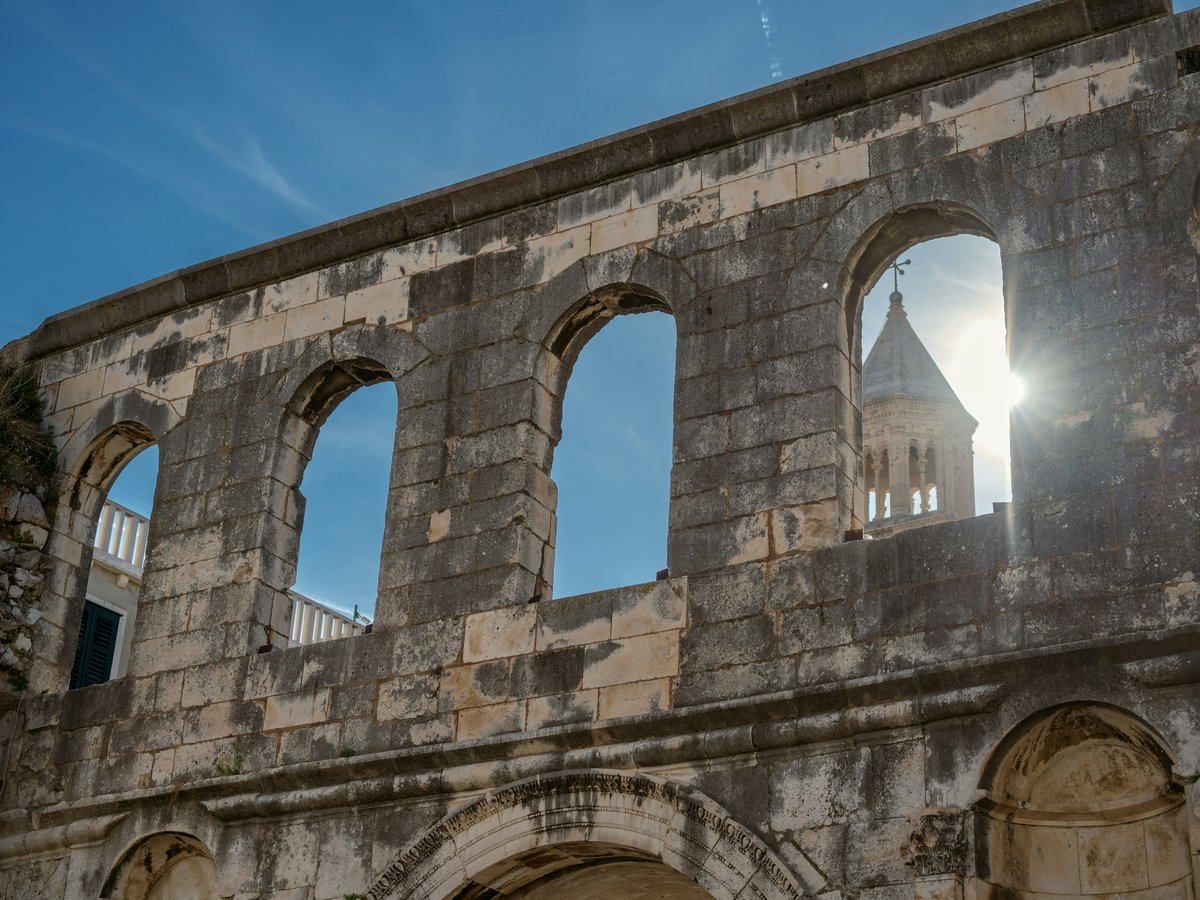
Stay in Split in July
71 hotels in the Trip.com pool for Split, from US$21 a night.
Opens Trip.com on Fri 2 Jul to Sun 4 Jul 2027; change the dates there.
Split in July is hot, crowded, and expensive. Those three words deserve equal weight. Daytime temperatures regularly sit in the low 30s Celsius (around 90°F), the Adriatic warms to comfortable swimming temperature, and the limestone walls of Diocletian's Palace, completed around 293 AD, seem to absorb every degree and push it back at you after sunset. The Riva waterfront fills with cruise-ship passengers by mid-morning, apartment rates in Varoš climb well above the annual average, and Bačvice beach runs out of space before noon on weekends.
Worth noting, though. July also delivers Split at its most alive. The Splitsko ljeto (Split Summer Festival) has opened its season in mid-July every year since 1954, staging opera, ballet, and theater on open-air platforms including the Peristyle courtyard inside the palace walls. Ultra Europe packs Stadion Poljud with tens of thousands of electronic music fans, typically in the opening days of the month. Rain is nearly absent, and the humidity stays lower than you might expect on the Mediterranean. You will share every sunset viewpoint and every konoba with a lot of other visitors, but you'll find a city that stays awake past midnight, eats well, and puts on a genuine summer season.
If you can handle consistent heat and plan your bookings 6-8 weeks ahead, July rewards the effort. If you prefer quieter streets and gentler prices, June or September offer nearly comparable conditions with noticeably thinner crowds.
Why visit in July
- The driest month of the year, with roughly 3 rainy days total, making outdoor plans highly reliable for day trips to islands like Brač and Hvar.
- Adriatic sea temperature reaches approximately 25°C (77°F), warm enough for extended open-water swimming and snorkeling without a wetsuit.
- Splitsko ljeto and Ultra Europe create back-to-back cultural and music programming that fills nearly every evening with live performance through mid-August.
- Ferry and catamaran connections to the Dalmatian islands run at maximum summer frequency, with Jadrolinija operating multiple daily departures to Supetar, Stari Grad, and Vis town.
Worth knowing
- Absolute peak-season pricing. Accommodation in the old town or Varoš runs 50-60% above the annual average, and waterfront restaurant tabs follow suit.
- Cruise ships deposit 3,000-5,000 day-trippers into the old town on heavy days, concentrating foot traffic around Diocletian's Palace between 10 AM and 4 PM.
- Temperatures in the low 30s Celsius feel several degrees hotter inside the palace walls, where stone surfaces reflect heat and shade is limited. The midday stretch from noon to 3 PM is genuinely uncomfortable for walking tours.
- Parking near the old town is effectively impossible from late June through August. The Sukoišan and Lora garages fill by mid-morning.
Best for
Think twice if
July is Split's hottest and driest month. Days are long and consistently sunny, with cloud cover rare enough to be noteworthy. The heat is dry by Mediterranean standards, which makes occasional mid-30s spikes more bearable than comparable temperatures in humid climates. Evenings cool modestly, settling into the low 20s Celsius after midnight, still warm enough for open-air dining without a layer. The sea breeze, called the maestral, typically picks up around midday and provides some relief along the waterfront and beaches, though it fades by early evening. The overall feel is of relentless sunshine. You might go the entire month without seeing real cloud cover.
Seasonal caution
- UV index frequently reaches 9-10 between 11 AM and 3 PM. Sunburn can happen in under 20 minutes of direct exposure on beaches or boat decks without protection.
- Occasional heat spikes push daytime temperatures to 36-38°C (97-100°F) during southerly jugo wind events, which bring higher humidity and a milky haze. These episodes typically last 2-3 days before the maestral returns.
Year-round climate
Averages from the last 5 years.
| Month | Avg high (°C) | Avg low (°C) | Rainfall (mm) |
|---|---|---|---|
| Jan | 12 | 5 | 162 |
| Feb | 13 | 5 | 81 |
| Mar | 15 | 7 | 110 |
| Apr | 18 | 10 | 109 |
| May | 23 | 15 | 110 |
| Jun | 29 | 20 | 49 |
| Jul | 32 | 23 | 23 |
| Aug | 31 | 22 | 76 |
| Sep | 26 | 18 | 137 |
| Oct | 22 | 14 | 110 |
| Nov | 16 | 9 | 258 |
| Dec | 13 | 7 | 157 |
Headline events
Splitsko ljeto (Split Summer Festival)
Mid-July through mid-August (opening night usually around July 14-15)
Croatia's oldest and most prominent summer arts festival, running continuously since 1954. The program spans opera, drama, ballet, and classical music performed on open-air stages throughout the old town, including the Peristyle courtyard inside Diocletian's Palace. Roughly 40-50 individual performances fill the festival's run, with both Croatian and international companies. The smell of warm stone and the acoustics bouncing off Roman columns make the Peristyle performances unlike anything in a conventional theater.
Ultra Europe
First or second weekend of July (typically Friday through Sunday)
One of Europe's largest electronic dance music festivals, held at the 35,000-capacity Stadion Poljud. The bass reverberates off Marjan hill and carries across the harbor after dark. The main festival runs 3 days, but the full Ultra week stretches to 7 days with satellite after-parties on Hvar and Vis. If you are not an EDM fan, it is worth knowing the dates so you can plan around the noise and influx.
Best things to do in July
Early-morning hike up Marjan hill
outdoorThe 178-meter forested hill on Split's western peninsula has a network of shaded trails, stairways cut into rock, and viewpoints looking across to the islands of Šolta and Brač. The path from Varoš to the Vidilica viewpoint takes about 25 minutes. The canopy of Aleppo pines provides shade that the old town completely lacks, and the air smells of pine resin and warm earth.
Starting before 8 AM avoids the midday heat that makes the exposed summit sections difficult later. Morning light on the Adriatic from Telegrin peak is the best photography window of the year.Booking tipNo booking needed. Access from the stairway at the end of Senjska ulica in Varoš.
Island hopping to Brač and Hvar
day tripJadrolinija and Kapetan Luka catamarans run at maximum summer frequency from Split's ferry port. Supetar on Brač is a 50-minute crossing, Hvar town about 1 hour by catamaran. Zlatni Rat beach on Brač and the lavender fields above Stari Grad on Hvar are both at their seasonal best.
Maximum ferry frequency with 6-8 daily departures to major islands. Calm seas make the crossings comfortable, and water temperature supports swimming at island beaches without a wetsuit.Booking tipBook catamaran tickets 3-5 days ahead on the Jadrolinija website. Morning departures before 9 AM sell out first.
Night swimming at Žnjan beach
beachThe long pebble beach east of Bačvice stretches for nearly 1 km and stays accessible after dark. The water retains enough warmth for comfortable swimming past 10 PM. Beach bars along the promenade serve drinks and grilled food until midnight, and the sound of waves on pebbles after dark has a quality the daytime crowds drown out.
Sea temperature peaks in late July, making after-dark swims genuinely pleasant rather than bracing. The beach attracts more locals than tourists in the evening hours.Open-air performances at the Peristyle
cultureThe central courtyard of Diocletian's Palace becomes an open-air stage during the Split Summer Festival. Performances begin after sunset, typically around 9:30 PM, when the stone columns and the Cathedral of Saint Domnius form a backdrop that no purpose-built theater can replicate. The acoustics in the enclosed courtyard are surprisingly effective for opera, and you feel the warmth stored in the ancient stone even after dark.
The festival's opening weeks fall in mid-to-late July, and the most prestigious productions tend to be programmed in the first 10 days of the run.Booking tipTickets go on sale roughly 4 weeks before the festival opens. Peristyle performances sell out early. Check the HNK Split box office or the festival website.
Sunset kayaking along the Marjan coastline
outdoorSeveral operators run guided kayak tours departing from Kašjuni beach on Marjan's south side. The route follows the cliff base, passing sea caves and a small chapel built into the rock face, before turning back as the sun drops behind the hill. Total time runs about 2-2.5 hours. The water is clear enough to see the bottom at 5-6 meters.
Flat calm sea conditions in July mean cancellations are rare. The sun sets around 8:40 PM, so evening tours launch around 6:30 PM when the worst of the heat has broken.Booking tipBook at least 3 days ahead through a local operator. Groups typically cap at 10-12 paddlers.
Day trip to ancient Salona
cultureThe ruins of the Roman city of Salona sit about 5 km northeast of Split's center, reachable by local bus 37 in roughly 20 minutes. The amphitheater, early Christian basilicas, and aqueduct remains sprawl across an open archaeological park with cicadas buzzing in the dry grass. Far fewer visitors come here than to the palace, even in peak season.
Long daylight hours allow an early-morning visit before the site heats up. The exposed ruins have no shade, so July visits work only in the first 2 hours after the 9 AM opening.Booking tipNo advance booking needed. Bring water and a hat. There is no shade and no cafe on site.
Picigin at Bačvice beach
beachThe traditional Split ball game played in ankle-deep water on the sandy shallows of Bačvice. Players slap a small ball back and forth with open palms, trying to keep it airborne with increasingly acrobatic dives. The wet slap of palms on the ball and the laughter carry across the whole beach. It looks simple and becomes addictive.
Warm water and long evenings mean games run from early morning until after dark. The annual picigin championship typically takes place in summer, drawing skilled local players to Bačvice.Booking tipNo booking. Walk into the shallows and ask to join. Locals are generally welcoming to newcomers.
Wine tasting in Kaštela
food and drinkThe string of 7 small towns along Kaštelanski zaljev (Kaštela Bay), between Split and Trogir, is home to the indigenous Crljenak Kaštelanski grape, the genetic ancestor of Zinfandel. Several family wineries offer tastings by appointment. The drive from Split takes 20-25 minutes, and the cooler microclimate along the bay provides a break from the city's stored heat.
The vines are in full leaf and the grapes are visibly developing, making vineyard visits more engaging. Evening tastings pair well with the cooler post-sunset temperatures.Booking tipContact wineries directly at least 2 days ahead. Most operate by appointment only.
What to eat in July
In season: fruit
Smokve (fresh figs)
The first crop of figs, called petrovače, ripens in late July around Kaštela and the hillsides above Split. Sold at the Pazar green market still warm from the sun, their honeyed sweetness pairs well with pršut and a glass of pošip white wine from Korčula.
Lubenica (watermelon)
Roadside stands along the D8 and stalls at the Pazar sell whole Dalmatian watermelons by the kilogram through July. Cold wedges appear on nearly every beach bar menu. The crunch and cold juice after a few hours on a hot pebble beach is hard to overstate.
On menus now
Srdele na gradele (grilled sardines)
Dalmatian sardine season peaks in summer. Street-side grills along the Riva and in Varoš konobas serve them whole over charcoal, seasoned with coarse salt and olive oil. The smell of sardines on a gradele grill is the defining scent of a Split summer evening. They're typically served with blitva (chard) and boiled potatoes.
Peka
Octopus or lamb slow-cooked under a cast-iron bell with potatoes, onions, and local herbs. A year-round Dalmatian staple, but July is when hillside konobas above Solin fire their outdoor grills nightly and the dish appears everywhere. The tender, oil-rich octopus version needs 2 hours of advance ordering at most places.
Street food peaks
Soparnik
A thin, unleavened pie filled with Swiss chard, onion, garlic, and olive oil, baked directly on hot coals. It originates from the Poljica region east of Split and appears at summer food stalls and markets. Croatia's Ministry of Culture recognizes it as intangible cultural heritage. The charred edges and earthy chard filling taste better than the description suggests.
What to drink
Bevanda
The Dalmatian summer cooler. A simple mix of red wine and cold still water, typically half and half. Locals in the old quarter drink it through the afternoon heat when a full glass of undiluted red feels like too much. It tastes lighter than you'd expect, almost like a mild sangria without the fruit.
Regular events in July
Picigin World ChampionshipFree
Annual tournament of Split's signature shallow-water ball game, held on the sandy flats of Bačvice. Teams compete in acrobatic saves and rallies while spectators watch from the beach. Free to attend.
Late June or early July (varies by year)Cinema na otvorenom (Open-air Cinema)
Summer outdoor film screenings at various locations including Bačvice and courtyards within the old town. Films typically shown in original language with Croatian subtitles, starting after dark around 9:30 PM.
Throughout July and August, typically 2-3 screenings per weekLjeto na Sustipanu (Summer on Sustipan)Free
Concert series and cultural events held on the Sustipan peninsula at the foot of Marjan, overlooking the harbor. A mix of local bands, acoustic acts, and occasional theater in a setting of pine trees and sea air. More intimate than the large festival stages downtown.
Select evenings throughout July and AugustBest places this July
Marjan Forest Park
parkThe pine-covered hill west of the old town is Split's green lung and the best escape from July's heat. The south side has rocky swimming coves accessible by trail, including Kašjuni and Bene beaches. The north side overlooks the harbor and the Kaštela plain. In July, the shade of the Aleppo pines drops the felt temperature several degrees below the exposed waterfront. The scent of warm pine needles is constant.
MejePazar (Green Market)
marketThe open-air produce market on the east side of Diocletian's Palace opens around 6:30 AM and is liveliest before 9 AM, when local shoppers browse seasonal figs, tomatoes, peppers, and peaches. By mid-morning the atmosphere shifts toward tourist traffic. July mornings bring the widest selection of Dalmatian stone fruits and herbs, and the colors of the stacked produce under canvas awnings photograph well.
LučacSustipan peninsula
parkA quiet park on the tip of the peninsula below Marjan, with benches under Mediterranean pines overlooking the ferry port and the open sea. Locals come here to read or watch the sunset. In July, the breeze off the water makes it one of the few comfortable spots for sitting outdoors in late afternoon. The stone benches are warm under your legs but the shade is real.
MejeKašjuni beach
beachA pebble beach on Marjan's southern coast, reached by a 15-minute walk or a short drive from the old town. Less crowded than Bačvice even in peak July because the access path deters casual visitors. Clear water against a backdrop of pine-covered cliffs, with a small beach bar for drinks.
MejeRadunica street
neighborhoodOne of Split's oldest residential streets, running east from the palace walls through what was historically the working-class quarter. The narrow lane is lined with small bars, workshops, and hanging laundry. In July, evening bar-hopping here feels more local than anything inside the palace perimeter, and the prices reflect it.
RadunicaTemple of Jupiter
historic siteOriginally a Roman temple within Diocletian's Palace, later converted to a baptistery for the Cathedral of Saint Domnius. The Egyptian sphinx guarding its entrance dates to the original imperial import. It takes 10 minutes to see, but the carved barrel vault ceiling is remarkable. Visit early in the morning before tour groups fill the small interior.
Grad (Old Town)Trogir old town
day tripA day trip 30 km west of Split. The island old town is a UNESCO site with Romanesque and Renaissance architecture compressed into walkable streets. Trogir Cathedral, with construction begun in 1213 and its celebrated Radovan portal, is the centerpiece. Somewhat less overwhelmed by cruise ships than Split in July, though still busy on days when ships dock in both ports.
Your packing checklist
Tick items off as you pack. Your progress saves in this browser.
All packed — have a great trip.
Insider tips
The Pazar green market east of the palace has the best prices and widest selection before 8 AM, when local shoppers dominate. By mid-morning, vendors along the tourist route adjust their pricing upward. Arriving early also means first pick of the petrovače figs when they start appearing in late July.
Skip the Riva for dinner. Walk 10 minutes inland to the streets around Radunica or upper Varoš, where konobas serve the same grilled fish and peka at noticeably lower prices without the waterfront surcharge. The food is often better, too, because these places rely on local regulars.
The No. 37 bus to Solin (for Salona) departs from the local bus station near the Pazar, not from the main intercity terminal. Tourists regularly wait at the wrong station and miss a departure. The ride costs under 2 EUR.
If Ultra Europe is in town during your visit, expect elevated noise levels in the Bačvice and Firule neighborhoods after midnight. Light sleepers should book accommodation in Varoš or Meje on Marjan's quieter western side instead.
The Croatian National Theatre in Split, operating since 1893, runs a reduced summer program but occasionally hosts Splitsko ljeto performances indoors. Tickets for air-conditioned shows offer a welcome midday break and tend to be available last-minute.
Avoid these mistakes
- Scheduling a walking tour of Diocletian's Palace between noon and 3 PM. The stone walls and paving trap heat, and shade inside the complex is limited. The temperature on the Peristyle floor can feel noticeably hotter than the reported air temperature. Book morning tours or go after 5 PM.
- Arriving at the ferry terminal without a pre-booked ticket for Hvar or Brač. July morning catamarans sell out days in advance, and showing up at the window at 7 AM often gets you nothing but the next available departure, which could be 4 hours later.
- Assuming you'll find street parking in the old town area. Split's center has strict pedestrian zones enforced throughout summer, and the few nearby garages fill before 10 AM. Use park-and-ride options or the bus from accommodation outside the center.
- Underestimating the sun on boat trips. A 4-hour island excursion with no shade structure provides continuous UV exposure that sunscreen alone cannot fully counter. Wear a hat and a UV-protective shirt, especially on ferry upper decks.
Practical tips for July
Croatia uses the euro (EUR) since January 2023. At the current rate of roughly 1 USD to 0.86 EUR, a waterfront dinner for two in July might run 60-80 EUR including wine. Book accommodation no later than early June for mid-July stays. Ferries and catamarans to Brač, Hvar, and Vis should be reserved online 3-5 days ahead. Most shops and restaurants in the old town accept cards, but the Pazar market and smaller konobas outside the tourist zone often prefer cash. Dress codes are relaxed everywhere except churches, where shoulders and knees should be covered. Split's digital-nomad suitability scores 7.2/10 (sourced from TTDI's editorial rubric), and several cafes in Manuš and along Marmontova ulica offer reliable Wi-Fi for remote work. Water from public fountains is safe to drink. The local bus network, operated by Promet, covers the beaches and suburbs for roughly 1.50 EUR per ride. Pharmacies (ljekarna) are well stocked, but popular items like high-SPF sunscreen run low at tourist-zone locations in July. Stock up at the Joker or Tommy supermarkets instead.
FAQ
Is July a good time to visit Split?
July is a good time if you prioritize beach weather, warm sea swimming, and summer cultural events like the Split Summer Festival. You'll pay peak-season prices and share the city with large crowds, particularly cruise-ship day-trippers. If your priority is sightseeing at a comfortable pace with lower costs, June or September are stronger choices. But if you want the full Dalmatian summer experience with long days and reliable sun, July delivers on that promise.
What is the weather like in Split in July?
Hot and dry. Highs consistently reach the low 30s Celsius (low 90s Fahrenheit), with overnight lows warm enough for open-air dining. Rain is almost nonexistent, appearing on maybe 3 days across the entire month with minimal accumulation. The maestral sea breeze keeps afternoons below 50% humidity, which makes the heat more bearable than comparable coastal destinations in more humid climates. Occasional jugo wind events can push temperatures several degrees higher but rarely persist beyond 2-3 days.
Is Split crowded in July?
Yes, noticeably. July is peak season. The palace interior, the Riva waterfront, and Bačvice beach are at their busiest. Cruise ships dock regularly, adding thousands of day-trippers concentrated in the old town between mid-morning and late afternoon. Restaurants along the harbor need reservations for dinner. Beaches east of the main strand, like Žnjan, and the coves on Marjan's south side tend to be somewhat less congested.
How far ahead should I book accommodation for Split in July?
At least 6-8 weeks for apartments in the old town or Varoš. Hotels near the waterfront often fill 2-3 months ahead for July dates. If you're flexible on location, neighborhoods like Firule, Manuš, or Spinut offer availability closer to the date but require a 15-20 minute walk or bus ride to reach the center. Prices drop noticeably once you step outside the palace perimeter.
Is it too hot to sightsee in Split in July?
The midday hours, roughly 11 AM to 4 PM, are uncomfortable for extended outdoor walking, especially inside the palace complex where stone surfaces amplify the heat. Plan monument visits for early morning or late afternoon. The family friendliness score of 6.8/10 (see the TTDI Family-Friendliness Index) partly reflects this reality, as children and older travelers find the July heat more taxing. Marjan's shaded forest trails and the city's air-conditioned museums offer good midday alternatives.
Things to Do in Split in July
 Free cancellation
 From Split: Krka Waterfalls, Food & Wine Tasting Tour
Day trip: 10 hours, free cancellation.
via Viator Free cancellation
 Blue Cave, Mamma Mia and Hvar, 5 Islands Speed boat Small group
Day trip: free cancellation.
via Viator Free cancellation
 Blue Lagoon & 3 Islands Cruise with Lunch, Wine & Swim from Split
Outdoor experience: 8 hours, free cancellation.
via Viator Free cancellation
 Blue Cave and Hvar Tour - 5 Islands Tour from Split and Trogir
Day trip: free cancellation.
via Viator Free cancellation
 From Split: Krka Waterfalls Tour, Boat Cruise & Swimming
Outdoor experience: 10 hours, free cancellation.
via Viator Free cancellation
 Blue Cave, Mama Mia and Hvar, 5 Island Speed boat Small group
Outdoor experience: free cancellation.
via ViatorFind a flight to Split
Live fares to Split appear here once cookies are accepted.
Last verified by automated review (v1.7.2) on . What is automated review?