Stay in Split in February
71 hotels in the Trip.com pool for Split, from US$21 a night.
Opens Trip.com on Fri 5 Feb to Sun 7 Feb 2027; change the dates there.
February in Split is the city stripped to its bones. Daytime temperatures sit around 13°C (56°F), nights fall to about 5°C (42°F), and you might have the 1,700-year-old corridors of Diocletian's Palace nearly to yourself. In practice, that quietness means roughly half the restaurants along the Riva promenade are closed, boat services to the islands run on skeletal winter timetables, and the Bačvice beachfront feels more like a windswept stone shelf than a swimming destination.
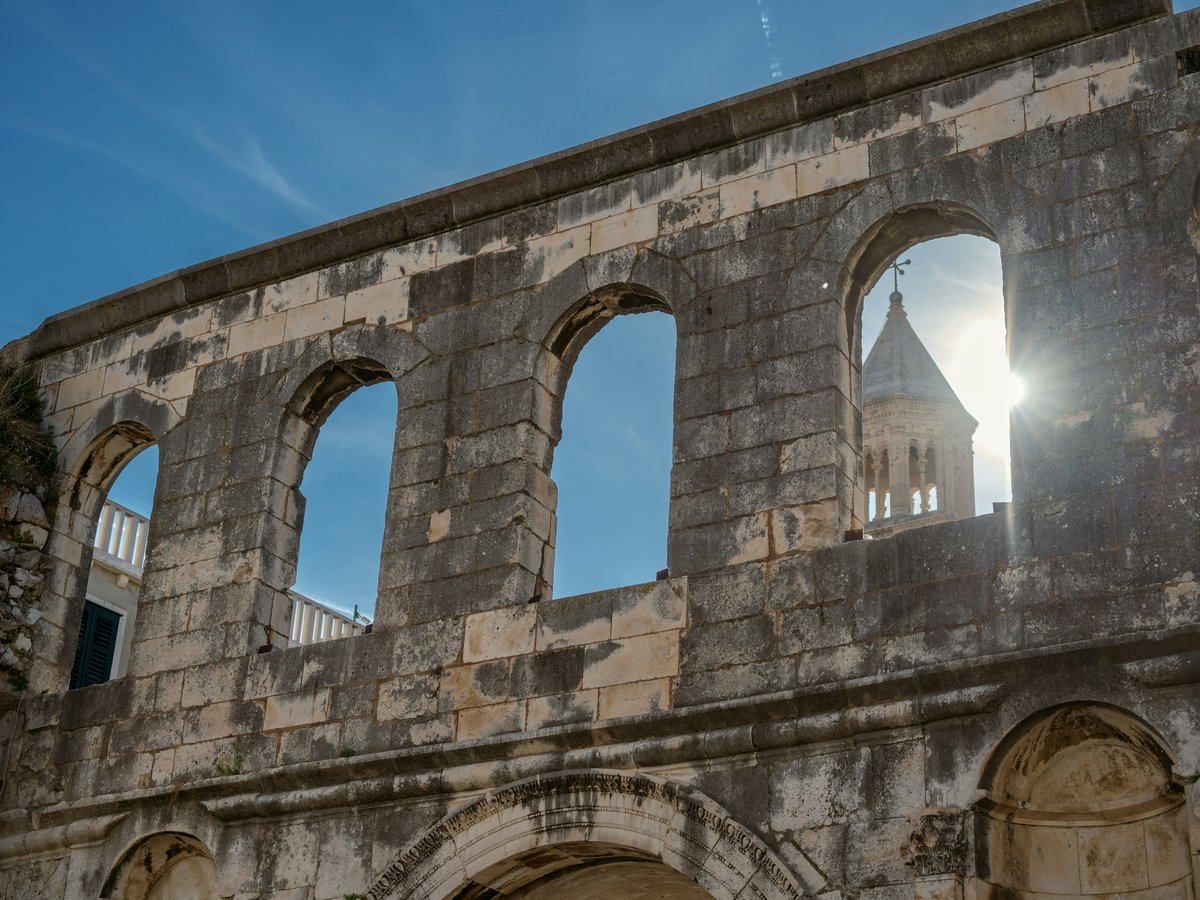
Split's old core doesn't fully shut down, though. Diocletian's Palace, built starting in 293, still functions as a living neighborhood in the Grad quarter, where residents walk dogs through the Peristyle and hang laundry between Roman columns. The Pazar green market opens every morning with winter citrus and greens. In mid-to-late February, the Splitski karneval fills the waterfront with parades and costumes, ending on Shrove Tuesday with the burning of Krnje, the carnival effigy. It's the one stretch when winter Split genuinely wakes up.
If you want swimming, nightlife, or island-hopping, wait until June. If you want to wander the stone lanes of Varoš without fighting for space, eat slow-cooked Dalmatian stews in a half-empty konoba, and spend far less than you would in July, February has a specific appeal. Rainfall totals about 81mm (3.2 inches) across 8 days, mostly in short Adriatic bursts that blow through in under an hour.
Why visit in February
- Accommodation rates across Split are at their annual low, making February one of the cheapest months to visit alongside January.
- The Peristyle, Marjan hill, and the Riva are nearly empty, so you can explore and photograph without competing for space or waiting in queues.
- Konoba winter menus shift from summer's grilled-fish tourist fare to slow-cooked Dalmatian stews and regional specialties that locals eat.
- The Croatian National Theatre (HNK Split) runs its winter drama and opera program through February, with tickets typically available even a few days before curtain.
Worth knowing
- Roughly half the restaurants and bars along the Riva and in the Bačvice area close from November through March, leaving the Grad and Varoš neighborhoods as your main dining zones.
- Winter ferry timetables to Brač, Hvar, and Vis are sharply reduced, with some routes running only once daily and weather cancellations adding gaps of 1-2 days.
- Daylight runs about 10.5 hours with sunset near 5:30 PM in early February, cutting outdoor sightseeing time roughly in half compared to July.
- The bura wind can arrive suddenly and make the waterfront uncomfortable for a day or two, with wind chill dropping well below the actual air temperature.
Best for
Think twice if
February tends to alternate between mild, clear days when you could sit at an outdoor cafe and grey stretches with Adriatic rain showers that pass in under an hour. Humidity hovers around 70%, which feels damp in the old town's stone alleys on overcast mornings. To be fair, Split's February is mild by continental European standards, and snow is extremely rare at sea level. Northeasterly wind can make some days feel sharply colder than the thermometer suggests.
Seasonal caution
- The bura, a cold northeasterly that funnels through the Dinaric Alps and down to the coast, can arrive with little warning and persist for 1-3 days. Wind speeds along the exposed Riva waterfront regularly reach 60-80 km/h (37-50 mph). It brings no rain but drops wind chill significantly and frequently suspends ferry services between Split and the islands.
Year-round climate
Averages from the last 5 years.
| Month | Avg high (°C) | Avg low (°C) | Rainfall (mm) |
|---|---|---|---|
| Jan | 12 | 5 | 162 |
| Feb | 13 | 5 | 81 |
| Mar | 15 | 7 | 110 |
| Apr | 18 | 10 | 109 |
| May | 23 | 15 | 110 |
| Jun | 29 | 20 | 49 |
| Jul | 32 | 23 | 23 |
| Aug | 31 | 22 | 76 |
| Sep | 26 | 18 | 137 |
| Oct | 22 | 14 | 110 |
| Nov | 16 | 9 | 258 |
| Dec | 13 | 7 | 157 |
Best things to do in February
Exploring Diocletian's Palace without crowds
culturalIn February, the palace's labyrinth of corridors, courtyards, and the underground cellars (Podrumi) are largely empty. You can hear your footsteps echo in the stone passageways. The Peristyle, which gets packed with tour groups in summer, becomes a quiet space where you can study the columns and the sphinx up close.
February's visitor numbers are among the lowest of the year, making this the best time to experience the palace as a space rather than a spectacle.Hiking Marjan hill
outdoorsThe forested hill at Split's western edge has a network of trails through Aleppo pine forest leading to viewpoints, small chapels, and the city zoo. The main trail from Varoš to the summit takes about 40 minutes. In February the air is cool and clean, and the trails are firm underfoot.
Cool temperatures make the exposed hillside trails comfortable, unlike the shadeless summer climbs when it regularly tops 30°C (86°F).Day trip to Trogir
day tripThe UNESCO-listed town of Trogir sits on a small island connected by bridges, about 27 km (17 miles) west of Split. Kamerlengo Castle (founded 1420) guards the western tip, and Trogir Cathedral (founded 1213) houses the carved stone Portal of Radovan. Both sites are open in winter with shorter hours, and in February you may be the only visitor inside either.
No queues at the cathedral entrance and cool weather make walking Trogir's compact old town far more pleasant than in summer heat.Booking tipBus 37 from Split's main bus station runs every 20-30 minutes year-round. No advance booking needed.
Attending the HNK Split winter season
culturalThe Croatian National Theatre in Split (HNK Split, founded 1893) is a grand Austro-Hungarian era building on Trg Gaje Bulata. February's program typically includes drama, opera, and occasional ballet. The interior is ornate and the acoustics are strong.
The winter season runs October through April, but February tends to have the lightest attendance, meaning good seat availability and a more intimate atmosphere.Booking tipCheck the HNK Split website for the February program. Tickets rarely sell out, but specific performances may have only 1-2 showings.
Visiting Galerija Meštrović
culturalThe gallery dedicated to Ivan Meštrović, Croatia's most prominent 20th-century sculptor, occupies a villa the artist designed himself on the Meje waterfront. The collection spans monumental bronzes, marble figures, and wooden reliefs. The building's terrace overlooks the Adriatic.
Entirely indoors except the terrace, making it ideal for rainy February days. In summer, the gallery can feel crowded. In February you're likely to have entire rooms to yourself.Joining the Splitski karneval
festivalThe main carnival procession moves through the city center with costumed groups, brass bands, and dancers. Neighborhoods across Split organize smaller celebrations in the days before Shrove Tuesday. The atmosphere is local and warm, nothing like the scale of Venice or Rio, but it feels real.
The carnival happens in the week before Ash Wednesday, which typically falls in mid-to-late February depending on the liturgical calendar.Booking tipNo booking needed. Arrive at the waterfront by mid-afternoon on carnival Sunday for comfortable viewing spots.
Walking the ruins of Salona
historicalThe ancient Roman capital of Dalmatia sprawls across an open-air site about 5 km (3 miles) north of Split in the town of Solin. The ruins include an amphitheater, early Christian basilicas, and sections of city wall. The site has almost no shelter.
Cool February temperatures make walking this shadeless archaeological site comfortable, unlike summer when the stone reflects heat back at you.Booking tipReachable by city bus from Split in about 15 minutes. Buy tickets at the site entrance.
What to eat in February
In season: fruit
Neretva valley mandarins
The tail end of mandarin season from the Neretva delta, about 150 km (93 miles) southeast of Split. By late February they start disappearing from the Pazar market stalls. The fruit is smaller and sweeter than supermarket mandarins, with a perfume-like citrus scent.
On menus now
Pašticada
Dalmatia's signature beef stew, braised for 4-5 hours with prunes, red wine, and root vegetables. Konobas across Varoš and Grad give it prominent placement on winter menus, when heavier stews replace summer's lighter seafood focus. Served over gnocchi with the thick, dark sauce still steaming, it's the taste of a Dalmatian February.
Brudet
A thick Adriatic fish stew made with whatever the morning catch brings, typically scorpionfish, monkfish, or mixed white fish, served over polenta. The broth carries the salt of the sea and the heat of dried chili. A fixture on winter konoba menus across the city.
Soparnik
A chard-filled flatbread from the Poljica region near Split, traditionally baked on a stone hearth. As Lent approaches in late February, bakeries and konobas feature it more prominently. The thin dough has a smoky, slightly charred texture that pairs well with young olive oil.
Festival food
Fritule
Small fried dough balls dusted with powdered sugar, sold at carnival stalls and bakeries throughout February. Production peaks during Splitski karneval weeks, when vendors line the waterfront. They smell like warm butter and citrus zest from 20 metres (65 feet) away.
Regular events in February
Splitski karnevalFree
Split's annual carnival parade along the Riva waterfront, featuring costumed groups, music, and floats. The largest public gathering of the winter season in the city.
The Sunday before Ash Wednesday, typically mid-to-late FebruaryDječji karnevalFree
A children's carnival event where kids in costumes parade through central Split, with families and school groups filling the streets around the old town.
The Saturday before the main carnival paradeSpaljivanje KrnjeFree
The traditional burning of Krnje, the carnival effigy, on the waterfront at dusk. A satirical reading of the effigy's supposed crimes precedes the burning, drawing a large local crowd.
Shrove Tuesday evening, the day after the main paradeHNK Split winter drama program
The Croatian National Theatre's winter schedule of drama, opera, and ballet performances, running throughout the month with typically 2-4 shows per week.
Throughout FebruaryBest places this February
Sustipan
parkA quiet clifftop park and historic cemetery on the Meje peninsula, west of Varoš. February's bare trees open wider views over the harbor and the islands of Šolta and Brač. Almost no tourists visit in winter, and the pine-scented air is sharper in the cold.
MejeVidilica viewpoint
viewpointThe highest accessible viewpoint on Marjan hill, reached by about 30 minutes of climbing from the Varoš trailhead. Clear February air sometimes gives visibility to the islands of Hvar and Vis on the western horizon. The stone bench at the top catches the afternoon sun.
MarjanLučac neighborhood
neighborhoodThe residential quarter east of Diocletian's Palace, with narrow stone streets and unrestored facades. In February you see the neighborhood as residents live it, with laundry lines overhead and the smell of cooking drifting from upper windows.
LučacTemple of Jupiter
historicalA small Roman temple within the Diocletian's Palace complex, later converted to a Christian baptistery in the Middle Ages. The narrow entrance creates summer bottlenecks that vanish in February. Inside, the original Roman barrel-vaulted ceiling and the medieval baptismal font reward a slow look.
GradMatejuška harbor
harborA tiny fishing harbor tucked between the Riva and Varoš, where local fishermen still moor their small boats. In February the waterfront smells of salt and diesel, and the painted wooden boats sit low in still water. One of the most photogenic corners of the city, with no one to work around.
Varoš
Your packing checklist
Tick items off as you pack. Your progress saves in this browser.
All packed — have a great trip.
Insider tips
Dalmatians still observe the marenda tradition, a late-morning meal around 10-11 AM. In February, look for the konobas that fill up at that hour. They tend to serve a more honest, more affordable menu than the tourist-facing places in Grad.
The Manuš neighborhood, south of Varoš toward the waterfront, has several konobas that stay open year-round because they serve a local crowd. Prices tend to run 15-20% lower than places inside the palace walls, and the menus lean seasonal.
Katedrala Sv. Duje (Cathedral of Saint Domnius) charges a small fee for the bell tower climb. In February you might have the narrow stone staircase entirely to yourself. Go mid-morning for the best light on the harbor and Marjan.
If the bura shuts down ferries and your island day trip falls apart, the Salona ruins make a strong mainland backup. The site is inland and unaffected by coastal wind.
Croatian coffee culture runs strong in Split even in deep winter. The ritual kafić at a waterfront cafe is a local habit regardless of temperature. Ordering a kava and sitting for 45 minutes is expected, not rushed.
Avoid these mistakes
- Booking accommodation in the Bačvice or Žnjan beach areas expecting proximity to the action. In February, these neighborhoods sit 1-2 km from the old town, the beach bars are closed, and you spend your time walking or busing to the only part of Split that's active.
- Assuming you can hop between islands on summer-style frequency. Check Jadrolinija's winter timetable before booking any island day trips, and have a mainland backup plan for wind cancellations.
- Arriving on a Sunday or Monday expecting full restaurant service. Even in the Grad quarter, several konobas close on Sundays in winter, and Monday closures are standard across much of the city.
Practical tips for February
Split Airport (SPU) has limited winter connections, so consider routing through Zagreb or taking the Dubrovnik-to-Split bus (roughly 4.5 hours, about 15-20 EUR) as an alternative. Croatia uses the euro, and 1 USD currently converts to about 0.86 EUR. ATMs inside the Grad walls sometimes charge higher withdrawal fees than the bank branches along Domovinskog rata. Most museums and sites keep shorter winter hours, typically closing between 4 and 5 PM, and many shut on Mondays. Book accommodation in Grad or Varoš to stay within walking distance of everything that operates in winter. The city bus system (Promet Split) runs on a reduced schedule after 8 PM, so plan evening returns from outer neighborhoods before then. Croatians tip modestly, around 10% at sit-down restaurants, and rounding up at cafes is the norm. Split scores 6/10 for LGBTQ+ friendliness (sourced from TTDI's editorial rubric). Public displays of affection between same-sex couples may draw attention outside tourist season, though safety concerns remain low.
FAQ
Is February a good time to visit Split?
Honestly, only for certain types of travelers. The city is at its quietest and cheapest, which appeals to history-focused visitors and budget-conscious solo travelers. Split scores 6.8/10 for family friendliness (see the TTDI Family-Friendliness Index), and February's limited dining options and cool weather make it less suitable for families with young children than the May-September window. If you can handle closures and enjoy having a city mostly to yourself, it has a specific appeal that summer cannot match.
What is the weather like in Split in February?
Mild compared to northern Europe, but definitely jacket weather. The Adriatic keeps Split from getting truly cold, though the bura wind can make it feel much colder when it blows. Expect a mix of sunny and grey days. Rain showers come and go quickly. Snow at sea level is almost unheard of. Pack layers and a waterproof shell.
Is Split crowded in February?
Not at all. February has some of the lowest visitor numbers of any month. You'll share the old town mainly with residents. Tour groups are rare, and popular sites that have 30-minute queues in July require no waiting at all.
Can you swim in Split in February?
The Adriatic sea temperature drops to around 13-14°C (55-57°F) in February, so swimming is really only for cold-water enthusiasts. You'll occasionally spot a local taking a quick dip at Bačvice, but the beach infrastructure is entirely shut down and there are no lifeguards on duty.
Is it worth visiting the islands from Split in February?
Day trips to Brač or Hvar are feasible with planning. Check winter ferry schedules well in advance and keep a buffer day in your itinerary in case weather delays a return crossing. The islands themselves are even quieter than the city, with many restaurants and hotels closed until spring. If that emptiness appeals to you, a February island visit can feel remarkably peaceful.
Things to Do in Split in February
 Free cancellation
 Split & Diocletian's Palace Walking Tour - Since 2007
City tour: 1.5 hours, free cancellation.
via Viator Free cancellation
 ATV Quad Safari Tour with Picnic & Swimming from Split
Outdoor experience: 4 hours, free cancellation.
via Viator Free cancellation
 SPLIT-PRIVATE Walking Tour of Old Town & Diocletian's Palace
City tour: 2 hours, free cancellation.
via Viator Free cancellation
 2-hours Split Segway Tour
Outdoor experience: 2 hours, free cancellation.
via Viator Free cancellation
 SPLIT-PREMIUM Diocletian's Walking Tour for History Lovers+Museum
City tour: 2 hours, free cancellation.
via Viator Free cancellation
 90-min Diocletian Palace Walking Tour - Since 2007
City tour: 1.5 hours, free cancellation.
via ViatorFind a flight to Split
Live fares to Split appear here once cookies are accepted.
Last verified by automated review (v1.7.2) on . What is automated review?