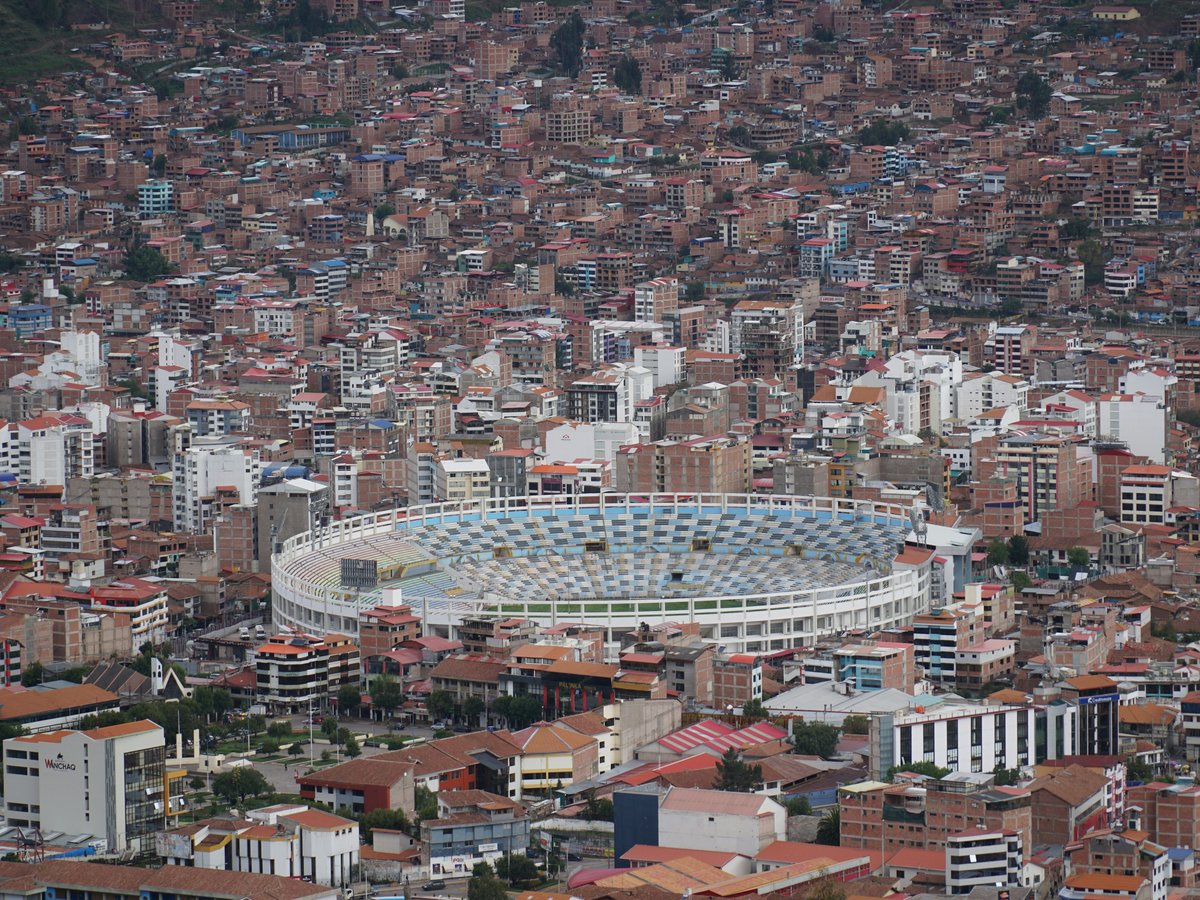
Stay in Cusco in March
91 hotels in the Trip.com pool for Cusco, from US$8 a night.
Opens Trip.com on Fri 5 Mar to Sun 7 Mar 2027; change the dates there.
March sits at the tail end of Cusco's rainy season, and that single fact shapes everything about a visit. Daytime highs hover in the mid-teens Celsius (low 60s Fahrenheit), comfortable in sunshine but cold the moment you step into shade. Rain falls on most days, typically as heavy afternoon downpours that clear by evening. Mornings tend to break cold and sharp, with thin sunshine on the red-tile rooftops of San Blas. By noon, clouds pile against the ridgeline above San Cristóbal, and the afternoon storm follows.
The slopes around Saqsaywaman glow an almost electric green after 4 months of sustained rainfall. You'll share the Plaza de Armas with a fraction of the dry-season crowds that arrive between June and August. Hotel and tour prices fall to their annual low, and you can often negotiate better rates face-to-face at agencies along Avenida El Sol. In many years, Semana Santa falls in late March, and the Señor de los Temblores procession takes over the colonial streets. If you carry a good rain jacket and schedule outdoor excursions for mornings, March delivers a cheaper, quieter, very green Cusco. If you need guaranteed clear skies for a multi-day trek, hold off until May.
Why visit in March
- The landscape around Cusco is at peak green, with the terraces at Moray and the Sacred Valley floor at their most photogenic after months of sustained rain.
- Crowd levels at major archaeological sites drop roughly 50-60% compared to July and August, which means shorter lines and less competition for photos at Coricancha and the Cathedral.
- Hotel and tour prices fall to their annual low. Rain-season discounts on guided excursions are common, and agencies along Avenida El Sol are more willing to negotiate than in the dry months.
- The Inca Trail reopens after its annual February maintenance closure, and the first groups out enjoy freshly cleared paths with smaller numbers than any other time of year.
- In many years, Cusco's Señor de los Temblores procession falls in late March, one of the most striking religious events in South America.
Worth knowing
- Nearly daily afternoon storms force outdoor plans into the morning hours. The rain can be torrential enough to flood lower streets and make steep cobblestone alleys slippery.
- Heavy rainfall regularly triggers landslides along the rail corridor between Ollantaytambo and Aguas Calientes, sometimes suspending PeruRail and Inca Rail service for 1-3 days with little warning.
- Many trails in the region, including Salkantay and the approach to Huchuy Qosqo, become muddy and slippery. River crossings can run dangerously high after sustained rain.
- Overcast afternoons limit golden-hour photography, and cloud cover frequently obscures the Ausangate and Salkantay peaks from Cusco's viewpoints.
Best for
Think twice if
March in Cusco brings the tail of the wet season at 3,400m (11,150ft). The average high reaches 16.4°C (62°F) and lows settle around 7.6°C (46°F) at night, though individual mornings can dip close to freezing at the higher edges of the city. Roughly 180mm of rain falls across 26 days, but the precipitation tends to arrive in concentrated afternoon bursts rather than all-day drizzle. Humidity averages around 80%, and you'll feel it in the heaviness of the afternoon air. After each downpour the streets carry the smell of wet cobblestone and eucalyptus from the hillside groves. Clear evenings drop quickly toward single digits, and the temperature swing between a sunny noon and a cloudless 9pm can reach 10°C.
Seasonal caution
- Heavy rainfall triggers landslides along the Cusco-to-Aguas Calientes rail corridor roughly 2-4 times each March, sometimes stranding travelers in either direction for days. Build buffer days into any Machu Picchu itinerary.
- UV radiation at this altitude is roughly 60% stronger than at sea level, and cloud cover does not effectively block UV. Sunburn is common even on overcast days, particularly on exposed walks to archaeological sites above the city.
- Individual nights can drop below freezing, particularly at higher-elevation sites and in the Santa Ana neighborhood. Budget hotels and hostels in these areas often lack heating.
Year-round climate
Averages from the last 5 years.
| Month | Avg high (°C) | Avg low (°C) | Rainfall (mm) |
|---|---|---|---|
| Jan | 17 | 8 | 226 |
| Feb | 17 | 8 | 185 |
| Mar | 16 | 8 | 180 |
| Apr | 17 | 7 | 74 |
| May | 17 | 6 | 35 |
| Jun | 18 | 5 | 5 |
| Jul | 19 | 5 | 7 |
| Aug | 19 | 5 | 20 |
| Sep | 19 | 6 | 41 |
| Oct | 19 | 7 | 92 |
| Nov | 19 | 8 | 169 |
| Dec | 18 | 8 | 180 |
Holidays and festivals in March
Public holidays
- Holy Thursday(Jueves Santo)25 March 2027
- Maundy Thursday(Jueves Santo)25 March 2027
- Good Friday(Viernes Santo)26 March 2027
- Easter Sunday(Domingo Santo)28 March 2027
Headline events
Procesión del Señor de los Temblores
Holy Monday (late March in most years, occasionally early April)
Cusco's most important religious procession dates to the 1650 earthquake. The dark-skinned Christ figure is carried from the Cathedral through the streets of the Centro Histórico while red ñucchu flowers rain down from balconies and rooftops. Tens of thousands of Cusqueños line the route from the Plaza de Armas through narrow colonial streets. The air thickens with copal incense, and brass bands echo off the stone walls. The procession falls on Holy Monday, which places it in late March in roughly 2 of every 3 years. Check the Easter calendar before booking around it.
Best things to do in March
Morning circuit of Saqsaywaman, Tambomachay, and Puka Pukara
archaeologyWalk the hilltop Inca fortress complex and continue to Tambomachay and Puka Pukara, a 3-4 hour loop that covers the major archaeological sites above Cusco. The massive limestone walls of Saqsaywaman stand against vivid green hillsides, and the water channels at Tambomachay run at their fullest during the rainy season. The sound of the water echoing through the carved stone niches is something you only hear this time of year.
March mornings are typically clear, and the green landscape makes the zigzag walls dramatically photogenic. By early afternoon rain closes in, so an early start is important.Booking tipBuy the Boleto Turístico (130 soles for the full circuit) at the COSITUC office on Avenida El Sol rather than at the site, where lines are longer.
Green-season day trip to Moray and Salineras de Maras
day tripThe concentric Inca agricultural terraces at Moray look their most vivid in March, with each ring a different shade of green based on what was planted. The Maras salt terraces nearby cascade down a hillside in thousands of small pans fed by a thermal spring, each one a slightly different shade of white and ochre.
The terraces at Moray are bare brown earth during the dry season. In March, the contrast between the planted rings and the surrounding valley is at its peak.Booking tipBook a shared minivan from Cusco rather than a private taxi. Most depart around 8am and return by 2pm, staying ahead of the afternoon rain.
Rainy-afternoon cooking class in San Blas
foodSeveral cooking schools in the San Blas neighborhood run half-day classes that start with a guided walk through Mercado de San Pedro to buy ingredients, then move uphill to cook 3-4 courses of traditional Cusqueño food. You'll learn to handle rocoto peppers without burning your hands, prep alpaca lomo saltado, and make chicha morada from purple corn.
Afternoon rain makes indoor activities more appealing, and March's seasonal produce is at its best in the market. Low-season class sizes are smaller, which means more hands-on time.Booking tipBook at least 3 days ahead. Classes run smaller in low season, but popular schools still fill up.
First Inca Trail groups of the year
trekkingThe classic 4-day trek to Machu Picchu reopens after its annual February maintenance closure. Trail sections have been cleared and repaired, campsites are freshly maintained, and you'll share the path with far fewer groups than during the dry-season rush. The cloud forest sections near Wiñay Wayna are thick with orchids and bromeliads in the wet months.
March is the first month the trail is open. The path is in its best-maintained condition of the year, and daily permit limits keep group sizes small during these low-season weeks.Booking tipPermits sell out months ahead even in low season because the daily cap of 500 people (including porters) still applies. Book 3-4 months in advance through a licensed operator.
Museum afternoons at Coricancha and Museo Inka
cultureCoricancha, the former Temple of the Sun with foundations from 1201, combines Inca stonework with the colonial Santo Domingo convent built directly on top. The Museo Inka near the Plaza de Armas holds one of the best collections of Inca textiles and ceramics in Peru. Both are indoor and fill a rainy afternoon with genuine substance.
Afternoon storms make outdoor sightseeing impractical from roughly 2pm onward. March's low crowds mean you can spend real time studying the Coricancha stonework without being herded through by tour groups.Sacred Valley market circuit at Pisac and Chinchero
marketThe Sunday market at Pisac fills the main plaza with produce, textiles, and ceramics. Chinchero's smaller Sunday market focuses on handwoven textiles from surrounding communities. Both run rain or shine. The drive through the Sacred Valley in March passes terraced hillsides at their greenest, with the Urubamba River running high and brown below.
Reduced tourist traffic means better prices and less aggressive selling. The Chinchero weavers have more time to demonstrate their techniques when not overwhelmed by dry-season tour groups.Booking tipGo on Sunday for the full market experience. Colectivos to Pisac leave from Calle Puputi near the Centro Histórico every 15-20 minutes.
Post-rain sunset from Mirador de San Cristóbal
viewpointThe hillside church and plaza above the Centro Histórico offers a wide view over Cusco's terracotta rooftops and the surrounding valley. After a March rainstorm, the air is exceptionally clear, and the wet rooftops catch the late light in a way that dry-season haze never allows. The walk up from the Plaza de Armas takes about 15 steep minutes.
Post-rain clarity in the evening light produces the sharpest panoramic views of the year. The washed air and lingering cloud banks over the mountains create layered compositions that dry-season light cannot match.What to eat in March
In season: fruit
Tuna (prickly pear)
The cactus fruit peaks during the rainy season. Vendors at Mercado de San Pedro sell them peeled and ready to eat for about 1 sol each. The flesh is sweet, slightly grainy, and ranges from pale green to deep magenta depending on the variety. Mind you, the tiny seeds are edible but take some getting used to.
Lucuma
This Andean fruit reaches peak supply in markets during the late wet season. Most Cusqueños eat it in ice cream, smoothies, or the dense lucuma cake sold at bakeries around the Plaza de Armas. The taste sits somewhere between maple syrup and sweet potato, with a dry, starchy texture when raw.
On menus now
Rocoto relleno
March is peak rocoto pepper season in the Cusco region. The stuffed peppers, filled with ground meat, hard-boiled egg, and melted cheese, appear on nearly every restaurant menu across the Centro Histórico. The heat tends to hit the back of your throat about 10 seconds after the first bite.
Street food peaks
Choclo con queso
Late-season harvest brings the largest kernels of Andean corn, served boiled and steaming from street carts alongside a slab of fresh queso fresco. The kernels are the size of your thumbnail, starchier and chewier than sweet corn. Street vendors near the Mercado de San Blas tend to have the freshest ears in the afternoon.
What to drink
Chicha de jora
Fermented corn beer brewed from germinated maize. Available year-round, but it flows more freely in early March during post-Carnival gatherings at chicherías around the Santa Ana neighborhood. The flavor is tangy, slightly sweet, with a yeasty funk. Expect to pay 2-3 soles per glass.
Regular events in March
Inca Trail reopening
The classic 4-day Inca Trail to Machu Picchu reopens after its annual February maintenance closure. Trail sections have been cleared and campsites repaired. The first groups of the year set out on freshly maintained path with smaller numbers than any other month.
March 1Día Internacional de la Mujer observancesFree
Cultural events, marches, and live music mark International Women's Day in the Plaza de Armas and along Avenida El Sol. Student groups from UNSAAC typically organize panels and street art installations around the Centro Histórico.
March 8Post-Carnival yunza celebrationsFree
Neighborhood-level tree-cutting ceremonies (yunza or cortamonte) continue into early March in communities around Cusco, particularly in residential barrios outside the tourist center. Locals dance around a decorated tree laden with gifts until someone fells it with an axe. The couple that cuts the tree down sponsors the next year's event.
Early March (dates shift with the liturgical calendar)Best places this March
Mercado de San Pedro
marketCusco's main covered market is a natural rainy-afternoon destination. The juice stalls along the central aisle pour fresh-squeezed tuna and lucuma smoothies. The second-floor food court serves enormous plates of lomo saltado and ají de gallina at some of the lowest prices in the city center. The produce section carries March's peak seasonal items, and the smell of fresh herbs and roasted corn fills the lower aisles.
San PedroCoricancha (Qorikancha)
archaeological siteThe Inca Temple of the Sun, its stonework dating to 1201, sits beneath the colonial Convento de Santo Domingo. The precision of the Inca masonry is visible in every trapezoidal doorway and perfectly fitted wall. March's smaller visitor numbers let you linger at the curved retaining wall without being pushed along by guides on tight schedules.
Centro HistóricoCusco Cathedral (Catedral del Cusco)
churchConsecrated in 1559 on the foundations of the Inca palace of Viracocha, the Cathedral dominates the north side of the Plaza de Armas. The interior holds roughly 400 colonial paintings, including the famous Last Supper that depicts Christ eating cuy. Rain-proof and quiet in March.
Centro HistóricoSan Blas artisan quarter
neighborhoodThe steep, narrow streets above the Plaza de Armas are lined with workshops, galleries, and small cafes. In March, without the dry-season crowd pressure, you can step into ceramic and textile studios and watch artisans work at their own pace. The smaller Mercado de San Blas is less touristic than its San Pedro counterpart, with better coffee and a calmer feel.
San BlasSaqsaywaman
archaeological siteThe massive Inca fortress above Cusco, with limestone blocks weighing up to 120 tonnes fitted without mortar. In March, the broad open hillside turns vivid green, and the site is quiet enough that you can sit on the zigzag walls and hear nothing but wind and the distant hum of the city below.
above Centro HistóricoIglesia de la Compañía de Jesús
churchCompleted in 1668 on the Plaza de Armas, the Jesuit church's ornate baroque facade competes with the Cathedral for attention. The gilded interior is less visited than its neighbor, and in March you might have the nave to yourself for 10 minutes at a stretch.
Centro HistóricoMirador de San Cristóbal
viewpointThe viewpoint beside the whitewashed Iglesia de San Cristóbal offers the widest panorama over Cusco's rooftops. On clear March evenings after the rain, wet terracotta tiles and lingering cloud banks over the surrounding mountains create the most atmospheric light of the year. Worth the steep 15-minute climb from the plaza.
San Cristóbal
Your packing checklist
Tick items off as you pack. Your progress saves in this browser.
All packed — have a great trip.
Insider tips
The cheapest and freshest lunch in Cusco is the menú del día at the second-floor food court in Mercado de San Pedro. For a handful of soles you get soup, a main course, and a drink. The stalls closest to the stairs tend to have the fastest turnover and freshest ingredients.
If the rain catches you at Saqsaywaman, walk downhill 5 minutes to Q'inqu, an archaeological site with covered rock formations that Cusqueños have used as rain shelter for centuries. Most tourist maps skip it entirely, but it is included on the Boleto Turístico.
Colectivos (shared minivans) to the Sacred Valley leave from Calle Puputi, not the main bus terminal. They depart when full, typically every 15-20 minutes, and cost 10-15 soles to Pisac. Taxis to the same destination quote 60-80 soles for the identical route.
March is an excellent month to buy textiles. Fewer tourists means less pressure to buy quickly, and artisans in San Blas workshops are more willing to explain their weaving process and materials when they are not managing a crowd. Prices tend to run 10-15% below dry-season levels.
The afternoons belong to cafes, not to ruins. Cusqueños treat the rain as part of life, not as something to push through. Settle into a second-floor cafe overlooking the Plaza de Armas around 2pm with a mate de coca and wait it out. The city looks its best in the hour after the rain stops.
Avoid these mistakes
- Booking a tight 2-day Cusco-to-Machu Picchu itinerary with no buffer days. March landslides can suspend rail service without warning, and a rigid schedule risks missing Machu Picchu entirely. Build at least one flexible day into any plan that depends on the train to Aguas Calientes.
- Planning all outdoor activities for the afternoon. The rain pattern in March is consistent. Every outdoor excursion, every ruin visit, every viewpoint stop should be scheduled for before noon. Afternoons are for museums, cooking classes, markets, and cafes.
- Packing only for warm weather because Cusco sits near the equator. Despite its tropical latitude, the city's extreme elevation means overnight temperatures regularly approach freezing. Travelers who arrive with T-shirts and shorts end up buying overpriced alpaca sweaters their first evening.
- Flying in from Lima (sea level) and attempting a hike the next morning. Give yourself at least 48 hours of gentle acclimatization, walking slowly around the city, before any strenuous effort at altitude. Coca tea helps, but it is not a substitute for time.
Practical tips for March
Book Machu Picchu entry tickets at least 2 weeks ahead, even in low season, because the daily visitor cap applies year-round. The Inca Trail's annual reopening falls at the beginning of March, but early conditions tend to be muddy and slippery. Spend at least 2 full days walking gently around the Centro Histórico and San Blas before attempting any hike above 3,800m. Coca tea (mate de coca) is available at nearly every hotel and cafe and genuinely helps with altitude headaches. The Peruvian sol trades at roughly 3.38 per US dollar. ATMs around the Plaza de Armas dispense both soles and dollars, though soles give better value at local businesses. Most restaurants in the Centro Histórico accept credit cards, but Mercado de San Pedro, stalls in Santa Ana, and taxis are cash-only. Tour operators across the city offer significant rain-season discounts, so compare 3-4 agencies before committing to any multi-day trek. PeruRail and Inca Rail post service disruptions on their websites, sometimes with only a few hours' notice. Check the morning of any train journey to Aguas Calientes.
FAQ
Is March a good time to visit Cusco?
March is fair, not ideal. It remains deep in the rainy season, with rain falling on most days and trails in muddy condition. That said, the low crowds, budget-friendly prices, and vivid green landscape genuinely appeal to certain travelers. If you are flexible with your schedule and comfortable adapting around afternoon storms, March offers a side of Cusco that dry-season visitors never see. If you want clear skies and reliable trekking weather, May through September is a better window.
Can I hike the Inca Trail in March?
Yes, the trail is open. It reopens after its annual February maintenance closure on March 1, and the first groups of the year set out on freshly cleared and repaired path. Conditions are muddy and slippery, river crossings run high, and cloud may obscure views on some mornings. But the freshly maintained trail and smaller group sizes are genuine advantages. Permits still sell out months ahead because the daily cap of 500 people (including porters) applies year-round, so book 3-4 months in advance through a licensed operator. Waterproof boots and gaiters are essential for the mud.
Does it rain all day in Cusco in March?
No, it typically rains for 1-3 hours in the afternoon, not all day. The usual March pattern starts with cold, dry mornings under clear or partly cloudy skies. Heavy storms build after lunch, pour through mid-afternoon, and pass by early evening. By nightfall the sky often clears again. You can comfortably plan 4-5 hours of outdoor activity each morning before the rain arrives. The key is starting early and heading indoors by early afternoon.
Will I get altitude sickness in Cusco?
Most visitors experience at least mild symptoms. Cusco sits at 3,400m (11,150ft), higher than any major city in Europe or North America, and altitude affects most people to some degree regardless of fitness level. Headaches, mild nausea, shortness of breath on stairs, and poor sleep are common during the first 24-48 hours. Spend at least 2 full days walking gently around the Centro Histórico before any strenuous hike. Coca tea and steady hydration help. If symptoms worsen after 48 hours, descend to the Sacred Valley (roughly 2,800m) and consult a doctor.
Is Cusco safe for families with children in March?
Reasonably safe, with some caveats worth planning around. Cusco scores 5.2 out of 10 for family friendliness (see the TTDI Family-Friendliness Index). The cobblestone streets are steep and slippery in the rain, which is challenging with small children or strollers. Altitude affects children more unpredictably than adults, so extra acclimatization time is important. That said, the archaeological sites, cooking classes, and covered markets are engaging for older children, and the low March crowds make the city easier to navigate with a family.
Things to Do in Cusco in March

Inca Trail 4-Day Trek to Machu Picchu – Return by Vistadome Train
Outdoor experience: 4 days.
via Viator Free cancellation
 Sacred Valley Full Day Tour
Day trip: 10 hours, free cancellation.
via Viator
4-Day Inca Trail Trek to Machu Picchu & Panoramic Train
Outdoor experience: 4 days.
via Viator
Classic 5-Day Salkantay Trek to Machu Picchu: Small Group Hike
Outdoor experience: 5 days.
via Viator
2-Day Short Inca Trail to Machu Picchu – Vistadome & 4-Star Hotel
Outdoor experience: 2 days.
via Viator Free cancellation
 Excursion to Rainbow Mountain Full Day Optional Red Valley
Outdoor experience: 12 hours, free cancellation.
via ViatorFind a flight to Cusco
Live fares to Cusco appear here once cookies are accepted.
Last verified by automated review (v1.7.2) on . What is automated review?