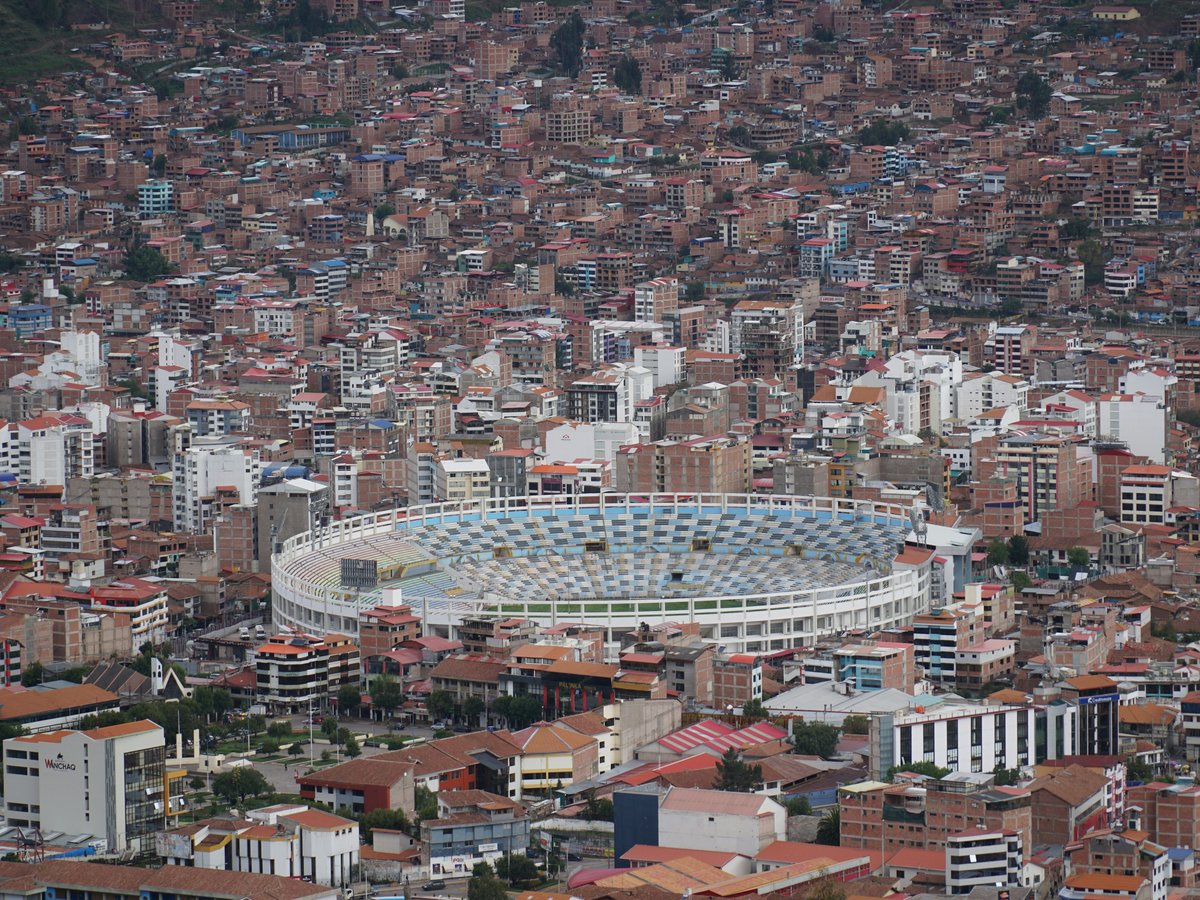
Stay in Cusco in June
91 hotels in the Trip.com pool for Cusco, from US$8 a night.
Opens Trip.com on Fri 4 Jun to Sun 6 Jun 2027; change the dates there.
June in Cusco belongs to Inti Raymi. The Festival of the Sun reenacts the Inca winter solstice ceremony and fills the city with parades, traditional dance troupes, and tens of thousands of visitors during the final week. It is the largest annual cultural event in the Peruvian highlands. The celebrations fill roughly 7 days before the main ceremony, and by mid-June the Centro Histórico becomes an open-air stage where folk bands and dance groups perform from dawn until well after dark.
Cusco's dry season peaks in June. Barely 5mm of rain falls across the entire month. Skies clear to a hard blue that makes the peaks of the Cordillera Vilcanota look close enough to touch. Daytime highs average 17.7°C (64°F), comfortable under the highland sun but not warm by sea-level standards. Nights drop to around 4.7°C (40°F), and at 3,400 meters above sea level, that cold settles into the stone streets of San Blas fast. You might see your breath in the Plaza de Armas by 8 PM.
To be fair, prime weather and Peru's biggest highland festival make June the most expensive month for accommodation. Hotels within walking distance of the Plaza fill weeks in advance, and rates rise sharply during the final week. If you prefer quiet streets and lower prices, May or September deliver nearly the same dry conditions without the festival premium. The ticketed grandstand seats at the main ceremony site tend to sell out months in advance.
Why visit in June
- Driest month of the year means consistently clear skies for the Inca Trail, Sacred Valley day trips, and outdoor activities without rain delays or muddy trails.
- Inti Raymi and Corpus Christi both fall in June, stacking two of Peru's most important traditional celebrations into a single trip.
- Clear, dry nights at altitude produce prime stargazing conditions. The Milky Way core is visible to the naked eye from viewpoints outside the city center.
- Highland trails that become muddy or impassable from December through March are dry, firm, and fully accessible for the first time since the wet season ended.
Worth knowing
- Peak-season pricing. Hotels near the Plaza de Armas may charge 40-60% above their wet-season rates, and the final week of June tends to be the most expensive stretch of the entire year.
- Nights consistently drop near freezing, and most outdoor festival events happen after sunset. You will spend evening ceremonies cold unless you pack serious layers.
- Crowds concentrate heavily during the final 10 days. The Centro Histórico and San Blas fill with tour groups, and restaurants that normally seat walk-ins start requiring reservations.
- Altitude sickness hits harder than most visitors expect. Arriving at elevation and immediately attending an all-day outdoor festival commonly leads to headaches and nausea.
Best for
Think twice if
The driest stretch of Cusco's calendar, with rain practically absent for the full month. Days feel pleasant in direct sunlight but the air carries a chill in shade. The gap between midday warmth and midnight cold catches visitors off guard. Thin, dry air at altitude makes sunburn and dehydration the primary physical risks. Cloud cover is rare, and clear conditions tend to persist for weeks at a time.
Seasonal caution
- UV radiation at Cusco's altitude is significantly more intense than at sea level. Sunburn can occur in under 30 minutes of direct exposure, even when the air feels cool. Apply SPF 50+ sunscreen and reapply every 2 hours.
- Nighttime temperatures can drop below 2°C on clear nights, particularly at higher points around the city. Hypothermia is a real risk during extended outdoor evening ceremonies without proper layers.
- Altitude sickness affects many visitors in their first 48 hours. Symptoms include headache, nausea, and shortness of breath. Arrive at least 2 full days before any strenuous activity or major outdoor event.
Year-round climate
Averages from the last 5 years.
| Month | Avg high (°C) | Avg low (°C) | Rainfall (mm) |
|---|---|---|---|
| Jan | 17 | 8 | 226 |
| Feb | 17 | 8 | 185 |
| Mar | 16 | 8 | 180 |
| Apr | 17 | 7 | 74 |
| May | 17 | 6 | 35 |
| Jun | 18 | 5 | 5 |
| Jul | 19 | 5 | 7 |
| Aug | 19 | 5 | 20 |
| Sep | 19 | 6 | 41 |
| Oct | 19 | 7 | 92 |
| Nov | 19 | 8 | 169 |
| Dec | 18 | 8 | 180 |
Holidays and festivals in June
Public holidays
- Saint Peter and Saint Paul(Día de San Pedro y San Pablo)29 June 2027
Headline events
Inti Raymi (Festival of the Sun)
June 24 (fixed annual date)
The reconstructed winter solstice ceremony of the Inca empire draws tens of thousands of spectators to Saqsaywaman each year. The day begins with rituals at the Coricancha sun temple, continues through the Plaza de Armas, and climaxes at the fortress ruins with a theatrical performance of costumed actors, llama offerings, and Quechua narration. Free public viewing areas ring the site, though grandstand seating sells out months ahead.
Best things to do in June
Inti Raymi ceremony
culturalA 3-hour open-air performance at the fortress ruins above the city. Several hundred performers in Inca-period dress reenact the solstice ceremony with ritual offerings, oratory in Quechua, and processions across the hillside grounds. The open standing sections fill by mid-morning but tend to offer more atmosphere than the ticketed grandstands.
Annual fixed-date event in late June. Does not happen at any other time of the year.Booking tipGrandstand tickets typically sell out by March or April. Book through the city's official tourism office rather than third-party resellers to avoid markups.
Inca Trail to Machu Picchu
trekkingThe classic 4-day trek from Km 82 passes through cloud forest, high-altitude passes above 4,200 meters, and Inca ruins along the route. June's dry conditions mean firm footing on stone steps, clear views from the 4,215-meter Dead Woman's Pass, and minimal mud in the forest sections.
Driest month of the year. Trails are firm, passes are clear, and the sunrise arrival at Machu Picchu is rarely obscured by morning clouds.Booking tipPermits are limited to 500 people per day including guides and porters. June permits often sell out 3-4 months ahead. Book through an operator registered with Peru's Ministry of Culture.
Corpus Christi processions in the Plaza de Armas
culturalFifteen patron saints are carried from their home churches across Cusco to the Cathedral, each accompanied by a brass band, dancers, and their parish community. The procession fills the main plaza and surrounding streets for most of the day.
Falls in early to mid-June each year. The date moves with the Christian liturgical calendar.Ruins circuit hike
hikingA half-day walk connects Saqsaywaman, Q'inqu, Puka Pukara, and Tambomachay through open grassland and eucalyptus groves above the city. The route covers roughly 8 kilometers with about 200 meters of elevation change. Golden-brown winter grass under blue sky gives the landscape a stark, photogenic quality.
Dry June conditions mean firm trails with no mud. The hilltop paths are slippery and sometimes impassable during the wet season from December through March.Booking tipThe Boleto Turístico covers entry to all four sites. Buy it at the COSITUC office near the Plaza de Armas rather than at individual gates.
Stargazing in the Sacred Valley
natureAltitude, dry air, and minimal light pollution outside Cusco combine for exceptional night-sky conditions. The Milky Way core is visible to the naked eye from viewpoints around Chinchero and the Urubamba valley floor. Some tour operators run evening telescope excursions.
June's near-zero humidity and persistent clear skies create the clearest night-sky conditions of the entire year.Booking tipEvening tours depart Cusco around 6 PM and return by 11 PM. Book a day ahead during festival week.
Coricancha solstice visit
culturalThe Inca sun temple was built with astronomical alignments. During late June, sunlight reportedly enters specific interior niches at angles visible only around the winter solstice. The contrast between the original Inca stonework and the Spanish colonial Santo Domingo convent built directly over it is itself worth the trip.
The Southern Hemisphere winter solstice falls around June 21. The temple's solar alignments are most apparent during this period.Booking tipVisit early morning for the best light angles and fewer visitors. The site opens at 8:30 AM.
Moray terraces and Maras salt mines day trip
day tripThe concentric circular terraces at Moray sit about 50 kilometers northwest of Cusco, likely used by the Incas as an agricultural laboratory. The nearby Maras salt ponds have been in continuous use since Inca times, with brine channeled into over 3,000 shallow pools carved into the hillside.
Dry conditions make the dirt roads to both sites reliably passable. The salt ponds reach higher concentration with less dilution from rain, and the white-on-brown contrast is at its sharpest.Booking tipCombined tours from Cusco take 6-8 hours. Afternoon light at Maras works better for photographs than morning. Book a tour that visits Maras second.
What to eat in June
On menus now
T'impu
A hearty boiled stew of beef, lamb, potatoes, chuño, and pears, traditionally served alongside chiri uchu during the Corpus Christi celebration. The rich broth appears on Cusco restaurant menus primarily during the first weeks of June.
What to drink
Ponche cusqueño
A warm cinnamon-spiced punch made with ground peanuts, sesame, cloves, and sometimes a splash of pisco. Street vendors serve it from large copper pots at evening markets and festival gatherings. The warmth is welcome once the sun drops below the rooftops around 5:30 PM.
In markets
Chuño
Freeze-dried potatoes produced during the cold, dry winter nights. Highland families still lay potatoes on straw mats to freeze overnight and desiccate under the daytime sun. The finished product appears in soups, stews, and festival dishes across the city throughout June and July.
Festival food
Chiri uchu
The cold ceremonial platter served during Corpus Christi in Cusco. Layers of cuy (guinea pig), dried beef (chalona), corn, fresh cheese, seaweed (cochayuyo), fish roe, and rocoto pepper are arranged on a plate and eaten at room temperature. Vendors set up around the Plaza de Armas, and extended families share the dish communally.
Lechón al horno
Slow-roasted suckling pig prepared in wood-fired adobe ovens. The crackling skin and tender meat appear at festival stalls during Semana del Cusco. The San Pedro market area concentrates the best vendors during the final week of June.
Regular events in June
Corpus ChristiFree
Fifteen patron saints from churches across Cusco are carried in procession to the Cathedral on the Plaza de Armas. Each arrives with its own brass band, dancers, and community delegation, creating a continuous stream of music and movement through the streets. The celebration draws thousands of Cusqueños and is followed by the traditional communal meal.
Usually late May or June (moveable feast tied to Easter)Semana del Cusco (Cusco Week)Free
A week of parades, folk dance competitions, open-air concerts, and civic ceremonies across the Centro Histórico and surrounding neighborhoods. Events build in intensity day by day, with the largest gatherings on the 22nd and 23rd before the main ceremony.
Approximately June 18-24Q'ollur Rit'iFree
A syncretic pilgrimage to a glacier sanctuary at roughly 4,700 meters near Ausangate, about 160 kilometers southeast of Cusco. Tens of thousands of pilgrims from across the Andes walk to the shrine over several days. The event blends Catholic and Andean traditions and is recognized by UNESCO as Intangible Cultural Heritage.
Late May or early June (varies with the liturgical calendar, typically the Tuesday before Corpus Christi)Día del Campesino (Peasant's Day)Free
A national holiday on the same date as Inti Raymi. Agricultural communities hold local fairs, craft markets, and celebrations. In Cusco the holiday blends into the larger festival but adds community-level events in outlying villages and the Wanchaq district.
June 24Best places this June
Saqsaywaman
archaeological siteThe massive Inca fortress ruins above the city, with stones weighing up to 200 tonnes fitted without mortar. Beyond the late-June ceremony held here, the site offers panoramic views over Cusco's terracotta rooftops and the valley beyond. On non-festival days the grounds are comparatively quiet, and the scale of the stonework is easier to appreciate.
Coricancha
temple and museumThe Inca sun temple, founded around 1201, was once covered in gold sheets and served as the most sacred site in the empire. The Spanish built the Santo Domingo convent directly over its walls. The junction of Inca stonework and colonial architecture is particularly atmospheric during the solstice week.
Centro HistóricoCusco Cathedral
cathedralThe mother church of the Archdiocese of Cusco, founded in 1559 on the foundations of an Inca palace. The interior holds over 400 paintings from the Cusco School, including a notable Last Supper depicting cuy as the main course. Corpus Christi processions begin and end at the Cathedral steps.
Centro HistóricoMercado de San Pedro
marketCusco's main food market. In June, vendors expand their prepared-food sections for the festival season. Warm ponche and seasonal dishes sit alongside the year-round stalls of fresh juice, dried goods, and cheese. Breakfast here costs a fraction of restaurant prices in the Centro Histórico.
San PedroMirador de San Cristóbal
viewpointA hilltop viewpoint with one of the best panoramas of the city. June's persistent clear skies make this the ideal month for the view. The walk up from the Plaza de Armas takes about 15 minutes through quiet residential streets. Late-afternoon light on the rooftops below is worth the climb.
San CristóbalBarrio de San Blas
neighborhoodThe artisan quarter above the Plaza de Armas, reached by steep cobblestone lanes. Ceramic workshops, textile studios, and small galleries line the Cuesta de San Blas. During the festival season, several studios extend their hours and host special exhibitions.
San BlasIglesia de la Compañía de Jesús
churchThe Jesuit church on the Plaza de Armas, completed in 1668 after the 1650 earthquake destroyed its predecessor. The ornate baroque facade competes with the Cathedral across the square. In June's clear morning light, the carved stone detailing stands out sharply against the blue sky.
Centro Histórico
Your packing checklist
Tick items off as you pack. Your progress saves in this browser.
All packed — have a great trip.
Insider tips
The free standing areas at the main Inti Raymi ceremony site offer better atmosphere than the ticketed grandstands, where you sit far from the performers. Arrive by 8 AM to claim a spot along the stone walls. The ceremony starts around 1 PM, but the best sightlines go to early arrivals.
Mercado de San Pedro prices rise noticeably during the final week of June. For the same ingredients at local rates, walk 15 minutes southeast to Mercado de Wanchaq in the Wanchaq district. The prepared food stalls serve identical dishes without the tourist markup.
The pre-ceremony parades during the 2-3 days before Inti Raymi are often more rewarding to photograph than the main event. Dance groups from across the region perform through the Centro Histórico with fewer tourists and better angles than the packed ceremony grounds.
If altitude sickness strikes, small clinics near the Plaza de Armas offer supplemental oxygen sessions at a fraction of what hotels charge for the same service. Ask your accommodation host for a referral rather than walking into the first tourist-facing pharmacy.
Avoid these mistakes
- Arriving the day before Inti Raymi without altitude acclimatization. The elevation is serious. Spending your first full day at an all-day outdoor event is the fastest way to end up in bed with a headache. Give yourself at least 2 full days in Cusco before any major activity.
- Packing for warm weather because the daytime high looks comfortable on paper. At altitude, sun temperature and shade temperature diverge dramatically. You can cycle between sweating and shivering within the same hour without layers.
- Booking a hotel far from the Plaza de Armas to save money during peak season, then spending the festival week in taxis. In June, proximity to the center is worth the premium. Walking distance means you can duck back to your room between events, change layers, and rest without losing an hour each way.
Practical tips for June
Book accommodation at least 6 weeks ahead for June stays, and further out if your dates overlap with the final week. Many restaurants in the Centro Histórico switch to prix-fixe menus during the festival period, which cost more than their regular offerings. 1 USD converts to roughly 3.38 PEN at current rates, and ATMs cluster around the Plaza de Armas and along Avenida El Sol. Tipping at sit-down restaurants runs around 10%, though market stalls and street food vendors do not expect it. The Boleto Turístico covers 16 archaeological sites and museums for 10 days and pays for itself after 3 visits. Some family-run shops in San Pedro and San Blas close for a day or two around the main festival, so stock up on supplies beforehand. Basic Spanish helps outside the main tourist zone, and even a few Quechua greetings earn genuine warmth from festival participants and market vendors.
FAQ
Is June a good time to visit Cusco?
June is arguably the best month of the year. It combines the driest weather, the clearest skies, and the city's biggest cultural celebration in Inti Raymi. The trade-off is peak-season pricing and larger crowds, particularly during the final 10 days. If those do not bother you, June is as good as it gets for a Cusco visit.
What is the weather like in Cusco in June?
Dry and cool. Days feel comfortable in the sun but the air carries a noticeable chill in shade. Rain is essentially absent for the entire month. The combination of thin, dry air and intense sun at altitude means you can sunburn quickly even when the temperature feels mild. Bring layers and strong sunscreen rather than rain gear.
Is Cusco crowded in June?
The first two weeks are busy but manageable. The final 10 days, from the start of Semana del Cusco through the 24th, draw the heaviest crowds of the entire year. The Centro Histórico fills with tour groups, festival-goers, and Peruvian domestic visitors. If you want the festival atmosphere without the worst density, early June around Corpus Christi is a less overwhelming window.
Is Cusco safe for solo travelers?
Cusco rates 6.2/10 for solo-traveler safety (see the TTDI Solo-Safety Index). The Centro Histórico and San Blas are generally safe during daylight. After dark, stick to well-lit streets and avoid walking alone near the bus terminals or in less-touristed neighborhoods. Petty theft, particularly pickpocketing, increases during festival crowds.
Do I need to book Inti Raymi tickets in advance?
The ticketed grandstand seats at the main ceremony tend to sell out by March or April. You can still watch for free from standing areas around the site, but arrive early in the morning to secure a decent sightline. The street parades and processions in the days before the main event do not require any tickets.
Things to Do in Cusco in June

Inca Trail 4-Day Trek to Machu Picchu – Return by Vistadome Train
Outdoor experience: 4 days.
via Viator Free cancellation
 Sacred Valley Full Day Tour
Day trip: 10 hours, free cancellation.
via Viator
4-Day Inca Trail Trek to Machu Picchu & Panoramic Train
Outdoor experience: 4 days.
via Viator
Classic 5-Day Salkantay Trek to Machu Picchu: Small Group Hike
Outdoor experience: 5 days.
via Viator
2-Day Short Inca Trail to Machu Picchu – Vistadome & 4-Star Hotel
Outdoor experience: 2 days.
via Viator Free cancellation
 Excursion to Rainbow Mountain Full Day Optional Red Valley
Outdoor experience: 12 hours, free cancellation.
via ViatorFind a flight to Cusco
Live fares to Cusco appear here once cookies are accepted.
Last verified by automated review (v1.7.2) on . What is automated review?