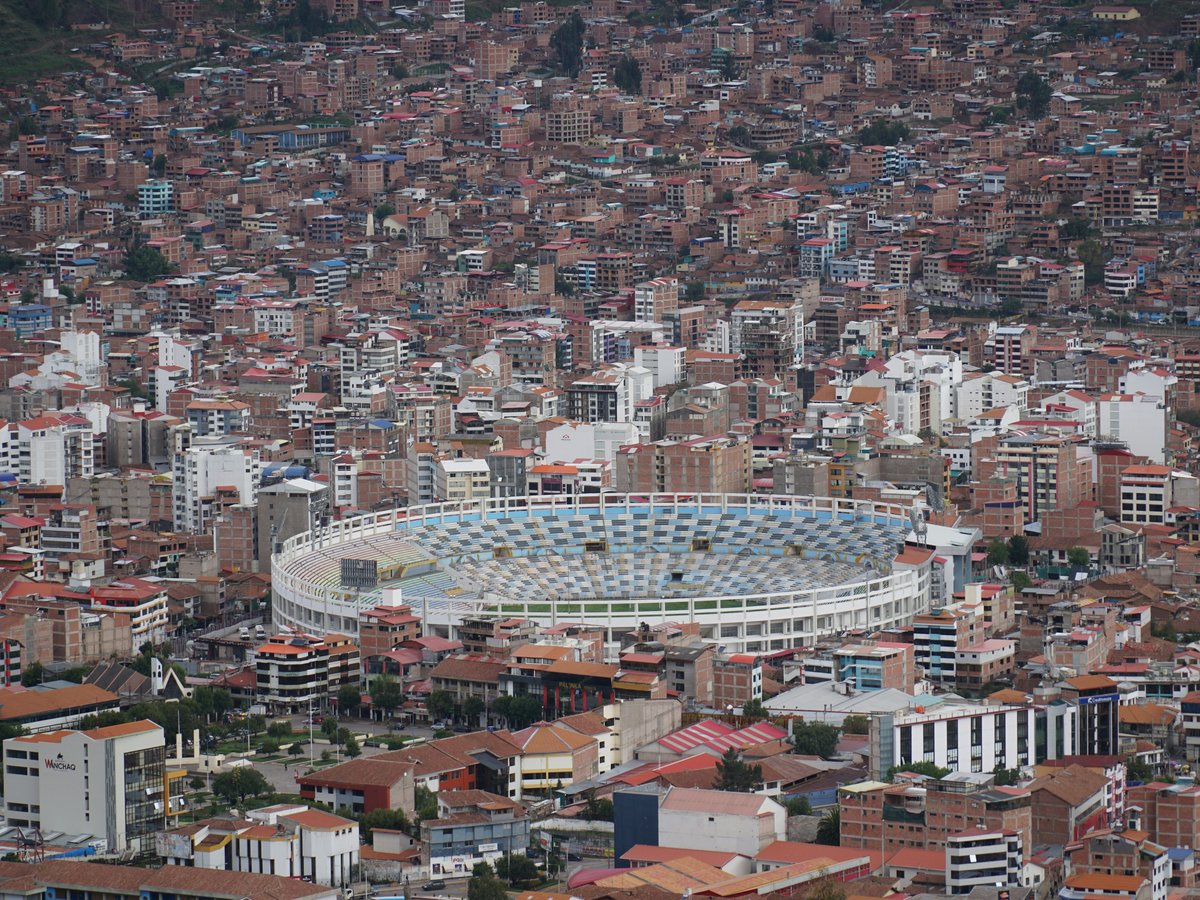
Cusco sits at 3,400 meters in Peru's southern highlands, and the altitude announces itself before anything else. Your lungs work harder. Your coffee cools faster in the thin air. The city was the capital of the Tawantinsuyu, the Inca Empire, and Inca-era stone foundations still line the colonial streets. Walking those streets costs nothing, and in Cusco the walking is the attraction. Plaza de Armas, rebuilt over the Inca ceremonial ground Haukaypata, remains the city's daily gathering point. The artisan lanes of San Blas carry the smell of carved cedar and drying oil paint from open workshop doors. Mercado Central de San Pedro, the iron-frame market hall 2 blocks from the main plaza, holds over a thousand vendor stalls selling produce, textiles, and ceramics. None of that requires a ticket. The most-promoted sites, including Saqsaywaman, Coricancha, and the Cathedral interior, all sit behind paid gates. But the city's real texture lives in its free-access plazas, its Inca walls, and the market aisles where fresh sugarcane juice and ají peppers scent the morning air.
Free attractions
-
Plaza de Armas de Cusco
The rebuilt footprint of Haukaypata, the Inca ceremonial ground, now framed by colonial arcades on 3 sides. Two of Cusco's most photographed churches face each other across the cobblestones, both requiring separate entrance fees. The square itself is always open. On clear evenings, the illuminated facades glow against the Andean dark, and local families keep the benches occupied past 9 PM. Shoe shiners, street photographers, and corn vendors work the perimeter daily.
Centro Históricolandmark -
Mirador de San Cristóbal
The overlook beside the small Iglesia de San Cristóbal sits above the historic center at roughly 3,500 meters. The entire old city spreads below in a grid of terracotta tile rooftops, and on clear days the snowline of the Vilcanota range appears to the southeast. The walk up from Plaza de Armas takes about 15 minutes on a steep cobblestone path. Mornings tend to be clearest before the cloud cover builds.
San Cristóbalviewpoint -
Piedra de los 12 Ángulos
Set into the outer wall of an Inca palace on Calle Hatunrumiyoc, now part of the Archbishop's Palace, this stone block fits into its neighbors with 12 interlocking angles and no mortar. It is visible from the street at any hour, though a guard sometimes watches the spot during the day. Calle Hatunrumiyoc connects Plaza de Armas to San Blas, so most walking routes pass it anyway. Run your fingers along the joins if the guard allows it. The precision is something you feel before you understand.
Centro Históricolandmark -
Cristo Blanco
A white concrete Christ statue on the ridge above Saqsaywaman, erected in 1945 as a gift from the Palestinian Christian community living in Cusco at the time. The statue itself is modest. The green hillside around it makes for a good afternoon walk, and the viewpoint looks back toward the city and across to the mountains beyond. No fence, no ticket, no closing time.
Saqsaywaman hillsideviewpoint and green space -
Plaza San Francisco
A wide public square with gardens, mature trees, and benches, anchored by the Iglesia de San Francisco. The church interior has its own fee, but the plaza is open ground with good people-watching and a clear sightline down Calle Garcilaso toward the San Pedro market area. Quieter than Plaza de Armas, particularly on weekday mornings when only pensioners and pigeons seem to have business there.
Centro Históricopark and landmark -
Plaza Regocijo
One block west of the main square, this smaller plaza was once part of the same Inca ceremonial complex. Trees, benches, and occasional weekend craft stalls fill the space. The Museo Histórico Regional faces onto its northern side. Less foot traffic than its neighbor makes it a better spot to sit and read or watch the light shift across the colonial facades in the late afternoon.
Centro Históricopark and landmark -
Museo de Sitio del Qoricancha
A small underground archaeological museum beside the Santo Domingo church, built over what was once the garden of the Inca sun temple. Displays include pre-Inca ceramics, Inca-period metalwork, and architectural fragments from the original Coricancha structure. Under Peru's Ministerio de Cultura first-Sunday policy, admission is typically free on the first Sunday of each month. On other days, it requires the Boleto Turístico or a separate ticket.
Santo Domingomuseum (free first Sunday of each month) -
Museo Histórico Regional (Casa Garcilaso)
Housed in the colonial-era birthplace of the chronicler Inca Garcilaso de la Vega on Plaza Regocijo, this state-run museum covers Cusco's pre-Inca, Inca, and colonial periods across 2 floors. The collection includes Wari and Killke ceramics, colonial-era paintings from the Escuela Cusqueña, and a room on the Spanish conquest. It follows the same first-Sunday free-entry policy as the Qoricancha site museum.
Centro Históricomuseum (free first Sunday of each month)
Free activities
-
Browsing Mercado Central de San Pedro
The ground floor of San Pedro market is a sensory education in Andean produce. Piles of ají amarillo, stacks of purple corn, and at least 8 visible varieties of potato sit at eye level. The juice vendors press fresh maracuyá or chirimoya blends for 2 to 4 soles, but watching them work costs nothing. The upper level sells alpaca textiles, and browsing there is free too. Go before 10 AM when the aisles are still passable.
Centro Históricomarket -
Walking the Barrio de San Blas
The artisan quarter climbs the hill northeast of the main plaza on narrow cobblestone lanes that predate the colonial grid. Ceramic workshops, wood carvers, and small galleries line the streets. Many are free to enter. The main lane, Cuesta San Blas, climbs steeply from Plazoleta Nazarenas. The smell of wood shavings and turpentine drifts from open workshop doors in the morning. At the top, Plazoleta de San Blas has a small church with an ornate carved pulpit, though the church charges a modest entry fee.
San Blaswalking -
Inca Walls Self-Guided Walk
Inca stonework runs through the foundations of the colonial center. Calle Loreto, the narrow lane leading from Plaza de Armas toward the Santo Domingo complex, is flanked on both sides by original masonry. The blocks fit together without mortar. Touch the wall at waist height and you can feel where the Inca courses end and the rougher colonial rebuild begins. Several other streets nearby carry similar stretches, making it possible to trace the old city's outline for free.
Centro Históricowalking -
Browsing Mercado de Wanchaq
About a 15-minute walk southeast of the center, Wanchaq is where Cusqueño families do their actual grocery shopping. Less polished than San Pedro, louder, and more densely packed with produce. You'll hear more Quechua than Spanish in the aisles. Browsing the stalls costs nothing, and the sheer volume of potato, grain, and herb varieties is worth the walk on its own.
Wanchaqmarket -
San Blas Gallery Walk
The galleries in San Blas and along Cuesta San Blas are commercial spaces, and entering is free. Many represent painters who blend European oil technique with Andean subjects, a local tradition with roots in the colonial period. Quality varies from tourist-oriented canvases to genuinely accomplished work. The gallery owners tend to welcome browsers without pressure. Look for workshop signs reading taller abierto for a chance to see painters and sculptors mid-process.
San Blasarts and culture
Free events
-
Corpus Christi Processions
Late May or June (60 days after Easter), annuallyCusco's largest religious festival brings 15 patron saints from parish churches across the city to Plaza de Armas. Each saint travels on a decorated silver-plated anda carried by parishioners through the streets. The processions are free to watch from the plaza and surrounding blocks. Traditional festival food includes chiriuchu, a cold platter of dried meat, cuy, seaweed, corn, and cheese served specifically during this celebration.
Plaza de Armas and parish churches citywide -
Inti Raymi Street Processions
June 24, annuallyThe Festival of the Sun on June 24 is Cusco's most attended annual event. The main ceremony at the Saqsaywaman terraces requires separately sold tickets. The free portion happens in the hours before, when hundreds of actors in Inca regalia process from the Coricancha area through the historic center to Plaza de Armas. Thousands of spectators line the route. The drumming resonates off the stone walls in a way you feel in your chest.
Historic center streets, from Coricancha to Plaza de Armas -
Santurantikuy
December 24, annuallyOn December 24, artisans from across the Cusco region set up stalls in Plaza de Armas to sell miniature nativity scenes, handcarved figurines, and ritual objects. The market has run continuously since the colonial period. Browsing is free, and the level of detail on some of the smaller carved pieces reflects weeks of work. By mid-afternoon the plaza is packed with local families shopping for their nacimientos.
Plaza de Armas de Cusco -
Señor de los Temblores Procession
Holy Monday (Lunes Santo), during Semana Santa. Date varies with Easter, annuallyThe Lord of the Earthquakes is Cusco's patron image, a dark-skinned crucifix housed in the Cathedral. On Holy Monday (Lunes Santo), the figure is carried through the city streets on a silver anda, accompanied by thousands of participants and onlookers. Red ñucchu flowers are thrown from balconies along the route, blanketing the streets. The procession is free to watch from anywhere along the path.
From Cusco Cathedral through the historic center streets -
Fiestas del Cusco
Throughout June, annuallyJune transforms the historic center. Daily performances, school marching bands, folk dance competitions, and civic ceremonies fill the weeks leading up to Inti Raymi on the 24th. Most events concentrate around Plaza de Armas and the surrounding streets. Peruvian and Cusqueño flags drape the balconies, and the center is noticeably louder and more crowded than any other month. Individual events are free to watch from the streets and plazas.
Plaza de Armas and streets throughout the historic center
Sites That Require the Boleto Turístico
Most of Cusco's famous archaeological sites require paid admission, and it is worth knowing which ones before you plan a free day. Saqsaywaman, the massive Inca fortress complex on the hill above the city, is the one visitors most often assume is free. It is not. Access to the main terraces and walls requires the Boleto Turístico, currently 130 soles for the full 10-day pass (roughly 39 USD). The same ticket covers Tambomachay, a ritual bath site; Puka Pukara, a military outpost; and Q'inqu, a shrine carved into living rock, all in the hills north of town. It also covers the terraced water gardens at Tipón, about 25 kilometers southeast in the valley. Huchuy Qosqo, a smaller Inca settlement northeast of Cusco, requires a full-day hike to reach. Coricancha, the Inca sun temple with foundations dating to 1201, sits beneath the colonial Santo Domingo church. Entry to the temple complex is separate from the Boleto Turístico and requires its own ticket. Cusco Cathedral, whose construction began in 1559 on the site of an Inca palace, also charges its own fee. The Iglesia de la Compañía de Jesús across Plaza de Armas, completed in 1668, does the same. Estadio Garcilaso, the city's main football ground since 1958, hosts Cienciano matches through the Peruvian league season. Tickets tend to be cheap by international standards, but they are not free. All of these sites are worth the entry cost on a longer visit. This guide covers what requires no payment at all.
A Free Morning Route Through Inca Cusco
Start at Plaza de Armas around 7 AM, when the square is still mostly empty and the air carries that high-altitude morning bite. Walk northeast along Calle Triunfo, past the Cathedral facade. The route connects to Calle Hatunrumiyoc, where you will pass the famous Inca stone block in the palace wall. Continue uphill into San Blas along Cuesta San Blas. The lane is steep and cobbled. At this hour the workshops have not opened yet, but you can peer through iron gates at half-finished carvings and stacked canvases. At the top, Plazoleta de San Blas has a handful of early-opening cafes. From San Blas, keep walking north toward Iglesia de San Cristóbal. The climb gets steeper. Take your time. At the mirador, the valley opens below in a sweep of terracotta rooftops against brown hillsides. If your lungs have adjusted, continue another 10 to 15 minutes toward Cristo Blanco, where the path levels out on the grassy ridge above Saqsaywaman's outer perimeter. The total route covers about 3 kilometers. Budget 2 to 3 hours with stops for photographs and catching your breath. Bring water and sunscreen. The sun at Cusco's elevation burns exposed skin within 20 minutes, even on overcast mornings.
FAQ
Are Cusco's churches free to enter?
Most major churches in the historic center charge an entrance fee, including the Cathedral and La Compañía de Jesús. That said, several smaller neighborhood churches still allow free entry during Mass hours, though photography is typically not permitted during services. The exteriors, facades, and the plazas they face are always free to view and photograph.
How much spending money do I need for a day in Cusco?
For a genuinely free day following this guide, you could spend nothing. Realistically, you might want a few soles for a fresh juice at San Pedro market or a bowl of soup at a market stall. The current exchange rate sits at 1 USD to 3.3706 PEN. A basic daily food budget of 30 to 50 soles (roughly 9 to 15 USD) covers 3 meals if you eat at markets and local menú restaurants rather than tourist-facing spots.
Is Cusco safe for solo travelers?
TTDI rates Cusco 6.2 out of 10 for solo-traveler safety (see the TTDI Solo-Safety Index). The historic center and San Blas are generally fine during daylight. Petty theft and bag-snatching tend to increase after dark, particularly on less-lit streets away from the plazas. Altitude sickness is likely the more immediate concern for most visitors. Standard precautions apply. Keep valuables close, stay aware near crowded market entrances, and avoid displaying expensive gear after sunset.
What about LGBTQ+ travelers visiting Cusco?
Cusco rates 3.5 out of 10 for LGBTQ+ friendliness (sourced from TTDI's editorial rubric). Peru does not currently recognize same-sex civil unions at the national level, and Cusco, while more cosmopolitan than much of Peru's highland region, remains socially conservative. Open displays of affection between same-sex couples may draw unwanted attention. A small number of LGBTQ-friendly bars and cafes operate in the center, but they tend to keep a low profile. The free activities in this guide are all public-space experiences where orientation is unlikely to be an issue.
When is the best time for free outdoor activities in Cusco?
May through September is the dry season, with the most consistently clear skies and comfortable daytime temperatures. June is the peak month for free festivals, with both the Corpus Christi processions and the Inti Raymi street celebrations. August mornings start cold. A recent mid-August dawn registered 5.7 degrees Celsius with a wind chill near 4 degrees and humidity at 89 percent. By midday the sun warms the plazas considerably. The wet season from November through March brings afternoon downpours most days, which shortens outdoor time but does not shut the city down entirely.
Last verified by automated review (v1.7.2) on . What is automated review?