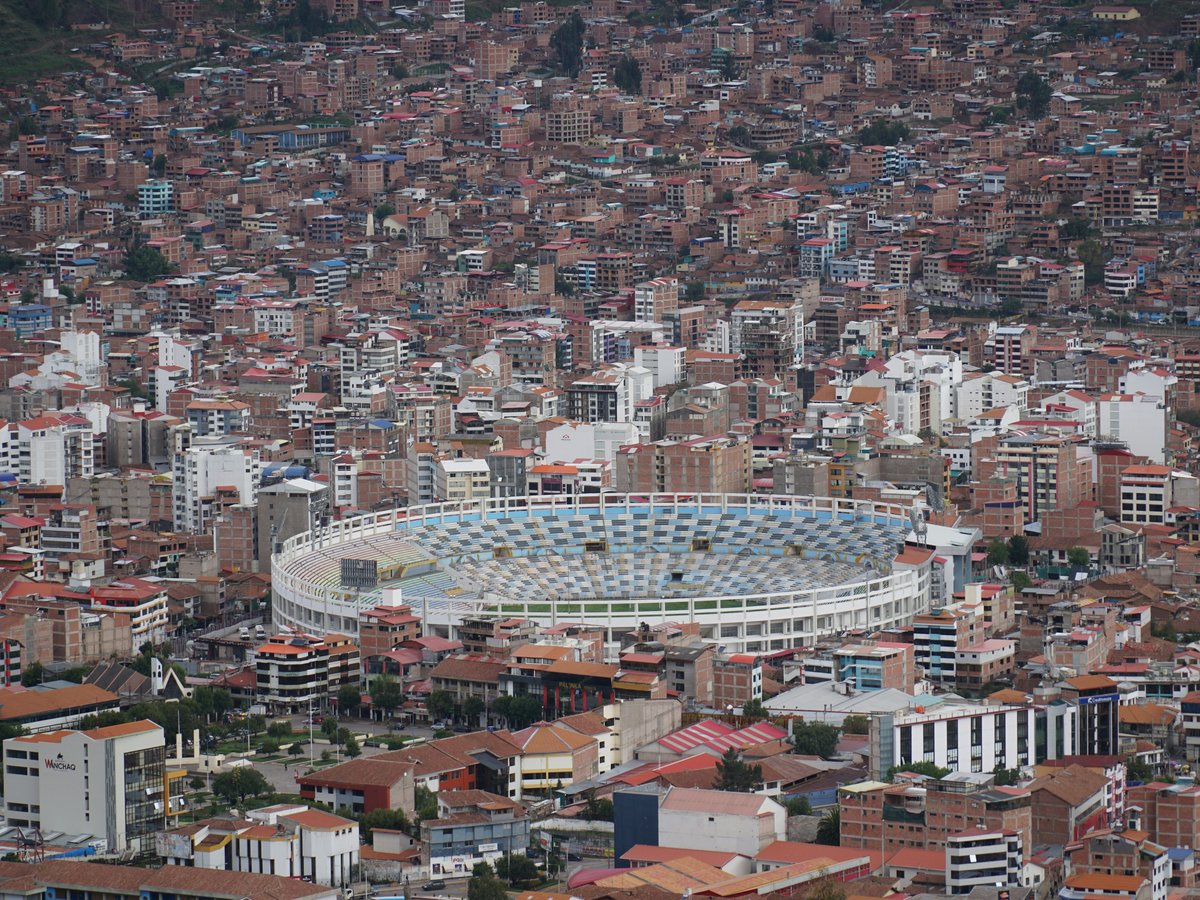
Cusco sits at roughly 3,400 meters above sea level in a valley carved between the Vilcanota and Urubamba ranges of Peru's southern Andes. The thin air hits you before the scenery does. Within 20 minutes of the Plaza de Armas, you can be on open trails past Inca stonework and stands of eucalyptus. The smell of dry earth and wood smoke mixes with cold morning light. The dry season runs May through September, when midday temperatures tend to reach 18 to 20°C and rain is rare. Worth noting, nights in June and July drop below freezing, and the UV index at this altitude regularly exceeds 11. The wet season, October through March, turns the brown hills green and makes some trails muddy, though mornings usually stay clear until early afternoon. Most visitors need 2 to 3 full days of acclimatization before tackling anything above moderate effort. That reality shapes every outdoor plan here, from a walk up to the Inca fortress at Saqsaywaman to a full-day push toward 5,000 meters. Humidity in August can drop below 30%, and your lips and knuckles will crack if you skip moisturizer.
Outdoor activities
-
Mountain Biking in the Sacred Valley
Several operators in Cusco run guided descents from high passes down into the Sacred Valley, dropping 1,000+ meters over 30 to 40 km of dirt track and singletrack. The classic route starts near Chinchero at around 3,800 meters and winds down through farming villages to the Urubamba River at roughly 2,800 meters. You'll feel the temperature climb as you lose altitude. The air thickens noticeably around your lungs. Bikes are usually decent hardtails, though a few shops stock full-suspension rigs for a premium. Expect to pay 200 to 400 PEN per person for a half-day guided ride including transport.
- Difficulty
- Moderate to difficult depending on route
- Duration
- 4-6 hours including transport
- Best season
- May through October (dry trails, better grip)
-
Horseback Riding to Inca Sites
Short horseback rides loop through the hills above Cusco, passing the terraces near Tambomachay and the garrison at Puka Pukara. The horses are mostly Peruvian Pasos, compact and sure-footed on rocky ground. Rides of 2 to 3 hours typically cost 100 to 180 PEN and leave from staging areas in the San Cristóbal neighborhood. The pace is slow, which suits the altitude, and the views across the red-tiled rooftops of Cusco from the northern ridgeline are worth the saddle time.
- Difficulty
- Easy (no experience required)
- Duration
- 2-3 hours
- Best season
- May through September
-
Rock Climbing at Cusco's Natural Walls
The limestone cliffs at Chuquicahuana, about 45 minutes south of Cusco near Cachimayo, offer 20+ bolted sport routes from 5.8 to 5.12a. The rock is compact and slightly abrasive, good for friction moves. A smaller crag near the outskirts of Saqsaywaman sees some bouldering, though the archaeological zone itself is off-limits for climbing. Bring your own gear or rent from one of 2 or 3 shops near Calle Plateros in the city center.
- Difficulty
- Moderate to advanced depending on route grade
- Duration
- Half day to full day
- Best season
- April through November (dry rock)
-
Paragliding over the Sacred Valley
Tandem paragliding flights launch from Chinchero at around 3,760 meters and soar over agricultural terraces and the patchwork fields below. Flights last 20 to 35 minutes depending on thermals. A tandem run costs about 300 to 450 PEN. The sensation of cold Andean air rushing past while the valley floor spreads 600 meters below you is its own kind of altitude adjustment. Operators provide all gear and transport from Cusco.
- Difficulty
- Easy (tandem, no experience needed)
- Duration
- 3-4 hours including transport, 20-35 minutes airborne
- Best season
- June through September (stable thermals)
-
ATV and Quad Bike Tours
Guided ATV loops run through the highlands above Cusco, passing through communities like Yuncaypata and along dusty tracks with views toward the Ausangate range. Most tours cover 25 to 40 km and include stops at the carved limestone site of Q'inqu and viewpoints north of the city. The dust gets thick on dry-season afternoons, so a bandana or buff over your nose is essential. Typical cost sits around 150 to 250 PEN for a 3-hour circuit.
- Difficulty
- Easy to moderate
- Duration
- 2.5-4 hours
- Best season
- May through September
-
Zip-lining in the Sacred Valley
Several zip-line courses run above the Urubamba River valley between Cusco and Ollantaytambo. The longest cables stretch over 300 meters, crossing above ravines and terraced hillsides. The one near the village of Pachar, about 75 km from Cusco, has 6 cables and combines zip-lining with short rappels. Prices range from 180 to 350 PEN. You'll hear the cable sing as you pick up speed, and the wind at this altitude bites harder than you'd expect.
- Difficulty
- Easy (guided, harnessed)
- Duration
- 2-3 hours at the site, plus 1.5 hours transport each way
- Best season
- Year-round (less pleasant in heavy rain, December through February)
Day hikes
-
The Four Ruins Trail (Cusco to Tambomachay)
This is likely the best acclimatization hike in the region. You start near the main square and climb steeply through the San Cristóbal neighborhood to Saqsaywaman, whose zigzag stone walls stretch over 300 meters. From there the trail continues on a mostly flat dirt road past Q'inqu, with its carved limestone tunnels and ceremonial niches, then to Puka Pukara's reddish stone garrison, and finally Tambomachay, where spring water still flows through Inca-carved channels. The total distance is roughly 8 km one way. You gain most of the elevation, about 200 meters, in the first 2 km. Take a taxi back for 10 to 15 PEN.
- Difficulty
- Easy to moderate (steep initial climb, then mostly level)
- Duration
- 3-4 hours one way with stops at each site
- Best season
- Year-round, best May through September
-
Huchuy Qosqo Trek
Huchuy Qosqo is a lesser-visited Inca settlement perched at about 3,650 meters above the Sacred Valley. The day-hike approach starts from Tambomachay, climbs over a pass near 4,400 meters, then descends to the ruins. You'll cross high-altitude grassland where the wind can cut right through a fleece. The settlement sits on a natural terrace with a commanding view down to the Urubamba Valley floor. From there, most hikers descend to Lamay and catch transport back to Cusco, about 45 minutes by road. Total walking distance is roughly 16 km.
- Difficulty
- Difficult (high pass, sustained distance, altitude above 4,000 meters)
- Duration
- 7-9 hours
- Best season
- May through September
-
Rainbow Mountain (Vinicunca)
The drive from Cusco to the Vinicunca trailhead near the community of Quesiuno takes about 3 hours, with departures typically at 4 AM. The hike covers roughly 5 km each way, climbing from about 4,700 meters to 5,036 meters. The mineral-striped slopes are genuinely strange to look at. Layers of red iron oxide, green chlorite, and ochre sandstone band the hillside. Mind you, the altitude here is serious. Even well-acclimatized hikers feel the thin air above 5,000 meters. Expect crowds by mid-morning in peak season. The temperature at the summit area regularly drops below 0°C before 9 AM.
- Difficulty
- Difficult (extreme altitude, steady incline)
- Duration
- Full day, 10-12 hours including 6 hours of driving
- Best season
- May through September (clearer skies, less mud)
-
Humantay Lake
The trailhead at Soraypampa sits at about 3,900 meters, a 3-hour drive from Cusco. The hike to the lake is roughly 3 km each way, gaining about 300 meters to reach the water at 4,200 meters. The turquoise glacial surface sits at the foot of Nevado Humantay, and the cold radiating off the glacier is palpable from 50 meters away. The trail is well-worn and moderately steep. This is currently one of the most popular day trips from the city, so early starts help you avoid the largest tour groups.
- Difficulty
- Moderate (altitude is the main challenge)
- Duration
- Full day, 9-11 hours including transport
- Best season
- May through September
-
Tipón Archaeological Park
Tipón is an Inca water-engineering site about 23 km southeast of Cusco, reachable in 40 minutes by combi or taxi. The site features 12 terraces irrigated by channels that still function after 500+ years. Beyond the main ruins, trails continue uphill through farmland and native woodland to secondary ruins and viewpoints above the Oropesa Valley. The air smells of eucalyptus and turned soil. This is a quieter alternative to the northern ruins circuit, and it pairs well with a stop in Oropesa for fresh bread on the way back. The village is known across the region for its wood-fired bakeries.
- Difficulty
- Easy to moderate
- Duration
- 3-5 hours at the site, plus 1.5 hours transport
- Best season
- Year-round
Water activities
-
Urubamba River Rafting (Ollantaytambo Section)
The upper Urubamba River runs through the Sacred Valley about 80 km from Cusco. The Ollantaytambo section offers Class II to III rapids over an 11 km stretch, suitable for beginners and families. The river water is cold, around 12 to 14°C, and operators provide wetsuits. You'll float past Inca terraces and under the snow line of the Veronica range. Half-day trips including transport from Cusco typically cost 180 to 280 PEN per person. The water volume is highest in the wet season, when the same stretches can push Class III-IV.
- Difficulty
- Class II-III (beginner to intermediate)
- Duration
- Full day including transport, 2-3 hours on the water
- Best season
- May through October for controlled rapids, November through March for higher water
-
Urubamba River Rafting (Chuquicara Section)
For more experienced paddlers, the Chuquicara section downstream from Ollantaytambo runs Class III to IV rapids through a tighter canyon. The gradient is steeper and the hydraulics more technical, with several named rapids that require active maneuvering. This section is best approached with a reputable operator who knows the current water levels. Wetsuits and helmets are mandatory. The canyon walls close in enough in places to block direct sunlight, and the temperature drop is noticeable even through neoprene.
- Difficulty
- Class III-IV (intermediate to advanced)
- Duration
- Full day, 3-4 hours on the water
- Best season
- May through September (more predictable water levels)
-
Kayaking on Lake Piuray
Lake Piuray sits at 3,750 meters near Chinchero, about 30 km northwest of Cusco. The lake is one of the city's drinking-water sources, so motorboats are restricted, which keeps the surface calm and the water relatively clean. A few local operators rent sit-on-top kayaks for 30 to 50 PEN per hour. The lake is roughly 3.5 km long and 1 km wide, big enough for a solid 2-hour paddle. On still mornings the reflection of the surrounding hills is near-perfect. Water temperature hovers around 10 to 12°C, so capsizing is genuinely unpleasant.
- Difficulty
- Easy (flatwater)
- Duration
- 2-3 hours on the water, plus 1 hour transport from Cusco
- Best season
- May through September
-
Lake Huaypo
Lake Huaypo lies about 35 km from Cusco, a few kilometers west of Chinchero at around 3,600 meters. It is smaller and quieter than neighboring Piuray, surrounded by low hills planted with potato and quinoa. Some visitors fish here with local guides for rainbow trout, an introduced species stocked in many Andean lakes since the mid-20th century. Swimming is technically possible, but the water temperature rarely exceeds 11°C, and most people find wading to the knees sufficient. The shoreline is soft and grassy, good for a picnic after a morning at the Chinchero textile market.
- Difficulty
- Easy
- Duration
- Half day including transport
- Best season
- Year-round, most comfortable May through September
Parks & gardens
-
Jardín Etnobotánico
This compact botanical garden sits behind the Coricancha, the sun temple dating to 1201. It holds about 260 native plant species from the Cusco region, arranged by ecological zone. The garden is small, maybe 15 minutes to walk through, but it concentrates medicinal and ceremonial plants you'd otherwise need to hike above 4,000 meters to find. The smell of muña and other highland herbs hangs in the enclosed space. It tends to be quiet even when the Coricancha itself is packed with tour groups.
Highlights: Native medicinal plants, Andean crop varieties, orchid section, terrace with views of Inca stonework along the temple's eastern wall
-
Plaza de Armas and Cathedral Square
FreeThe Plaza de Armas sits at 3,399 meters and serves as the city's center of gravity. The Cusco Cathedral, whose construction began in 1559, anchors the square's northern facade. The Church of the Society of Jesus, dating to 1668, closes the southeastern end. Central gardens feature clipped hedges, benches, and a pair of old ash trees. On dry-season mornings the square fills with sharp sunlight by 8 AM and stays warm until shadow reclaims it around 4 PM.
Highlights: Cathedral facade, the Jesuit church's Baroque frontpiece, central fountain, evening light on the stone arcades
-
Parque de la Madre
FreeA mid-sized urban park in the Wanchaq district, about 1.5 km south of the main square. It has a small artificial lake, paved walking paths, and a playground. Local families fill it on weekends, and food vendors set up along the eastern edge selling anticuchos and salchipapas for 5 to 10 PEN. The park sits lower than the historic center, and the air feels marginally thicker here. It is one of the few flat green spaces in a city defined by its slopes.
Highlights: Small lake, playground, weekend food vendors, jogging loop of roughly 800 meters
-
Parque Zonal Inca Pachacutec
FreeOn the southern approach to the city along Avenida de la Cultura, this park centers on a tall monument to Inca Pachacutec. It includes a sports complex, green lawn areas, and a lookout from the monument's base. The park draws less tourist traffic than the center, and you might find pickup football games on Saturday mornings near Estadio Garcilaso, the stadium built in 1958 that sits nearby.
Highlights: Pachacutec monument and lookout, sports fields, Saturday morning football culture, proximity to the Garcilaso stadium
Practical tips
- Altitude Acclimatization
- Spend at least 48 hours in the city before any hike above 4,000 meters. Coca tea (mate de coca) is widely available and may ease mild symptoms. Acetazolamide (Diamox) is sold in Cusco pharmacies without prescription for around 15 to 25 PEN per box. If headaches persist past day 3, consider dropping to the Sacred Valley at 2,800 meters for a night.
- Sun Protection
- The UV index at this altitude regularly hits 11 to 14, which is extreme by WHO standards. Wear SPF 50+ and reapply every 90 minutes. A wide-brim hat and UV-rated sunglasses are not optional. Reflected UV off light-colored stone at the ruins can burn the underside of your chin and nose. Apply sunscreen there too.
- Water and Hydration
- Drink 3 to 4 liters per day at altitude, more on hike days. Tap water in Cusco is not safe to drink. Bottled water (1.5L) costs 3 to 5 PEN from corner shops. Bring a reusable bottle with a filter if you plan multiple day hikes, since trail water sources above 4,000 meters are often shared with livestock.
- Gear and Layering
- Mornings and evenings in the dry season drop below 5°C, while midday sun pushes near 20°C. Dress in synthetic or merino layers. A wind shell and a warm mid-layer cover most conditions. For hikes above 4,500 meters, pack an insulating jacket, gloves, and a wool or synthetic hat. Good ankle-supporting boots matter on the rocky terrain around the Inca sites.
- Trail Conditions and Navigation
- Trails near the archaeological sites north of Cusco are well-maintained and obvious. Beyond those, most routes above 4,000 meters follow informal paths through open grassland with minimal signage. Download offline maps via Maps.me or AllTrails before heading out. In the wet season, October through March, muddy trails can double your time, and river crossings on the Huchuy Qosqo route may become impassable after heavy rain.
- Boleto Turístico
- Access to the four northern Inca sites, Tipón, and several other monuments requires the Boleto Turístico, currently priced at 130 PEN for the full pass covering 16 sites, or 70 PEN for a partial circuit. The ticket is valid for 10 days and sold at the COSITUC office on Avenida El Sol 103 or at site entrances. There is no separate hiking permit for the trails connecting these archaeological zones.
FAQ
How many days should I spend acclimatizing before hiking near Cusco?
Plan for at least 2 full rest days before any serious hike. On day 1, keep to flat routes around the city. On day 2, try the gentle climb toward the northern archaeological sites. By day 3, most people are ready for moderate hikes up to 4,000 meters. For anything above 4,500 meters, like Vinicunca, 3 to 4 acclimatization days is safer. Some travelers spend their first night in the Sacred Valley at 2,800 meters and then move up to the city.
Is it safe to hike solo around Cusco?
The trails between the main northern ruins are walked daily by hundreds of visitors and are generally safe in daylight. Cusco scores 6.2 out of 10 for solo-traveler safety (see the TTDI Solo-Safety Index). For remote routes like the trek to Huchuy Qosqo, hiking with at least one companion or a local guide is advisable, since the terrain is isolated above the pass and mobile phone signal disappears beyond 4,000 meters.
What does outdoor gear cost in Cusco compared to home?
Basic gear is available in shops around Calle Plateros and the San Pedro market area. Quality varies. Rental hiking boots run about 15 to 30 PEN per day, trekking poles 10 to 20 PEN. A down jacket bought locally costs 80 to 200 PEN but insulation quality is often lower than name brands. With 1 USD currently at about 3.38 PEN, rental gear is affordable for most budgets. Bring critical items like broken-in boots and a reliable rain shell from home.
Can families with children do outdoor activities near Cusco?
Families can manage the flat sections of city parks and the lower portion of the northern ruins walk without difficulty. Cusco scores 5.2 out of 10 for family friendliness (see the TTDI Family-Friendliness Index). Children acclimatize differently than adults, and pediatricians generally advise against taking kids under 2 above 3,500 meters without medical consultation. The Sacred Valley at 2,800 meters offers gentler terrain for families with young children.
Do I need a guide for day hikes near Cusco?
For the four ruins walk from the city to Tambomachay, a guide is unnecessary. The path is obvious and other walkers are always in sight. For Humantay Lake and Vinicunca, most visitors join organized tour groups that handle the 3-hour drives and include a guide. For the Huchuy Qosqo trek, a local guide who knows the route above the 4,400-meter pass is strongly recommended for first-timers.
What is the best time of year for outdoor activities around Cusco?
The dry season from May through September offers the most reliable weather, with clear mornings and minimal rain. June and July are driest but also coldest at night. September and October can be a good compromise, with warmer nights and the first green returning to the hillsides. The wet season brings afternoon downpours that turn high-altitude trails to mud and make river crossings unpredictable, though rafting operators welcome the higher water volume on the Urubamba.
Outdoor experiences in Cusco

Inca Trail 4-Day Trek to Machu Picchu – Return by Vistadome Train
Outdoor experience: 4 days.
via Viator
4-Day Inca Trail Trek to Machu Picchu & Panoramic Train
Outdoor experience: 4 days.
via Viator
Classic 5-Day Salkantay Trek to Machu Picchu: Small Group Hike
Outdoor experience: 5 days.
via Viator
2-Day Short Inca Trail to Machu Picchu – Vistadome & 4-Star Hotel
Outdoor experience: 2 days.
via Viator Free cancellation
 Excursion to Rainbow Mountain Full Day Optional Red Valley
Outdoor experience: 12 hours, free cancellation.
via Viator
4-Day Short Salkantay Trek to Machu Picchu with Sky Camp Stay
Outdoor experience: 4 days.
via Viator Free cancellation
 Excursión to Humantay Lake Full Day from Cusco
Outdoor experience: 15 hours, free cancellation.
via Viator Free cancellation
 Cusco: Rainbow Mountain & Red Valley Premium Day Trip with Meals
Outdoor experience: 12 hours, free cancellation.
via Viator Free cancellation
 Full-Day Rainbow Mountain Trek (Meals Included)
Outdoor experience: 14 hours, free cancellation.
via Viator Free cancellation
 Inca Trail 4-Day 3-Night Trek to Machu Picchu with Expert Guides
Outdoor experience: 4 days, free cancellation.
via Viator
5-Day Salkantay Trek to Machu Picchu + Vistadome Train
Outdoor experience: 5 days.
via Viator Free cancellation
 Rainbow Mountain Beat-the-Crowd, Small Group - 8:00 AM Departure
Outdoor experience: free cancellation.
via ViatorLast verified by automated review (v1.7.2) on . What is automated review?