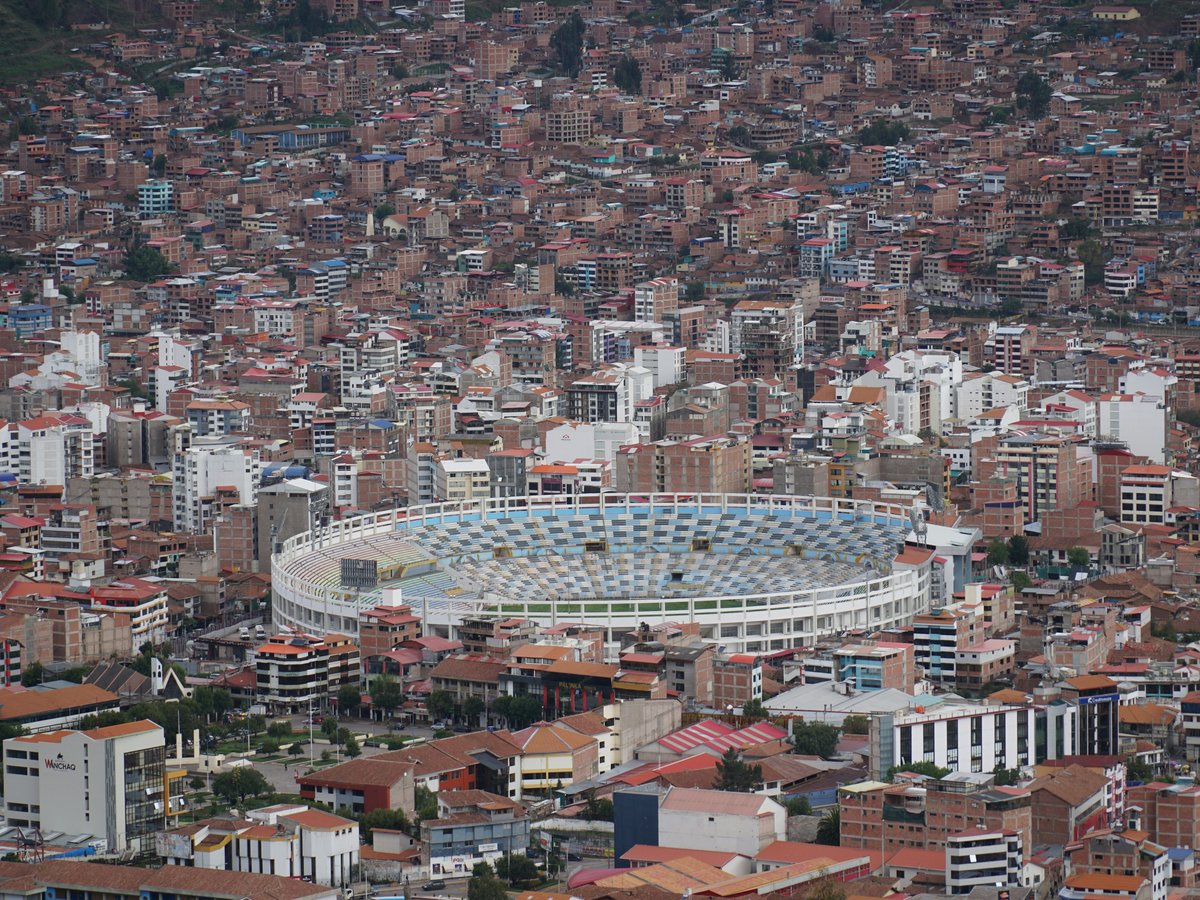
Cusco sits in a valley at roughly 3,400 meters above sea level, and the city still follows the bones of its Inca layout, radiating from Plaza de Armas in a rough grid that climbs steeply in every direction. The Saphi and Tullumayo rivers, now channeled underground, originally defined the center's borders. Walking distances between neighborhoods tend to be short, maybe 10 to 15 minutes on flat ground, but the altitude makes even a gentle slope feel punishing during your first 48 hours. Most visitor life happens in three clusters. The colonial core around Plaza de Armas, the artisan hillside of San Blas directly above it, and the market district near San Pedro station to the west. Beyond those, neighborhoods like Wanchaq and Santiago are where cusqueños live their daily lives, with local markets, bus terminals, and prices that reflect a city where the average meal costs 8 to 15 soles (roughly 2.40 to 4.50 USD at current rates). The weather here tends to catch people off guard. Even in the dry season, midday temperatures hover around 12 to 13°C and can feel closer to 9°C with the wind. Light drizzle appears without warning. Pack layers, not shorts.
Neighborhoods
-
Centro Histórico (Plaza de Armas)
This is the colonial heart of Cusco, built directly on top of Inca foundations. Cusco Cathedral, which took nearly a century to complete after its founding in 1559, dominates the northeast side of Plaza de Armas. The Church of the Society of Jesus, finished in 1668, faces it from the southeast corner. You'll find polished stone arcades on three sides of the plaza, filled with restaurants on the second floors and tourist agencies at street level. The architecture is a constant collision of Inca stonework and Spanish colonial construction. Walls along Calle Hatun Rumiyoq still feature the original Inca masonry, including the famous 12-angled stone. The noise level is high. Tour groups gather by 8 a.m., taxi horns echo off the narrow streets, and brass bands sometimes set up on the plaza steps for municipal celebrations. At night the cathedral and Jesuit church are lit up and the foot traffic shifts from tour groups to bar-hoppers along Calle Procuradores.
- Best for
- First-time visitors who want walkable access to Cusco's major colonial landmarks and don't mind tourist-oriented pricing, which runs 30 to 50% above what you'd pay two blocks away
- Key streets
- Calle Plateros runs northwest from the plaza and is lined with travel agencies, cafes, and money-exchange shops. Calle Procuradores, nicknamed Gringo Alley, is the nightlife strip. Calle Hatun Rumiyoq connects the plaza to San Blas and passes the 12-angled stone in the wall of the old Archbishop's Palace. Calle Mantas runs south toward San Pedro market.
-
San Blas
San Blas is the artisan district, perched on a steep hillside directly above Plaza de Armas. The streets are narrow, cobbled, and punishing on the calves. Plazoleta San Blas, the small square at its center, is anchored by the San Blas Church, which houses a carved wooden pulpit from the colonial era that locals consider one of the finest pieces of woodwork in the Americas. The neighborhood has traditionally been home to ceramicists, painters, and woodworkers, and you'll still find workshops tucked behind heavy wooden doors on Calle Tandapata and Cuesta San Blas. That said, the past decade has brought a wave of boutique hotels and international restaurants. The architecture is lower-rise than the center, with whitewashed walls, terra-cotta roofs, and flowering courtyards visible through open gates. Mornings here are quiet. The sound of the city sits below you, and from several points along Tandapata you get unobstructed views down over the cathedral roofline and across to the hills beyond.
- Best for
- Couples and solo travelers who prefer a quieter base within walking distance of the center, and anyone who values atmosphere over convenience. Worth noting that the steep climb back from dinner in the plaza is genuinely taxing at altitude. TTDI rates Cusco's solo-traveler safety at 6.2/10 (see the TTDI Solo-Safety Index), and San Blas is generally one of the safer areas after dark, though the poorly lit back streets above Tandapata warrant caution past midnight.
- Key streets
- Cuesta San Blas is the main artery connecting Plaza de Armas to Plazoleta San Blas. Calle Tandapata runs along the upper contour with the best views. Carmen Bajo leads further uphill toward quieter residential blocks. Calle Suytuccato connects to the Saphi valley side.
-
San Pedro
San Pedro is defined by its market. Mercado San Pedro is a sprawling indoor market about 4 blocks southwest of Plaza de Armas, and the surrounding streets take on the same mercantile energy. Stalls spill onto sidewalks along Calle Cascaparo and Calle Santa Clara. The market itself is a two-story building filled with juice vendors, butchers, cheese stalls, dried-herb sellers, and lunch counters serving menú del día for 6 to 8 soles. The smell is a mix of fresh fruit, raw meat, and the herbal earthiness of dried coca leaves. San Pedro station, the departure point for PeruRail and Inca Rail services to Ollantaytambo and Aguas Calientes, sits at the market's western edge. This means the neighborhood has a transit-hub feel, with backpackers wheeling luggage over cobblestones and colectivos lining up along the station approach. It is louder and grittier than San Blas or the plaza area. Hotels here tend to be budget-oriented, running 60 to 120 soles per night for a private room.
- Best for
- Budget travelers, food-focused visitors, and anyone catching an early train to Machu Picchu. Families might find the sensory overload of the market area a lot for younger children. Cusco's family-friendliness score sits at 5.2/10 (see the TTDI Family-Friendliness Index), and San Pedro's narrow sidewalks and dense foot traffic are part of the reason.
- Key streets
- Calle Santa Clara runs east from the market toward the center and is lined with bakeries and small shops. Calle Cascaparo parallels it one block south and has cheaper, more local-facing stalls. Calle Unión connects San Pedro to Santiago district further west.
-
San Cristóbal
San Cristóbal sits on the steep hillside north of Plaza de Armas, higher even than San Blas. The Iglesia de San Cristóbal, a small colonial church with a single bell tower, sits at a viewpoint that overlooks the entire historic center. From the church terrace you can trace the layout of Cusco's colonial grid against the surrounding hills. The road continues uphill toward Saqsaywaman, the Inca fortress site about a 20-minute walk above the church. The neighborhood itself is primarily residential, with fewer restaurants and shops than San Blas. Walls here are thick adobe, painted in fading pastels, and the streets are steep enough that some sections are stepped rather than paved. Dogs are everywhere. The pace is noticeably slower, and you'll hear Quechua spoken as commonly as Spanish in the small tiendas along the road. The walk from the church back to Plaza de Armas takes about 15 minutes downhill, but the path is poorly lit past the first two blocks.
- Best for
- Travelers who want a quiet, residential feel close to Saqsaywaman and the northern archaeological sites like Tambomachay and Puka Pukara. Not ideal if you plan to eat out frequently, since options are limited to a handful of small restaurants.
- Key streets
- Calle Resbalosa connects from the northern edge of Plaza de Armas up to the church. From there, the road forks toward Saqsaywaman to the northeast and the Q'inqu archaeological site to the northwest. Calle Saphi, at the base, is a useful connector back to the plaza.
-
Wanchaq
Wanchaq is modern Cusco. It sits south of the historic center along Avenida de la Cultura, where local life happens without the tourist overlay. The streets are wider, the buildings are concrete rather than colonial stone, and the pace shifts from sightseeing to commuting. Real Plaza, one of Cusco's shopping malls, sits along the avenue, alongside banks, pharmacies, and fast-food chains. Estadio Garcilaso, the city's main football stadium built in 1958, anchors the southern end of the district. Match days bring a different energy entirely, with food vendors along the approach roads and fans in red and white who arrive hours before kickoff. Restaurants in Wanchaq serve Peruvian comfort food at local prices. A lomo saltado or ají de gallina runs 10 to 15 soles, roughly a third of what the same dish costs near Plaza de Armas. The tradeoff is that you are a 20-minute walk or a 5-sol taxi ride from the historic core.
- Best for
- Digital nomads on longer stays and travelers who prefer local pricing. Cusco scores 6.2/10 for digital-nomad suitability (sourced from TTDI's editorial rubric), and Wanchaq's cafes with reliable Wi-Fi and affordable coworking options are a significant part of that rating. Budget-conscious visitors willing to commute into the center will find better value here than anywhere else in the city.
- Key streets
- Avenida de la Cultura is the main commercial artery running southeast from the center. Avenida Huayruropata runs parallel and has more local restaurants. Calle Manco Cápac intersects both and connects to the residential blocks north of the stadium.
-
Santa Ana
Santa Ana lies west of San Pedro, across the Saphi river channel, in a part of Cusco that few tourists ever reach. The streets climb steeply toward the Arco de Santa Ana, one of the old entry gates to the colonial city. Mercado de Cascaparo, smaller and scrappier than San Pedro, serves the surrounding residential blocks. The architecture is mixed. Some colonial-era houses with thick walls and interior courtyards survive alongside more recent concrete construction. The area has a working-class feel, with repair shops, small grocers, and the kind of corner bodegas where regulars have their own stool. You might hear cumbia playing from open doorways at midday. Plaza de Armas is about a 10-minute walk downhill, though the return trip uphill takes nearly double that at altitude.
- Best for
- Travelers seeking an unfiltered local experience and rock-bottom accommodation prices. Long-stay visitors and Spanish-language students sometimes base themselves here for the immersion. Not ideal for anyone uncomfortable in areas with minimal English signage or tourist infrastructure.
- Key streets
- Calle Hospital runs along the southern edge of the neighborhood toward San Pedro. Calle Arcopata climbs toward the Arco de Santa Ana and the viewpoints above. Calle Quiscapata connects to the Mercado de Cascaparo area.
-
Coricancha / Santo Domingo
This pocket district sits southeast of Plaza de Armas, anchored by Coricancha, the Inca sun temple whose foundations date to 1201. The Spanish built the Convento de Santo Domingo directly on top of the Inca walls. The result is a layered structure where you can see both construction traditions in a single glance. The surrounding blocks along Avenida El Sol have a more commercial character than the plaza area, with banks, tour offices, and the occasional upscale restaurant. The Jardín de Coricancha, a small terraced garden below the temple walls, is one of the quieter spots in central Cusco. Mornings here tend to be calm, with the garden largely empty before 10 a.m. The noise picks up along Avenida El Sol during rush hours, when it becomes one of the busiest roads in the center.
- Best for
- History-focused travelers who want to be near Cusco's most significant Inca site without staying in the noisier plaza area. Hotels along Avenida El Sol tend to be mid-range, running 150 to 300 soles per night, and the location works well as a compromise between the tourist center and the quieter southern districts.
- Key streets
- Avenida El Sol is the main road running southeast from the plaza past Coricancha. Calle Maruri runs parallel one block north and has smaller hotels and restaurants. Calle Pampa del Castillo connects the Coricancha area back toward Plaza de Armas.
FAQ
Which neighborhood in Cusco is best for first-time visitors?
Centro Histórico around Plaza de Armas puts you within walking distance of the Cathedral, the Jesuit church, and the main restaurant and tour-agency strip. You'll pay more for accommodation and meals here, but the convenience of having everything on your doorstep is hard to beat for a short stay of 2 to 3 nights. San Blas, directly uphill, offers a quieter alternative that is still a 10-minute walk down to the plaza. For more detail on arriving and getting oriented, the Wikivoyage Cusco guide covers transit options at https://en.wikivoyage.org/wiki/Cusco#Get_in and local navigation at https://en.wikivoyage.org/wiki/Cusco#Get_around.
Is Cusco safe for solo travelers?
The score mentioned earlier in the San Blas section reflects both genuine risks and manageable precautions. The historic center and San Blas are generally safe during daylight and early evening. Common-sense precautions apply after dark, especially on poorly lit streets above San Blas and in Santa Ana. Petty theft, particularly phone-snatching, is the primary concern rather than violent crime. The Wikivoyage safety section at https://en.wikivoyage.org/wiki/Cusco#Stay_safe covers common scams and areas to watch.
How much should I budget for food in Cusco?
Prices vary dramatically by neighborhood. A menú del día (set lunch with soup, main, and drink) at Mercado San Pedro costs 6 to 8 soles, roughly 1.80 to 2.40 USD. The same meal at a tourist restaurant near Plaza de Armas runs 25 to 40 soles. For evening dining, mid-range restaurants along Calle Plateros charge 30 to 55 soles for mains. In Wanchaq, a full chicken dinner with sides costs less than what you would pay for an appetizer near the plaza. The Wikivoyage food section at https://en.wikivoyage.org/wiki/Cusco#Eat has additional detail on local dishes and dietary considerations.
Is Cusco a good base for digital nomads?
It works for stays of a few weeks to a couple of months, particularly if you base yourself in Wanchaq or the quieter edges of San Blas where mid-term rental prices are more reasonable. Wi-Fi reliability has improved over the past few years, though speeds in older buildings can be inconsistent. Cafes in the center cater to laptop workers, and a few coworking spaces have appeared along Avenida de la Cultura. The altitude is the wild card. Some people adjust within 2 to 3 days, while others feel sluggish for a full week. The dry season from May through September brings clearer skies but colder mornings, with temperatures that can feel close to single digits before the sun climbs above the valley rim.
How does LGBTQ+ friendliness compare to other Peruvian cities?
Cusco scores 3.5/10 on TTDI's LGBTQ+ friendliness rubric (sourced from TTDI's editorial rubric), which reflects a conservative social environment shaped by strong Catholic traditions in the highlands. Public displays of affection between same-sex couples may draw stares outside of tourist-oriented establishments. Lima tends to be more openly progressive. That said, tourist-facing bars and hotels in the Centro and San Blas are generally welcoming regardless of orientation. The Wikivoyage practical-information section at https://en.wikivoyage.org/wiki/Cusco#Cope covers broader social context.
What is the best time of year to visit Cusco?
The dry season runs from May through September and is the most popular window, with clear skies and cold nights that can drop below 0°C. June through August is peak tourist season, which means higher hotel prices and larger crowds at Saqsaywaman and Coricancha. The shoulder months of April and October tend to offer a reasonable tradeoff between weather and pricing. The wet season from November through March brings afternoon downpours that can turn cobblestone streets slippery, but accommodation prices drop 20 to 40% and the surrounding hillsides turn green. Inti Raymi, the Inca sun festival, falls on June 24 each year and fills the city for about a week beforehand.
Last verified by automated review (v1.7.2) on . What is automated review?