Stay in Cusco in July
91 hotels in the Trip.com pool for Cusco, from US$8 a night.
Opens Trip.com on Fri 2 Jul to Sun 4 Jul 2027; change the dates there.
July is the driest month of the year in Cusco, with roughly 7mm of rainfall across about 2 days. That number alone explains why it's the most popular month for visitors, and you'll notice the crowds in every hotel lobby and side street in the Centro Histórico. Daytime highs reach about 18.5°C (65°F) under sharp Andean sunlight, comfortable for walking the steep, sun-warmed cobblestones of San Blas or sitting on the grass at Saqsaywaman. After sunset, the temperature drops to around 4.5°C (40°F), and the cold settles in fast. You'll feel it in your fingers before you've finished dinner on the Plaza de Armas.
This is Cusco's peak season by every measure. Hotels in San Blas fill weeks in advance, and prices across the city tend to run 40-60% above the annual average. Peru's Independence Day, Fiestas Patrias, falls on July 28-29 and brings domestic tourists on top of the international crowd. Mid-month, the Fiesta de la Virgen del Carmen fills the streets of Paucartambo with masked dancers, brass bands, and the smell of incense and street-food smoke. Day-trippers from Cusco make the road trip east for one of the Andes' most intense processions.
The near-total absence of rain keeps the Classic Inca Trail, the route to Huchuy Qosqo, and ruins like Tambomachay and Puka Pukara fully accessible. Cusco sits at 3,400 meters (11,150 feet), and at that altitude, clear air makes the Andean skyline sharper and closer than anything you'll see in the cloudy wet months. Even August, the next-driest month, averages nearly 20mm.
Why visit in July
- Nearly rainless skies keep multi-day treks like the Classic Inca Trail and the Salkantay Trek mud-free, without the landslide delays and cloud cover that mark the November-March wet season.
- Peru's Independence Day closes out July with military parades, brass bands, and traditional dance performances in Cusco's historic center.
- Clear, dry air at altitude means the surrounding Andean peaks, many snow-capped, are visible from Cusco with a sharpness the wet season's cloud and humidity erase.
- Dry cold suppresses insect populations. Mosquitoes that bother visitors at lower-altitude sites in the Sacred Valley during wetter months are largely absent in July.
Worth knowing
- Peak-season pricing across hotels, restaurants, and tour operators. Rates in San Blas and the Centro Histórico hit their annual highs in July, and last-minute availability is scarce.
- Many budget and mid-range hotels in Cusco lack central heating. After sunset the cold is serious, and your room might have nothing but extra blankets and cold tile floors.
- UV radiation at altitude burns exposed skin in minutes, even on days that feel cool. First-day sunburn is the most common tourist health complaint in the dry season.
- Major sites in the Centro Histórico fill with organized tour groups between 9am and 2pm. Independent travelers can reclaim those spaces by visiting at dawn or in the late afternoon.
Best for
Think twice if
July sits in the heart of Cusco's dry season, which runs roughly May through September. Days are sunny, with skies clear enough to make the Vilcanota range look close enough to touch. Walk through San Cristóbal before 8am and you'll see your breath. By midday the Andean sun warms the stone walls along Calle Hatun Rumiyoq, though the air stays mild enough for a light jacket. Humidity sits around 58%, low enough that the cold never feels damp the way it does on Lima's coast. Any rainfall tends to arrive as a brief afternoon drizzle, a far cry from the 200mm-plus deluges of January and February.
Seasonal caution
- Temperatures at exposed sites above the city can dip below 0°C (32°F) after dark. Frost is common on the high-altitude grasslands surrounding Cusco in July.
- UV index frequently reaches 11-12 on the WHO scale (classified as extreme) due to altitude and clear, dry air. Unprotected skin burns within minutes. This is the most underestimated hazard for July visitors.
Year-round climate
Averages from the last 5 years.
| Month | Avg high (°C) | Avg low (°C) | Rainfall (mm) |
|---|---|---|---|
| Jan | 17 | 8 | 226 |
| Feb | 17 | 8 | 185 |
| Mar | 16 | 8 | 180 |
| Apr | 17 | 7 | 74 |
| May | 17 | 6 | 35 |
| Jun | 18 | 5 | 5 |
| Jul | 19 | 5 | 7 |
| Aug | 19 | 5 | 20 |
| Sep | 19 | 6 | 41 |
| Oct | 19 | 7 | 92 |
| Nov | 19 | 8 | 169 |
| Dec | 18 | 8 | 180 |
Holidays and festivals in July
Public holidays
- Air Force Day(Día de la Fuerza Aérea)23 July 2027
- Independence Day(Día de la Independencia)29 July 2027
Headline events
Fiestas Patrias
July 28-29 (celebrations extend from approximately July 25 to July 30)
Peru's national Independence Day commemorates the 1821 declaration of independence from Spain. In Cusco, celebrations stretch across the final week of July with civic parades through the city center, traditional dance performances in the plazas, flag-raising ceremonies, and restaurants serving special heritage menus from Peru's regional cuisines. Government offices and schools close, and the city swells with domestic visitors from Lima and Arequipa.
Fiesta de la Virgen del Carmen de Paucartambo
Approximately July 15-18 (centered on July 16)
One of Peru's most elaborate religious folk festivals, held annually in the highland town of Paucartambo about 110km east of Cusco. Masked dance troupes perform choreographed stories over 3-4 days, with the Saqra dancers (costumed as demons wearing grotesque hand-carved wooden masks) drawing the most attention. The climax is the procession of the Virgen del Carmen statue through town, accompanied by each troupe performing in sequence. The town's population of roughly 3,000 swells to well over 15,000.
Best things to do in July
Classic Inca Trail to Machu Picchu
hikingThe 4-day, 43km trek to Machu Picchu passes through cloud forest, high Andean grassland, and a series of Inca ruins along the route. July's dry conditions keep the stone steps free of the slippery mud that makes the trail treacherous from December through March.
Driest month of the year. Mud-free stone steps, clear views from Dead Woman's Pass at 4,215 meters (13,828 feet), and minimal risk of trail closures from landslides.Booking tipPermits sell out 3-4 months ahead for July. Book by March at the latest through a licensed operator registered with Peru's Ministry of Culture.
Day trip to Moray and the Maras salt mines
day tripThe concentric agricultural terraces at Moray and the pre-Inca salt evaporation ponds at Maras sit in the Sacred Valley about 50km northwest of Cusco. The two are typically combined as a half-day trip by minivan or mountain bike.
Dry weather means the circular terraces at Moray are fully walkable without mud, and the Maras salt ponds are actively harvested, creating stark white-against-brown contrasts for photography.Booking tipBook a combined Maras-Moray tour at least 2-3 days ahead in July. Morning departures fill fastest.
Virgen del Carmen festival in Paucartambo
culturalThe mountain town of Paucartambo hosts one of Peru's most elaborate masked-dance festivals in mid-July. The celebration lasts 3-4 days, with each comparsa (dance troupe) telling a different story from Peru's layered history. The sound of brass bands bounces off the town's colonial facades, and the smell of anticuchos and chicha fills the main plaza.
This festival happens only in mid-July. There's no other time of year to see it.Booking tipNo tickets needed, but transport fills up. Arrange a colectivo from Wanchaq or book a tour the week before.
Stargazing in the Sacred Valley
natureClear winter skies and low humidity make July ideal for naked-eye and telescopic astronomy in the Sacred Valley. Several community tourism operators near Chinchero and Ollantaytambo run guided night-sky sessions in Quechua and Spanish, pointing out the Llama constellation and the Milky Way's densest band.
Minimal cloud cover and low humidity at high altitude create some of the clearest night skies in South America during July.Booking tipSessions depend on moon phase. Book around the new moon for the darkest skies.
Exploring Tipón's Inca hydraulic engineering
culturalThe Inca water-engineering site at Tipón, about 23km southeast of Cusco, features terraces with running water channels that have functioned continuously for over 500 years. The precision of the stonework channels is easier to appreciate when they're not obscured by wet-season runoff.
Dry conditions reveal the full engineering of the water channels without rain muddying the lower terraces.Booking tipCombine with a visit to Pikillacta, a pre-Inca Wari site 7km further south, for a full half-day.
Mountain biking the Maras-Moray circuit
adventureA 30-40km loop through the Sacred Valley on dirt tracks past Maras, Moray, and the salt mines. The terrain mixes single-track descents with steady climbs through farming communities where you'll catch the smell of eucalyptus and wood smoke.
Hard-packed trails in the dry season. The wet months turn these same dirt tracks into unrideable mud in several sections.Booking tipSeveral Cusco operators rent quality mountain bikes. Book at least a day ahead in July, as fleet sizes are limited.
Sunrise at Saqsaywaman
sightseeingThe massive stone fortress above Cusco faces east, and the first light of a July morning hits the polygonal walls with a golden warmth that fades by mid-morning. Tour buses typically arrive after 9am, so sunrise visitors have the 3,700-meter site largely to themselves.
Cloudless July mornings deliver reliable sunrise light. In the wet season, fog and low cloud frequently obscure the view entirely.Huchuy Qosqo trek
hikingA 1-2 day trek to a lesser-known Inca administrative site at 3,600 meters, with panoramic views over the Sacred Valley and Lake Piuray. The trail starts near Lamay and requires no permit, making it a strong alternative for travelers who missed the Inca Trail allocation.
Dry trails and clear views of snow-capped peaks across the valley. The high-altitude camp is cold in July but manageable with proper gear.Booking tipCan be done independently, but a guide familiar with the trail improves the experience. Book 3-4 days ahead.
What to eat in July
On menus now
Chairo
A thick Andean soup built on chuño (freeze-dried potatoes), lamb or beef, wheat, barley, and local vegetables. Cusco's market comedores serve it steaming on cold July mornings, and the earthy flavor of the reconstituted potatoes is particular to highland cooking.
Lechón cusqueño
Slow-roasted suckling pig scored and seasoned with cumin, aji peppers, and garlic. The San Jerónimo district, about 20 minutes southeast of the center, is known year-round for its lechón vendors, but demand and quality both peak during the national holiday week.
Timpusqa
A traditional Cusqueño boiled dinner of beef, pork rind, potatoes, moraya (white chuño), and pears. The pear in a savory broth is unexpected and distinctly Cusqueño. It appears most often in market comedores and home kitchens during the cold winter months.
What to drink
Ponche cusqueño
A warm, spiced drink made with toasted peanuts, cloves, cinnamon, sesame, and sometimes pisco. Vendors in the San Pedro market sell it from steaming urns during the Independence Day celebrations, and the nutty, cinnamon-heavy aroma carries across the market aisles.
Emoliente
A hot herbal drink sold from pushcarts on cold Cusco evenings, made with toasted barley, flaxseed, lime juice, and medicinal herbs. Look for the vendors' steaming metal urns near the Centro Histórico after sunset, when locals stop for a warm cup on their way home.
In markets
Chuño
Freeze-dried potatoes processed during the cold, dry winter nights in the highlands above Cusco. July's consistent overnight frost is ideal for the traditional freeze-thaw-stomp cycle that transforms fresh potatoes into this lightweight, shelf-stable staple.
Regular events in July
Fiesta de Santiago ApóstolFree
Patron saint celebrations on July 25 across the Cusco region, with traditional horse blessings (herranza), music featuring harps and violins, and communal feasting in highland communities. The festivities are strongest in Sacred Valley towns like Pisac and Calca.
July 25Liga 1 football at Estadio Garcilaso
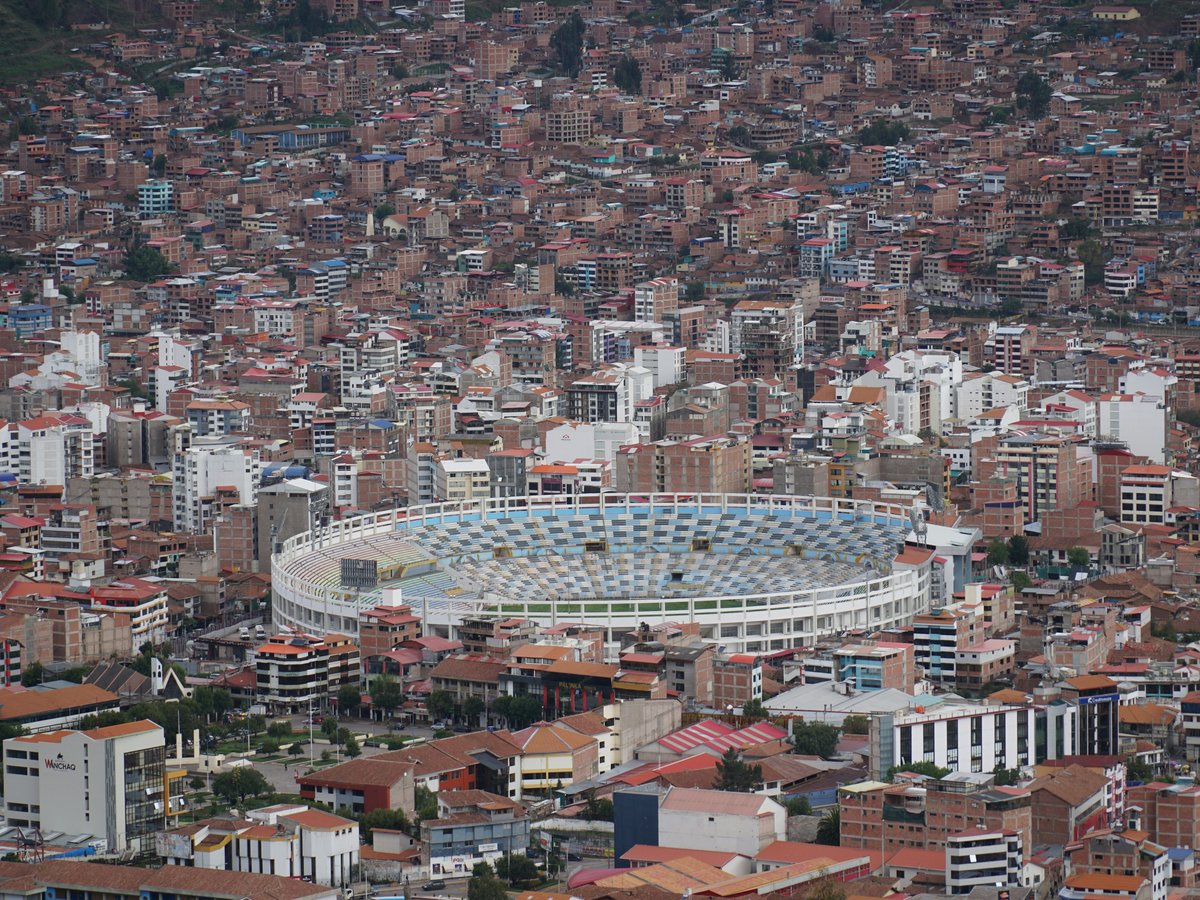
Peru's Liga 1 football matches at Estadio Garcilaso, built in 1958 and home to Cienciano, tend to draw larger-than-usual crowds during the national holiday week. The atmosphere at a late-July match, with the city already in celebration mode, is more electric than the average league fixture.
Late July (match schedule varies by season)Best places this July
Coricancha (Qorikancha)
temple and museumThe site of the Inca sun temple, founded in 1201, now partially covered by the Convento de Santo Domingo. The remaining Inca stonework in the lower walls is some of the finest in Peru. July's angled winter sunlight reaches parts of the interior courtyards that stay shadowed during the Southern Hemisphere's summer months.
Centro HistóricoMercado de San Pedro
marketCusco's main market, a 10-minute walk from the Plaza de Armas. The national holiday week brings special displays of Peruvian produce and traditional foods on the upper level. Arrive before 8am when the juice stalls still have fresh-pressed options and the aisles are navigable.
San PedroBarrio de San Blas
neighborhoodThe artisan neighborhood above the Plaza de Armas, with small galleries, ceramic workshops, and the Templo de San Blas (known for its carved wooden pulpit). The steep cobblestoned lanes are easier to walk in dry weather, and the workshops stay open late during peak season.
San BlasMirador de San Cristóbal
viewpointA viewpoint above the city with a wide-angle view of Cusco's terracotta rooftops and the mountains beyond. In July the air is dry enough to see the snowline on the Ausangate massif, roughly 100km to the southeast. Late afternoon light is warmest on the rooftops below.
San CristóbalQ'inqu
archaeological siteAn archaeological site with carved rock formations, cave passages, and water channels cut directly into limestone. It sits between the city and Saqsaywaman, close enough to combine on foot. The carved channels are dry in July, which makes the deliberate human shaping of the stone easier to read against the natural rock.
outskirts, between the city and SaqsaywamanCusco Cathedral
church and museumThe mother church of Cusco's archdiocese, founded in 1559 on the foundations of an Inca palace. The interior holds an extensive collection of Cusqueño School paintings, including a famous Last Supper that features cuy (guinea pig) on the table. Modest dress is enforced at the entrance.
Plaza de ArmasIglesia de la Compañía de Jesús
churchCompleted in 1668, this Jesuit church on the Plaza de Armas has one of Cusco's most ornate baroque facades. The carved stone portal faces east and catches July's morning light at an angle that rewards early visitors with cameras.
Plaza de ArmasWanchaq district
neighborhoodThe more residential, less tourist-focused part of Cusco south of the historic center. Prices at restaurants and shops here tend to be noticeably lower. Good cevicherías and pollerías line the main avenues, and you'll hear more Quechua spoken on the street than you will near the Plaza de Armas.
Wanchaq
Your packing checklist
Tick items off as you pack. Your progress saves in this browser.
All packed — have a great trip.
Insider tips
At the Mercado de San Pedro, the second-floor comedores serve better-value set lunches (menú del día) than the ground-floor stalls facing the main entrance. The upper level is also quieter and easier to eat at during peak-season midday.
During Fiestas Patrias, the best viewing spots for the main military parade along Avenida El Sol fill before 7am. Locals stake out positions with chairs and blankets the evening before. Standing room on the side streets is easier to find.
Coca tea (mate de coca) is sold at every café and hotel lobby in Cusco and is the standard local remedy for altitude discomfort. It's mild, tastes like green tea with an earthy note, and is legal throughout Peru. Don't try to bring coca leaves home, as they're restricted in most countries.
Colectivos to Paucartambo for the Virgen del Carmen festival depart from near the Coliseo Cerrado in Wanchaq. They run frequently during festival days. Mind you, the last return vans fill up after the evening processions, so arrange a round-trip through a tour operator to avoid being stranded.
Casas de cambio on Calle Plateros in the Centro Histórico typically offer rates close to the official exchange (currently around 3.38 PEN to 1 USD). Avoid changing money at Alejandro Velasco Astete Airport or with street changers near the Plaza de Armas, where the spread is wider.
Avoid these mistakes
- Booking Inca Trail permits too late. July allocations sell out faster than any other month, often 3-4 months in advance, and there's no waitlist system. Travelers who arrive without a permit need to pivot to the Salkantay or Lares trek instead.
- Packing only for mild daytime temperatures and arriving unprepared for the post-sunset cold. The temperature swing between 2pm and 8pm in July can reach 12-14°C, and many budget hostels have no heating at all.
- Scheduling Machu Picchu or a full-day Sacred Valley tour for the first or second day. Altitude acclimatization at Cusco's elevation takes at least 24-48 hours. Experienced travelers keep the first day light, walking the city center and saving physical excursions for day 3 onward.
- Skipping sun protection because the air feels cool. July's dry-season sun at altitude is deceptively strong. First-day sunburn is the most common health complaint among visitors, and it happens on comfortable, clear-sky days when you don't feel the damage until evening.
Practical tips for July
Book accommodation at least 4-6 weeks ahead for July, and earlier if your visit overlaps with the Fiestas Patrias weekend. Machu Picchu entry tickets have daily caps that make July sellouts common, so secure them as soon as your travel dates are confirmed. Most restaurants in the Centro Histórico and San Blas open by 7am and close by 10pm, though the national holiday week brings extended hours and special heritage menus. Tipping at Cusco restaurants is appreciated at around 10% but not obligatory. Dress modestly when entering Cusco's churches, as exposed shoulders and shorts are turned away. ATMs near the Plaza de Armas charge withdrawal fees of 15-22 PEN per transaction, so withdraw larger amounts less frequently. Carry cash for market vendors and smaller establishments. Solo-traveler safety scores 6.2/10 (see the TTDI Solo-Safety Index). Stick to well-lit streets after dark, stay alert near the market areas late at night, and use registered taxis or ride-hailing apps rather than flagging cars on the street. Colectivos to Sacred Valley sites depart from various points in Wanchaq and run less frequently during the national holiday, when many drivers take the day off.
FAQ
Is July a good time to visit Cusco?
July is one of the best months for Cusco weather-wise, sitting right in the middle of the dry season with minimal rainfall and consistently clear skies. The tradeoff is peak-season crowds and the year's highest prices for hotels and tours. That said, if reliable dry weather matters more to you than saving money, July is a strong choice. It ranks 3rd overall among the 12 months, behind June (which has the Inti Raymi festival and similar weather with marginally fewer crowds) and May (comparable dryness with lower prices and smaller crowds).
What is the weather like in Cusco in July?
Expect sunny, dry days with comfortable daytime warmth and cold nights that require proper layering. Rain is essentially absent across the month. The biggest surprise for most visitors is how strong the midday sun feels despite the cool air temperature, and how quickly a genuine chill sets in after dark. You'll want both high-SPF sun protection and a warm insulated jacket, which seems contradictory until you experience the daily swing firsthand.
Is Cusco crowded in July?
Yes, July is likely Cusco's busiest month. Summer holidays in North America and Europe coincide with the dry season, and Peru's own Fiestas Patrias at month's end brings a wave of domestic visitors. Tour groups arrive at the major sites between 9am and 2pm, so early-morning or late-afternoon visits are noticeably quieter. Restaurants near the Plaza de Armas fill by 7pm most evenings. Book dinner reservations for popular spots or eat earlier.
Do I need to book Machu Picchu tickets in advance for July?
Yes, and the sooner the better. Daily visitor limits mean July tickets sell out regularly, sometimes weeks ahead for the most popular morning circuits. Book your entry circuit and time slot as early as possible once your travel dates are set. If you're planning the Classic Inca Trail, permits need to be secured 3-4 months in advance through a licensed operator. Alternative treks like Salkantay and Lares don't require the same lead time.
How many days should I spend in Cusco in July?
Plan for at least 4-5 days. The first 1-2 should be low-key acclimatization days in the city itself. Walk the Centro Histórico and San Blas on foot at an easy pace, drink coca tea, and resist the temptation to rush to Machu Picchu on day one. After acclimatizing, you can fit in a Sacred Valley day trip, a day at Machu Picchu, and still have time for a museum morning or a return visit to the San Pedro market. Compressing the trip into 2 days risks altitude sickness and misses most of what makes the city worth the flight.
Things to Do in Cusco in July

Inca Trail 4-Day Trek to Machu Picchu – Return by Vistadome Train
Outdoor experience: 4 days.
via Viator Free cancellation
 Sacred Valley Full Day Tour
Day trip: 10 hours, free cancellation.
via Viator
4-Day Inca Trail Trek to Machu Picchu & Panoramic Train
Outdoor experience: 4 days.
via Viator
Classic 5-Day Salkantay Trek to Machu Picchu: Small Group Hike
Outdoor experience: 5 days.
via Viator
2-Day Short Inca Trail to Machu Picchu – Vistadome & 4-Star Hotel
Outdoor experience: 2 days.
via Viator Free cancellation
 Excursion to Rainbow Mountain Full Day Optional Red Valley
Outdoor experience: 12 hours, free cancellation.
via ViatorFind a flight to Cusco
Live fares to Cusco appear here once cookies are accepted.
Last verified by automated review (v1.7.2) on . What is automated review?