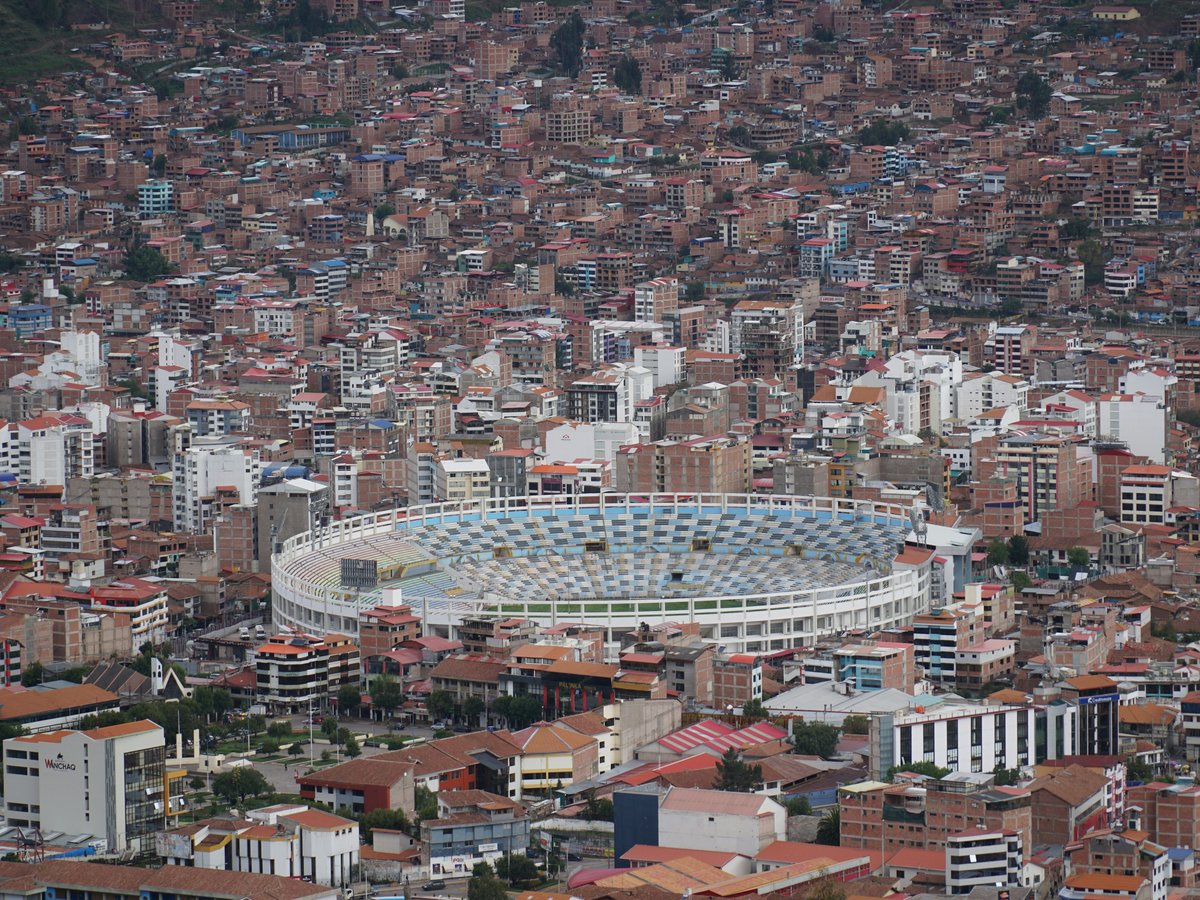
Stay in Cusco in January
91 hotels in the Trip.com pool for Cusco, from US$8 a night.
Opens Trip.com on Fri 1 Jan to Sun 3 Jan 2027; change the dates there.
January is the wettest month of the year in Cusco. That single fact should frame your entire trip. The city receives roughly 226mm of rainfall across 27 of 31 days, and the persistent moisture transforms the normally golden hills above San Cristóbal into greens so deep they look subtropical. Mornings tend to start clear, with hard Andean sun burning over the tile rooftops of San Blas by 9 AM. By about 2 PM, clouds pile up behind the ridgeline above Saqsaywaman and the rain arrives. Heavy. Sometimes with hail. Rarely lasting more than 2 hours.
Daytime highs reach about 17°C (62°F), and lows settle near 8°C (46°F), so the cold is manageable with a fleece. The real difficulty sits in the combination of slick cobblestones, afternoon mud on trails outside Centro Histórico, and the 3,400-meter (11,150-foot) altitude that leaves you winded on Cusco's steep streets even on a dry morning. To be fair, the trade-off is significant. Archaeological sites that draw hundreds of visitors per hour in June-August sit nearly quiet on January mornings.
This is deep low season. Hotels around Plaza de Armas and in San Blas price well below annual averages. The Fiesta de San Sebastián fills that district's streets with Qhapaq Ch'uncho and Qhapaq Qolla dancers, a tradition most foreign visitors never witness because so few are here. If you can build your days around the afternoon rain, January reveals a Cusco that dry-season visitors miss entirely.
Why visit in January
- Tourist numbers hit their annual low. Archaeological sites like Tambomachay, normally busy with organized tour groups, might have a handful of visitors on a January weekday morning.
- Hotel and tour rates drop 30-50% below the May-September dry season average, making January one of the most affordable months to visit Cusco.
- The Andean landscape turns a vivid, almost improbable green. Wildflowers bloom along highland trails, and the path to Huchuy Qosqo runs through carpets of wet grass beneath dramatic cloud formations.
- District fiestas draw cuzqueño families rather than tour groups, giving you an unscripted window into Cusco's living Andean traditions.
Worth knowing
- Rain falls nearly every afternoon, cutting the effective outdoor touring day roughly in half. Plan all open-air sightseeing before about 1 PM.
- Trails outside the city center become slippery with mud, and some access roads in the Sacred Valley turn temporarily impassable after heavy downpours.
- The rail and road route to Machu Picchu is prone to landslides in January. PeruRail cancellations due to track damage or mudslides happen several times most Januarys.
- Some tour operators reduce their weekly schedules or close during the wettest weeks, limiting options for organized multi-day treks.
Best for
Think twice if
January sits at the peak of Cusco's wet season, but the daily rhythm tends to be predictable. Mornings often break cool and clear, with thin air that intensifies UV even through partial cloud cover. By early afternoon, dark clouds gather over the surrounding peaks and rain falls in heavy bursts, sometimes accompanied by hail that bounces off the stone streets of the historic center. Showers typically clear by 5 or 6 PM, and evenings run cold and dry with sharp stars overhead. The humidity makes the cool mornings feel a few degrees chillier on exposed skin, and fog often lingers in the valley below San Cristóbal until mid-morning.
Seasonal caution
- Landslides on the rail and road route between Cusco and Aguas Calientes are a recurring January hazard. Check PeruRail and IncaRail service alerts daily if you have a Machu Picchu visit planned.
- Hail accompanies some afternoon storms and can be large enough to sting exposed skin. If you notice a sudden temperature drop and darkening sky, seek cover before the storm breaks.
- UV radiation at this altitude remains intense even on overcast days. The UV index regularly reaches 11-13 in January, enough to cause sunburn within 15-20 minutes of unprotected exposure.
- Flash flooding can affect low-lying areas and unpaved roads in the Sacred Valley after sustained heavy rain. Avoid river crossings and low bridges during or immediately after storms.
Year-round climate
Averages from the last 5 years.
| Month | Avg high (°C) | Avg low (°C) | Rainfall (mm) |
|---|---|---|---|
| Jan | 17 | 8 | 226 |
| Feb | 17 | 8 | 185 |
| Mar | 16 | 8 | 180 |
| Apr | 17 | 7 | 74 |
| May | 17 | 6 | 35 |
| Jun | 18 | 5 | 5 |
| Jul | 19 | 5 | 7 |
| Aug | 19 | 5 | 20 |
| Sep | 19 | 6 | 41 |
| Oct | 19 | 7 | 92 |
| Nov | 19 | 8 | 169 |
| Dec | 18 | 8 | 180 |
Holidays and festivals in January
Public holidays
- New Year's Day(Año Nuevo)1 January 2027
Best things to do in January
Walk the Inca Trail before the February closure
hikingPeru's Ministry of Culture shuts the Inca Trail every February for maintenance and ecological recovery. January is the last month to hike it before that closure, and you will likely share the 4-day route with very few other trekkers. The trail is muddy and cloud cover often obscures the mountain views, but the vegetation is lush and the final approach to the Sun Gate feels genuinely remote.
Last month before the annual February closure. Permits are readily available, unlike the 6-month advance booking needed in dry season.Booking tipBook through a licensed operator at least 2 weeks ahead. January permits rarely sell out, but operators need lead time to confirm group sizes.
Morning Sacred Valley circuit to Pisac and Ollantaytambo
sightseeingThe Pisac archaeological site and Ollantaytambo fortress sit 1-2 hours from Cusco by road. In January, both sites are green and nearly empty in the mornings. Leave Cusco by 7 AM and aim to finish outdoor exploration by noon, before the afternoon rain arrives. Pisac's terraces look striking against the saturated green hillsides, and the wind carries the smell of wet earth up the mountain.
The afternoon rain pattern makes morning-only scheduling essential. The green landscape and empty ruins create conditions specific to the wet season.Booking tipHire a private driver rather than joining a group tour. January group tours often cancel due to low enrollment, and a driver lets you set your own early-morning schedule.
Cooking class with market sourcing
food and cultureSeveral Cusco cooking schools begin with a guided walk through Mercado Central de San Pedro to buy ingredients, then move to a kitchen for 3-4 hours of hands-on preparation. In January, the market carries seasonal produce like fresh choclo, tuna fruit, and capulí that appears only during the wet months. The full class runs rain-proof from about 9 AM to 2 PM, and the aroma of roasting peppers and simmering ají sauces fills the kitchen by midday.
January's seasonal ingredients, including fresh corn and Andean fruits, make the market visit and the resulting dishes different from any other month.Booking tipBook 3-4 days ahead. January classes run smaller, and some schools reduce their weekly schedule.
Visit Tipón's Inca hydraulic system at full flow
archaeologyTipón sits about 25 km southeast of Cusco and contains some of the most sophisticated Inca water engineering ever built. Terraced fountains, channels, and cascades that trickle in dry season run at full volume in January. The site receives very few visitors even in peak months, and in January you might have the terraces entirely to yourself. The sound of water moving through 600-year-old stone channels is worth the 45-minute drive alone.
The rainy season fills Tipón's entire hydraulic network. Channels and fountains that barely flow in June-August run at full capacity, revealing the original engineering intent.Booking tipNo advance booking needed. Take a colectivo from Avenida de la Cultura toward Urcos and ask to be dropped at the Tipón turnoff.
Rainy-afternoon visit to Museo de Arte Precolombino
museumThe MAP, housed in a colonial mansion on Plaza de las Nazarenas, holds a focused collection of pre-Columbian art spanning 3,000 years. With January's predictable afternoon rain, scheduling indoor cultural visits for 2-5 PM becomes a natural rhythm. The collection is compact enough to see in 90 minutes, and the courtyard cafe makes a good spot to wait out the last of the rain with a cup of coca tea.
The afternoon rain pattern makes indoor cultural sites the natural second half of each day. In January, even the MAP's galleries feel private.Booking tipNo advance booking required. The Boleto Turístico del Cusco covers entry to the MAP and 15 other sites.
Photograph the green Andes and dramatic storm clouds
photographyJanuary's combination of lush green hillsides, low afternoon clouds, and clear golden mornings creates photographic conditions that do not exist in dry season. The hills above the city, normally brown and dusty, glow green. Storm clouds rolling in over the mountains produce dramatic light, and morning golden hour from the San Cristóbal viewpoint catches the orange rooftops against a vivid valley floor.
The wet season transforms Cusco's surroundings into a green landscape with dramatic cloud formations. Dry-season Cusco looks entirely different.Booking tipNo booking needed. Bring a weather-sealed camera body or a rain sleeve for your lens. Carry a microfiber cloth for wiping moisture.
What to eat in January
In season: fruit
Tuna (prickly pear)
The Opuntia cactus fruit peaks across the Cusco region in January. Vendors at Mercado Central de San Pedro sell them peeled and ready to eat, and the sweet, seed-filled flesh comes in green, orange, and deep magenta varieties.
Capulí
The Andean cherry (Prunus serotina) ripens in January. Small, dark, and slightly tart, capulí appears in market stalls and is used to make mazamorra de capulí, a thick dessert porridge seasoned with cinnamon and cloves that smells like warm spiced wine.
On menus now
Humitas
Fresh corn season means the best humitas of the year. These steamed corn cakes, wrapped in husks with cheese and a touch of anise, carry a warm, earthy sweetness from January's tender crop that dried-corn versions in other months cannot match.
Street food peaks
Choclo con queso
Giant Andean corn kernels (choclo cusqueño), each the size of a thumbnail, are served on the cob with thick slabs of fresh queso serrano. January's harvest produces the plumpest, most starchy kernels of the year. Market stalls and street vendors sell this as a quick mid-morning snack for a few soles.
What to drink
Chicha de jora
This fermented corn beer has been brewed in clay vessels called chomba for centuries across the Cusco region. January's fresh-harvest corn makes the batches slightly sweeter and less sour than versions brewed from stored grain. Look for red plastic bags or small flags hung above doorways in the San Sebastián and Santiago districts, which mark chicherías where the yeasty, slightly tangy brew is served fresh from the vessel.
Regular events in January
Año Nuevo (New Year's Day)Free
New Year celebrations center on Plaza de Armas, where crowds gather on the night of December 31 and celebrations continue into the first day of January. Many cuzqueño families attend morning mass and spend the day visiting relatives. Some restaurants and shops close for the day, and the city moves at a slower pace than usual.
January 1Bajada de Reyes (Epiphany)Free
The Feast of the Epiphany brings processions and traditional nativity scenes to churches across Cusco. Families dismantle their home nacimientos (nativity displays), and community celebrations include music and dance in neighborhoods throughout the city. Several parishes host outdoor feasts with warm ponche (spiced fruit punch) and tamales.
January 6Fiesta de San SebastiánFree
The district of San Sebastián, about 15 minutes east of Plaza de Armas, celebrates its patron saint with one of the largest traditional dance festivals on the Cusco calendar. Comparsas in elaborate costumes perform through the streets, accompanied by brass bands. The celebration draws thousands of cuzqueños but relatively few foreign visitors, and the scent of anticuchos and picarones from street vendors fills the air around the main plaza of the district.
January 20Best places this January
Mercado Central de San Pedro
marketCusco's main market is entirely covered, making it one of the best places to spend a rainy afternoon. January brings seasonal produce like fresh choclo, tuna fruit, and capulí that you will not find in dry-season months. The juice stalls on the upper level serve fresh-squeezed tuna and lucuma blends. Go before 8 AM on weekdays to see the market at its most local, with the smell of fresh bread and simmering soups filling the covered aisles, before tour groups arrive around 10.
San PedroCoricancha
archaeological site and museumThe Inca sun temple, founded in 1201, sits beneath the colonial Convento de Santo Domingo. The museum portion inside is an ideal rainy-afternoon destination. Stonework in the underground chambers, fitted without mortar to tolerances that still impress engineers, stays dry and well-lit regardless of weather. January's low crowds mean you can study the joints and niches at your own pace.
Centro HistóricoCusco Cathedral
church and museumConstruction began in 1559 on the foundations of the Inca palace of Viracocha. The interior holds more than 400 paintings from the Cusco School, including the well-known Last Supper depicting Christ and his apostles eating cuy (guinea pig). In January, the cathedral's massive interior is often nearly empty, giving you time to study the artwork without competing for sightlines.
Centro HistóricoChurch of the Society of Jesus
churchThis Jesuit church, dating to 1668, faces the cathedral across Plaza de Armas and arguably rivals it in decorative detail. The baroque facade catches morning light before the afternoon clouds roll in, and the warm glow of the gilded altarpiece inside is worth 20 minutes even if you are not typically drawn to churches.
Centro HistóricoQ'inqu
archaeological siteA carved limestone outcrop about 30 minutes uphill from the city center, on the road to Saqsaywaman. In January, rainwater fills the carved channels and flows through them as the Inca engineers intended, turning what looks like abstract stone carving in dry season into a working water feature. The site is unguarded and free to visit, and you will likely be alone with the sound of running water.
northern outskirts
Your packing checklist
Tick items off as you pack. Your progress saves in this browser.
All packed — have a great trip.
Insider tips
Eat lunch at the comedores on the second floor of the central market. A full almuerzo (soup, main course, drink) costs a fraction of what restaurants facing Plaza de Armas charge for the same dishes, and the portions are larger. Point to what looks good rather than trying to decipher the handwritten menus.
The Boleto Turístico del Cusco covers 16 sites including Saqsaywaman, Tipón, and several museums. In January, you have time to use all 16 entries because sites are uncrowded and you are not competing with tour-bus schedules. Buy it at the COSITUC office on Avenida El Sol rather than at individual site entrances.
Colectivos (shared minivans) on Avenida de la Cultura run to Pisac, Urcos, and the Tipón turnoff for a few soles per person. They leave when full, which in January can mean a 15-20 minute wait, but the cost difference compared to a private taxi is significant.
If altitude is hitting you hard, do not take a hot shower immediately after arriving. The combination of altitude fatigue, dehydration from the flight, and hot steam can cause fainting. Drink coca tea, rest for 2-3 hours, and take a lukewarm shower instead.
The San Pedro neighborhood around the market has several small bakeries selling empanadas cusqueñas (meat-filled pastries) fresh from wood-fired ovens by 7 AM. These cost a few soles and make a better, cheaper breakfast than most hotel offerings.
Avoid these mistakes
- Planning outdoor excursions for the afternoon. In January, the rain pattern is predictable enough that this mistake is entirely avoidable. Any open-air activity, whether the Sacred Valley or a walking tour, should finish by 1 PM at the latest.
- Trying to do too much on the first day at altitude. Altitude sickness does not care how fit you are. Spending your first 24 hours walking uphill to San Cristóbal or climbing the steep streets of San Blas is a reliable way to feel terrible by evening. Use day one for flat, low-effort activities near Plaza de Armas.
- Leaving camera and phone unprotected in your bag. January rain arrives fast, sometimes in under 10 minutes from clear sky to downpour. By the time you notice dark clouds, you may have 5 minutes before heavy rain. A waterproof pouch and a lens rain cover should be in your bag on every outing.
- Booking a tight same-day connection for Machu Picchu. Train services occasionally cancel or delay due to landslides on the track in January. Build at least one buffer day into any Machu Picchu plan so a single cancellation does not wreck your itinerary.
Practical tips for January
Book Machu Picchu entry tickets online through the official Peruvian government portal at least 1 week ahead. January availability is rarely an issue, but the site now requires timed-entry slots and a licensed guide. Carry cash in soles. Card acceptance outside the tourist center is unreliable, and ATMs on Plaza de Armas tend to charge higher withdrawal fees compared to the BCP branch on Avenida El Sol. Tipping is not expected at most local restaurants but is appreciated at about 10% in tourist-facing ones. The rainy-season schedule means some Sacred Valley tour operators run reduced departures (3 per week instead of daily), so confirm departure days before booking accommodation around your planned tour dates. Colectivos and local buses continue to run on normal schedules regardless of weather. Bring a headlamp or phone flashlight for evening walks in San Blas, where streetlighting is inconsistent on the steeper side streets. Most pharmacies in Centro Histórico carry altitude-sickness medication (acetazolamide) without a prescription, but starting the course 24 hours before arrival is more effective than taking it after symptoms begin.
FAQ
Is January a good time to visit Cusco?
January is the wettest month in Cusco, with rain falling on all but a few days. It is not the strongest month for outdoor trekking or guaranteed clear skies. However, it brings the lowest prices of the year, almost no tourist crowds, and a green landscape that dry-season visitors never see. If you are flexible about scheduling and willing to plan around afternoon rain, January can be rewarding. If you want reliably dry weather for hiking, aim for May through September instead.
Can you still visit Machu Picchu from Cusco in January?
Yes. Machu Picchu remains open year-round, and the Inca Trail is open in January (it closes only in February for maintenance). However, the rail route from Cusco to Aguas Calientes is prone to landslide disruptions, so build flexibility into your schedule. Train cancellations are not daily, but they happen several times most Januarys. Machu Picchu itself can be foggy in the early morning, though clouds often clear by mid-morning to reveal dramatic views framed by green peaks.
What should I wear in Cusco in January?
Layers and waterproofing. Mornings start cool enough for a fleece, and the humidity makes it feel chillier than the thermometer reads. By midday the air warms enough for a single layer in the sun. Afternoons bring rain, so the waterproof jacket goes back on. Quick-dry fabrics are essential because cotton and denim take hours to dry in the thin mountain air. Waterproof hiking boots with good grip handle Cusco's slick cobblestones far better than trainers or sandals.
Is Cusco safe for solo travelers in January?
Cusco scores 6.2/10 for solo-traveler safety (see the TTDI Solo-Safety Index). Standard precautions apply year-round. In January specifically, fewer tourists on the streets after dark can make some poorly lit areas feel less comfortable, so stick to well-traveled routes at night. The San Blas and Centro Histórico neighborhoods are the most walkable after dark. Avoid carrying large amounts of cash, and use ATMs inside banks rather than standalone street machines.
How bad is the rain in Cusco in January?
Rain arrives nearly every day, but not usually all day. The typical pattern is clear mornings and heavy afternoon showers lasting 1-2 hours. Some days the rain starts earlier or lasts longer, and occasional storms bring hail. The practical adaptation is to schedule all outdoor sightseeing for the morning and save museums, markets, and restaurants for the afternoon. Following that rhythm, the rain is manageable rather than trip-ruining.
Things to Do in Cusco in January

Inca Trail 4-Day Trek to Machu Picchu – Return by Vistadome Train
Outdoor experience: 4 days.
via Viator Free cancellation
 Sacred Valley Full Day Tour
Day trip: 10 hours, free cancellation.
via Viator
4-Day Inca Trail Trek to Machu Picchu & Panoramic Train
Outdoor experience: 4 days.
via Viator
Classic 5-Day Salkantay Trek to Machu Picchu: Small Group Hike
Outdoor experience: 5 days.
via Viator
2-Day Short Inca Trail to Machu Picchu – Vistadome & 4-Star Hotel
Outdoor experience: 2 days.
via Viator Free cancellation
 Excursion to Rainbow Mountain Full Day Optional Red Valley
Outdoor experience: 12 hours, free cancellation.
via ViatorFind a flight to Cusco
Live fares to Cusco appear here once cookies are accepted.
Last verified by automated review (v1.7.2) on . What is automated review?