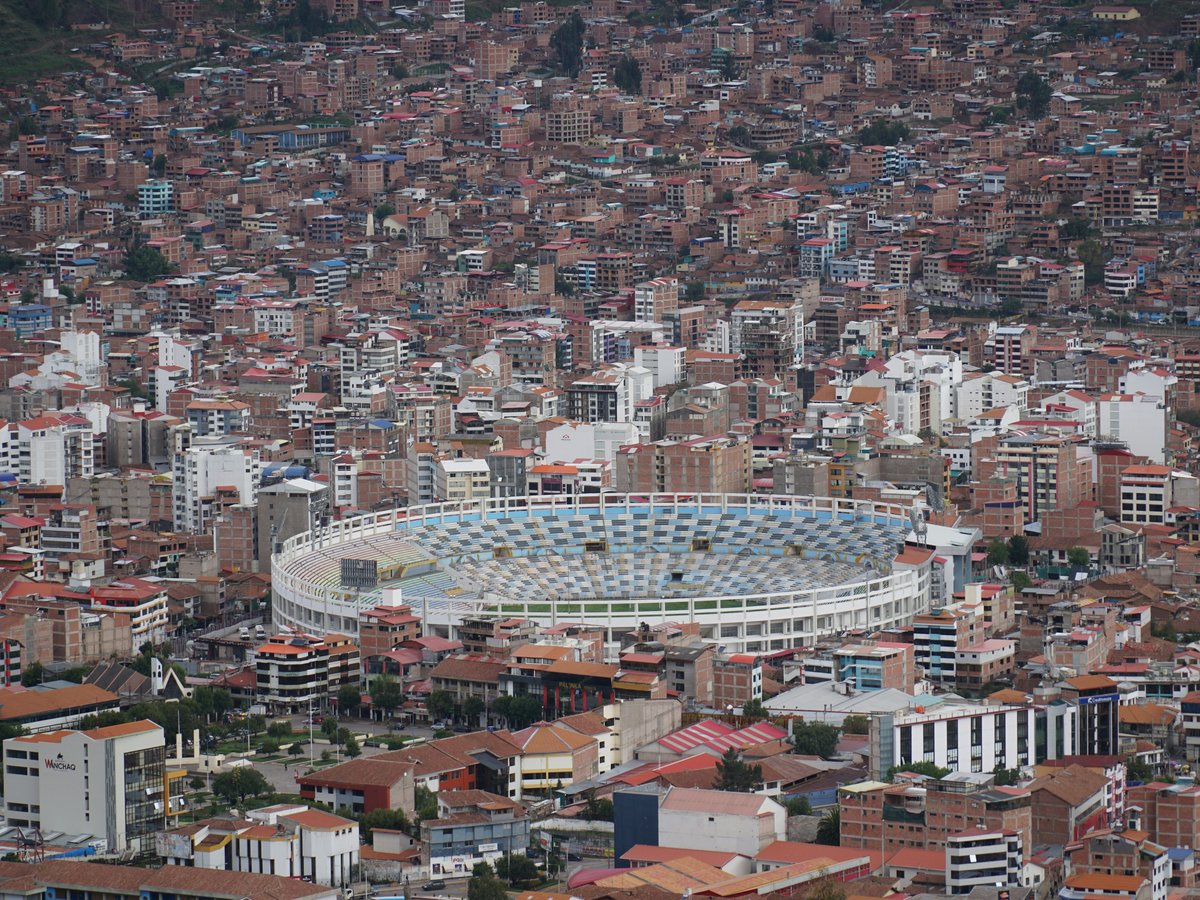
Stay in Cusco in October
91 hotels in the Trip.com pool for Cusco, from US$8 a night.
Opens Trip.com on Fri 16 Oct to Sun 18 Oct 2026; change the dates there.
October in Cusco marks the turn from dry season into wet, and the rain is the defining feature to plan around. Total rainfall reaches 92mm across roughly 20 days, nearly triple what September sees. Most showers arrive between 2pm and 4pm and rarely last more than 45 minutes. The cobblestone alleys of San Blas become temporary streams during the heavier bursts, draining downhill toward the Río Huatanay.
Daytime highs sit around 19°C (66°F), comfortable for walking, but evenings drop to about 7°C (45°F). Cusco sits at 3,400 meters (11,150 feet), which means the sun hits harder than those mild numbers suggest. You'll burn fast on a clear morning. Altitude sickness is the first real challenge for arrivals from sea level, and the city's steep terrain means even the walk from Plaza de Armas up to the San Cristóbal lookout will have you catching your breath on day one.
Once your lungs adjust, usually by day 2 or 3, the shape of each day becomes predictable. Bright mornings for the steep walks, the afternoon showers, and then a narrow second window of soft light around 5pm before the sun sets behind the western ridge near 5:45pm. Above the city, the agricultural terraces at Chinchero and Maras come alive as farmers begin planting potatoes and quinoa with the season's first reliable moisture. Red earth, freshly turned at 3,600 meters, carries a mineral smell on the breeze. Down in Centro Histórico, each shower washes dry-season dust off the terracotta rooftops, and the skyline takes on a sharpness the hazy dry months lacked.
Why visit in October
- The June-August peak crowds are gone. Saqsaywaman, Cusco Cathedral, and Coricancha all have noticeably shorter queues and fewer tour buses.
- Shoulder-season hotel rates in San Blas and Centro Histórico typically run 20-30% below peak July and August pricing.
- The first rains turn the brown hillsides above the city green, with wildflowers appearing on trails and agricultural terraces across the Sacred Valley.
- Morning weather is usually clear from about 7am to noon, giving a reliable 5-hour window for outdoor activities before rain arrives.
Worth knowing
- The afternoon rain pattern is predictable, but it still limits usable outdoor daylight to roughly 5-6 hours. Café tables around Plaza de Armas and Plazoleta Nazarenas get pulled under cover after the first drops, and any plan built around all-day sun will need revision by mid-trip.
- Multi-day treks like the Inca Trail carry real rain risk at higher passes, where afternoon showers can turn to sleet above 4,000 meters (13,120 feet).
- Some outdoor tour operators reduce Sacred Valley departure frequency in late October as wet season approaches, limiting day-trip options on certain routes.
Best for
Think twice if
October sits at the dry-to-wet transition in Cusco's year. Mornings are sunny and cool, with clouds building through midday and rain arriving by early afternoon. The air fills with the smell of wet earth and eucalyptus after each burst. Evenings clear again but temperature drops quickly once the sun sets behind the ridge above San Pedro. UV index readings above 11 are common at midday, even with partial cloud cover.
Seasonal caution
- UV radiation at Cusco's altitude regularly exceeds index 11 at midday, even under partial cloud cover. Exposed skin can burn in under 15 minutes without SPF 50+ protection.
- Altitude sickness affects most visitors arriving from sea level or low-altitude cities. Symptoms typically peak 6-24 hours after arrival. Allow at least 48 hours of acclimatization before strenuous hiking or any activity above 4,000 meters.
Year-round climate
Averages from the last 5 years.
| Month | Avg high (°C) | Avg low (°C) | Rainfall (mm) |
|---|---|---|---|
| Jan | 17 | 8 | 226 |
| Feb | 17 | 8 | 185 |
| Mar | 16 | 8 | 180 |
| Apr | 17 | 7 | 74 |
| May | 17 | 6 | 35 |
| Jun | 18 | 5 | 5 |
| Jul | 19 | 5 | 7 |
| Aug | 19 | 5 | 20 |
| Sep | 19 | 6 | 41 |
| Oct | 19 | 7 | 92 |
| Nov | 19 | 8 | 169 |
| Dec | 18 | 8 | 180 |
Holidays and festivals in October
Public holidays
- Battle of Angamos(Combate de Angamos)8 October 2026
Best things to do in October
Morning hike to Saqsaywaman
outdoorThe fortress site sits about 300 meters above Plaza de Armas, a steep 30-minute walk or a 10-sol taxi ride. The massive limestone and diorite walls, some blocks weighing over 100 tonnes, are the largest Inca stonework in Peru.
October's first rains turn the surrounding grasslands green within about 2 weeks of the season's first shower. Morning light on the zigzag walls is sharper without dry-season dust haze, and the site's relative quiet lets you hear the wind through the grass on the upper plateau.Booking tipEntry is covered by the Boleto Turístico general (130 soles, valid 10 days). No advance booking needed for the site itself.
Day trip to Tipón
outdoorTipón lies about 25 kilometers southeast of the city. The Inca-engineered terraces and water channels here are among the best-preserved hydraulic works in the Andes, with irrigation systems still functioning after roughly 500 years.
Early October rains reactivate channels that run dry from June through August, making the water features more active than during peak tourist season.Booking tipColectivos from Avenida de la Cultura cost about 5 soles. Entry is included in the Boleto Turístico.
Photography walk through San Blas
photographyThe artisan quarter above Plaza de Armas has the steepest and narrowest streets in old Cusco. Craft workshops line Cuesta San Blas, and small plazas open up between whitewashed colonial buildings with blue-painted doors.
Wet cobblestones reflect warm light for about 30 minutes after each afternoon shower. The narrow alleys funnel diffused light between whitewashed walls, and artisan workshops along Cuesta San Blas tend to keep their doors open in the milder shoulder-season weather, letting you photograph potters and weavers at their benches.Inca Trail 4-day trek to Machu Picchu
trekkingThe 43-kilometer route from Kilometer 82 crosses three mountain passes, the highest at Warmiwañusca (Dead Woman's Pass) at 4,215 meters (13,828 feet). The trail passes through cloud forest, alpine grassland, and dozens of Inca ruins.
Permit availability is significantly better than June or July, when slots sell out 4-6 months ahead. Trail vegetation is lush from the early rains, and campsites are notably less crowded.Booking tipBook permits at least 3 months ahead through a DIRCETUR-licensed operator. October dates are available closer to departure than peak months, but popular start dates still fill.
Cusco Cathedral interior visit
cultureThe Cathedral on Plaza de Armas, begun in 1559, holds one of the most significant colonial art collections in South America. The cedar choir stalls, the El Señor de los Temblores crucifix, and Cusco School paintings fill three naves.
A rain-proof option for October afternoons. Smaller crowds let you study the Marcos Zapata Last Supper painting, which famously depicts a roasted cuy (guinea pig) on the table, without tour groups blocking the view.Booking tipEntry is 25 soles or included in the Boleto Turístico religious circuit.
Cooking class with seasonal ingredients
foodSeveral cooking schools in San Blas and near the central market offer half-day hands-on classes that start with a market tour. Classes typically run 3-4 hours and cost 100-200 soles per person.
October brings seasonal tuna (prickly pear) and the year's first fresh habas to market stalls, ingredients that aren't available when most tourists visit during dry months.Booking tipBook 2-3 days ahead for weekend classes. Weekday availability is usually open.
Day hike to Huchuy Qosqo
trekkingThe trail from Tambomachay to Huchuy Qosqo covers roughly 15 kilometers through highland terrain above 3,600 meters, passing through farming communities in the Chinchero district. The Inca ruins sit on a plateau overlooking the Sacred Valley floor.
Wildflowers, including yellow retama and purple lupins, begin appearing along the trail after the first October rains. The farming communities en route are preparing highland fields for planting, adding activity and color that the dry tourist months lack.Booking tipHire a local guide in Tambomachay or book through a Cusco agency. The trail is not well-marked in several places.
What to eat in October
In season: fruit
Tuna (prickly pear)
The cactus fruits ripen across the Cusco valley from September through November. Vendors at Mercado San Pedro sell them peeled for 1-2 soles. The flesh ranges from magenta to pale yellow, sweet with a texture like firm kiwi.
On menus now
Rocoto relleno
A roasted rocoto pepper stuffed with ground beef, olives, hard-boiled egg, and melted cheese. The fresh October harvest from market gardens around the Sacred Valley keeps the supply steady and the flavor at its sharpest.
Street food peaks
Choclo con queso
Oversized Andean corn kernels, boiled and served with a slab of salty highland cheese. The first fresh choclo of the growing season appears in October markets, and the kernels are noticeably sweeter than stored dry-season corn.
What to drink
Chicha de jora
Fermented corn beer brewed from germinated maize. Chicherías in the Santiago neighborhood hang a red flag or balloon when a fresh batch is ready. The slightly sour, yeasty taste pairs well with heavier Andean dishes.
In markets
Habas (fresh fava beans)
The highland spring harvest brings fresh fava pods to Cusco's market stalls in October. Boiled and served with queso fresco, they're a simple Andean snack that tastes nothing like dried favas from a package.
Regular events in October
Día del Combate de AngamosFree
National holiday commemorating the 1879 naval battle during the War of the Pacific. Schools and government offices close. Small civic ceremonies take place at Plaza de Armas and Estadio Garcilaso.
October 8Día de la Canción CriollaFree
Peru's national day of creole music. Peñas (music venues) across the city host live performances, and restaurants around Plaza de Armas often feature criolla musicians on the evening of the 31st. Street performances are free.
October 31Señor de los Milagros processionsFree
Parish processions carry purple-draped religious icons through Cusco's streets, particularly near the churches in Centro Histórico. Smaller and more local than Lima's processions, but they occasionally affect traffic.
Various dates throughout October, with larger processions around October 18 and 28Best places this October
Saqsaywaman
archaeological siteThe annual Inti Raymi stage (used in June) sits empty and peaceful in October. The zigzag walls create interesting shadow patterns in morning light, and the grassy plateau above the main ruins offers one of the best aerial perspectives of Cusco's red-roofed cityscape.
Mercado San Pedro
marketCusco's central market is the rain-proof fallback for wet afternoons. The produce section stocks seasonal tuna fruit and fresh habas. Second-floor juice stands blend fresh fruits for 3-4 soles, about half what the tourist cafes on nearby streets charge.
San PedroQ'inqu
archaeological siteAn Inca ceremonial site with carved stone channels and natural rock formations set in a eucalyptus grove north of the city. The first October rains bring water through channels that sit dry for most of the year. Rarely crowded in any season.
Barrio de San Blas
neighborhoodThe artisan quarter's steep streets dry within 30 minutes of an afternoon shower. Workshops selling Santurantikuy-style ceramics and hand-carved retablos line Cuesta San Blas, with prices that tend to run well below the export shops on Avenida El Sol. Small plazas with café tables catch morning sun until the clouds build.
San BlasMirador de San Cristóbal
viewpointThe walk up from Plaza Nazarenas takes about 15 minutes and gains roughly 80 meters. The 16th-century San Cristóbal church itself opens on a sporadic schedule, but the paved terrace in front offers 270-degree views from the Saqsaywaman ridgeline on the left to the airport valley on the right. Late afternoon, after the rain clears, is the sharpest viewing window.
San CristóbalChurch of the Society of Jesus (Iglesia de la Compañía de Jesús)
churchCompleted in 1668 on Plaza de Armas, the Jesuit church's baroque facade competes visually with the Cathedral next to it. The main nave catches direct morning light through the east-facing entrance between about 8am and 10am, illuminating the mestizo-baroque carvings along the side altars. The interior gold-leaf altarpiece is one of the finest in Peru.
Centro HistóricoTipón and Oropesa village
archaeological site and villageCombine a morning visit to the water terraces with a stop in nearby Oropesa, where bakeries have been producing round chuta bread in wood-fired ovens for generations. The bread is dense, slightly sweet, and sells for about 5 soles a loaf.
Oropesa district
Your packing checklist
Tick items off as you pack. Your progress saves in this browser.
All packed — have a great trip.
Insider tips
Museo de Arte Precolombino on Plazoleta Nazarenas is the city's best rainy-afternoon contingency. The Moche ceramics, Chimú gold work, and Nasca textiles fill about 90 minutes, and the museum café in the courtyard is a comfortable place to wait out the sky.
The alpaca goods sold at Mercado San Pedro cost roughly half of what the tourist shops along Calle Hatunrumiyoc charge for comparable quality. Run the fabric between your fingers. Real alpaca feels silky, not scratchy.
Coca tea (mate de coca) is available at nearly every hotel and restaurant in Centro Histórico. Start drinking it on arrival, before altitude symptoms set in. It won't cure severe altitude sickness, but it settles nausea and mild headaches.
Colectivos to Pisac and Ollantaytambo leave from near the bus terminal on Calle Pavitos every 15-20 minutes throughout the day. Fares run 5-10 soles per person, compared to 50+ soles for a tourist shuttle.
Avoid these mistakes
- Booking a Rainbow Mountain (Vinicunca) trip without checking the forecast. At 5,200 meters (17,060 feet), an October rain shower becomes sleet or snow, and the mountain's colored mineral bands wash out under overcast light. Ask your operator about morning conditions before committing.
- Packing only warm-weather clothes because daytime temperatures feel mild. The gap between afternoon sun and evening cold catches visitors off guard, especially at open-air restaurant courtyards where you might sit for an hour or more after dark.
- Attempting steep uphill hikes on the first day after arriving from sea level. Give yourself at least 2 full days of flat walking around Plaza de Armas before heading uphill to any of the archaeological sites above the city.
Practical tips for October
Book Inca Trail permits at least 3 months ahead, even for October. The national holiday early in the month closes banks, post offices, and government offices for the day. Plan any banking around it. Most restaurants along Calle Plateros and around Plaza de Armas keep normal hours year-round. ATMs cluster around Plaza de Armas and Avenida El Sol. The exchange rate currently sits around 3.38 PEN per 1 USD. Tipping is not expected at casual restaurants, but 10% is standard at sit-down places in the tourist center. The Boleto Turístico general covers 16 archaeological sites and museums. Purchase it at the COSITUC office on Avenida El Sol or at any included site. For treks, use only agencies licensed by DIRCETUR (Peru's regional tourism authority). Allow at least 2 full days in Cusco for altitude acclimatization before departing on any multi-day route.
FAQ
Is October a good time to visit Cusco?
October is a solid shoulder-season option. You trade the guaranteed clear skies of the dry months for noticeably fewer crowds, lower hotel rates, and green landscapes. Rain showers are frequent but follow a predictable afternoon pattern that you can plan around. It ranks 7th out of 12 months for Cusco overall. If you're comfortable structuring outdoor excursions for morning hours, October offers strong value compared to the June-August peak.
What is the weather like in Cusco in October?
Expect sunny, comfortable mornings that give way to afternoon rain showers on most days. Temperatures range from warm enough in the sun to cold after dark, so layering is essential. Humidity sits around 68%, which feels dry compared to tropical lowlands. The main adjustment is planning outdoor activities for before noon and keeping a rain layer in your daypack for the afternoon.
Is Cusco crowded in October?
Noticeably less than peak season. October sits between the high-demand dry months and the wet-season trough that runs from roughly December through February. Popular archaeological sites still have visitors, but queues are shorter and tour groups are smaller. Hotels have genuine availability, and you can often negotiate room rates on arrival rather than booking months ahead.
Can I hike the Inca Trail in October?
Yes. The trail is open every month except February, when it closes for maintenance. October sees more rain than the dry-season peak, so expect wet conditions on at least 1-2 of the 4 days. The upside is easier permit availability and fewer groups at campsites and ruins along the route. Waterproof gear and gaiters are worth their weight.
Things to Do in Cusco in October

Inca Trail 4-Day Trek to Machu Picchu – Return by Vistadome Train
Outdoor experience: 4 days.
via Viator Free cancellation
 Sacred Valley Full Day Tour
Day trip: 10 hours, free cancellation.
via Viator
4-Day Inca Trail Trek to Machu Picchu & Panoramic Train
Outdoor experience: 4 days.
via Viator
Classic 5-Day Salkantay Trek to Machu Picchu: Small Group Hike
Outdoor experience: 5 days.
via Viator
2-Day Short Inca Trail to Machu Picchu – Vistadome & 4-Star Hotel
Outdoor experience: 2 days.
via Viator Free cancellation
 Excursion to Rainbow Mountain Full Day Optional Red Valley
Outdoor experience: 12 hours, free cancellation.
via ViatorFind a flight to Cusco
Live fares to Cusco appear here once cookies are accepted.
Last verified by automated review (v1.7.2) on . What is automated review?