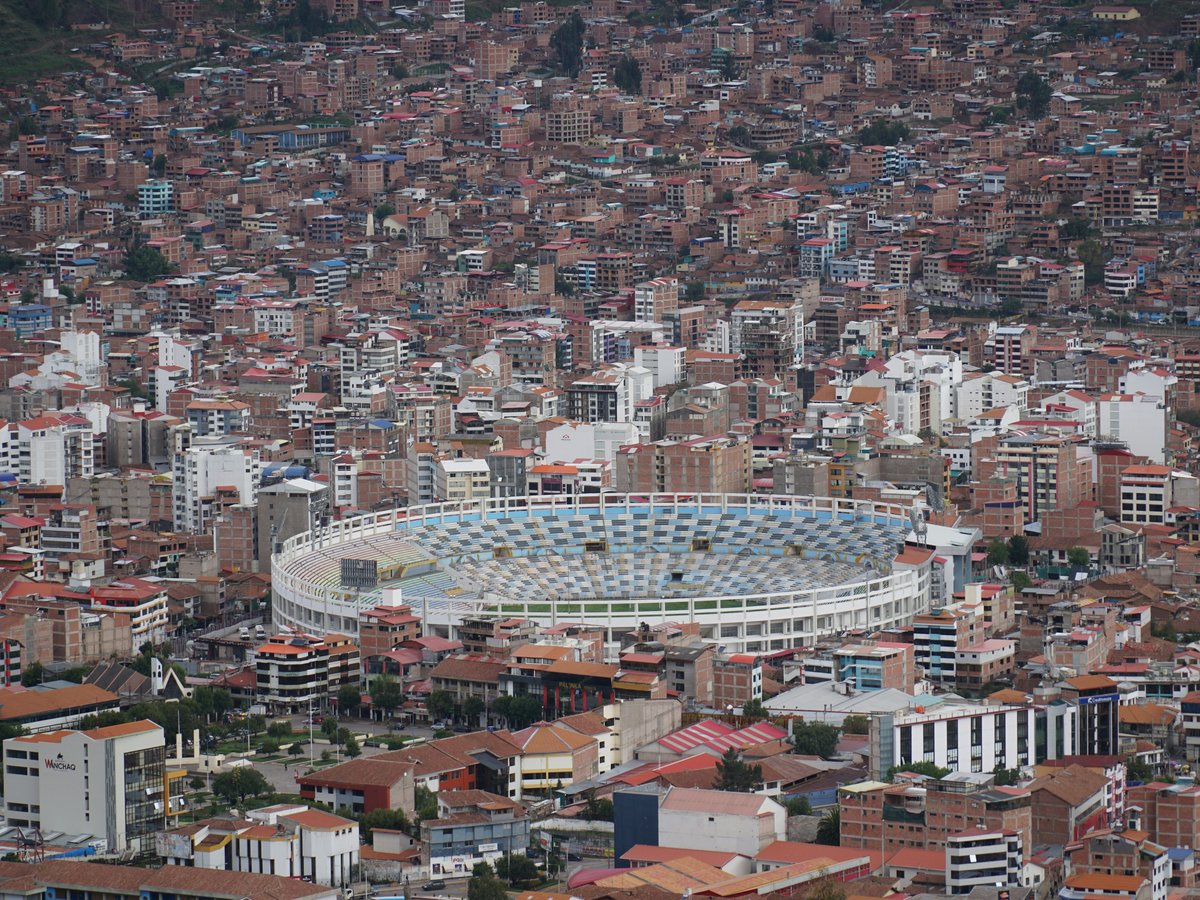
Stay in Cusco in April
91 hotels in the Trip.com pool for Cusco, from US$8 a night.
Opens Trip.com on Fri 2 Apr to Sun 4 Apr 2027; change the dates there.
April marks the turning point in Cusco's year. The wet season is winding down, rainfall drops sharply from March, and mornings above the Plaza de Armas tend to break clear and cold before afternoon clouds drift across the valley. Expect daytime temperatures near 17°C (63°F) and nights around 7°C (44°F). At 3,400 metres (11,150 feet) above sea level, those numbers bite harder than they look on paper. The chill is real. The air is thin enough that your lips will crack before lunch on your first full day.
When Easter falls in April, the city transforms. Cusco's Semana Santa is one of the most elaborate in South America. It centers on the Procesión del Señor de los Temblores, a Monday-of-Holy-Week procession that fills the streets around the Cathedral with tens of thousands of devotees and blankets the Centro Histórico in the scent of crimson ñucchu flowers. The entire Plaza de Armas fills. Hotel demand for that single week spikes hard. If Easter lands in March instead, April becomes a quiet shoulder month with improving weather and none of the dry-season crowds.
The Inca Trail reopens in March after its annual February maintenance closure, and April brings the first wave of trekkers to the route before the June through August high season. Trails across the Sacred Valley are green from recent rains, waterfalls near Ollantaytambo run at full volume, and the agricultural terraces at Tipón still carry water. You'll likely catch a shower most afternoons, but it rarely lasts longer than 45 minutes.
Why visit in April
- Rainfall drops to roughly a third of the March figure, with most showers confined to short afternoon bursts that clear within an hour.
- The Inca Trail is open and permits for April are significantly easier to secure than for the June through August peak, when they sell out months in advance.
- Sacred Valley landscapes are still green from the wet season, with rivers and waterfalls at high volume. The terraces at Moray and Tipón are particularly striking against the green hillsides.
- Crowd levels at major sites like Saqsaywaman and Qorikancha sit well below dry-season peaks, so you can photograph the stonework without a tour group in every frame.
Worth knowing
- Rain still falls on roughly 16 days of the month, mostly as afternoon showers. If you need guaranteed dry weather for a multi-day trek, May or June is a safer bet.
- Nights are genuinely cold, especially for travelers arriving from tropical lowlands. Most budget hotels in Cusco lack central heating, so you feel every degree of the nighttime drop.
- If Semana Santa falls in April, Centro Histórico accommodation availability tightens and street closures during processions can make navigation frustrating for visitors who haven't planned around the schedule.
- Altitude affects most visitors for the first 24 to 48 hours. April's comfortable weather tempts you into a packed first day, which tends to make the headache worse.
Best for
Think twice if
April sits at the wet-to-dry transition. Mornings typically start clear and sunny with a crisp chill, then clouds build through midday and release short showers between about 14:00 and 17:00. The rain is rarely heavy enough to cancel plans, but an hour spent under a cafe awning is a near-daily rhythm. By late April, fully dry days become more common as the season turns. The sun is strong enough at altitude to burn exposed skin in under 20 minutes, even through light cloud cover.
Seasonal caution
- UV radiation at Cusco's elevation can reach index 11 or higher on clear April days, roughly 40-50% stronger than at sea level. Sunburn happens fast, even under partial cloud. Wear SPF 50+ and a brimmed hat whenever you're outdoors.
- Nighttime temperatures on clear nights can dip to 4-5°C (39-41°F), and most accommodation below the mid-range tier has no heating. A proper sleeping layer matters more here than it does in most travel destinations.
Year-round climate
Averages from the last 5 years.
| Month | Avg high (°C) | Avg low (°C) | Rainfall (mm) |
|---|---|---|---|
| Jan | 17 | 8 | 226 |
| Feb | 17 | 8 | 185 |
| Mar | 16 | 8 | 180 |
| Apr | 17 | 7 | 74 |
| May | 17 | 6 | 35 |
| Jun | 18 | 5 | 5 |
| Jul | 19 | 5 | 7 |
| Aug | 19 | 5 | 20 |
| Sep | 19 | 6 | 41 |
| Oct | 19 | 7 | 92 |
| Nov | 19 | 8 | 169 |
| Dec | 18 | 8 | 180 |
Headline events
Semana Santa and the Procesión del Señor de los Temblores
Variable. Holy Week falls in late March or April depending on the year. In some years the full week lands in April (e.g. 2028, 2030), while in others it falls entirely in March.
Cusco's Holy Week is one of the most elaborate in South America. The centerpiece is the Procesión del Señor de los Temblores (Lord of the Earthquakes), the city's patron image, carried through the streets on a silver litter on the Monday of Holy Week while devotees throw crimson ñucchu flowers. The scent of the blossoms and the sound of brass bands echoing off colonial stone fills the Centro Histórico for hours. When Easter falls in April, this is the single most compelling reason to be in the city.
Best things to do in April
Inca Trail to Machu Picchu
trekkingThe classic 4-day, 43-kilometre (27-mile) trek from Kilometre 82 to Machu Picchu through cloud forest and high passes. April's trail conditions are manageable, with some muddy sections from residual rain but green scenery the dry season cannot match.
The trail reopened in March after its annual February closure. April permits are significantly easier to get than June through August, and the route sees fewer trekkers per day.Booking tipBook permits at least 6 to 8 weeks before your start date, through a licensed operator. The government caps daily entries at 500 including porters and guides.
Morning visit to Saqsaywaman
archaeologyThe massive Inca fortress complex sits above the city, its zigzag limestone walls built from blocks weighing up to 200 tonnes each. In April, the surrounding hillsides are still green and the morning light hits the pale stone at a low angle that sharpens every joint in the masonry.
Fewer visitors than the dry-season peak means you can study the stonework without competing for space. The green grass framing the walls is a photographic contrast that disappears by June.Booking tipArrive by 7:00 AM before tour buses from the Plaza de Armas. The Boleto Turístico general ticket covers entry.
Sacred Valley day trip with waterfalls
day tripThe valley between Pisac and Ollantaytambo is at its most photogenic in April. Rivers run high, the Perolniyoc waterfall near Ollantaytambo runs at full force, and the agricultural terraces at Moray look like a green amphitheatre carved into the earth.
Post-wet-season water levels make the rivers and waterfalls far more impressive than in the dry months. The valley smells like wet earth and eucalyptus.Booking tipColectivos to Pisac leave from Calle Puputi throughout the morning. A private driver for the full valley loop tends to be better value if you split with 2-3 other travelers.
San Blas artisan quarter walk
cultureThe steep, narrow streets above the Plaza de Armas hold dozens of ceramic, textile, and woodworking workshops. In April, you can browse without the press of tour groups that crowd the lanes from June onward. The cobblestones can be slick after afternoon rain, so mornings work best.
Shoulder-season foot traffic means artisans have time to talk about their work. Several workshops let you watch ceramics being painted or textiles woven on backstrap looms.Tipón terraces and water engineering
archaeologyAn Inca royal estate about 23 kilometres (14 miles) southeast of Cusco. Tipón features some of the most sophisticated hydraulic engineering the Incas built. Water still flows through the original stone channels across stepped agricultural terraces.
April's water levels from the tail end of the wet season mean every channel at Tipón is active. By July, several run dry. The sound of water moving through 600-year-old stonework is reason enough to come.Booking tipHire a taxi from Cusco or take a combi toward Urcos and ask to be dropped at the Tipón turnoff. The walk from the road to the site is about 4 kilometres uphill.
Acclimatization hike to the Cristo Blanco viewpoint
walkingThe white Christ statue above Saqsaywaman offers a 360-degree panorama of Cusco's terracotta rooftops and the valley beyond. The 30-minute uphill walk from San Cristóbal is a good first-day test of how altitude is treating your lungs.
April mornings tend to be the clearest of any transition-season month. Visibility before the afternoon clouds build can stretch to the snowcapped peaks of the Vilcanota range southeast of the city.Semana Santa processions (when Easter falls in April)
festivalIf your dates align with Holy Week, the daily processions through the colonial streets are free and open to everyone. Each day of the week brings a different saint's image through a different route. The sound of brass bands bouncing off stone walls fills the Centro Histórico from mid-morning on.
This happens only during Holy Week, which falls in April in some years. It is a once-a-year window into Cusqueño devotion and pageantry that no other month can replicate.Booking tipNo booking needed, but position yourself along Calle Hatun Rumiyoc or near the Cathedral steps at least 2 hours before the Monday procession if you want a clear view.
What to eat in April
In season: fruit
Capulí
The Andean cherry peaks from late March through April in the valleys around Cusco. Small, dark-skinned, and intensely sweet with a slight bitter-almond note. Vendors sell them in small bags at Mercado Central de San Pedro, and you'll spot them along roadsides in the Sacred Valley.
On menus now
Lawa de choclo
A thick, silky corn soup that appears across Cusco's menus when fresh-harvest choclo arrives from the valley floor in March and April. Seasoned with huacatay (Andean black mint) and sometimes topped with dried meat, it's the right bowl for a cold evening when the temperature drops into single digits.
Street food peaks
Choclo con queso
April catches the tail end of the Sacred Valley's choclo harvest. The giant-kernel Andean corn arrives roasted or steamed, served with a thick slab of fresh queso fresco. The kernels are starchy, creamy, and nothing like the corn you know from elsewhere. Street vendors and stalls in the San Pedro market area sell it throughout the day.
What to drink
Chicha de jora
Fermented corn beer brewed from germinated jora maize. April's fresh harvest provides some of the year's best raw material. Look for red flags or red plastic bags tied to poles outside doorways. They signal a fresh batch is ready, a tradition that dates to the Inca period. Chicherías in the Santiago and Santa Ana neighborhoods tend to be more traditional than the tourist-facing spots near the plaza.
Festival food
Doce Platos
When Easter falls in April, the Good Friday tradition of twelve dishes fills restaurant tables and family homes across the city. The spread typically includes trucha (trout), humitas, tamales, and a thick corn pudding. It is one of the few occasions when the full range of Cusqueño cooking appears on a single table at once.
Regular events in April
Cruz Velakuy preparationsFree
Communities across the Cusco region begin decorating large wooden crosses in late April for the Cruz Velakuy festival on May 2-3. Crosses appear on hilltops, rooftops, and church facades, adorned with cloth and flowers. The atmosphere of preparation is visible in markets and residential neighborhoods well outside the tourist core.
Late April through early MayMercado Central de San Pedro harvest stallsFree
April's fresh choclo, capulí, and tumbo harvest brings extra vendor activity to the market. The produce section expands and the juice stalls add seasonal fruit blends. Not a formal event, but the market has a noticeably different character from the dry-season months when these fruits are gone.
Throughout AprilDía de la Tierra activitiesFree
Environmental organizations in and around Cusco coordinate cleanup events and community awareness campaigns around April 22. Activities tend to focus on waterways and areas surrounding archaeological sites, reflecting the city's ongoing tension between tourist volume and preservation.
April 22Best places this April
Qorikancha (Coricancha)
archaeological siteThe Inca sun temple, founded around 1201, sits beneath the Church of Santo Domingo. April's smaller visitor numbers mean you can examine the precisely fitted stonework of the original temple walls without being shuffled through by a guide. Morning light entering the trapezoidal niches is worth timing your visit for.
Centro HistóricoCusco Cathedral
cathedralConstruction began in 1559 on the foundations of the Inca palace of Viracocha. The interior holds over 400 paintings from the Cusqueño School, including a Last Supper with a cuy (guinea pig) on the table. During Semana Santa, the Cathedral becomes the emotional center of the city's observances.
Centro HistóricoMirador de San Cristóbal
viewpointThe viewpoint beside the San Cristóbal church offers the most accessible panorama of Cusco's terracotta roofscape. April mornings, before the afternoon clouds arrive, give the widest sightlines. The walk up from Plaza de Armas takes about 15 minutes and doubles as an altitude check on your legs.
San CristóbalMercado Central de San Pedro
marketThe main market is louder, more chaotic, and more rewarding in April than in the dry months. Harvest-season produce piles up in the aisles. The juice stands blend fresh tumbo and capulí. Second-floor food stalls serve hot bowls of corn soup for a few soles.
San PedroLa Compañía de Jesús
churchThe Church of the Society of Jesus, completed in 1668, faces the Cathedral across Plaza de Armas. Its baroque facade is one of the most ornate in Peru. In April, you can photograph the full frontage without tour groups blocking the frame, which is nearly impossible in July.
Centro HistóricoQ'inqu (Q'enqo)
archaeological siteA carved limestone outcrop about 4 kilometres from the city center. Q'inqu features channels, altars, and a cave with a carved stone table likely used for ceremonies. The site is open and uncrowded in April, and the surrounding grassland is green from the rains.
outskirts, near SaqsaywamanPuka Pukara
archaeological siteA small Inca military outpost on the road toward Tambomachay. The red-stone ruins sit on a hillside with views down the valley. April's clear mornings make the short walk from the road worthwhile, and you'll likely have the site to yourself for long stretches.
outskirts, road to Tambomachay
Your packing checklist
Tick items off as you pack. Your progress saves in this browser.
All packed — have a great trip.
Insider tips
The restaurants ringing Plaza de Armas charge 3 to 4 times what you'll pay for the same dishes at the second-floor food stalls in Mercado Central de San Pedro, or at small restaurants on the streets behind the market. The food at the market stalls is often better.
Take a combi to Tambomachay, then walk the 8-kilometre (5-mile) route downhill through Puka Pukara and Q'inqu back toward Saqsaywaman. You hit the sites in reverse order from the tour-bus crowds, and the walk is mostly downhill with valley views the whole way.
If Semana Santa falls during your visit, book accommodation in San Blas or Wanchaq rather than Centro Histórico. The procession routes close central streets for hours at a time, and the noise from brass bands starts early. A 10-minute walk uphill gives you quiet and easy access.
Mate de coca (coca leaf tea) is served at nearly every hotel and restaurant. It seems to help some travelers with mild altitude headaches, though evidence beyond the anecdotal is thin. Either way, it's warm, slightly bitter, and costs almost nothing.
If you're considering a multi-day trek beyond the Inca Trail, the Lares Trek and Salkantay Trek do not require the same government permits. Local agencies in Cusco can arrange either with 1-2 weeks' notice in April, which is rarely possible during the June through August rush.
Avoid these mistakes
- Packing a full day of walking and site visits on arrival day. At Cusco's altitude, most visitors experience at least mild symptoms for the first 24 to 48 hours. A headache that starts mild at noon can become debilitating by evening. Plan a slow first day. Sit in a cafe. Walk only flat streets.
- Scheduling outdoor activities for the afternoon. April's rain pattern is predictable. Mornings are clear, clouds build by midday, and showers arrive between about 14:00 and 17:00. Put ruins, viewpoints, and treks in the morning block.
- Packing only warm-weather clothes because daytime highs look comfortable on paper. The 10°C swing between day and night catches travelers off guard, especially after sunset when the temperature drops fast and there's no central heating waiting at the hotel.
- Assuming the Inca Trail can be booked on arrival. Even in April, permits sell out weeks to months ahead. Showing up without a booked permit and a licensed guide means you will not walk the trail.
Practical tips for April
April mornings are the prime sightseeing window, so put outdoor sites before noon and save museums and markets for the afternoon shower hours. Book Inca Trail permits at least 6 to 8 weeks ahead, even in shoulder season. The Boleto Turístico general ticket covers 16 archaeological sites and museums over 10 days. Buy it at the COSITUC office on Avenida El Sol rather than at individual sites, where partial-circuit tickets are sometimes pushed on visitors. The current exchange rate sits around 3.38 PEN per 1 USD. ATMs in the Wanchaq district typically give better rates than the casas de cambio clustered near Plaza de Armas. Altitude acclimatization takes a minimum of 24 to 48 hours, so plan a quiet first day and avoid alcohol for the first night. If Semana Santa falls during your visit, book accommodation well in advance and expect street closures across the Centro Histórico during processions. Tipping in sit-down restaurants is not obligatory, but 10% is appreciated and increasingly expected at tourist-facing places. Most archaeological sites open by 7:00 AM and close around 17:30. Carry your passport or a photocopy, as some sites require it alongside the Boleto Turístico.
FAQ
Is April a good time to visit Cusco?
April is a good month, though not the absolute best. It sits at the transition from wet to dry season, so you get improving weather, green landscapes, and fewer crowds than the peak months. Some afternoon rain is likely on about 16 days, but mornings are typically clear. April ranks around 6th out of 12 months overall, behind the core dry season (June through August) and the shoulder months of May and September.
What is the weather like in Cusco in April?
Days average around 17°C (63°F) with nights near 7°C (44°F). About 16 days see some rain, mostly as short afternoon showers that clear within an hour. Mornings are typically sunny and cool. Sunscreen matters more than an umbrella at this altitude, where the UV index can reach 11 on clear days.
Is Cusco crowded in April?
Moderate. April sees noticeably fewer visitors than the June through August high season. You will encounter tour groups at Saqsaywaman and the Cathedral, but rarely the packed, shoulder-to-shoulder experience of July. The exception is Semana Santa. When Holy Week falls in April, the city fills with domestic and international visitors for that single week, particularly around the Plaza de Armas.
Can I hike the Inca Trail in April?
Yes. The trail reopens in March after its annual February maintenance closure. April trail conditions are manageable, with some muddy sections from residual rain but green scenery that the dry season cannot match. Permits are easier to secure than in the peak months but still require booking well in advance through a licensed operator.
Do I need altitude sickness medicine for Cusco?
Cusco sits at 3,400 metres (11,150 feet), and most visitors experience at least mild symptoms for the first day or two. Consult your doctor before travel about acetazolamide (Diamox). On arrival, keep your first day slow, drink plenty of water, and skip alcohol for the first night. Coca tea is widely available and might help, though the scientific evidence remains limited.
Things to Do in Cusco in April

Inca Trail 4-Day Trek to Machu Picchu – Return by Vistadome Train
Outdoor experience: 4 days.
via Viator Free cancellation
 Sacred Valley Full Day Tour
Day trip: 10 hours, free cancellation.
via Viator
4-Day Inca Trail Trek to Machu Picchu & Panoramic Train
Outdoor experience: 4 days.
via Viator
Classic 5-Day Salkantay Trek to Machu Picchu: Small Group Hike
Outdoor experience: 5 days.
via Viator
2-Day Short Inca Trail to Machu Picchu – Vistadome & 4-Star Hotel
Outdoor experience: 2 days.
via Viator Free cancellation
 Excursion to Rainbow Mountain Full Day Optional Red Valley
Outdoor experience: 12 hours, free cancellation.
via ViatorFind a flight to Cusco
Live fares to Cusco appear here once cookies are accepted.
Last verified by automated review (v1.7.2) on . What is automated review?