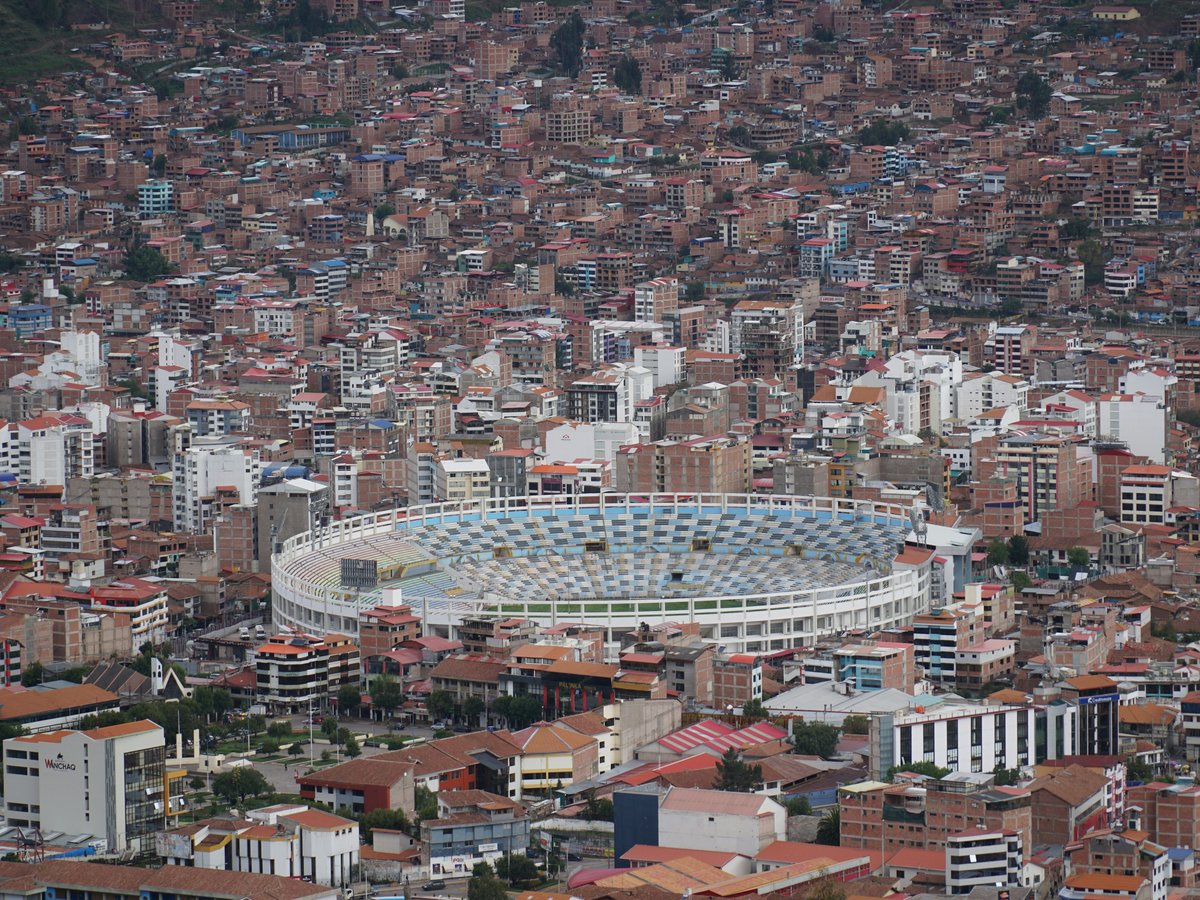
Stay in Cusco in September
91 hotels in the Trip.com pool for Cusco, from US$8 a night.
Opens Trip.com on Fri 3 Sep to Sun 5 Sep 2027; change the dates there.
September in Cusco sits at the tail of the dry season, and that timing is the single most important thing to know. Daytime highs reach about 19°C (67°F) under reliably clear morning skies, while nights drop to around 6°C (44°F) at Cusco's altitude in the high Andes. Rainfall for the month averages 41mm. Mostly afternoon showers, passing within 30 to 45 minutes. Compare that to January's 226mm and you start to see why the trails around the Sacred Valley and the ruins above the city remain dry and walkable, though you might notice green shoots starting to push through the brown hillsides.
Two events mark Cusco's September calendar. The Warachikuy ceremony at Saqsaywaman reenacts Inca coming-of-age trials each mid-September, with competitions in running, sling-throwing, and endurance. The Señor de Huanca pilgrimage on September 14 draws thousands of devotees who walk roughly 48 km to a sanctuary northeast of the city. Neither event approaches the scale of June's Inti Raymi, but both tend to feel less staged and more rooted in local participation.
Hotel rates around Plaza de Armas and in San Blas have dropped from the July-August peak, and you'll find availability at mid-range properties that were fully booked 6 weeks earlier. Calle Plateros still carries the evening smell of anticuchos and roasting corn. September's shoulder positioning means you won't compete for tables the way travelers do in July.
Why visit in September
- Tail of the dry season with minimal rainfall. Trails and ruins remain accessible without the mud and washouts that define the November-through-March wet season.
- Peak-season crowds have thinned since August, meaning shorter queues at major sites and easier permit availability for multi-day treks like the Inca Trail.
- Shoulder-season hotel pricing with wider availability, particularly in San Blas and the blocks around Plaza de Armas where July-August sellouts are common.
- Clear morning skies through most of the month provide reliable conditions for photography at elevated sites like Tambomachay and Puka Pukara.
Worth knowing
- Afternoon showers appear more frequently than in June or July. The unpredictability can cut short half-day outdoor plans if you don't start early.
- Mind you, nights get cold enough that budget accommodations without heating become genuinely uncomfortable. Bring real insulation, not a light hoodie.
- No landmark festival on the scale of June's Inti Raymi. September's events are locally rooted and rewarding, but they won't define your trip the way a marquee celebration does.
Best for
Think twice if
Mornings start cool and still, often with a thin layer of frost catching early light on exposed ground outside the city center. By late morning the high-altitude sun feels genuinely intense on exposed skin, warm enough for short sleeves yet with a noticeable bite of cold in the shade. Clouds tend to build from the east after noon, and when rain comes it typically falls as a brief shower you can wait out under a market awning. Humidity averages around 65%, noticeably drier than the wet-season months when the air sits heavy. The pattern is predictable. Outdoor time before noon, indoor sites after.
Seasonal caution
- Acute altitude sickness (soroche) is a real risk at 3,400 meters (11,150 ft). Symptoms including headache, nausea, and shortness of breath typically appear within 6 to 12 hours of arrival. Plan at least 48 hours of gentle acclimatization before any strenuous activity.
- UV radiation at this elevation regularly exceeds an index of 11, classified as extreme by the WHO. Sunburn can develop within 15 minutes of unprotected exposure, even on partly cloudy mornings.
- Temperature drops of over 12°C between afternoon highs and nighttime lows are normal. The shift happens rapidly after sunset, catching travelers off guard at exposed sites where wind compounds the chill.
Year-round climate
Averages from the last 5 years.
| Month | Avg high (°C) | Avg low (°C) | Rainfall (mm) |
|---|---|---|---|
| Jan | 17 | 8 | 226 |
| Feb | 17 | 8 | 185 |
| Mar | 16 | 8 | 180 |
| Apr | 17 | 7 | 74 |
| May | 17 | 6 | 35 |
| Jun | 18 | 5 | 5 |
| Jul | 19 | 5 | 7 |
| Aug | 19 | 5 | 20 |
| Sep | 19 | 6 | 41 |
| Oct | 19 | 7 | 92 |
| Nov | 19 | 8 | 169 |
| Dec | 18 | 8 | 180 |
Best things to do in September
Multi-day Inca Trail trek
trekkingThe classic 4-day, 43 km route to Machu Picchu passes through cloud forest, alpine passes above 4,200 meters, and a sequence of Inca ruins before arriving at the Sun Gate. September's dry conditions keep river crossings low and campsites firm.
Last reliable dry-season window before October's rainfall starts softening trails and raising river levels.Booking tipPermit availability is better than in June or July, but popular departure dates still fill. Book well ahead through a licensed operator.
Ruins circuit above Cusco
sightseeingAn 8 km walking route northeast of the city links Tambomachay, Puka Pukara, and Q'inqu, three Inca sites accessible on foot. The trail passes through open grassland at around 3,700 meters with clear views across the Cusco Valley.
Dry ground and comfortable morning temperatures make the uphill stretches manageable. The grass is still brown and low, opening sightlines that vegetation obscures in the wet months.Sunrise from the San Cristóbal mirador
photographyThe church plaza above the city center provides a panoramic view of Cusco's terracotta rooftops against the surrounding hills. First light hits the Cathedral and Plaza de Armas below while the rest of the city is still in shadow.
September's dry mornings produce reliably clear dawns. Fewer overcast mornings than October or November mean more consistent sunrise conditions.Day trip to Moray and the Maras salt mines
day tripThe circular Inca agricultural terraces at Moray and the hillside salt-harvesting pans at Maras sit about 50 km northwest of Cusco. The salt pans are actively worked during the dry season, with the white terraces contrasting sharply against the brown valley floor.
Dry trails and firm roads make the approach straightforward. The salt pans are at peak production and photogenic contrast during the last dry months.Booking tipHalf-day tours are widely available, but you can also take a colectivo to Chinchero and arrange local transport onward.
Morning at Mercado San Pedro
food and cultureCusco's central market in the San Pedro neighborhood fills two floors with produce, meats, juices, and prepared food stalls. September's stalls carry both dry-season staples and the first spring produce arriving from lower valleys.
The overlap between dry-season and early-spring harvests creates the widest ingredient variety of the transitional months. Tuna, choclo, and chuño share the same stalls.San Blas artisan workshop visits
cultureThe steep cobblestone streets of San Blas hold dozens of ceramic, textile, and jewelry workshops in converted colonial houses. September's shoulder-season quiet means artisans have time for individual conversations and studio demonstrations that peak-season crowds make difficult.
Fewer tour groups than July-August means artisans are more available for unhurried studio visits. Some workshops that limit walk-ins during peak season reopen their doors.Booking tipMost workshops welcome walk-ins, though a day's notice helps for in-depth demonstrations.
Huchuy Qosqo trek from the Sacred Valley
trekkingA half-day trek from Lamay climbs to this Inca administrative complex perched at about 3,600 meters above the Sacred Valley floor. The site includes storehouses, terraces, and a two-story kallanka hall, with far fewer visitors than Ollantaytambo or Pisac.
Firm trail conditions and clear sightlines across the valley make the ascent safer and more rewarding than after October's rains loosen the path.Booking tipGuided treks are available through agencies in the Centro Histórico. September demand is lower than the July-August peak, so next-day departures are often possible.
What to eat in September
In season: fruit
Tuna (prickly pear)
Cactus fruits ripen on hillsides around the Cusco Valley from August into October. Their deep magenta flesh tastes faintly of watermelon. Street vendors along Avenida El Sol peel them fresh for a few soles.
On menus now
Rocoto relleno
Rocoto peppers reach peak heat and size by September. Cusco's version stuffs them with seasoned beef and bakes them under a melted queso fresco cap, richer and heavier than the Arequipa preparation found elsewhere in Peru.
Sopa de chuño
Freeze-dried potato soup, a cold-morning highland staple. September's lingering pre-dawn cold makes this thick, starchy broth feel like a necessity rather than a choice at market stalls near San Pedro.
Street food peaks
Choclo con queso
September's stored maize harvest still yields the oversized Andean corn kernels unique to this altitude. Market stalls serve them warm with a thick slab of fresh cheese, the kernels noticeably larger and starchier than coastal varieties.
What to drink
Chicha de jora
The dry season's remaining corn stores ferment into fresh batches of this cloudy, slightly sour Andean beer at chicherías across the city. Flavor varies from mildly sweet and yeasty to bracingly tart, depending on fermentation time.
Regular events in September
WarachikuyFree
Reenactment of Inca coming-of-age initiation rites at the Saqsaywaman fortress complex. Hundreds of young participants compete in footraces, wrestling, and precision challenges on the open esplanade, with the Cusco Valley as backdrop.
Mid-September (dates vary by year)Señor de Huanca pilgrimageFree
One of the Cusco region's largest religious pilgrimages. Thousands of devotees walk to the Sanctuary of Señor de Huanca, carrying offerings and stopping at roadside chapels along the route northeast of the city.
September 14Equinoccio de Primavera (Spring Equinox)Free
Andean spring equinox observances at Inca sites around Cusco, marking the beginning of the planting season. Smaller ceremonies sometimes take place at solar-aligned sites across the valley.
September 22-23Día Mundial del TurismoFree
World Tourism Day brings free or discounted entry to select museums and archaeological sites in the Cusco region, along with cultural performances in Plaza de Armas.
September 27Best places this September
Coricancha
archaeological siteThe original Inca sun temple, founded around 1201, sits beneath the colonial Convento de Santo Domingo. September's clear morning light fills the precisely cut trapezoidal windows, which were engineered to frame solstice and equinox alignments.
Centro HistóricoCusco Cathedral
churchCompleted over decades after its 1559 founding, the Cathedral anchors the north side of Plaza de Armas. It houses one of the most significant collections of colonial Cusqueño painting in Peru. September mornings before 10 AM are quiet enough to study the canvases without tour-group congestion.
Centro HistóricoMercado San Pedro
marketThe city's main market occupies a large iron-framed hall in the San Pedro neighborhood. September brings both dry-season staples and early spring ingredients from lower valleys. The upstairs juice stands sell fresh-squeezed tuna and orange for a few soles.
San PedroSan Cristóbal mirador
viewpointThe church and plaza above the old city provide the best panoramic view of Cusco's rooftops. September's clear mornings are ideal for early-light photography, and the walk up from Plaza de Armas takes about 15 minutes at a gentle pace.
San CristóbalLa Compañía de Jesús (Church of the Society of Jesus)
churchThis Baroque church, completed in 1668, faces the Cathedral across Plaza de Armas. Its carved stone facade catches September morning light in sharp relief, and the gilded interior is among the most ornate in southern Peru.
Centro HistóricoTipón
archaeological siteAn Inca water-engineering site about 23 km southeast of Cusco, featuring terraced fountains and irrigation channels that still function. September's lower water table makes individual channels and stonework joints more visible than during the wet months.
Your packing checklist
Tick items off as you pack. Your progress saves in this browser.
All packed — have a great trip.
Insider tips
The Boleto Turístico general covers 16 sites including Tambomachay, Tipón, and Q'inqu for about 130 soles. Buy it at the COSITUC office on Avenida El Sol, not from touts near the site entrances who occasionally sell expired or partial-circuit tickets.
Chicherías in the Santiago neighborhood serve fresh chicha de jora from clay urns. Look for a pole with a red flag or red plastic bag hanging outside the doorway. That signals a new batch is ready. No flag means they're out.
Colectivos to Chinchero and the Sacred Valley leave from near Calle Pavitos by Mercado San Pedro. They cost a fraction of organized tour prices and run frequently until early afternoon.
If the Señor de Huanca pilgrimage falls during your visit around September 14, the road toward San Salvador gets congested with devotees and support vehicles. Plan any Sacred Valley day trip around that date.
The Marcos Zapata painting of the Last Supper inside the Cathedral shows Jesus and the apostles eating cuy (guinea pig) and drinking chicha. It's one of Cusco's most photographed details. Visit before 10 AM to see it without a crowd.
Avoid these mistakes
- Going straight from the airport to a strenuous hike or high-altitude trek. September draws trekkers for the late dry-season window, and the temptation to start immediately is strong. Soroche symptoms appear within hours at this elevation. Give yourself at least 48 hours of gentle walking in the historic center.
- Packing only for mild daytime weather. September afternoons might feel warm enough for a t-shirt. Nights are a different story. Budget accommodations without heating get genuinely cold after dark. Bring real insulation.
- Scheduling outdoor plans across the full day without accounting for the afternoon rain pattern. Mornings are reliably clear, but showers tend to arrive after 1 PM. Stack ruins visits and hikes in the morning, and save markets, museums, and restaurants for the afternoon.
- Assuming September weather resembles Northern Hemisphere autumn. Cusco sits at nearly 13.5°S latitude. September here is early spring, not early fall. The city is warming, not cooling.
Practical tips for September
Book Inca Trail permits at least 3 months ahead, even in September. While availability is less constrained than in June or July, popular start dates still fill. The Salkantay and Lares alternatives typically need only 2 weeks' notice. Museums and churches in the Centro Histórico generally open 8 AM to 5 PM, with some closing for lunch between noon and 2 PM. The Cathedral and Coricancha keep shorter Sunday hours. Taxis do not use meters. Agree on a fare before getting in. Rides within the historic center typically run 5 to 8 soles, while airport transfers to Aeropuerto Alejandro Velasco Astete cost 15 to 20 soles. ATMs cluster along Avenida El Sol and near Plaza de Armas, with both sol and dollar withdrawals available, though dollar machines charge higher fees. September's shoulder positioning often gives you room to negotiate hotel rates directly, particularly for stays of 3 nights or more. Pack a headlamp if you plan early-morning trek departures. September sunrise is around 5:40 AM, and the streets leading out of San Blas are poorly lit.
FAQ
Is September a good time to visit Cusco?
September is a genuinely good time. It sits at the tail of the dry season with comfortable daytime temperatures, manageable rainfall, and thinner crowds than the June-August peak. Hotel rates have settled to shoulder-season levels, and trekking conditions remain solid. The trade-off is occasional afternoon showers and no single defining festival, though the Warachikuy ceremony and Señor de Huanca pilgrimage give the month its own cultural identity.
What is the weather like in Cusco in September?
Days are mild and mostly sunny, with clear mornings and clouds building in the afternoon. You might see rain on roughly a third of the days, but these tend to be brief showers rather than all-day gray. The daily temperature swing is significant, from comfortable warmth by day to genuine cold after dark. Bring layers and a rain shell and you'll handle it fine.
Is Cusco crowded in September?
Moderately. The July-August peak has passed, and you'll notice shorter lines at major sites and more hotel availability. To be fair, Cusco is a year-round destination, so Plaza de Armas and the main ruins still see steady foot traffic. You won't have the city to yourself, but you also won't queue for 45 minutes at the entrance to Coricancha.
Can I hike the Inca Trail in September?
Yes. Trail conditions are firm, river crossings stay at manageable levels, and morning visibility is typically clear. Worth noting, September is less competitive for permits than June or July, though advance booking is still necessary. The Salkantay and Lares routes are also in good condition and don't require the same permit system.
What should I wear in Cusco in September?
Layers are the whole strategy. Mornings are cool enough for a fleece, the midday sun warms up enough for a light shirt, and evenings send you back to the fleece. A compact rain jacket handles the afternoon showers. Sturdy shoes with grip matter on the cobblestones, and sun protection at this altitude is non-negotiable.
Things to Do in Cusco in September

Inca Trail 4-Day Trek to Machu Picchu – Return by Vistadome Train
Outdoor experience: 4 days.
via Viator Free cancellation
 Sacred Valley Full Day Tour
Day trip: 10 hours, free cancellation.
via Viator
4-Day Inca Trail Trek to Machu Picchu & Panoramic Train
Outdoor experience: 4 days.
via Viator
Classic 5-Day Salkantay Trek to Machu Picchu: Small Group Hike
Outdoor experience: 5 days.
via Viator
2-Day Short Inca Trail to Machu Picchu – Vistadome & 4-Star Hotel
Outdoor experience: 2 days.
via Viator Free cancellation
 Excursion to Rainbow Mountain Full Day Optional Red Valley
Outdoor experience: 12 hours, free cancellation.
via ViatorFind a flight to Cusco
Live fares to Cusco appear here once cookies are accepted.
Last verified by automated review (v1.7.2) on . What is automated review?