Compare every Japan city in January →
Stay in Yokohama in January
63 hotels in the Trip.com pool for Yokohama, from US$29 a night.
Opens Trip.com on Fri 1 Jan to Sun 3 Jan 2027; change the dates there.
January in Yokohama opens with the city half-closed. From 1 to 3 January, the Shogatsu New Year holiday shuts many museums, family restaurants and small shops in Kannai and Noge, while the queues for hatsumode, the first shrine visit of the year, run down the hill below Iseyama Kotai Jingu. By 4 January the offices reopen, domestic holidaymakers head home, and Yokohama settles into its quietest stretch of the year.
Expect crisp days around 9.5°C (49°F) and nights that fall to about 0.9°C (34°F). The reward for the chill is the sky: dry northwesterly air clears the haze over Tokyo Bay, and on a good morning Mount Fuji sits white and sharp above the Minato Mirai towers, roughly 100 km (62 miles) to the west.
To be fair, this is a fair month, not a great one. After dark the wind off Yamashita Park bites hard, and the Yokohama Stadium district in Kannai sits silent until the baseball season starts in spring. That said, hotel demand drops after the holiday week, and you'll rarely wait for a table on Chukagai Odori in Chinatown.
Why visit in January
- Mount Fuji visibility is at its annual best. The volcano shows up in the view west from the Sky Garden in Yokohama Landmark Tower on most clear mornings, and tends to vanish again from April onward.
- A typical January brings only around 5 rainy days, so the walk from Motomachi up to the Yamate Bluff and Harbor View Park rarely gets washed out.
- The Hakone Ekiden relay passes through Tsurumi, Hodogaya and Totsuka, giving you free kerbside views of one of Japan's most-watched races.
- After the second week of January, Chinatown, the Cup Noodles Museum and the Yokohama Red Brick Warehouse see a fraction of their spring and autumn weekend crowds.
Worth knowing
- Shogatsu closures run from about 29 December to 3 January, and the Yokohama Archives of History, Nogeyama Zoo and many independent restaurants in Noge stay shut for part or all of that window.
- Wind chill on the waterfront at Osanbashi Pier and Yamashita Park makes the near-freezing night lows feel several degrees colder.
- Daylight is short: sunset in Yokohama comes before 5 pm for most of January, which cuts afternoons at outdoor sites like Sankei-en.
- The Yokohama DeNA BayStars play no home games at Yokohama Stadium until spring, so the Kannai stadium area loses its evening crowds.
Best for
Think twice if
January is Yokohama's driest month, with rainfall averaging 38 mm (1.5 in), about a quarter of what March brings, and humidity sitting around 61%. The dry karakkaze wind that sweeps across the Kanto Plain will chap your lips within a day or two. Mornings are often blue and still, and the wind tends to pick up off Tokyo Bay by mid-afternoon.
Seasonal caution
- Occasional snow. Once or twice a winter, a low-pressure system off the Pacific coast drops snow on Yokohama, usually in late January or February, and when it does, JR East and Keikyu often slow or suspend trains at a few hours' notice.
- Frost on clear nights. Temperatures can dip below 0°C (32°F) after midnight, and the stone steps up to Harbor View Park and the Yamate Bluff can be slick before 8 am.
Year-round climate
Averages from the last 5 years.
| Month | Avg high (°C) | Avg low (°C) | Rainfall (mm) |
|---|---|---|---|
| Jan | 10 | 1 | 38 |
| Feb | 11 | 2 | 63 |
| Mar | 15 | 6 | 155 |
| Apr | 19 | 11 | 172 |
| May | 22 | 15 | 205 |
| Jun | 26 | 19 | 185 |
| Jul | 31 | 24 | 159 |
| Aug | 32 | 25 | 143 |
| Sep | 28 | 22 | 196 |
| Oct | 22 | 15 | 147 |
| Nov | 17 | 10 | 81 |
| Dec | 12 | 4 | 54 |
Holidays and festivals in January
Public holidays
- New Year's Day(元日)1 January 2027
- Coming of Age Day(成人の日)11 January 2027
Headline events
Hakone Ekiden (Tokyo-Hakone Round-Trip College Ekiden Race)
2 January (outbound to Hakone) and 3 January (return to Tokyo). Runners reach Tsurumi mid-morning.
Around 20 university teams race a relay of about 217 km (135 miles) between Otemachi in Tokyo and Lake Ashi in Hakone, following National Route 1 straight through Yokohama with baton handovers at the Tsurumi and Totsuka relay stations. Roadside crowds along the full route tend to reach around a million people, and the race ranks among Japan's biggest New Year television events.
Best things to do in January
Mount Fuji from the Sky Garden at Yokohama Landmark Tower
viewpointThe Sky Garden observation deck sits on the 69th floor, 273 m (896 ft) up the 296 m (971 ft) Landmark Tower in Minato Mirai, facing west across Kanagawa toward Fuji and the Tanzawa mountains.
Low humidity and steady northwesterly winds give January the best odds of a full, cloud-free Fuji silhouette, especially at sunset.Booking tipArrive 30 minutes before sunset on a weekday. Weekend evenings in January fill the west-facing windows three deep.
Hatsumode at Iseyama Kotai Jingu
cultureThis shrine near Sakuragicho, founded in 1870, is often called the Ise Shrine of Kanto and serves as Yokohama's main New Year shrine, with food stalls, omikuji fortune slips and bonfires in the precinct.
The New Year shrine visit is an early January occasion, with stalls and decorations packed away by mid-month.Booking tipNo booking needed. Go after dark on 2 or 3 January for shorter queues than on the morning of New Year's Day.
New Year day trip to Tsurugaoka Hachimangu, Kamakura
day tripKamakura's main shrine, founded in 1063, sits about 25 minutes from Yokohama Station on the JR Yokosuka Line, and its long Dankazura approach fills with hatsumode worshippers.
Roughly 2.5 million people visit in the first three days of January, the largest New Year crowd in Kanagawa. Seeing it is a ritual in itself.Booking tipIf crowds put you off, go on a weekday after 7 January, when the New Year decorations are usually still up and the wait drops to minutes.
Ice skating at the Art Rink, Yokohama Red Brick Warehouse
outdoorAn outdoor seasonal rink set in the plaza between the two 1911 and 1913 brick warehouses, with the harbour and the Cosmo Clock 21 ferris wheel behind it.
The rink runs in winter, roughly from late November to mid-February, and January's cold keeps the ice firm.Booking tipWeekend evenings sell out on the day, so buy session tickets online the day before.
Watching the Hakone Ekiden on Gondazaka
sportGondazaka is the long climb on National Route 1 in Hodogaya Ward, part of the race's second leg, and it is where team strategies tend to break open.
The relay passes Yokohama only on those two New Year days, and the hill is one of the most dramatic free vantage points on the whole course.Booking tipClaim a kerb spot at least an hour before the lead runner is due. The nearest station is Hodogaya on the JR Yokosuka Line.
Fukubukuro lucky bags on Hatsuuri day
shoppingOn 2 January, department stores around Yokohama Station and boutiques along Motomachi Shopping Street open for the year's first sale, stocking sealed fukubukuro bags of mystery goods.
Hatsuuri is a New Year custom, and the best bags from fashion and tea shops tend to go within the first hour.Booking tipQueue before the 10 am opening. Some stores in the Yokohama Station complex now take online pre-orders in December.
Winter walk through Sankei-en
gardenSankei-en is a garden in Honmoku that opened to the public in 1906, and its 175,000 sq m (43 acres) hold historic buildings moved from Kyoto and Kamakura, including a three-storey pagoda.
Bare maples open the sightlines to the pagoda, the ponds sometimes skin over with ice at dawn, and the earliest plum trees can bud by late January.Booking tipThe garden usually closes over the year-end days, so check its site before going in the first week of January.
What to eat in January
On menus now
Ozoni
Ozoni is a mochi rice-cake soup eaten across the Kanto region on New Year's morning. Yokohama's version usually comes in a clear dashi with chicken and komatsuna greens.
Nanakusa-gayu
Rice porridge with seven spring herbs, eaten on 7 January to settle the stomach after the holiday feasting. Supermarkets in Isezakicho and Kohoku sell ready-made herb packs for it.
Street food peaks
Nikuman steamed pork buns
Steamed pork buns sold from street-front steamers along Chukagai Odori in Yokohama Chinatown. On cold January afternoons, the queues form at the counters with the most steam.
What to drink
Amazake
A warm, sweet, low- or no-alcohol drink made from fermented rice. Shrine stalls at Iseyama Kotai Jingu ladle it out during the New Year visiting period.
In markets
Miura daikon
This fat winter radish from the Miura Peninsula, south of Yokohama, peaks between December and February, turning up simmered in oden at izakaya in Noge.
Festival food
Osechi ryori
Osechi ryori is the lacquered box of New Year dishes, packed with kuromame black beans, kazunoko herring roe and datemaki omelette. In the first days of January, it fills the basement food halls of Takashimaya and Sogo at Yokohama Station.
Regular events in January
Joya no Kiteki (New Year ship horns)Free
At midnight on New Year's Eve, ships moored in Yokohama Port sound their horns together, and crowds gather on Osanbashi Pier and along Yamashita Park to hear it.
Midnight, 31 December into 1 JanuaryComing of Age Day ceremony at Yokohama ArenaFree
Yokohama holds one of Japan's largest coming-of-age ceremonies, with tens of thousands of 20-year-olds attending, and the streets around Shin-Yokohama Station fill with kimono and hakama crowds all day.
Second Monday of January (a national holiday)Dondoyaki fire festivalsFree
Neighbourhood shrines and riverside parks across Yokohama burn the year's New Year decorations on bonfires, and locals toast dango rice dumplings on bamboo poles over the flames for good health.
Weekends around 15 JanuaryChunjie (Lunar New Year) in Yokohama ChinatownFree
Lion dances, a lantern display and a costume parade fill Chinatown and Yamashita Park. Because the date follows the lunar calendar, in 2027 Lunar New Year falls on 6 February, pushing the celebrations outside January that year.
Late January or February, depending on the lunar calendarBest places this January
Osanbashi Pier
viewpointThe pier's wooden rooftop deck is open around the clock, and at dawn it gives a low, wind-free view of Yokohama Bay Bridge, which opened in 1989, and of the Minato Mirai skyline.
KannaiHarbor View Park (Minato-no-Mieru-Oka Koen)
parkThe rose beds are bare in January, but the hilltop terrace still frames the bay and the cranes of Honmoku Pier, and on weekday mornings it is quiet.
YamateYokohama Marine Tower
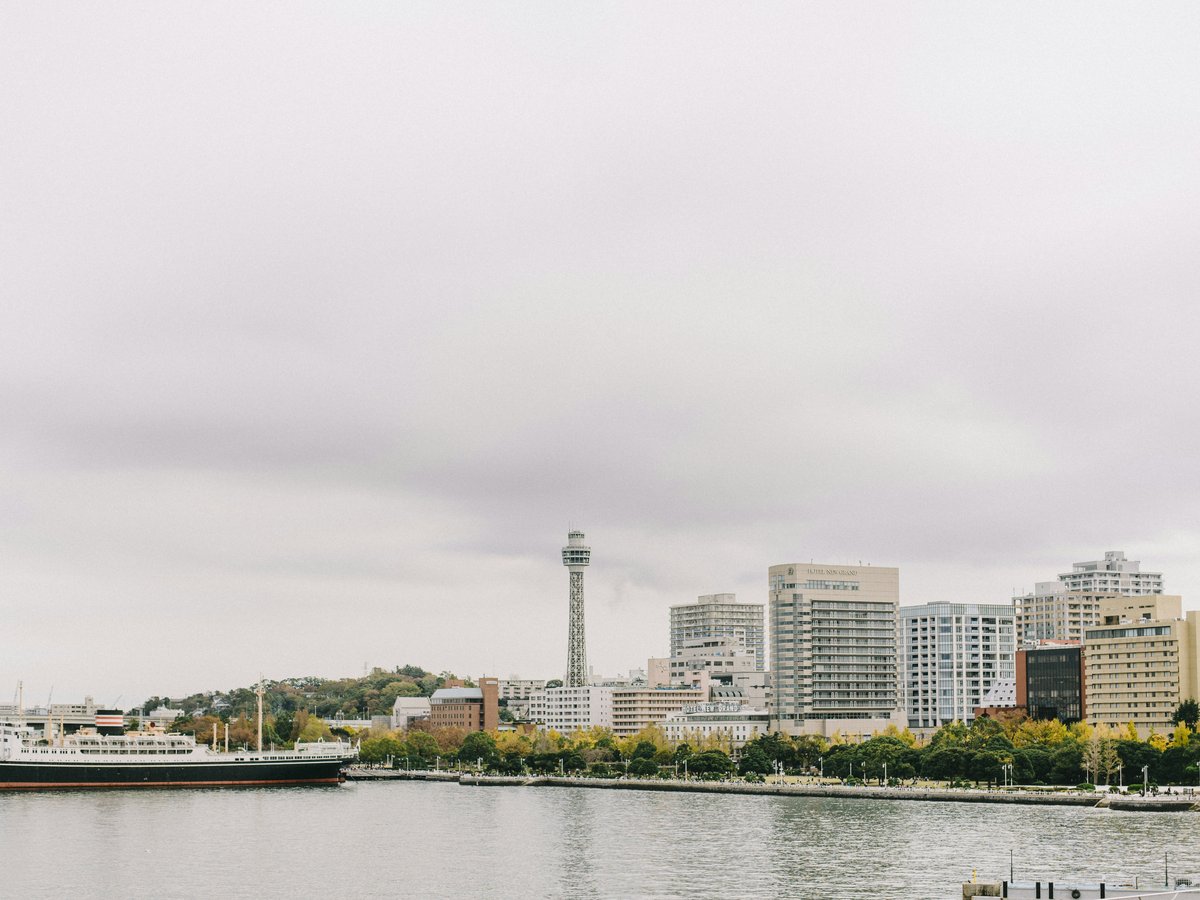
viewpointBuilt in 1961, the 106 m (348 ft) tower has an indoor observation deck, which makes it a warm alternative when the wind makes the waterfront hard work.
Yamashita-choHikawa Maru in Yamashita Park
museumA 1930 ocean liner moored beside the park. The heated interiors and art deco dining saloon fill an easy hour on a cold afternoon.
Yamashita-choSacred Heart Cathedral
landmarkThis brick cathedral on the Bluff dates from 1933 and is the seat of the Catholic Diocese of Yokohama. In the first days of January it still has its Christmas crib up.
YamateKanazawa Bunko and Shomyoji
museumThe prefectural museum grew out of a samurai library founded in 1275, and the neighbouring Shomyoji temple garden, with its red arched bridge, is almost empty in January.
KanazawaNogeyama Zoo
zooThis free-admission hilltop zoo opened in 1951. The red pandas are most active in the cold months, and the paths look down over Sakuragicho.
NogeNoge izakaya district
food districtSeveral hundred small bars and izakaya pack the lanes west of Sakuragicho Station, where oden pots and charcoal grills make it Yokohama's warmest place to eat on a January night.
Noge
Your packing checklist
Tick items off as you pack. Your progress saves in this browser.
All packed — have a great trip.
Insider tips
Fuji is clearest in the first two hours after sunrise, before sea haze builds over Tokyo Bay. Osanbashi Pier is open at dawn and free, while the Landmark Tower deck does not open until mid-morning.
Locals skip the Iseyama Kotai Jingu queue on New Year's morning and go on the evening of 3 January, when the bonfires are lit and the omikuji stalls have stock left.
Standing bars and small izakaya in Noge often reopen a day or two before the chain restaurants in Minato Mirai, because many are owner-run and depend on regulars.
Nogeyama Zoo and the Yokohama Archives of History are the quietest indoor-outdoor pairing in the city after mid-January, as school groups do not return until the spring term trips in April.
Avoid these mistakes
- Planning a museum day for 1 to 3 January. Check each venue's year-end schedule, because the Archives, the zoo and many galleries close for several days.
- Taking a city bus along National Route 1 on the Ekiden days. Rolling road closures in Tsurumi, Hodogaya and Totsuka can add an hour to the trip, so use the JR or Keikyu lines instead.
- Heading to Tsurugaoka Hachimangu around noon on New Year's Day and expecting a quick visit. The line from Kamakura Station can take more than 90 minutes.
- Dressing for the midday sun. Temperatures on the Minato Mirai waterfront fall 5-8°C (9-14°F) within an hour of sunset.
Practical tips for January
Book hotels in Minato Mirai and Kannai for New Year week two to three months ahead, as domestic families fill them early. JR East and the Minatomirai Line usually run extra late trains on New Year's Eve, so you can see the ship horns at the port and still get back to Yokohama Station. From 29 December to 3 January, treat museums and small restaurants as closed unless their site says otherwise, though convenience stores and chain family restaurants stay open, and department stores at Yokohama Station usually reopen on 2 January. The Coming of Age Day holiday Monday packs the Yokohama Municipal Subway Blue Line toward Shin-Yokohama. Tipping is not practised anywhere in Yokohama, including at hotels and taxis. At shrines, rinse your hands at the temizuya basin before approaching the hall, and bow twice, clap twice and bow once at the offering box.
FAQ
Is January a good time to visit Yokohama?
It is a fair month rather than a great one. You get dry, sunny days, the clearest Fuji views of the year, and low-season prices after the holiday week. Against that, you get cold harbour evenings and widespread New Year closures. April, May, October and November rank higher overall.
What is the weather like in Yokohama in January?
Cold and dry. Daytime highs stay in the single digits Celsius (high 40s Fahrenheit), nights hover just above freezing, and rain falls on only a handful of days. A warm coat, gloves and thermals are enough, and snow is rare but possible late in the month.
Is Yokohama crowded in January?
Only at the start. Shrines, department stores and the Ekiden route are packed in the first few days, and from about the second week, Chinatown, Minato Mirai and Sankei-en are quieter than at any other time of year apart from February.
Is anything open in Yokohama on New Year's Day?
Shrines are at their busiest, and convenience stores, most chain restaurants and the Landmark Tower observation deck usually stay open. Most museums, independent restaurants and small shops in Motomachi and Noge close, and many reopen on 4 January.
Can you see Mount Fuji from Yokohama in January?
Usually, yes. The dry winter air gives Yokohama more clear Fuji days in January than in almost any other month, and the best spots are the west-facing windows of Landmark Tower and the rooftop deck at Osanbashi, early in the morning.
Things to Do in Yokohama in January
 Free cancellation
 Tokyo in 1 Day from Yokohama: Private Tour, Licensed Guide
Day trip: 8 hours, free cancellation.
via Viator Free cancellation
 Tokyo Private Tour by Car with English-Speaking Driver (Premium)
Day trip: 9 hours, free cancellation.
via Viator Free cancellation
 Yokohama ⇆ Tokyo, Narita, Haneda Airport Private Transfer
Day trip: free cancellation.
via ViatorLast verified by automated review (v1.7.2) on . What is automated review?