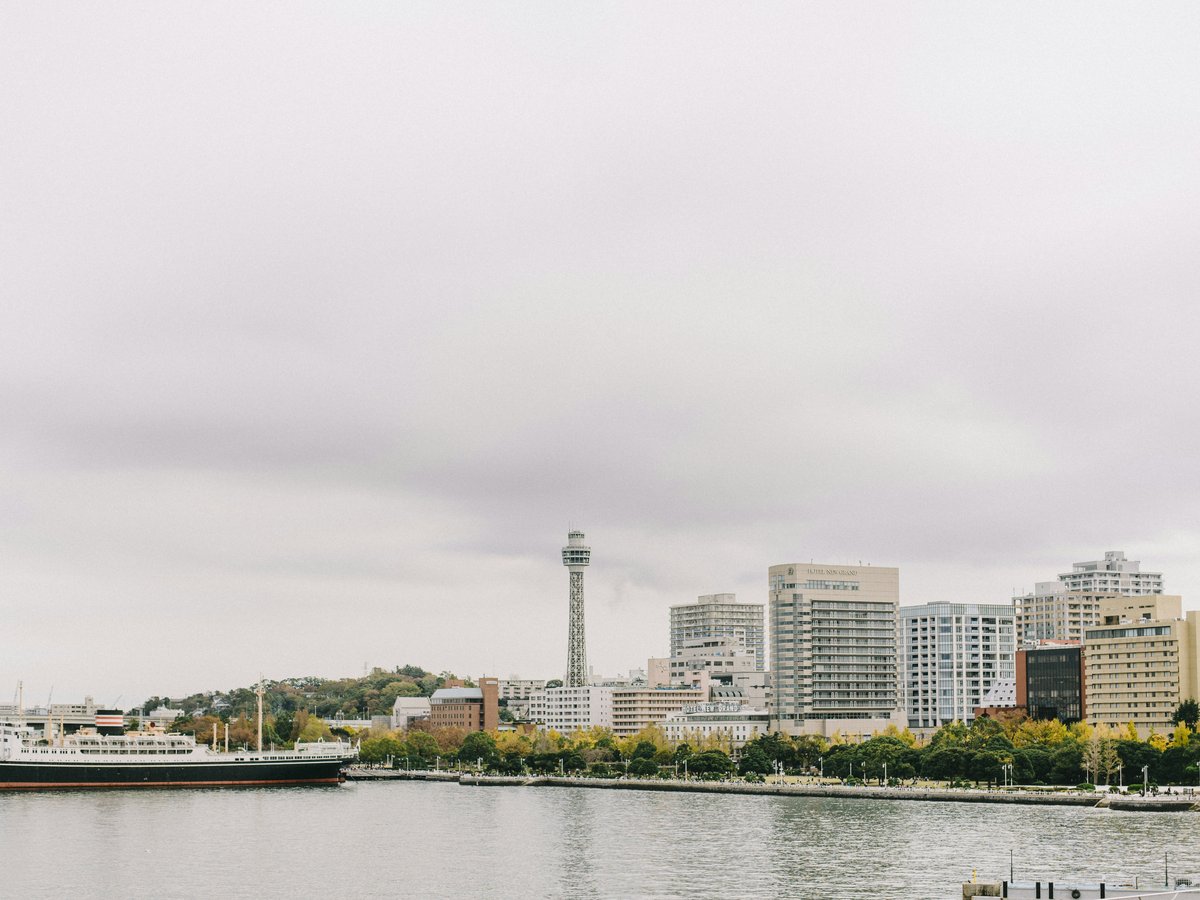
Yokohama grew out of a fishing village after the port opened to foreign trade in 1859, and the city still arranges itself around that waterfront. Most of what visitors want sits in a 3 km arc along the bay: Minato Mirai 21 is the reclaimed district of towers and piers to the north, Kannai and Bashamichi hold the old banks and customs buildings in the middle, and Chinatown, Yamashita Park and Motomachi sit to the south with the Yamate bluff rising above them. You can walk from Sakuragicho Station to the Harbor View Park lookout in about 45 minutes, and if your legs give out, the Minatomirai Line links Yokohama Station to Motomachi-Chukagai in roughly 10 minutes. Yokohama Station itself is the transit knot 2 km north of the bay, with trains to Tokyo in about 25 minutes. Shin-Yokohama is a separate business district inland, built around the Shinkansen, and Honmoku and Kanazawa-ku, further out, reward a half-day each. Right now, in late September, the harbor feels sticky: at 2 a.m. today it was 23.2°C under overcast skies at 90% humidity, so it felt closer to 26.5°C, and a light layer is worth packing for the sea breeze on the piers. Prices here run a little below central Tokyo, and at the current rate of about ¥157.6 to the US dollar, a ¥1,000 lunch set works out to roughly $6.35.
Neighborhoods
-
Minato Mirai 21
Minato Mirai is the postcard Yokohama: glass towers, wide plazas and bayside boardwalks built on reclaimed shipyard land from the 1980s onward. The Landmark Tower rises 296 m and opened in 1993, and its Sky Garden deck on the 69th floor looks across to Mount Fuji on clear winter mornings. The pace is slow and polished. Weekdays belong to office workers from Queen's Square and weekends to couples queuing for the Cosmo Clock 21 Ferris wheel, with the noise level staying low apart from the screams off the Cosmo World roller coaster. The food is mostly mall dining and hotel restaurants, so you won't find much grit here.
- Best for
- First-time visitors, families with strollers, business travelers attending events at Pacifico Yokohama, and anyone who wants a harbor-view hotel room.
- Key streets
- Kishamichi, the promenade built on an old freight rail line, runs from Sakuragicho to the Red Brick Warehouse (Aka Renga Soko), whose two brick buildings date from 1911 and 1913 and now hold shops and a beer hall. We'd continue from there through the Queen's Square atrium, past the Nippon Maru sailing ship at Dockyard Garden, and out to the Cup Noodles Museum on Shinko island. Since 2021, the Yokohama Air Cabin gondola has crossed the canal between Sakuragicho and Unga Park if you'd rather ride than walk.
-
Kannai and Bashamichi
This is the old commercial core, and it feels it. Stone banks, trading houses and prewar civic towers line straight streets laid out for horse carriages, the name Bashamichi literally meaning carriage road. In 1872 these blocks got some of Japan's first gas street lamps, whose replicas still glow on the corners at dusk, and the Kanagawa Prefectural Museum of Cultural History now occupies the former Yokohama Specie Bank, a domed building completed in 1904. The pace is office-district steady by day. Streets empty out after 8 p.m., except around the ballpark, and the food leans toward old-school yoshoku (Japanese-Western) diners, coffee houses and bars with wood counters.
- Best for
- Architecture fans, history readers, baseball fans, and travelers who want a quieter mid-range hotel within 10 minutes' walk of both Chinatown and Minato Mirai.
- Key streets
- Bashamichi runs between Kannai Station and Honcho-dori. Nihon-odori, the wide, tree-lined avenue toward the water, passes the Yokohama Archives of History, which opened in 1981 on the grounds where Commodore Perry's 1854 treaty was signed. Yokohama Park holds Yokohama Stadium, open since 1977 and home to the BayStars, whose game nights fill Kannai with the smell of grilled skewers and the sound of trumpet fight songs.
-
Chinatown (Yokohama Chukagai)
Japan's largest Chinatown packs more than 500 shops and restaurants into a grid of roughly 500 m by 500 m, behind ten ornate gates. It is loud, steamy and crowded: the air smells of roasting chestnuts, star anise and pork buns, and touts on every corner hand out menus for all-you-can-eat dim sum. The red-and-gold Kanteibyo temple to Guan Yu anchors the center, and the newer Masobyo, built in 2006 for the sea goddess Mazu, sits a few blocks south. Weekends get close to shoulder-to-shoulder. Cantonese, Shanghainese, Sichuan and Taiwanese kitchens all compete here.
- Best for
- Food-focused travelers, families grazing on street snacks, and anyone staying in Kannai or Yamashita who wants a cheap, lively dinner within walking distance.
- Key streets
- Chukagai-odori is the main drag from the Zenrin-mon gate. Kanteibyo-dori runs past the temple, and Ichiba-dori, the old market street, is narrower and a notch more local. Motomachi-Chukagai Station on the Minatomirai Line drops you at the eastern edge.
-
Yamashita Park and the Waterfront
Yamashita Park is a 750 m strip of lawn, rose beds and benches along the harbor, opened in 1930 on landfill made from the rubble of the 1923 Great Kanto Earthquake. The retired ocean liner Hikawa Maru, launched the same year, is moored alongside, and you can tour its Art Deco dining saloon. Across the road, the red lattice of Yokohama Marine Tower, which opened in 1961, marks the skyline. Mornings belong to joggers and dog walkers, and the sound of ship horns and gulls carries all day. The food scene here is thin, so eat in Chinatown one block inland.
- Best for
- Couples, early risers, and travelers who want classic grand-hotel rooms with a sea view rather than a tower-block view.
- Key streets
- Yamashita Park itself, Kaigan-dori along the water, and the Osanbashi Pier approach to the west. Hotel New Grand, open since 1927, faces the park. General MacArthur stayed there in 1945.
-
Motomachi and Yamate (The Bluff)
Yamate is the hill where 19th-century foreign merchants and diplomats made their homes above the port. The clapboard Western houses, church spires, and the Foreign General Cemetery give it a hushed, leafy character you won't find anywhere else in the city. The Sacred Heart Cathedral, the diocese's seat, took its current Gothic form in 1933. Down the slope, Motomachi Shopping Street is a narrow, low-rise strip of boutiques, bakeries, and old-line shops that once supplied those foreign residents. Motomachi smells of butter and fresh bread, while Yamate smells of cut grass and damp stone after rain.
- Best for
- Slow walkers, photographers, couples, and older travelers who want a quiet afternoon. There are few hotels here, so most people visit from a base in Kannai or Minato Mirai.
- Key streets
- Motomachi Shopping Street runs about 600 m along the Nakamura River from Ishikawacho Station. From there, climb to Yamate-hommachi-dori, the ridge road that links Harbor View Park, the Yamate 111 house, Berrick Hall, the Ehrismann Residence, and the Italian Garden.
-
Noge and Sakuragicho
Sakuragicho Station stands on the site of the terminus of Japan's first railway, opened in 1872. Cross the road from the Minato Mirai side and the scale drops fast: Noge is a warren of hundreds of tiny izakaya, standing bars, and yakitori counters, and on Friday nights the lanes fill with charcoal smoke, clinking glasses, and older regulars in suit jackets. Above it, Nogeyama Park holds Nogeyama Zoo, which opened in 1951 and still charges no admission. The area feels the least polished in central Yokohama, and the most honest.
- Best for
- Bar-hoppers, solo travelers who like counter seating, budget eaters, and families with small children at the free zoo by day.
- Key streets
- Noge-cho's grid of lanes runs west of Sakuragicho Station. Miyakobashi Shotengai is a two-story row of tiny bars curving along the Ooka River, and Nogeyama Park and the zoo sit up the hill via the slope past the Noge Chuo shopping street.
-
Isezakicho and Yoshida-machi
Before Minato Mirai existed, Isezaki Mall was Yokohama's main entertainment street, and today it is a pedestrian shopping road with a slightly faded, lived-in feel, lined with pachinko halls, drugstores and old department stores. The side streets toward Fukutomicho and Hinodecho hold Thai, Korean, Filipino and Chinese groceries and cafés, run by a large immigrant community. Yoshida-machi, next door, has turned into a quiet street of galleries, wine bars and hole-in-the-wall restaurants. It gets noisy after dark near the pachinko doors and quiet two blocks away.
- Best for
- Budget travelers, people seeking cheap business hotels, and eaters who want Southeast Asian and Korean food at neighborhood prices.
- Key streets
- Isezaki Mall runs southwest from Kannai Station toward Isezaki-chojamachi Station on the Blue Line, with Yoshida-machi's main street crossing near the Kannai end. The lanes behind Fukutomicho hold the late-night restaurants.
-
Yokohama Station Area
Yokohama Station is a transit machine, not a destination. JR, Keikyu, Tokyu, Sotetsu, the Minatomirai Line and the Blue Line subway all converge here, and construction has reshaped the station almost continuously for decades. The west exit is a crush of department stores, electronics shops and chain izakaya around the Tsuruyacho streets, while the east exit connects to the Sogo and Bay Quarter malls and the water bus pier. It is loud and fast and runs on escalators.
- Best for
- Travelers who value transit connections above character, day-trippers to Tokyo or Kamakura, and anyone arriving late on the Narita Express or a Haneda airport bus.
- Key streets
- The Nishiguchi (west exit) streets toward Minamisaiwai, Takashimaya's basement food hall, and the Bay Quarter boardwalk on the east side.
-
Shin-Yokohama
Shin-Yokohama grew up around the Tokaido Shinkansen stop and looks it: office blocks, business hotels, wide windy streets. Evenings are quiet unless there is an event at Yokohama Arena or Nissan Stadium, which hosted the 2002 FIFA World Cup final, and then the sidewalks fill with fans in team scarves. The area's one real food draw is the Shin-Yokohama Raumen Museum, which opened in 1994 and serves regional ramen styles from across Japan in a mock 1958 Tokyo streetscape.
- Best for
- Travelers catching early Shinkansen trains toward Kyoto and Osaka, concertgoers, and football fans.
- Key streets
- The streets north of the station toward Yokohama Arena, and the Raumen Museum a five-minute walk southeast of the station.
-
Honmoku and Negishi
Honmoku is a low-rise residential stretch of the south coast, partly occupied as a US military housing area until 1982, and some American-style diners still survive. The reason to visit is Sankei-en, a landscaped garden opened to the public in 1906 by the silk merchant Hara Sankei, who moved historic buildings here from Kyoto, Kamakura and elsewhere, including a three-story pagoda from Tomyoji temple. The garden is quiet: pond water, carp, cicadas in summer. Inland, Negishi Forest Park holds the concrete ruins of the grandstand of Japan's first Western-style racecourse.
- Best for
- Garden lovers, photographers, and travelers who want a half-day away from the crowds without leaving the city.
- Key streets
- The Sankei-en main gate and the inner garden around Rinshunkaku villa, plus Honmoku-dori for the old diners and the grandstand ruins in Negishi Forest Park.
-
Kanazawa-ku (Kanazawa Bunko and Hakkeijima)
The city's southern tip has the feel of a seaside town that happens to be in Yokohama. Kanazawa Bunko, the samurai-era library founded in 1275 by the Hojo clan retainer Hojo Sanetoki, survives as a prefectural museum beside the pond gardens and vermilion bridge of Shomyoji temple. Down the coast, the Seaside Line monorail runs out to Hakkeijima Sea Paradise, an island aquarium and amusement park. Weekdays are quiet. On weekends, families arrive and the island stalls fill the air with the smell of grilled squid.
- Best for
- Families with children, history readers interested in medieval Japan, and travelers heading on to Kamakura or Yokosuka.
- Key streets
- The approach to Shomyoji and the Kanazawa Bunko museum from Kanazawa-bunko Station on the Keikyu Line. Take the Seaside Line from Kanazawa-hakkei to Hakkeijima.
FAQ
Which Yokohama neighborhood is best for a first-time visitor?
Minato Mirai or Kannai. Minato Mirai gives you harbor-view hotels and flat, stroller-friendly boardwalks, while Kannai costs less and puts you within a 10-minute walk of Chinatown, Yamashita Park and the Noge bars. Both are on the Minatomirai Line.
Should I stay in Yokohama or visit as a day trip from Tokyo?
Yokohama Station is about 25 minutes from Tokyo Station on the JR Tokaido Line, so a day trip works if the waterfront is all you want. Staying at least one night lets you see the Noge izakaya lanes after dark and the harbor lights from Osanbashi, and it puts Kamakura and Sankei-en within easy reach the next morning.
Is Yokohama a good city for families and solo travelers?
Yokohama scores 8.5/10 for family friendliness (see the TTDI Family-Friendliness Index), helped by free venues like the Nogeyama Zoo and the wide seawall parks. For solo travelers, the safety score is 8.3/10 (see the TTDI Solo-Safety Index), and the Noge and Isezakicho bar streets stay busy past midnight without feeling threatening.
Where should I stay if I am catching the Shinkansen?
Stay in Shin-Yokohama: Nozomi trains toward Kyoto and Osaka stop there, and business hotels sit within five minutes of the platforms. If you'd rather be near the bay, the Blue Line subway connects Shin-Yokohama to Sakuragicho and Kannai in about 15 minutes.
What is the cheapest area to eat and sleep in central Yokohama?
Isezakicho and Noge. Business hotels around Isezaki Mall usually cost less than Minato Mirai's towers, and Noge's standing bars and Fukutomicho's Thai and Korean diners serve dinner for ¥1,000 to ¥2,000, roughly $6 to $13 at current rates.
Last verified by automated review (v1.7.2) on . What is automated review?