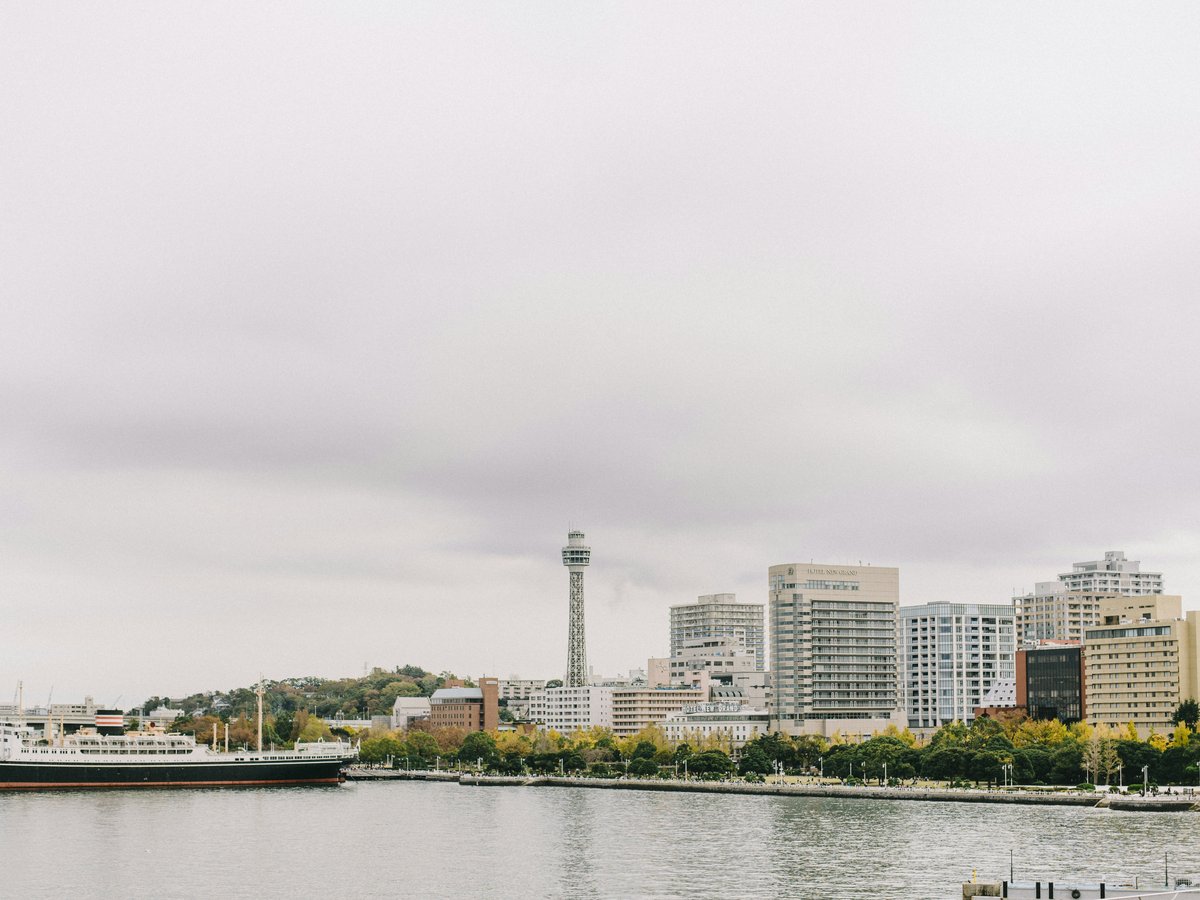
Yokohama opened to foreign trade in 1859, and much of what the treaty-port years left behind costs nothing to see today. The Bluff, called Yamate locally, still has seven Western-style residences with no entry fee; the rooftop deck of Ōsanbashi Pier stays open 24 hours; and the harbour promenade runs roughly 3 km from Sakuragichō Station to Yamashita Park, all of it free to walk. The biggest expense of a zero-budget day tends to be the train, since most rides from central Tokyo currently cost a few hundred yen. At the rate of ¥157.59 to the US dollar (observed 25 September 2026), a ¥1,000 bowl of noodles in Chinatown comes to about US$6.35, if you do give in to the steam and the smell of pork buns on Chūkagai-Ōdōri.
Free attractions
-
Nogeyama Zoo (Nogeyama Dōbutsuen)
Yokohama City opened this hilltop zoo in 1951, and admission has always been free. Red pandas, giraffes and lions share the slope above Sakuragichō, and the walk up from Hinodechō Station takes about 15 minutes, getting steep near the top. The zoo is closed on Mondays, or on Tuesday when Monday is a public holiday.
Nishi Ward, NogeyamaZoo -
Yamashita Park (Yamashita Kōen)
The city built this seafront park on rubble from the 1923 Great Kantō Earthquake and opened it in 1930. The Guardian of Water statue was a 1960 gift from San Diego, Yokohama's sister city. On summer evenings the lawns smell of cut grass and salt, and ship horns sound from the Ōsanbashi berths.
Naka Ward, Yamashita-chōPark -
Minato no Mieru Oka Kōen (Harbor View Park)
This park sits on the Yamate bluff with a direct sightline to the Yokohama Bay Bridge, which opened in 1989, and its English rose garden tends to peak in May and again in October. British troops were stationed on this ground until 1875.
Naka Ward, YamatePark and viewpoint -
Yamate Western Residences (Berrick Hall, Ehrismann Residence, Yamate 111, Bluff No. 18, Diplomat's House, British House Yokohama, Yamate No. 234)
Yokohama City runs all seven of these former foreign residences on the Bluff, and each one is free to enter. Berrick Hall, finished in 1930, is the largest, with Spanish-style arches and tiled floors that stay cool underfoot even in September. The houses usually close on the second Wednesday of each month.
Naka Ward, YamateHistoric houses -
Ōsanbashi Pier rooftop (Ōsanbashi Yokohama International Passenger Terminal)
The terminal reopened in 2002 with a rolling rooftop of ipe wood and grass that locals call the Whale's Back. It is open 24 hours and costs nothing, and from the tip you can see Minato Mirai's Landmark Tower to the west and the Bay Bridge to the east.
Naka Ward, Kaigan-dōriViewpoint -
Yokohama Customs Museum (Yokohama Zeikan Shiryōten)
This small exhibit sits on the ground floor of the 1934 Yokohama Customs building, whose green-domed tower Yokohama residents call the Queen, with displays covering port history and seized counterfeit goods. Entry is free.
Naka Ward, Kaigan-dōriMuseum -
JICA Yokohama Japanese Overseas Migration Museum (Kaigai Ijū Shiryōkan)
The museum traces the story of Japanese families who left for Hawaii, Brazil and Peru from the 1860s on. Admission is free, it closes on Mondays, and it sits on the second floor of the JICA Yokohama building in Shinkō, a few minutes from the Red Brick Warehouse.
Naka Ward, ShinkōMuseum -
Sacred Heart Cathedral (Yamate Catholic Church)
The Gothic Revival church on the Bluff dates from 1933 and is the seat of the Catholic Diocese of Yokohama. Visitors can usually step inside outside of Mass and weddings, and the twin spires show up clearly from the Motomachi end of Yamate Hondōri.
Naka Ward, YamateChurch -
Negishi Forest Park (Negishi Shinrin Kōen)
Japan's first Western-style racecourse opened here in 1866, and the concrete stands of the old first-class grandstand, designed by J. H. Morgan in 1929, still loom over the lawn behind a fence. The park's plum and cherry trees pull crowds in February and early April.
Naka Ward, NegishiPark -
Nissan Global Headquarters Gallery
Nissan's ground-floor showroom sits a 7-minute walk from Yokohama Station's east exit, with current models and concept cars on display and entry free. You can sit in several of the cars, and the upholstery still smells new.
Nishi Ward, TakashimaShowroom
Free activities
-
Kishamichi Promenade
The promenade follows a freight rail line that closed in the 1980s, crossing the water on three old truss bridges from Sakuragichō to Shinkō in about 500 m, with the original rails still set into the boardwalk.
Naka Ward, Minato Mirai to ShinkōWalking route -
Yamashita Rinkō Line Promenade
An elevated walkway runs along a disused port rail spur from the Red Brick Warehouse to the western end of Yamashita Park, keeping you above traffic for roughly 500 m before ending near the Hikawa Maru's mooring.
Naka Ward, Shinkō to YamashitaWalking route -
Harbour-to-Bluff loop
Start at Yamashita Park, cross the footbridge to France-yama Park, then climb to the rose beds on the bluff. From there, follow Yamate Hondōri past the Western residences and drop down to Motomachi. Budget about 2.5 hours at an easy pace. The climb from the harbour is around 40 m, and in humid weather you will feel it.
Naka WardWalking route -
Yokohama Chinatown (Chūkagai) browsing
Chinatown spreads across roughly 500 m by 500 m with ten ornamental gates and hundreds of shops, and walking in costs nothing. The painted façade of Kanteibyō, the temple to Guan Yu first built in 1862, is free to admire from the street, and the lanes smell of star anise and roasting chestnuts.
Naka Ward, Yamashita-chōNeighbourhood walk -
Red Brick Warehouse (Akarenga Sōko) browsing
The two brick customs warehouses were completed in 1911 and 1913 and reopened as a shopping and event space in 2002, and entry to the buildings and the plaza between them is free. The plaza hosts seasonal fairs, some of which charge a gate fee.
Naka Ward, ShinkōHistoric buildings -
Umi no Kōen (Yokohama Seaside Park) beach
This artificial beach in Kanazawa Ward stretches about 1 km, and swimming is typically allowed in July and August, though walking the sand is free all year. Take the Kanazawa Seaside Line to Umi no Kōen Minamiguchi Station.
Kanazawa Ward, HakkeijimaBeach -
Motomachi Shopping Street window-shopping
Motomachi grew up in the 1860s to supply the foreign residents on the Bluff, and today the 600 m street is lined with boutiques and bakeries. The brick pavement and the Mizumachi-dōri back lane are both good for a free stroll.
Naka Ward, MotomachiStreet -
Zō-no-Hana Park (Elephant's Trunk Park)
The park takes its name from the curved Meiji-era breakwater, which looks like an elephant's trunk from above. It opened in 2009 for the port's 150th anniversary, and at night it gives one of the best free views of the Minato Mirai skyline.
Naka Ward, Kaigan-dōriPark and viewpoint
Free events
-
Chinese New Year (Shunsetsu) in Chinatown
Late January or February, following the lunar calendarLion dances move shop to shop as firecrackers crack on the side streets, and some years a lantern parade runs through Chūkagai. Watching from the street is free. Check the Chinatown association for this year's dates.
Yokohama Chinatown -
Yokohama Port Opening Festival (Yokohama Kaikōsai)
Annually, around 2 JuneThe festival marks the port's opening on 2 June 1859, with harbour-side stages and a fireworks show among the regular features. Most of the outdoor programme has been free to watch, although reserved seating may cost extra.
Rinkō Park and the Minato Mirai waterfront -
Yokohama Jazz Promenade street performances
Annually, usually early OctoberThe city's jazz festival runs across about two days: the main hall concerts need a paid pass, but the outdoor street stages in Kannai and Minato Mirai have been free to stand and listen.
Kannai, Bashamichi and Minato Mirai -
Double Tenth Festival (Sōjūsetsu) in Chinatown
Annually, around 10 OctoberTaiwanese community groups mark 10 October with a parade of dragons and lions through Chinatown. Watching from the pavement is free.
Yokohama Chinatown -
Yokohama Sparkling Twilight
Annually, typically JulyThis summer weekend event has included decorated boats, a short fireworks display, and food stalls in the park, and watching from the lawn has been free. Dates and format have changed from year to year, so check the official listing before you go.
Yamashita Park
Popular Yokohama sights that charge admission
Several of Yokohama's better-known attractions charge admission, so they don't appear in the free lists above. Sankei-en, the landscaped garden laid out by silk merchant Hara Sankei and opened to the public in 1906, has an entry fee, as does the observation deck of the Yokohama Marine Tower, which opened in 1961. The Yokohama Archives of History, which opened in 1981 in the former British Consulate, charges a small fee, and the Kanazawa Bunko museum in Kanazawa Ward, tracing its roots to a library founded in 1275, charges for its exhibitions. Yokohama Stadium opened in 1977 as the home of the DeNA BayStars, and games are ticketed. The battleship Mikasa, launched in 1900, is preserved in neighbouring Yokosuka and charges admission. One entry worth flagging: the Yokohama Curry Museum opened in Isezakichō in 2001 but has since closed, so any guidebook that still lists it is out of date. Kamakura is a separate city, about 30 minutes south by JR, and not part of Yokohama.
Getting between free sights
The Minatomirai Line runs from Yokohama Station to Motomachi-Chūkagai in about 8 minutes, and every harbour sight listed above sits within a 20-minute walk of one of its stations. Wikivoyage's transit notes (https://en.wikivoyage.org/wiki/Yokohama#Get_around) cover the lines and walking distances in more detail. Umi no Kōen and Negishi Forest Park are the two outliers: the beach requires the Kanazawa Seaside Line, and the Negishi grandstand is roughly a 15-minute walk uphill from Negishi Station on the JR Negishi Line.
Weather and timing
At 2am on 28 September 2026, Yokohama was overcast at 23.2°C, with 90% humidity pushing the feels-like figure to 26.5°C. Late September walks along the bay tend to stay sticky until the afternoon sea breeze arrives. The Yamate houses and the migration museum both have air conditioning, making them good places to cool off in the middle of the Bluff loop. October usually brings drier air and the second rose bloom on the bluff.
Families on a zero budget
Yokohama earns a family friendliness score of 8.5 out of 10 (see the TTDI Family-Friendliness Index). Much of that comes from the free zoo on Nogeyama, the sand at Umi no Kōen, and the flat lawns of Yamashita Park. The Ōsanbashi rooftop has open space but few railings on its grassy slopes, so keep toddlers close near the edges.
Sources
Wikivoyage Yokohama article, https://en.wikivoyage.org/wiki/Yokohama. Sights, https://en.wikivoyage.org/wiki/Yokohama#See. Arrival options, https://en.wikivoyage.org/wiki/Yokohama#Get_in. Food districts, https://en.wikivoyage.org/wiki/Yokohama#Eat. Money and practical matters, https://en.wikivoyage.org/wiki/Yokohama#Cope. Safety notes, https://en.wikivoyage.org/wiki/Yokohama#Stay_safe.
FAQ
Which Yokohama museums are free, and on which days are they closed?
The Yokohama Customs Museum and the JICA Japanese Overseas Migration Museum both charge no admission, and the JICA museum shuts on Mondays. The seven Yamate Western residences are free as well, closing on the second Wednesday of the month as a rule, though holiday schedules can shift that, so check each site's page the week you travel.
Is Sankei-en free to visit?
No. Sankei-en charges an adult entry fee, which is why this guide lists it among the paid sights. For a free garden, Harbor View Park's rose beds on the Yamate bluff are the closest substitute.
Where is the best free night view in Yokohama?
The Ōsanbashi rooftop is open 24 hours, looking straight across at the Minato Mirai skyline and the Cosmo Clock 21 Ferris wheel. Zō-no-Hana Park, next door, gives a lower angle on the same skyline across the water.
Can I swim for free in Yokohama?
Umi no Kōen in Kanazawa Ward is the city's sole sandy swimming beach, and entry has been free. Swimming is permitted during July and August, with lifeguard dates set each season, so confirm them with the park before you go.
Is the Yokohama Foreign General Cemetery free to enter?
The cemetery on Yamate has usually opened its grounds on weekends and holidays from March to December, with a suggested donation of a few hundred yen toward upkeep. On other days, you can see many of the headstones from the path along the fence on Yamate Hondōri, next to the Yamate Museum.
Last verified by automated review (v1.7.2) on . What is automated review?