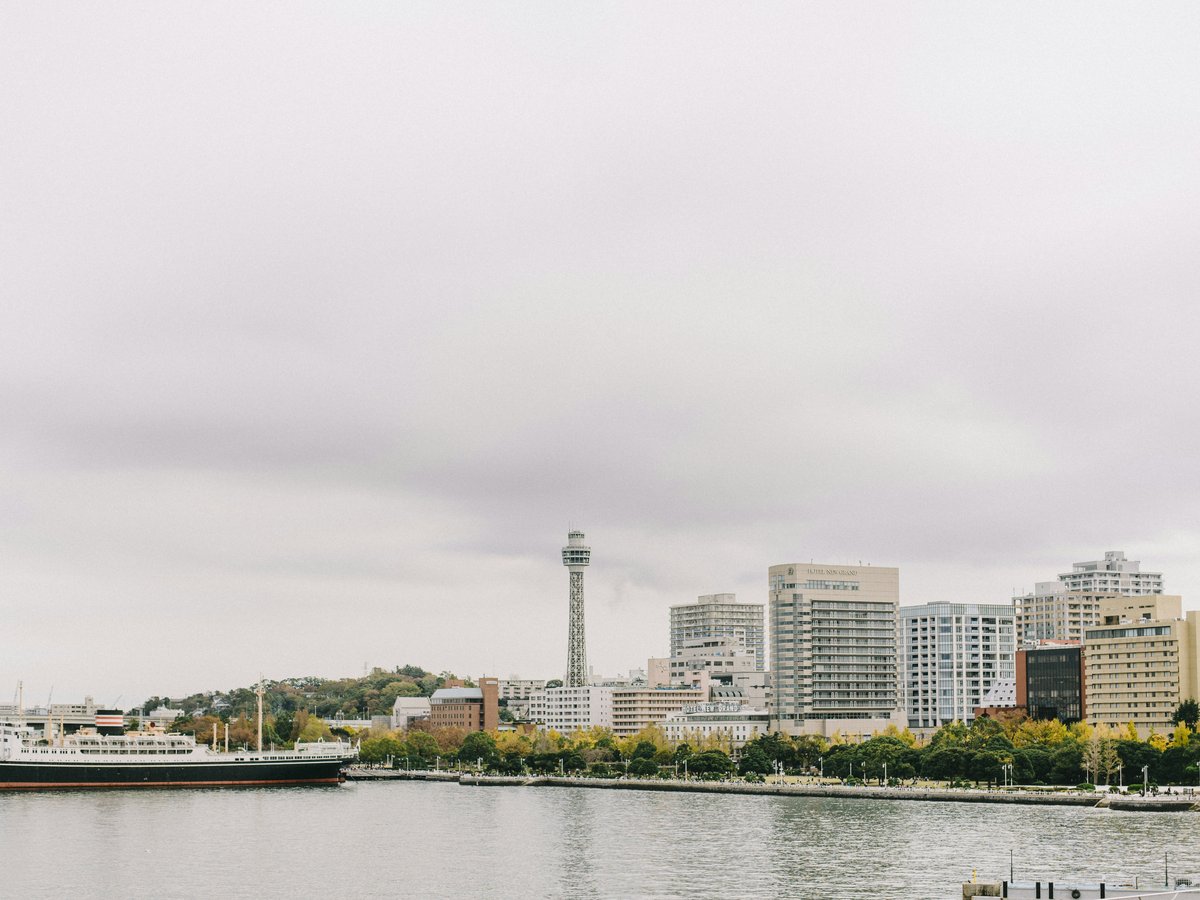
Yokohama is a port city before anything else, and most of its outdoor life plays out along the shoreline of Tokyo Bay. The promenade from Minato Mirai to Yamashita Park is flat, paved, and busy with runners by 6 a.m., though the land behind the harbor is steeper than first-time visitors expect. The Yamate bluff rises behind Motomachi, and in the south the forested Enkaizan hills in Kanazawa-ku hold the highest ground in the city. Kamakura is about 25 minutes south on the JR Yokosuka Line, and its ridge trails are the easiest real hiking you can reach from central Yokohama, while the Tanzawa mountains and Mount Takao are both within about 90 minutes by train. The climate is humid: at 2 a.m. on 28 September 2026 it was still 23.2°C with 90% humidity under an overcast sky, which is typical of late September here. Autumn, from mid-October to late November, and spring, from March to May, are when the trails and bike paths are at their best.
Outdoor activities
-
Waterfront run or walk, Minato Mirai to Yamashita Park
The paved route starts at Rinko Park in Minato Mirai and passes the Red Brick Warehouses and Osanbashi Pier on its way to Yamashita Park, covering roughly 3 km one way. The boards on the Osanbashi Pier roof creak slightly underfoot, and at dawn the harbor smells of diesel and salt. Before 8 a.m. you share it mostly with other runners and the odd fisherman on the breakwater.
- Difficulty
- Easy
- Duration
- 30 to 60 minutes one way on foot
- Best season
- October to May; in July and August go before 7 a.m.
-
Bike share around the harbor with baybike
Yokohama's red docomo-run baybike bikes sit in docking stations across Naka-ku and Nishi-ku, and the electric assist earns its keep on the climb up to Yamate and Harbor View Park. You pay through the app. A loop from Yokohama Station through Minato Mirai, Chinatown and Motomachi takes about 2 hours if you stop along the way.
- Difficulty
- Easy
- Duration
- 1 to 3 hours
- Best season
- March to May, October to November
-
Sakai River cycling road to Enoshima
This riverside bike path runs south along the Sakai River, on Yokohama's western edge, down to the coast at Enoshima. It is mostly flat and separated from traffic, though a few sections are shared with pedestrians, and the last stretch opens out to sea air and the view of Enoshima island. Budget a full day with rental and train logistics.
- Difficulty
- Easy to moderate, depending on distance
- Duration
- Half day to full day
- Best season
- April to May, October to November
-
Surfing and SUP on the Shonan coast
Yuigahama and Zaimokuza in Kamakura and Kugenuma in Fujisawa are the nearest surf breaks to Yokohama, and the waves there are usually small enough to suit beginners, with several shops near Yuigahama renting boards and giving lessons. Typhoon swells from August to October bring bigger surf and crowds of locals.
- Difficulty
- Beginner to intermediate
- Duration
- 2 to 4 hours
- Best season
- June to October; wetsuit needed from November
-
Rock scrambling and climbing at Takatoriyama
Takatoriyama, 139 m high on the border of Zushi and Yokosuka, started life as a stone quarry, and the sheer rock faces it left behind are still used by local climbers. Hikers can follow the ridge path to a Buddha carved into the cliff and an observation deck looking over Tokyo Bay. Roped climbing is for experienced parties with their own gear.
- Difficulty
- Easy for the walk, advanced for roped climbing
- Duration
- 2 to 3 hours for the walk
- Best season
- October to April
Day hikes
-
Kamakura Daibutsu Hiking Course
The trail starts near Jochiji temple, about 10 minutes from Kita-Kamakura Station, and follows a wooded ridge to the Great Buddha at Kotoku-in, covering about 3 km. Tree roots and damp clay make parts slippery after rain. From Yokohama Station, Kita-Kamakura is about 20 minutes on the JR Yokosuka Line.
- Difficulty
- Easy to moderate
- Duration
- 1.5 to 2 hours
- Best season
- November to early December for maple color; March to May
-
Kamakura Tenen Hiking Course
The Tenen course is the longest and highest of the Kamakura ridge walks, running from behind Kenchoji to near Zuisenji, with views over Sagami Bay on clear winter days. Expect rock steps and narrow sections. Storms have closed parts of the Kamakura trails in recent years, so check Kamakura city notices before you go.
- Difficulty
- Moderate
- Duration
- 2 to 2.5 hours
- Best season
- November to April
-
Omaruyama, Enkaizan hills
Omaruyama, at about 156 m, is the highest point in Yokohama, rising in the forested hills between Isogo-ku and Kanazawa-ku. Trails run through mixed broadleaf woods to a summit that looks out over the bay toward the Boso Peninsula. Bush warblers call in spring; from July, the cicadas are loud.
- Difficulty
- Easy to moderate
- Duration
- 2 to 3 hours as a loop
- Best season
- October to May
-
Mount Takao, Trail 1
Mount Takao is 599 m high, and Trail 1 climbs about 3.8 km on a paved path past Yakuoin temple to the summit. From Yokohama, take the JR Yokohama Line to Hashimoto and change to the Keio lines for Takaosanguchi, a trip of about 90 minutes. On autumn weekends the summit is packed, so start before 8 a.m.
- Difficulty
- Easy to moderate
- Duration
- About 90 minutes up; allow 4 to 5 hours door to door
- Best season
- Mid to late November for foliage; winter for Mount Fuji views
-
Mount Oyama, Tanzawa
Mount Oyama, 1,252 m, is the most serious day hike on this list. Take the Odakyu Line to Isehara and the bus to the Oyama Cable stop, then ride the cable car to Afuri Shrine, where stone steps and a rocky path climb about 90 minutes to the summit. On clear days the view reaches Enoshima and Sagami Bay.
- Difficulty
- Moderate to strenuous
- Duration
- 4 to 6 hours on the mountain
- Best season
- October to November; April to May
Water activities
-
Swimming at Umi no Koen, Kanazawa-ku
Umi no Koen, a seaside park, holds the only sandy swimming beach in Yokohama, about 1 km of artificial shoreline beside Hakkeijima. Take the Seaside Line to Umi no Koen Minamiguchi. Lifeguards are posted only during the official summer swimming season, and in spring the same tidal flats fill with families digging for clams.
- Difficulty
- Easy
- Duration
- Half day
- Best season
- July to August for swimming; April to June for clam digging
-
Stand-up paddleboarding at Zushi and Hayama
Zushi Beach sits in a sheltered cove, about 30 minutes from Yokohama on the JR Yokosuka Line, and on calm mornings the water is flat enough for first-time paddlers. Board rental shops line the beach road in summer, but afternoon sea breezes build quickly, so go early.
- Difficulty
- Beginner
- Duration
- 1 to 3 hours
- Best season
- June to September
-
Sea kayaking along the Miura Peninsula
The rocky coast south of Hayama, toward Akiya and the Miura Peninsula, has small coves and reefs, and the water here is noticeably clearer than inside Tokyo Bay. Guided sea kayak tours run from the Hayama area. Go with a guide, because currents and wind change fast.
- Difficulty
- Beginner with a guide, intermediate unguided
- Duration
- 2 to 4 hours
- Best season
- May to October
-
Beach days at Yuigahama and Zaimokuza, Kamakura
Yuigahama is a 10-minute walk from Kamakura Station and the busiest beach near Yokohama, where beach huts called umi no ie open in July and sell shaved ice and cold beer. Zaimokuza, farther east, is a little calmer. Jellyfish show up from mid-August, which is when many locals stop swimming.
- Difficulty
- Easy
- Duration
- Half day to full day
- Best season
- July to mid-August
Parks & gardens
-
Sankei-en
Sankei-en is a Japanese garden in Honmoku, opened to the public in 1906 by the silk merchant Hara Sankei, with ponds, streams, and historic buildings brought from Kyoto and Kamakura laid out across a wooded valley. It feels much further from the port than it is, and the carp ponds are quiet on weekday mornings.
Highlights: A three-storied pagoda from Kyoto on the hill above the main pond, plum blossoms in February, irises in June and autumn color in late November.
-
Yamashita Park
FreeYamashita Park opened in 1930 on land reclaimed with rubble from the 1923 Great Kanto Earthquake, running about 750 m along the harbor with benches facing the Bay Bridge and a steady breeze off the water. The ocean liner Hikawa Maru is moored at its eastern end.
Highlights: The rose garden, busiest in mid-May and October, the harbor promenade and the red-and-white Yokohama Marine Tower (1961) across the road.
-
Harbor View Park (Minato no Mieru Oka Koen)
FreeHarbor View Park sits on the Yamate bluff above Motomachi and looks straight down at the Bay Bridge. The approach from Motomachi-Chukagai Station is a steep 10-minute climb. The English garden next to the British House Yokohama smells of roses in May.
Highlights: The Bay Bridge lookout, the English rose garden and the foreigners' cemetery and Western houses along the Yamate ridge nearby.
-
Nogeyama Park and Nogeyama Zoo
FreeNogeyama Park covers a hill a 15-minute walk from Sakuragicho Station, and its zoo has been open since 1951 and is free to enter, which is rare in Japan. On warm afternoons, expect children and the smell of animal enclosures.
Highlights: Free zoo entry (closed most Mondays), a lookout toward Minato Mirai and cherry trees in early April.
-
Negishi Forest Park
FreeNegishi Forest Park covers the grounds of the former Negishi Racecourse in Naka-ku, where Western-style horse racing began in Japan in the 1860s, and the big lawn is where Yokohama families picnic under the cherry trees in early April.
Highlights: The ruined concrete grandstand of the old racecourse and a wide grass slope with plenty of shade.
-
Mitsuike Park
FreeMitsuike Park in Tsurumi-ku is built around three ponds and is known for roughly 1,000 cherry trees, and in late March and early April the paths around the ponds get crowded. The rest of the year it is a quiet place for a loop walk.
Highlights: Cherry blossoms around the ponds, a Korean-style garden, and flat walking paths.
-
Shomyoji temple garden, Kanazawa-ku
FreeShomyoji is a Kamakura-period temple next to the Kanagawa Prefectural Kanazawa Bunko museum, which grew out of a library founded in 1275. The Pure Land garden has a pond crossed by two arched bridges, and the whole place tends to stay quiet.
Highlights: The vermilion bridges over the pond, the Niomon gate, and nearby trails into the Kanazawa hills.
Practical tips
- Heat and humidity
- From late June to mid-September, Yokohama is often above 30°C with humidity over 70%, so carry at least 1.5 liters of water for a Kamakura ridge walk. Vending machines stand at nearly every trailhead and station, and a bottle usually costs 130 to 180 yen, about 1 US dollar at 157.59 yen to the dollar.
- Rainy season and typhoons
- The rainy season (tsuyu) usually runs from early June to mid-July, and typhoon season peaks from August to October. After heavy rain, Kamakura's clay trails turn slick and ridge paths sometimes close for fallen trees, so check the Japan Meteorological Agency forecast the evening before a hike.
- Hornets, snakes and leeches
- Japanese giant hornets (suzumebachi) are most aggressive from August to October, so wear light-colored clothing and move away calmly if one circles you. Mamushi pit vipers live in the Tanzawa and Miura grass, and mountain leeches are common on the lower Tanzawa trails in the wet months.
- Footwear and gear
- For the Kamakura courses and Mount Takao, trail runners with good grip are enough, but on Mount Oyama wear boots or shoes with stiff soles, because the stone steps are worn and uneven. Bring a light rain shell in every season except midwinter.
- Transit cards and timing
- A Suica or PASMO card works on JR, Keikyu, Odakyu, Keio and the Seaside Line, as well as on most buses to trailheads. On autumn weekends, Kamakura and Mount Takao are crowded from about 10 a.m., so catch a train before 8 a.m. to walk in relative quiet.
- Beach safety
- Stick to Kanagawa beaches during the official season, usually July to August, when lifeguards and flag systems are in place. Rip currents form at Yuigahama and Kugenuma when typhoon swells arrive. Swimming in the harbor around Minato Mirai is prohibited.
FAQ
Can you hike without leaving Yokohama city limits?
Yes. The Enkaizan hills in Kanazawa-ku and Isogo-ku have forest trails up to Omaruyama, the city's high point, and a loop takes about 2 to 3 hours. For longer ridge walks, most Yokohama residents take the train to Kamakura.
What is the best month for outdoor activities around Yokohama?
November is likely the best all-round month: temperatures sit around 12 to 18°C, the maples in Kamakura and on Mount Takao turn red, and typhoon season has usually ended. April is a close second for cherry blossoms, though parks are crowded.
Is Yokohama a good base for families who want to spend time outdoors?
Families do well here. Yokohama scores 8.5/10 for family friendliness (see the TTDI Family-Friendliness Index), and the free zoo at Nogeyama, the flat harbor promenade and the beach at Umi no Koen are easy with young children.
Can you swim in Yokohama itself?
Umi no Koen in Kanazawa-ku is the one official sandy swimming beach inside the city, opening in the peak summer months. For clearer water and surf, go south to Zushi, Hayama or the Kamakura beaches, all within 40 minutes by train.
Do I need permits for hiking near Yokohama?
None of the day hikes in this guide require a permit or registration. For Mount Oyama and the wider Tanzawa range, filing a hiking plan (tozan keikakusho) with Kanagawa Prefectural Police is recommended but voluntary.
Last verified by automated review (v1.7.2) on . What is automated review?