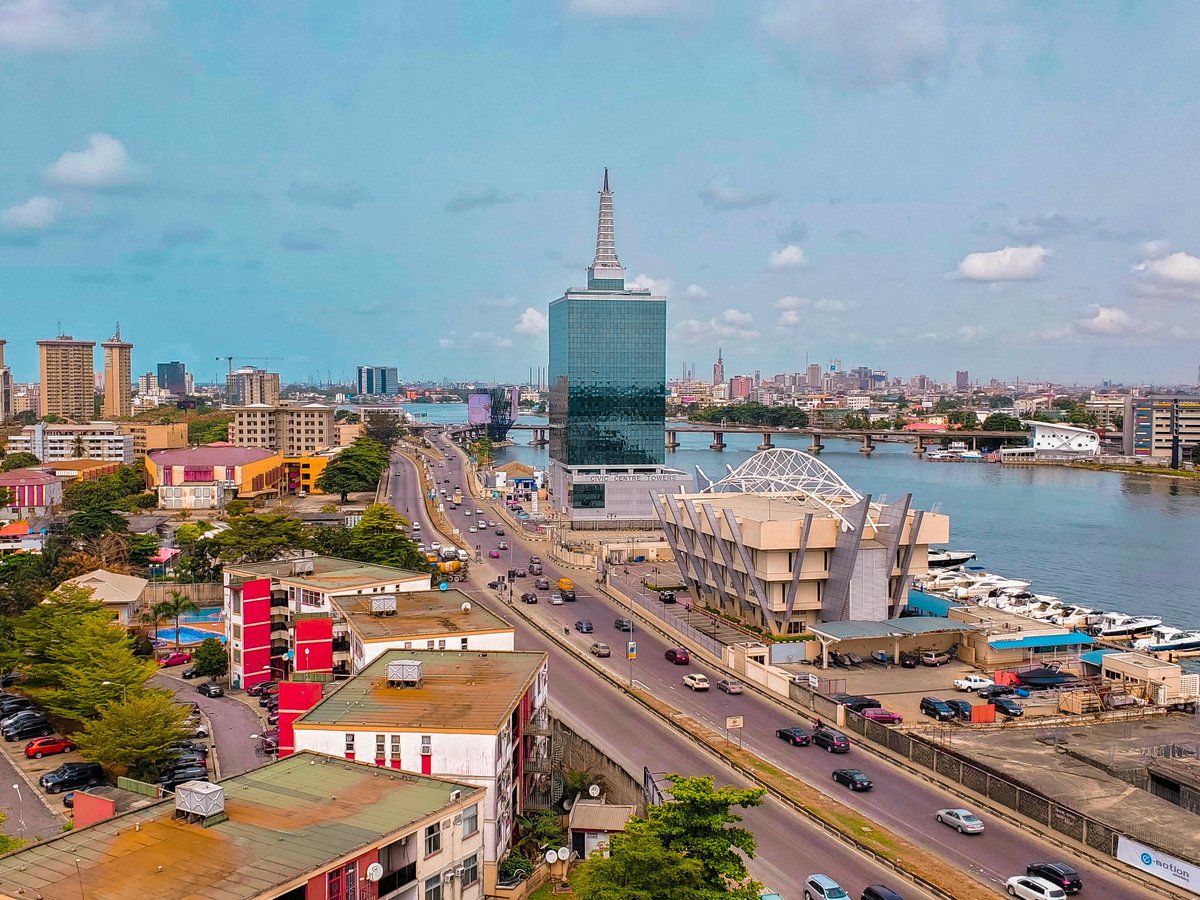
Stay in Lagos in March
20 hotels in the Trip.com pool for Lagos, from US$31 a night.
Opens Trip.com on Fri 5 Mar to Sun 7 Mar 2027; change the dates there.
March in Lagos marks the turn between dry season and wet season. The harmattan dust from the Sahara has typically cleared by the first week, and the hazy skies of January and February give way to a tropical baseline. That baseline, in Lagos, means thick heat and climbing humidity. Expect afternoon showers on many of the days this month, though most are short downpours that clear within 30 to 45 minutes.
The December and January crowds have gone home. Nigerians in the diaspora, who flood Victoria Island and Lekki over the holidays, departed weeks ago, and hotel availability improves noticeably along Adeola Odeku Street and Admiralty Way. Rates tend to sit near their annual average. That said, this is not a quiet month. Lagos operates at full tilt year-round, and the city's estimated 20-million-plus population ensures Apapa's port roads, the Third Mainland Bridge, and every yellow danfo bus remain at capacity.
The restaurants and galleries that define the island side of Lagos are accessible again without December's reservation wars. Terra Kulture on Tiamiyu Savage Street runs its regular theatre and exhibition schedule. Rele Gallery in Onikan opens new shows. The suya vendors along Allen Avenue in Ikeja set up their charcoal grills nightly. If you can handle West African heat without air-conditioned breaks every couple of hours, March offers a narrow window. The worst of the dry-season dust is behind you, and the heavy rains of June through September have not started. It is a transitional month, not a destination month. Nobody plans a trip to Lagos because of March specifically. But if your schedule brings you here, expect smaller crowds at the Nigerian National Museum in Onikan and shorter waits at restaurants across the islands.
Why visit in March
- Harmattan haze has cleared by early March, giving Lagos its best air clarity since November and improving views across the lagoon from Five Cowries Terminal toward the Victoria Island skyline.
- Hotel occupancy drops after the December-January diaspora rush. Rooms around Adeola Odeku Street on Victoria Island and along Admiralty Way in Lekki tend to run 15-25% below their holiday-season rates.
- Rainfall stays moderate compared to the wet-season peaks of June and September, when monthly totals routinely exceed 200mm. Tarkwa Bay and Elegushi Beach remain usable most days.
- Galleries and restaurants across Victoria Island and Ikoyi run regular schedules without the private-event closures and booking wars typical of late December. Spots like Terra Kulture on Tiamiyu Savage Street and Rele Gallery in Onikan welcome walk-ins.
Worth knowing
- Humidity stays high enough in March that daytime heat feels considerably worse than the thermometer suggests. Plan air-conditioned breaks every 2-3 hours when walking Lagos Island's Broad Street corridor or the market stalls around Balogun.
- Traffic congestion on the Third Mainland Bridge and along the Lekki-Epe Expressway remains severe. A 10km (6-mile) trip between Surulere on the mainland and Eko Hotels on Victoria Island can take 90 minutes during morning rush.
- Power outages remain a daily reality across Lagos, including upscale neighborhoods like Ikoyi and Lekki Phase 1. Confirm generator backup at your accommodation before booking, and carry a portable power bank.
- March has no defining festival or seasonal attraction. There is no single event that makes this month worth choosing over the clearer, cooler window of November through January.
Best for
Think twice if
March days in Lagos tend to start clear and sunny before clouds build through the early afternoon. Showers arrive typically between 14:00 and 17:00, and most pass within an hour. The mornings feel genuinely hot, particularly inland around Ikeja and Surulere where the lagoon breeze does not reach. Along the waterfront on Victoria Island and Ikoyi, the air moves a little more, though it still hangs heavy with moisture. Nights stay warm enough that sleeping without air conditioning is difficult in most neighborhoods. The harmattan dust of the preceding months has lifted, so the air feels cleaner but also heavier and wetter. Expect the occasional day where rain never comes and the heat sits on the city from morning to night, thick and still. On those days, the rooftop bars along Ozumba Mbadiwe Avenue fill up early as residents chase any breeze off the lagoon.
Seasonal caution
- The combination of high humidity and daytime temperatures above 31°C pushes the felt temperature above 40°C (104°F) on many March afternoons. Limit outdoor exposure between 12:00 and 15:00, particularly on shadeless stretches like Ozumba Mbadiwe Avenue and the open lanes of Balogun Market. Drink water constantly. Heat exhaustion symptoms can develop quickly for visitors not acclimated to tropical West Africa.
- Flash flooding can occur in low-lying areas of Lagos Island around Adeniji Adele and parts of the Lekki-Ajah corridor after heavy downpours. Avoid underpasses and poorly drained streets during and immediately after rain. The gutters along Broad Street and Nnamdi Azikiwe Street overflow quickly in a hard rain.
Year-round climate
Averages from the last 5 years.
| Month | Avg high (°C) | Avg low (°C) | Rainfall (mm) |
|---|---|---|---|
| Jan | 32 | 25 | 20 |
| Feb | 32 | 25 | 30 |
| Mar | 32 | 26 | 85 |
| Apr | 32 | 26 | 98 |
| May | 31 | 26 | 112 |
| Jun | 29 | 25 | 246 |
| Jul | 28 | 24 | 183 |
| Aug | 28 | 24 | 128 |
| Sep | 28 | 24 | 208 |
| Oct | 29 | 24 | 173 |
| Nov | 31 | 25 | 64 |
| Dec | 32 | 24 | 24 |
Holidays and festivals in March
Public holidays
- Good Friday(Good Friday)26 March 2027
- Easter Monday(Easter Monday)29 March 2027
Best things to do in March
Lagos Island colonial walking tour
sightseeingA self-guided or guided walk through the oldest quarter of Lagos, passing Tinubu Square, the former Supreme Court building on Broad Street, the 19th-century merchant houses along Kakawa Street, and the white walls of the Brazilian Quarter where freed slaves from Brazil built distinctive townhouses in the 1800s. The route covers roughly 3km (2 miles) of the city's colonial-era administrative core and takes 2-3 hours at a comfortable pace.
The harmattan haze has lifted by March, and mornings start with the clearest skies Lagos sees between November and April. The soft early light is ideal for photographing the colonial architecture along Broad Street and the pastel facades of the Brazilian Quarter.Booking tipLocal guides can be arranged through hotels on Victoria Island or through the Terra Kulture concierge on Tiamiyu Savage Street. Morning starts before 09:00 are cooler and catch the best light.
Lagos Lagoon sunset boat tour
tourA 2-hour boat trip from Five Cowries Terminal across the Lagos Lagoon, passing the Third Mainland Bridge and the glass-fronted skyline of Victoria Island. The lagoon reflects the late-afternoon light, and the breeze off the water offers genuine relief from the heat on shore. You might spot fishermen casting nets near the Makoko floating community along the northern shore.
Lagoon waters are calmer before the wet-season storms begin in May, and the reduced atmospheric haze after harmattan gives sharp views of the Victoria Island skyline and the Civic Centre tower at sunset.Booking tipBook through your hotel or at Five Cowries Terminal on Ozumba Mbadiwe Avenue. Weekday afternoons are less crowded than Saturday departures.
Evening suya crawl in Ikeja
foodA walking tour of the suya vendors along Allen Avenue and nearby side streets in Ikeja, one of the mainland's commercial centers. Each vendor has a slightly different yaji spice blend, and comparing them is half the fun. The spot near the Allen Avenue roundabout is a local favorite, with beef, chicken, and kidney skewers laid out on metal trays. Most spots open after sundown and stay busy until 01:00 or later. The smell of beef fat hitting charcoal hangs in the warm air.
March's dry evenings bring the full roster of roadside suya vendors out before the wet season pushes many under permanent cover or indoors.Booking tipNo booking needed. Start around 19:00 when the grills are fully lit and the first batches are ready.
Tarkwa Bay Beach afternoon
beachTarkwa Bay is a sheltered beach on an island near the Lagos harbor mouth, reached by a 15-minute boat ride from harbor jetties on Lagos Island or Victoria Island. The bay is protected from open-ocean swells by the harbor breakwater, making swimming calmer than at the exposed Atlantic-facing beaches like Elegushi and Alpha Beach on the Lekki coast. The sand is clean by Lagos standards, and a small community of residents sells grilled fish and cold drinks on the shore.
Sea conditions in March are calmer than during the wet-season months of June through September, and the beach draws fewer visitors than during the December-January holidays.Booking tipBoats run throughout the day from harbor jetties near CMS on Lagos Island. Arrive before 10:00 on weekends to avoid waiting. Bring your own drinking water and snacks, as the island vendors charge a premium.
Gallery openings in Ikoyi and Onikan
cultureSeveral commercial galleries in Ikoyi, around the Falomo roundabout area, and Onikan's emerging art corridor launch new exhibition seasons in late February and March after the holiday pause. Rele Gallery, Art Twenty One on Akin Olugbade Street, and the Centre for Contemporary Art Lagos (CCA Lagos) typically debut new work during this window. Opening nights include wine, conversation, and access to the artists. The scene is small enough that you can visit 2-3 galleries in a single evening on foot within Ikoyi.
February-March is when Lagos galleries reset after the December social season and debut new work. Opening-night events cluster in late February through mid-March, and the art calendar is more active now than in any other shoulder month.Booking tipCheck gallery social media pages for opening dates. No formal booking needed for most openings. Rele Gallery posts schedules on Instagram.
Canopy walkway at Lekki Conservation Centre
natureThe 401-meter (1,316-foot) canopy walkway at Lekki Conservation Centre passes above a coastal mangrove ecosystem and ranks among the longest such structures in Africa. Below, vervet monkeys, monitor lizards, and various bird species move through the trees. The walkway sways gently underfoot, which adds to the experience. The surrounding 78-hectare reserve also has ground-level nature trails that loop through marshland and secondary forest.
March trails are drier and firmer than during the wet months. The mangrove canopy stays green from residual moisture without the standing water and mosquito intensity of the June-August peak.Booking tipVisit on weekday mornings for the smallest crowds. The walkway is exposed to direct sun at midday, so go before 10:00. The centre sits along the Lekki-Epe Expressway near the Chevron roundabout.
Amala lunch in Surulere
foodCross to the mainland for lunch at one of Surulere's amala joints, where the dark yam-flour dish is served with gbegiri (bean soup), ewedu (jute leaf soup), and assorted meats in portions that could feed two. Surulere is widely considered the heartland of Lagos amala culture, and the neighborhood's roadside bukas line Adeniran Ogunsanya Street and the surrounding blocks. The texture is silky, the soups are deeply savory, and the pace of a buka lunch is fast.
Dry-season conditions mean the open-air and semi-outdoor bukas that serve the best amala are operating at full capacity, with no rain disrupting the charcoal cooking or flooding the unpaved side streets where many of these spots sit.Booking tipNo reservation needed. Arrive between 12:00 and 13:30 before the best pots run low.
What to eat in March
In season: fruit
Agbalumo
The African star apple reaches the tail end of its December-through-March season in Lagos. By late March, vendors at Oyingbo Market on the mainland and along major junctions near Obalende sell the orange-skinned fruit at lower prices as supply dwindles. The tart, citrusy flesh has a chewing-gum texture that Lagosians love. Catch it before it disappears until next December.
Early-season mangoes
Southern Nigeria's mango season begins in March. The first mangoes tend to be smaller and slightly more tart than the April and May harvests, but roadside sellers across the mainland start stacking them by mid-month. Look for the local varieties near bus stops in Mushin and along Awolowo Way in Ikeja.
Cashew fruit
Cashew trees fruit between February and April in southwestern Nigeria. The yellow or red fruit appears at mainland markets like Mile 12 and Oyingbo and is eaten fresh or pressed into tart, refreshing juice. The nut, roasted and sold separately, is the same cashew found worldwide. March catches the season at its peak.
Street food peaks
Suya
Spiced grilled beef skewers coated in yaji, a ground peanut and chili mix. Suya is available year-round, but the warm, dry March evenings bring roadside vendors out in force, particularly along Allen Avenue in Ikeja and around the Obalende bus terminal. The smoky, peppery aroma carries for a full city block. Each vendor's yaji blend is slightly different.
What to drink
Fresh palm wine
Palm wine tapping is productive during the late dry season, and March yields a sweet, lightly fermented drink that has not yet turned overly sour. Find it at dedicated palm wine bars in Surulere and Mushin or from tappers selling along major roads on the mainland. Best consumed within hours of tapping, when the fizz is still lively and the sweetness has not soured.
Regular events in March
International Women's Day LagosFree
Rallies, panel discussions, and cultural events across Lagos mark March 8 each year. Events concentrate on Lagos Island and at co-working spaces and cultural centers on Victoria Island, including Terra Kulture on Tiamiyu Savage Street and the British Council on Thompson Avenue in Ikoyi. Organizations host workshops on entrepreneurship and women's health, and evening events often feature live music and spoken word.
March 8Lagos International Polo Tournament
The annual tournament at the Lagos Polo Club on Polo Avenue in Ikoyi draws Nigeria's polo community and a well-dressed social crowd. Matches run over several days, and the sideline atmosphere blends sport with high-society networking. The club grounds are one of the few large green spaces on the island side of Lagos, covering roughly 7 hectares behind walls that muffle the surrounding traffic.
Late February through early MarchNigeria Professional Football League matches
NPFL regular-season games draw passionate local crowds to Lagos's stadiums. Teslim Balogun Stadium (opened 1984) in Surulere and the Lagos National Stadium (opened 1961) on Surulere's western edge host matches on most weekends through March. The atmosphere is loud, partisan, and a genuine window into Lagos beyond the tourist circuit. Vendors sell roasted plantain chips and cold sachet water in the stands.
Most weekends throughout MarchBest places this March
Nigerian National Museum
museumFounded in 1957, this is Lagos's primary museum for archaeological and ethnographic collections. Exhibits include Benin Bronze replicas, Nok terracotta figures dating to 500 BCE, and displays on Nigerian cultural history spanning several centuries. The air-conditioned interior along Awolowo Road makes it a reliable retreat when March's afternoon showers hit. The sculpture garden outside has pieces shaded by mature frangipani trees.
OnikanCathedral Church of Christ
historic siteThis Anglican cathedral, completed in 1946, is one of the oldest churches in Lagos and anchors the southern end of Lagos Island near the marina. The colonial-era stonework photographs well in March's clear morning light, and the interior offers cool air and quiet in a city that rarely provides either. Sunday services draw large congregations, so visit on weekday mornings for the emptiest nave.
Lagos IslandBalogun Market
marketLagos's largest open-air market sprawls across several blocks south of Nnamdi Azikiwe Street. Textiles, electronics, housewares, and food stalls pack the narrow lanes. The market is more navigable on dry March mornings than during the wet-season months when standing water and mud make the paths treacherous. The density of color and sound is overwhelming in the best sense. The ankara fabric section, where bolts of wax-print cotton stack floor to ceiling, is worth a slow walk even if you are not buying.
Lagos IslandFreedom Park
parkBuilt on the grounds of a former colonial-era prison on Broad Street, Freedom Park is one of the few green, open-air cultural spaces on Lagos Island. The park hosts live music on Thursday and Saturday evenings, poetry readings, and film screenings on a regular schedule. March's dry evenings make the outdoor programming comfortable, and the grounds are peaceful enough to forget you are in one of Africa's largest cities. The old prison walls still stand, now repurposed as gallery and event space.
Lagos IslandNike Art Gallery
galleryFive floors of Nigerian and West African art in a converted residential building on the Lekki-Epe Expressway. The collection spans textile art, painting, sculpture, and beadwork from artists across the country. Foot traffic drops noticeably after the December tourist season, and in March you can often speak directly with the resident artists working on the upper floors. The ground-floor textile room holds thousands of hand-dyed adire and batik cloths.
LekkiBar Beach
beachThe public beach on Victoria Island facing the Atlantic, running roughly from Eko Hotels toward the Landmark complex. Swimming requires caution due to strong undertows year-round, but the beach is popular for evening walks, football matches on the sand, and people-watching. In March, the beach sees fewer visitors than during the Detty December party season, and the sand is cleaner before the wet-season debris washes in.
Victoria IslandTerra Kulture
cultural centreA combination art gallery, theatre, restaurant, and bookshop on Tiamiyu Savage Street, Terra Kulture is one of the most reliable cultural spaces on Victoria Island. The theatre hosts Nollywood-adjacent stage productions and spoken-word nights. The restaurant serves solid Nigerian dishes, and the small bookshop stocks Nigerian literature. In March, the venue runs its regular weekly programme without the holiday scheduling chaos.
Victoria IslandLekki Arts and Crafts Market
marketA more curated, tourist-approachable alternative to the chaotic mainland markets. Vendors sell woodcarvings, beadwork, leather goods, bronze castings, and ankara-print clothing in a fenced compound along the Lekki-Epe Expressway. Prices start high, and negotiation of 40-50% is standard. March foot traffic is low enough that vendors are more willing to deal than during the December rush when the diaspora crowd pays asking price.
Lekki
Your packing checklist
Tick items off as you pack. Your progress saves in this browser.
All packed — have a great trip.
Insider tips
The island-mainland divide is the most important geography to understand in Lagos. Victoria Island, Ikoyi, and Lekki sit on the island side. Most tourist-facing hotels, restaurants like Nkoyo and The Yellow Chilli, and cultural venues cluster there. Crossing to the mainland (Surulere, Ikeja, Yaba) for a day trip means budgeting 2-3 extra hours for round-trip traffic on the Third Mainland Bridge or Eko Bridge.
Bolt works more reliably than Uber in Lagos as of recent years. Both are safer and more predictable than negotiating with okada motorcycle taxis or flagging down danfo minibuses, especially if you do not speak Yoruba or pidgin English. The BRT buses along Ikorodu Road are a cheap alternative for mainland trips, but the routes are limited.
If Ramadan falls during your March visit (the dates shift each year with the Islamic calendar), many mainland bukas close during daylight hours. Restaurants on Victoria Island and Lekki, including The Place chain and Terra Kulture's cafe on Tiamiyu Savage Street, stay open regardless, since they serve a mixed clientele.
The best produce at open-air markets arrives early. At Oyingbo Market on the mainland, the freshest agbalumo and plantains are gone by mid-morning. Arrive before 09:00 on weekdays, and negotiate every price. Vendors expect it.
For evening drinks, skip the hotel lobbies and try Bogobiri House on Maitama Sule Street in Ikoyi. The garden bar hosts live Afrobeat and jazz sessions on weeknights with no cover charge. Sky Restaurant & Lounge at Eko Hotels has a rooftop view across the Atlantic that improves any March sunset.
Avoid these mistakes
- Assuming 'dry season' means no rain in March. The dry season is ending, and afternoon showers arrive with little warning. First-time visitors who leave rain gear at the hotel on a clear morning regularly get caught in a downpour near Balogun Market or along the exposed waterfront of Bar Beach by 15:00.
- Scheduling activities across both the mainland and the islands in a single afternoon. The Third Mainland Bridge and Eko Bridge gridlock from 16:00 onward. A trip from Ikeja to Victoria Island becomes a 90-minute crawl. Plan to stay on one side of the lagoon per half-day.
- Walking long distances between 11:00 and 15:00 to save on ride-hailing. The midday heat on shadeless stretches like Ozumba Mbadiwe Avenue and Broad Street feels far worse than the thermometer suggests, and heat exhaustion is a genuine medical risk for visitors not acclimated to tropical humidity. Book a Bolt instead.
- Exchanging currency at Murtala Muhammed International Airport on arrival. The bureau de change offices on Broad Street and around Adeola Odeku Street on Victoria Island consistently offer noticeably better rates than the airport counters.
- Eating only at island restaurants and missing mainland food. The best amala is in Surulere, the best suya lines Allen Avenue in Ikeja, and Oyingbo Market sells the freshest produce in Lagos. Budgeting one mainland food day is worth the traffic.
Practical tips for March
March sits between Lagos's peak tourist season and the wet-season slowdown, so most services operate on standard schedules with no seasonal closures. Book accommodations on the islands (Victoria Island, Ikoyi, or Lekki Phase 1) for proximity to restaurants and the lagoon breeze, though mainland neighborhoods like Ikeja near Murtala Muhammed International Airport offer better room rates and easier access to Allen Avenue's nightlife. Confirm generator availability before booking, since grid power in Lagos is unreliable year-round and air conditioning at night is not optional in March's humid conditions. Traffic is worst Monday through Friday between 07:00 and 09:30 and again from 16:00 to 20:00, particularly on Third Mainland Bridge and Eko Bridge connecting the islands to the mainland. If arriving by air, arrange pickup through your hotel rather than negotiating with taxi touts in the arrivals hall at Murtala Muhammed. Carry both sunscreen and a compact umbrella daily. Dress conservatively at markets like Balogun and on Lagos Island's commercial streets around Broad Street and Nnamdi Azikiwe Street. Nigeria uses the naira. ATMs at Guaranty Trust Bank and First Bank branches on the islands are generally reliable, though international card fees vary. Carry small-denomination notes for danfo rides and market purchases. For sit-down meals, try Yellow Chilli on Ozumba Mbadiwe Avenue for peppered snails and jollof rice, or walk to Mama Cass on Admiralty Way in Lekki for grilled fish and cold Chapman.
FAQ
Is March a good time to visit Lagos?
March is a fair month for Lagos. The harmattan dust has cleared and the heaviest rains have not yet arrived, but humidity is high and daytime temperatures stay in the low 30s Celsius (high 80s Fahrenheit). It is neither the best window (that would be November through January, when the air is drier and slightly cooler) nor the worst (June and September bring the heaviest rainfall). Beach days at Tarkwa Bay and Bar Beach are still comfortable, and gallery openings cluster around Ikoyi and Lekki. If your travel dates are flexible, aim for November or December instead.
What is the weather like in Lagos in March?
Mornings tend to start clear and sunny before clouds build through the early afternoon. Rain arrives on many days but typically passes within an hour. The air stays warm from morning to night, and the humidity makes everything feel hotter than the numbers suggest. Neighborhoods near the lagoon, particularly Ikoyi and parts of Victoria Island along Ozumba Mbadiwe Avenue, catch a breeze that helps. Inland areas like Surulere and Ikeja tend to trap more heat. After dark, air conditioning moves from a comfort to a necessity for most visitors.
Is Lagos crowded in March?
Lagos's 20-million-plus population makes the city feel packed at all times, but tourist-specific crowding drops after the December-January diaspora rush. Hotels along Admiralty Way in Lekki Phase 1 and around Adeola Odeku Street on Victoria Island are noticeably calmer than during the Detty December season. Restaurants like Yellow Chilli on Ozumba Mbadiwe Avenue and Nkoyo in Lekki seat walk-ins without the holiday-season wait. You will not fight for tables or queue at the Nike Art Gallery's entrance.
Is Lagos safe for tourists in March?
Safety in Lagos demands a high level of awareness regardless of the month. Petty crime and scam attempts target visitors, particularly around Balogun Market on Lagos Island and at bus stops along Ikorodu Road. Use Bolt or Uber after dark, avoid displaying phones or jewelry in crowded areas like Computer Village in Ikeja, and keep to well-trafficked streets such as Awolowo Road in Ikoyi or Admiralty Way in Lekki. Hiring a local guide or fixer for your first days significantly improves both safety and the quality of your experience.
Is Lagos good for families with children?
Lagos scores 4.2 out of 10 for family friendliness (see the TTDI Family-Friendliness Index). The city's traffic, infrastructure gaps, and security concerns make it a difficult destination with young children. Families who visit tend to base themselves in the more controlled environment of hotels on Victoria Island, arrange private transport for every outing, and choose structured experiences in contained spaces like the Lekki Conservation Centre's 401-meter canopy walkway or the air-conditioned exhibits at the Nigerian National Museum in Onikan rather than open-ended exploration. The playground at Muri Okunola Park on Victoria Island is one of the few public green spaces families use regularly.
Last verified by automated review (v1.7.2) on . What is automated review?