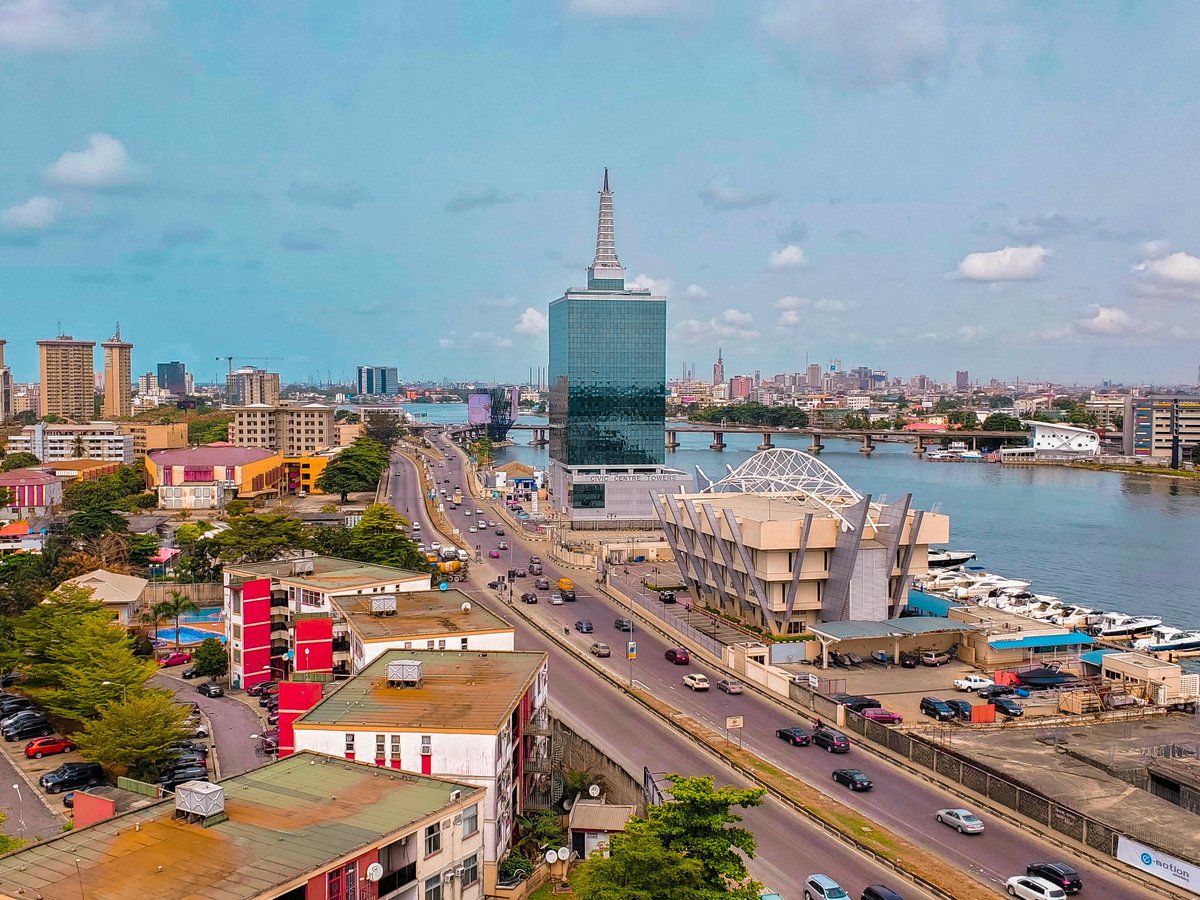
Lagos spreads across a lagoon system on Nigeria's southwest coast, and the geography shapes everything about how the city works. The oldest districts sit on Lagos Island, a dense spit of land connected to the mainland by three bridges, including Eko Bridge. The mainland stretches north and west through Yaba, Surulere, Ikeja, and beyond. Then there is the Lekki Peninsula, a long sand finger pushing east along the Atlantic. Most visitors end up on either Lagos Island (particularly Victoria Island and Ikoyi) or the Lekki corridor, because that is where the international hotels, restaurants, and business offices cluster. The mainland neighborhoods tend to be more residential and commercially local. Traffic between these zones can turn a 12-kilometer drive into a 2-hour ordeal, so where you sleep matters more here than in most cities. At 1,330.6 NGN to the dollar, Lagos is surprisingly affordable for food and local transport but hotel prices in the upscale zones rival Nairobi or Accra. Worth noting, the city currently scores 2.8/10 for solo-traveler safety (see the TTDI Solo-Safety Index), so neighborhood choice has real security implications. September brings heavy rain. Temperatures hover around 25°C but humidity above 90% makes it feel closer to 30°C most days.
Neighborhoods
-
Victoria Island
The commercial heart of modern Lagos. Glass towers and gated compounds line Ahmadu Bello Way and Adeola Odeku Street. You hear generators humming behind compound walls, construction cranes swing overhead, and the smell of suya smoke drifts from evening vendors near the roundabouts. The architecture is a patchwork of 1970s concrete blocks, mirrored office towers from the 2000s, and newer developments still wrapped in scaffolding. Traffic noise is constant. At night the energy shifts to restaurants and lounges along Akin Adesola Street.
- Best for
- Business travelers, first-time visitors wanting proximity to restaurants and hotels, anyone who needs reliable infrastructure
- Key streets
- Ahmadu Bello Way (the main artery running north-south), Adeola Odeku Street (banks and corporate offices), Akin Adesola Street (dining and nightlife), Kofo Abayomi Street (upscale restaurants and the Eko Hotel cluster)
-
Ikoyi
Quieter and greener than its neighbor Victoria Island, Ikoyi sits between the lagoon and Five Cowrie Creek. Bourdillon Road and Alexander Avenue are lined with embassy compounds, old colonial-era bungalows (some dating to the 1920s), and newer mansions behind high walls draped in bougainvillea. You might notice the sound of birds in the mornings, something you rarely get elsewhere in Lagos. The pace here is noticeably slower. Ikoyi Club 1938 occupies a large green parcel near the center of the neighborhood, and its golf course provides one of the few open sightlines in the area.
- Best for
- Longer stays, families with children who want a quieter base, anyone who values green space and lower noise levels
- Key streets
- Bourdillon Road (embassy row and high-end residences), Awolowo Road (the neighborhood's main commercial strip with cafes, pharmacies, and small supermarkets), Kingsway Road (connecting Ikoyi to Falomo Bridge and Victoria Island)
-
Lagos Island (Marina / Broad Street / Balogun)
This is old Lagos. The streets around Broad Street and Balogun Market are narrow, packed, and loud. Market women call out prices in Yoruba, handcarts weave between pedestrians, and the air smells of dried fish and pepper. Balogun Market is one of West Africa's largest open markets, and the surrounding blocks overflow with textiles, electronics, and household goods. The Nigerian National Museum, founded in 1957, sits on the island near Onikan and holds Benin bronzes, Nok terracotta, and Ife heads. The Cathedral Church of Christ, completed in 1946, stands on the Marina waterfront. Colonial-era buildings along Broad Street are crumbling but still occupied. This is not a comfortable place to stay, but it is essential to see.
- Best for
- Day visits for history, culture, and market shopping. Not recommended as a base for most visitors.
- Key streets
- Broad Street (the old colonial commercial axis), Marina (the waterfront road facing Lagos Harbour), Nnamdi Azikiwe Street (runs through the market district toward Idumota), Odunlami Street (near the museum quarter and Onikan)
-
Lekki Phase 1
Built out along the peninsula starting in the 1990s, Lekki Phase 1 has wide roads, newer apartment blocks, and a growing restaurant scene. Admiralty Way is the main drag, lined with banks, fast-food chains, and mid-range restaurants. The architecture is mostly 3-to-5 story apartment buildings with ground-floor retail. It feels more suburban than Victoria Island, with less foot traffic and more driving. The Lekki toll gate at the eastern entrance is a well-known landmark and a frequent bottleneck. You'll find more young professionals and middle-class families here than in the older money neighborhoods.
- Best for
- Mid-range budgets, longer stays, digital workers who want newer buildings with better internet infrastructure. Lagos scores 4.2/10 for digital-nomad suitability (sourced from TTDI's editorial rubric), and Lekki Phase 1 is likely where that score lands highest.
- Key streets
- Admiralty Way (restaurants, banks, and retail), Admiralty Road (residential), Fola Osibo Street (smaller restaurants and local shops)
-
Surulere
A mainland neighborhood with deep roots in Lagos's music and sports culture. Teslim Balogun Stadium, built in 1984, hosts football matches and concerts. The National Stadium, which opened in 1961, sits nearby. The streets around Adeniran Ogunsanya are lined with record shops, tailors, barbers, and small restaurants serving amala with gbegiri and ewedu. The buildings are mostly 2-to-3 story concrete structures from the 1960s through 1980s. Noise from the main roads is heavy, but the interior streets can be surprisingly calm. This is a neighborhood where people sit outside in the evenings, playing draught boards and listening to Fuji music from someone's speaker.
- Best for
- Travelers interested in Lagos's music scene and local culture, budget-conscious visitors willing to trade polish for authenticity
- Key streets
- Adeniran Ogunsanya Street (the commercial spine with shops, restaurants, and nightlife), Bode Thomas Street (connects to Yaba and has a mix of offices and eateries), Ogunlana Drive (residential with scattered bars and event spaces)
-
Yaba
Lagos's emerging tech district. Co-working spaces and startup offices have moved into former warehouses and residential buildings along Herbert Macaulay Way. The University of Lagos campus sits at the northern edge, and its student population keeps the area feeling young. Yaba has a grittier texture than the island neighborhoods, with unpainted concrete, tangled overhead wiring, and the constant sound of okadas (motorcycle taxis) threading through gaps in traffic. But the food scene has grown noticeably in the last 3 to 4 years, with new spots opening along Sabo and around the Yaba market area.
- Best for
- Tech workers, younger travelers on tighter budgets, anyone who wants to see the mainland without being in the thick of the market districts
- Key streets
- Herbert Macaulay Way (the main corridor connecting Yaba to Ebute Metta and Surulere), Commercial Avenue (offices and small businesses), Sabo (a cluster of shops, restaurants, and the Yaba open market)
-
Ikeja
The administrative capital of Lagos State, Ikeja sits on the mainland near Murtala Muhammed International Airport. The GRA (Government Reserved Area) section has wide, tree-lined streets and older homes from the 1960s. Allen Avenue is the commercial spine, packed with restaurants, hotels, and shops. The Computer Village market near Otigba Street is one of the largest electronics markets in West Africa. Ikeja tends to feel more orderly than the island neighborhoods, with wider roads and less of the compressed density. The airport proximity makes it practical for short stays or layovers.
- Best for
- Airport layovers, business travelers with meetings on the mainland, budget travelers who want decent hotels at lower prices than Victoria Island
- Key streets
- Allen Avenue (restaurants and mid-range hotels), Opebi Road (offices and residential), Toyin Street (fast food, banks, local eateries), Otigba Street and surroundings (Computer Village electronics market)
-
Apapa
Lagos's main port district. Container trucks dominate the roads, and the traffic here might be the worst in a city already famous for gridlock. The Apapa waterfront faces Lagos Harbour, and you can watch cargo ships being loaded from the few accessible points along Wharf Road. Residential Apapa, particularly the GRA section, has old colonial-era houses and a fading gentility. The Cathedral of the Holy Cross, founded in 1938, stands in the district. Most travelers have no reason to stay here, but the port area gives you a raw sense of how Lagos functions as West Africa's busiest commercial gateway.
- Best for
- Brief visits only. Port logistics workers and shipping industry travelers sometimes stay in Apapa GRA, but it is not practical for leisure visitors.
- Key streets
- Wharf Road (runs along the port), Creek Road (connects Apapa to the mainland), Burma Road (the GRA residential area)
FAQ
Which Lagos neighborhood is safest for first-time visitors?
Victoria Island and Ikoyi are where most first-time visitors base themselves, and for good reason. Both have a visible security presence, gated hotel compounds, and walkable commercial strips during daylight hours. Lagos currently scores 2.8 out of 10 for solo-traveler safety (see the TTDI Solo-Safety Index), so staying in one of these two neighborhoods reduces your exposure to the city's rougher edges. That said, you should still take taxis or ride-hailing apps after dark rather than walking, even on the island.
Is Lagos suitable for families with children?
Lagos scores 4.2/10 for family friendliness (see the TTDI Family-Friendliness Index). Ikoyi is likely the best neighborhood for families. It has green space, lower traffic noise, and proximity to international schools and clinics. Lekki Phase 1 is another option if you prefer newer apartments with more space. The main challenges are traffic (which makes outings time-consuming), limited public parks, and the need to plan activities carefully rather than wandering freely.
Where should I stay if I need to work remotely from Lagos?
Lekki Phase 1 and Yaba are the two strongest options for remote workers. Lekki has newer buildings with better electrical infrastructure and internet connections. Yaba has co-working spaces like CcHub and a younger, tech-oriented atmosphere. The digital-nomad suitability score for the city as a whole sits at 4.2 out of 10 (sourced from TTDI's editorial rubric), and power reliability is the main drag on that number. Wherever you stay, confirm your accommodation has inverter batteries and a backup generator before booking.
How do I get between Lagos neighborhoods without spending hours in traffic?
Lagos traffic is genuinely severe. A 15-kilometer trip between Ikeja and Victoria Island can take 2 hours during peak times (roughly 7 to 10 AM and 4 to 8 PM). Boat services between Falomo, CMS, and Apapa jetties are faster for waterfront routes and cost under 1,500 NGN per trip. Ride-hailing apps like Bolt and Uber work throughout the city. The BRT (Bus Rapid Transit) runs dedicated lanes on some mainland corridors and is worth using between Ikorodu Road and CMS on Lagos Island. Avoid driving yourself. Wikivoyage's guide to local transit options covers the BRT routes in more detail (see https://en.wikivoyage.org/wiki/Lagos#Get_around).
Is Lagos safe for LGBTQ+ travelers?
Lagos scores 1/10 for LGBTQ+ friendliness (sourced from TTDI's editorial rubric). Nigeria's Same-Sex Marriage Prohibition Act of 2014 criminalizes same-sex relationships with penalties of up to 14 years imprisonment. There is no visible LGBTQ+ scene, and public displays of affection between same-sex couples carry real risk. LGBTQ+ travelers should exercise extreme caution and avoid disclosing their orientation.
What is the best neighborhood for experiencing Lagos's food scene?
Surulere and Yaba are where you'll find the most interesting local food at the lowest prices. Amala with gbegiri and ewedu is the dish to seek out. Victoria Island has the widest range of international restaurants, with clusters along Akin Adesola and Kofo Abayomi streets. Ikeja's Allen Avenue has a strong mid-range restaurant row. For market food and street snacks, the blocks around Lagos Island's Balogun Market area offer roasted plantain (boli) with groundnut and pepper sauce for around 500 to 1,000 NGN. Wikivoyage's food section covers additional options across the city (see https://en.wikivoyage.org/wiki/Lagos#Eat).
Last verified by automated review (v1.7.2) on . What is automated review?