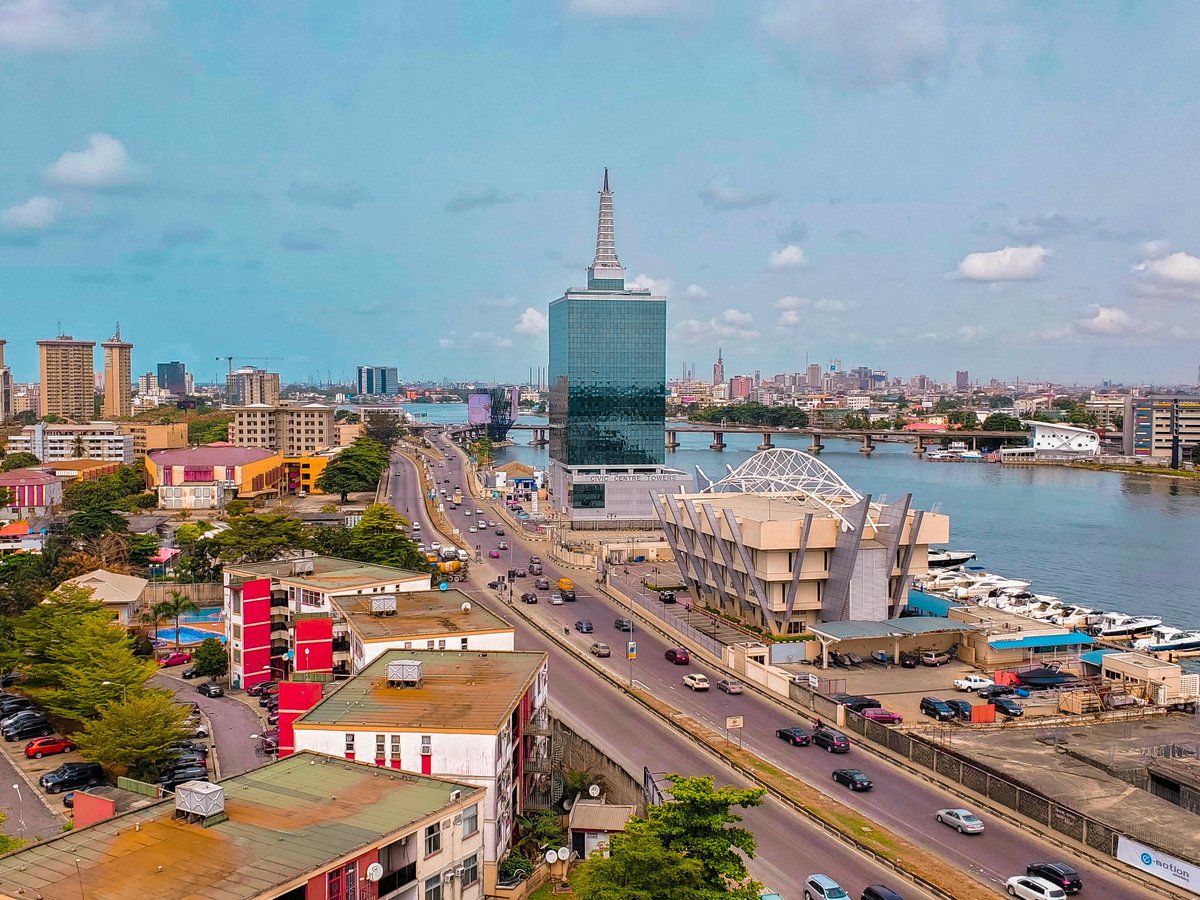
Lagos occupies a low-lying network of islands and lagoon-side mainland along Nigeria's southwestern Atlantic coast. The highest natural ground in the city barely reaches 10 meters above sea level, so the terrain is shaped by water rather than rock or elevation. From Eko Bridge, the lagoon opens out in a flat expanse of brown water dotted with fishing canoes and passenger ferries. In late September, temperatures sit around 25°C but the humidity holds above 90%, and the air feels closer to 30°C the moment you step outside. You notice the weight of it immediately, along with the smell of ocean salt and warm laterite after rain. The wet season runs from roughly April through October, bringing heavy afternoon downpours that can flood unpaved roads in Lekki and along the mainland within minutes. November through March is the dry stretch, and it is the reliable window for anything that keeps you on your feet for more than an hour. To be fair, Lagos is not a city most travelers associate with outdoor recreation. It is dense, it is loud, and the traffic between the mainland and Victoria Island can eat 2 to 3 hours out of a short itinerary. But the coastline extends about 180 kilometers along the state boundary, mangrove-lined creeks snake through the Lekki Peninsula, and pockets of green reward the effort of reaching them. The outdoor personality of Lagos is tidal, seasonal, and defined by the city's position between the Atlantic and the lagoon.
Outdoor activities
-
Lekki Conservation Centre Canopy Walkway
The canopy walkway at Lekki Conservation Centre stretches about 401 meters above the swamp forest floor, making it one of the longest in Africa. You walk across a series of suspension bridges rigged between wooden platforms, swaying gently about 20 meters up. The views look out over the reserve's wetland and secondary-growth forest on the Lekki Peninsula. Mona monkeys move through the trees below, and you might spot Nile monitor lizards near the waterline on quieter mornings. The walkway itself takes about 30 to 45 minutes at a comfortable pace. Temperatures at the canopy level can climb 3 to 4°C above ground readings after noon, when the foliage traps the humidity.
- Difficulty
- Easy, though the height and sway may unsettle some visitors
- Duration
- 30 to 45 minutes for the walkway, 2 to 3 hours for the full reserve visit
- Best season
- November through March, when the trails are drier and visibility through the canopy is better
-
Early-Morning Road Cycling on Lekki-Ikoyi Link Bridge
The Lekki-Ikoyi Link Bridge is a 1.36-kilometer cable-stayed bridge that connects Lekki Phase 1 to Ikoyi across Five Cowries Creek. Before 6 AM on weekends, traffic is light enough that a group of Lagos cyclists regularly rides the bridge and surrounding roads. The route typically loops through parts of Ikoyi and back, covering roughly 15 to 25 kilometers depending on the group. The road surface is smooth asphalt, and the bridge itself offers open water views on both sides. You will want lights and reflective gear for any pre-dawn start before 5:30 AM.
- Difficulty
- Moderate, mostly due to sharing the road with vehicles after 7 AM
- Duration
- 1.5 to 2.5 hours for a 20-kilometer loop
- Best season
- November through February, when the Harmattan wind keeps the mornings cooler and dry
-
Running at the Surulere Sports Precinct
The Lagos National Stadium in Surulere, built in 1961, sits within a broader sports precinct that includes the Teslim Balogun Stadium from 1984. Runners and walkers use the perimeter roads and internal paths early in the morning, before the heat sets in and the area fills with event traffic. The loop around the stadium grounds covers about 3 to 4 kilometers of mixed pavement and packed earth. The loop is flat and mostly shaded by mature trees along the Surulere perimeter. Mind you, the facilities have seen better decades, and some sections of path are uneven, so watch your footing in the dim pre-dawn light.
- Difficulty
- Easy
- Duration
- 30 to 60 minutes
- Best season
- Year-round, though the dry months are more comfortable for sustained effort
-
Beach Volleyball at Elegushi Beach
Elegushi Royal Beach in Lekki draws weekend crowds to its stretch of sand along the Atlantic. Several informal volleyball nets go up on Saturday and Sunday mornings, and pickup games are common. The sand along the Elegushi shoreline is coarse and tan-colored, and the Atlantic wave noise provides a steady background. Entry costs a few thousand naira per person, and you can rent chairs and buy grilled fish and cold drinks from vendors along the shoreline. The beach is wide enough that the volleyball area stays separate from the swimming crowd.
- Difficulty
- Easy to moderate depending on the competition
- Duration
- 1 to 3 hours
- Best season
- Dry months for consistent weather, though weekend games happen year-round
-
Quad Biking on the Lekki Coastal Sand
A few operators along the Lekki-Epe Expressway corridor offer quad bike rentals for rides along sandy tracks near the coast. The terrain is flat sand and low scrub between the expressway and the Atlantic shoreline. Sessions typically last 30 minutes to an hour, with a guide leading the group. The machines are usually 150cc to 250cc ATVs suitable for beginners. The sand tends to be softer and slower after rain from April through October, and firmer near the waterline during the drier months.
- Difficulty
- Easy to moderate, no prior experience needed
- Duration
- 30 to 60 minutes per session
- Best season
- December through February, when the sand is firmest and the weather is driest
Day hikes
-
Lekki Conservation Centre Wetland Trail
The nature trail at the reserve on the Lekki Peninsula covers roughly 4 to 5 kilometers through wetland, swamp forest, and patches of coastal savanna. The path is mostly flat boardwalk and packed earth, with some sections that flood during and after heavy rains. You walk through stands of raffia palm and past dark, still pools along the wetland where monitor lizards bask on fallen logs. The air under the canopy at the reserve smells of damp wood and leaf decay, and the mosquitoes are persistent, especially near standing water. DEET-based repellent from 30% concentration upward is the minimum. The trail loops back to the main gate near the Lekki-Epe Expressway, so there is no need for a shuttle or return transport.
- Difficulty
- Easy. Flat terrain, well-marked path, no significant elevation change
- Duration
- 1.5 to 2.5 hours at a walking pace with stops for wildlife
- Best season
- November through February, when the trail is driest and the undergrowth is less dense
-
Olumo Rock, Abeokuta
Olumo Rock is a granite inselberg that rises about 137 meters above the town of Abeokuta in Ogun State, roughly 100 kilometers north of Lagos. The drive takes about 2 hours in light traffic, though Lagos traffic can stretch that to 3 or more. The Egba people used the rock as a natural fortress during the 19th-century inter-tribal wars, and some of the caves at its base still hold shrines and carvings. The ascent follows carved stone steps that wind up the face of the rock, with an elevator available for part of the climb. The upper 30 meters or so involve scrambling over bare granite, and the surface gets slippery after rain. From the top, the view extends across the tin rooftops of Abeokuta and the Ogun River winding through the lowlands. Most visitors pair the climb with a walk through the Itoku market area of Abeokuta, known for its adire indigo-dyed textiles.
- Difficulty
- Moderate. The steps are uneven and steep in places, and the final section requires some hand-over-foot scrambling on rock
- Duration
- 1 to 2 hours for the climb and descent, plus 4 to 6 hours round-trip driving from Lagos
- Best season
- The dry months, for dry rock surfaces and clearer views from the summit
Water activities
-
Swimming and Surfing at Tarkwa Bay
Tarkwa Bay is a sheltered cove on an island near the entrance to Lagos Harbour, reachable only by boat from jetties around the city. The ride from Falomo Jetty takes about 15 to 20 minutes in a motorboat. The beach is calmer than the open Atlantic coast because the harbour breakwater blocks the largest swells, which makes it one of the safer swimming spots near Lagos. Small waves still roll in, and a few local surf instructors offer board rentals and lessons for beginners. The sand is golden-brown and warm underfoot, and the water stays around 26 to 28°C year-round. A small fishing community lives on the island, and vendors sell grilled fish, coconut, and cold drinks from simple beachside stalls.
- Difficulty
- Easy for swimming in the sheltered area, moderate for surfing the small waves
- Duration
- Half-day trip including boat travel
- Best season
- November through April for calmer seas and better visibility
-
Kayaking on Lagos Lagoon
A few outfitters in the Lekki and Victoria Island area offer guided kayak trips on the Lagos Lagoon and the connecting creeks. The Lagos Lagoon is broad and mostly calm, though commercial ferry and speedboat traffic creates wake that you need to manage in a kayak. Morning paddles tend to start from small jetties along the Lekki waterfront, heading into the quieter creeks where the mangroves close in and the city noise fades. The water is brackish and brown, typically less than 3 meters deep in the creek channels, and you paddle over submerged roots past fishing canoes tied to wooden stakes. Guided tours typically run 2 to 3 hours and cover about 5 to 8 kilometers depending on the route and tide.
- Difficulty
- Moderate, due to boat wake on the open lagoon and the need to navigate around commercial traffic
- Duration
- 2 to 3 hours for a guided trip
- Best season
- The drier months, when rain interruptions are less frequent and the lagoon level is lower
-
Jet Skiing at Elegushi Beach
Jet ski rentals are available at Elegushi Royal Beach in Lekki, where operators run 15 to 30-minute sessions in the surf zone along the Atlantic shoreline. The machines are typically 700cc to 1000cc personal watercraft, and an operator usually rides with beginners. The water off Elegushi is open Atlantic, so the swells can be significant and the current runs parallel to the shore. The salt spray is constant in the 1 to 2-meter swells, and you feel every wave through your legs. Sessions run on Saturdays, Sundays, and public holidays when the Elegushi Beach staff are present.
- Difficulty
- Moderate to challenging in rough surf, easier on calm days
- Duration
- 15 to 30 minutes per session
- Best season
- December through March for the calmest Atlantic conditions
-
Boat Excursion through Badagry Creek
Badagry sits about 60 kilometers west of central Lagos along the coastal road toward the Benin Republic border. The town is historically significant as a major point in the trans-Atlantic slave trade, and the creek that runs through it opens into a network of waterways lined with coconut palms and fishing villages. Local boatmen at the Badagry waterfront offer tours in wooden motorboats through channels where the water reflects the green of overhanging palms and the air carries woodsmoke from nearby settlements. The trip typically includes stops at small islands and a visit to the Badagry Heritage Museum. It is a full-day commitment from Lagos when you factor in the 1.5 to 2-hour drive each way.
- Difficulty
- Easy, as a passenger on a guided boat
- Duration
- Full day including 3 to 4 hours driving and 2 to 3 hours on the water
- Best season
- November through February for drier conditions and more navigable creek levels
Parks & gardens
-
Lekki Conservation Centre
This 78-hectare reserve on the Lekki Peninsula preserves a patch of coastal wetland and savanna that gives you a sense of what the Lagos shoreline looked like before the city grew over it. The reserve holds the elevated walkway that draws most visitors, along with nature trails that wind through swamp forest and grassland. The grounds are maintained by the Nigerian Conservation Foundation, and the paths are well-marked with wooden signage. Weekend mornings tend to be busy with families and school groups, so weekday visits offer a quieter experience.
Highlights: Elevated walkway, swamp boardwalk, birdwatching platforms, and a small picnic area near the entrance gate
-
Freedom Park
FreeFreedom Park sits on Broad Street on Lagos Island, occupying the grounds of a former colonial-era prison that opened to the public in 2010. The grounds hold open lawns, covered pavilions, a performance stage for weekend live music, and a cafe on the Broad Street side. It is one of the few genuinely calm spots in the density of Lagos Island. The Nigerian National Museum, founded in 1957, stands nearby on King George V Road. That stretch of Lagos Island also puts you within a short walk of Onikan Stadium, the Cathedral Church of Christ from 1946, and the older Cathedral of the Holy Cross dating to 1938. You can cover all of these on a 2-kilometer loop through the old city, which makes Freedom Park a good starting point for a morning walk before the heat sets in.
Highlights: Live music events on weekends, open-air amphitheatre, the old prison walls preserved as historical features, proximity to four other ground-truth landmarks on Lagos Island
-
Muri Okunola Park
FreeThis small urban park on Victoria Island serves as a morning exercise ground for residents of the surrounding neighborhoods. Joggers loop the perimeter path, and a few fitness groups meet on the grass before the workday starts. The park holds shade trees, benches, and a children's play area along its edges. It is compact, maybe 2 to 3 hectares, but its location in the middle of Victoria Island's commercial district makes it a useful green pause between errands or meetings.
Highlights: Perimeter jogging path, shaded benches, children's playground, proximity to Victoria Island restaurants for post-walk breakfast
-
LUFASI Nature Park
LUFASI sits along the Lekki-Epe Expressway on the Lekki Peninsula, a compact patch of secondary forest managed as a conservation education centre by the Lagos Urban Forest and Animal Sanctuary Initiative. The park holds walking trails through regenerating woodland, a small artificial lake, and enclosures for rescued animals including tortoises and peafowl. It is quieter and less visited than the larger conservation reserve further along the expressway, which makes weekday mornings feel almost private. The paths are unpaved and can be muddy in the wet season, but the shade cover keeps the temperature a few degrees below the surrounding streets of Lekki.
Highlights: Tortoise enclosures, birdwatching along the lakeside path, shaded forest walk through regenerating woodland
Practical tips
- Sun Protection and Heat
- Lagos sits close to latitude 6°N, so the equatorial sun is intense year-round, even on overcast days during the wet season. Apply SPF 50+ sunscreen before heading out, and reapply every 2 hours if you are sweating or in the water. A wide-brimmed hat and UV-rated sunglasses are essential for beach days and open-water activities. The heat index regularly exceeds 35°C during midday from February through April, so schedule strenuous activities for before 9 AM or after 4 PM.
- Hydration
- Carry at least 2 liters of water per person for any outdoor activity lasting more than an hour. Bottled water is widely available at shops and from street vendors across Lagos, typically costing between 100 and 300 NGN per 1.5-liter bottle. Sachets of pure water at 500ml cost as little as 50 NGN and are sold everywhere. Dehydration comes on fast when humidity tops 85%, and you may not notice how much you are sweating because the moisture in the air slows evaporation.
- Safety and Group Travel
- Lagos scores 2.8/10 for solo-traveler safety (see the TTDI Solo-Safety Index), and outdoor activities are no exception to the general caution the city demands. The city also scores 1/10 for LGBTQ+ friendliness (sourced from TTDI's editorial rubric), reflecting Nigerian federal legislation that criminalizes same-sex relationships. Stick to guided tours and group outings for water activities and day trips outside the city. Avoid isolated beaches after dark. Keep valuables in a waterproof pouch or leave them at your accommodation. For the Olumo Rock trip described in the day hikes section, travel with a reputable tour operator rather than arranging informal transport.
- Gear and Footwear
- Waterproof sandals with good grip work well for beach activities and short boardwalk trails at the Lekki reserves. For the Olumo Rock climb, proper closed-toe hiking shoes with ankle support are worth the extra weight in your bag. A lightweight rain jacket is non-negotiable during the wet season. Mosquito repellent with at least 30% DEET is critical for any activity near standing water or mangrove areas. A dry bag protects electronics during boat rides and kayaking.
- Money and Costs
- At the current exchange rate of roughly 1,331 NGN per 1 USD, outdoor activities in Lagos are relatively affordable for visitors carrying foreign currency. Beach entry fees at places like Elegushi typically run between 2,000 and 5,000 NGN per person. Boat rides to Tarkwa Bay cost around 1,000 to 2,000 NGN each way. Carry cash in smaller denominations, as vendors at beaches, parks, and jetties rarely accept card payments. ATMs are available in Lekki and on Victoria Island but can be unreliable on weekends.
- Trail Conditions and Timing
- Most trails and outdoor paths in Lagos are unpaved and flood easily during and after rain. The wetland trail described in the day hikes section can be ankle-deep in water from June through September. Plan outdoor days around the weather forecast and leave early. Lagos traffic adds significant travel time to any destination outside your immediate neighborhood. Budget at least an extra hour each way for journeys that cross between the mainland and the islands, especially on weekdays.
FAQ
What is the best time of year for outdoor activities in Lagos?
The drier half of the year offers the most reliable conditions for hiking, cycling, beach visits, and water sports. December and January tend to bring the Harmattan wind from the Sahara, which drops humidity and cools mornings to around 22 to 24°C. The wetter months make many trails muddy and some creeks difficult to navigate, though early mornings can still offer dry windows for shorter activities.
Is it safe to swim at Lagos beaches?
The open Atlantic beaches along the Lagos coast have strong rip currents and undertow that catch even experienced swimmers. Tarkwa Bay, as noted in the water activities section, is the sheltered exception where swimming is generally safer. At open-coast beaches like Elegushi, wade rather than swim, and stay within waist depth unless you are a strong swimmer who understands rip currents. The Lagos Lagoon itself is not suitable for swimming due to pollution and boat traffic. Lifeguard presence is inconsistent at most Lagos beaches.
How do I get to Tarkwa Bay from central Lagos?
The most common route is by motorboat from one of the jetties on Lagos Island or the Ikoyi side. Falomo Jetty near the Falomo Bridge and Five Cowries Terminal are popular departure points. Boats run throughout the day, and the crossing is short, under half an hour in reasonable conditions. Negotiate the fare before boarding, and confirm the return schedule with your boat operator since the last boats back leave in the late afternoon.
Are there any real hiking trails near Lagos?
Flat terrain limits hiking options within the city itself. The wetland trail at the Lekki reserve is the closest thing to a nature walk within Lagos proper. For a genuine climb with elevation gain, the Olumo Rock trip to Abeokuta in Ogun State is the most accessible option. Beyond that, the Idanre Hills in Ondo State offer a more challenging trek, but the 4 to 5-hour drive each way makes it a stretch for a single day trip from Lagos.
What should I wear for outdoor activities in Lagos?
Lightweight, moisture-wicking clothing in light colors works best for Lagos's 25 to 33°C temperature range and high humidity. Long-sleeved UPF-rated shirts protect against both the equatorial sun and the Anopheles mosquitoes common near water. On beaches, quick-dry shorts and water shoes are more practical than flip-flops on the coarse sand. For the wet season, a packable waterproof jacket saves you from afternoon downpours that arrive with little warning.
Last verified by automated review (v1.7.2) on . What is automated review?