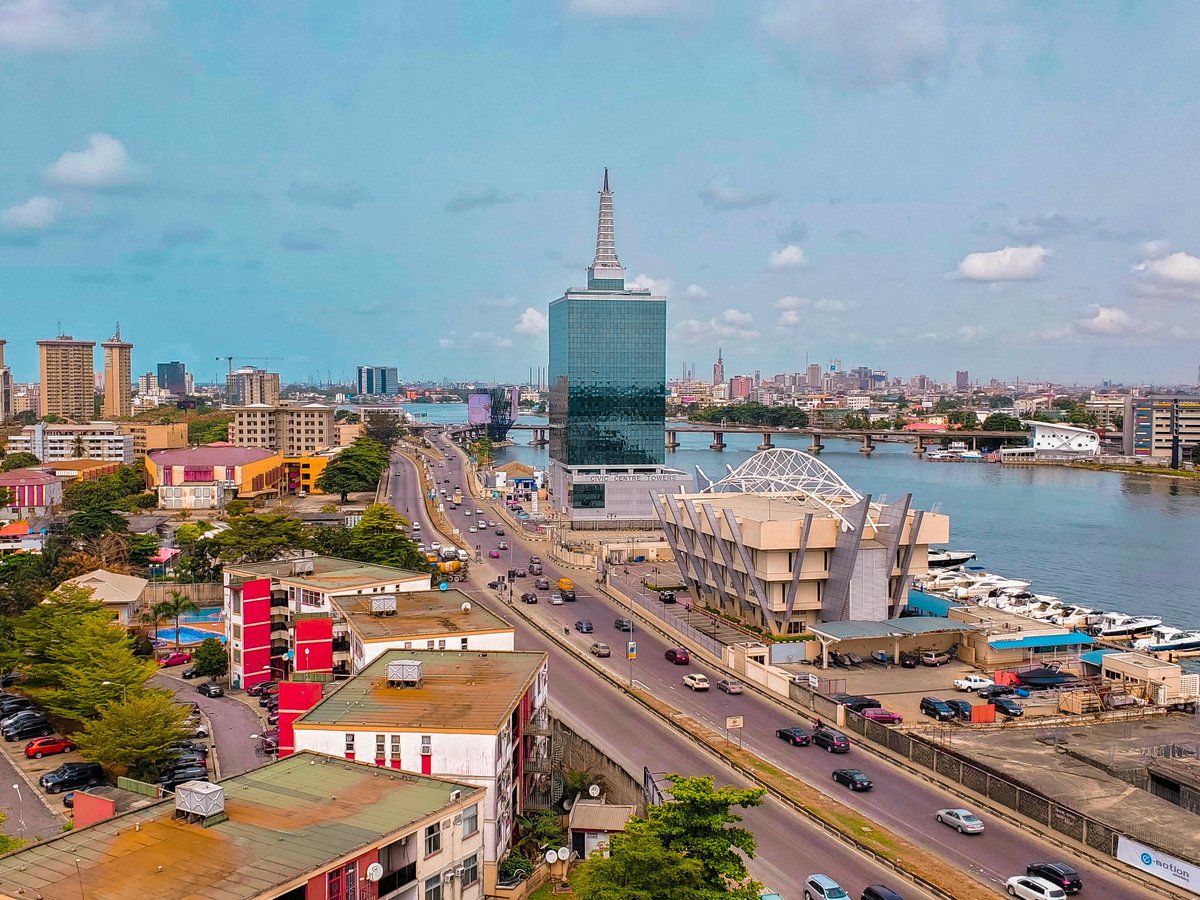
Lagos sprawls across a chain of lagoon islands and a mainland peninsula where roughly 20 million residents have built West Africa's largest city. The free attractions cluster in a few walkable pockets, particularly around Onikan and Marina on Lagos Island and in the Lekki corridor on the mainland. You'll likely smell the pepper and smoke from suya grills before you spot the vendors, and the soundscape shifts block by block, from Afrobeat bass lines on Broad Street to overlapping shouts in the market lanes. Wet-season humidity regularly exceeds 90%, and the warm drizzle that rolls in most afternoons means you'll want a light cover for your bag. To be fair, Lagos demands awareness from visitors on foot, and the BRT bus network is the budget way to bridge the gaps between neighborhoods (see https://en.wikivoyage.org/wiki/Lagos#Get_around for route basics).
Free attractions
-
Cathedral Church of Christ, Lagos
Completed in 1946 on the corner of Broad Street near the Marina waterfront, this Anglican cathedral stays noticeably cooler inside than the street outside. High ceilings and stained glass filter the equatorial sun into something gentler. Open to visitors daily between services.
Marina, Lagos IslandHistoric place of worship -
Cathedral of the Holy Cross, Lagos
The older of Lagos Island's 2 major cathedrals, this Catholic church dates to 1938. The interior is dimmer and more intimate than its Anglican counterpart about 1 km west. Masses run in both English and Yoruba. Free entry at all times.
Lagos IslandHistoric place of worship -
Nike Art Gallery
Nike Davies-Okundaye's 5-story gallery holds thousands of Nigerian paintings, Adire textiles, batik pieces, and sculptures. Entry is always free, and you might spend 2 hours working through the floors. The ground level is heavy on textiles, with oil paintings concentrated higher up. A rooftop terrace offers a view across the Lekki skyline.
LekkiArt gallery -
Terra Kulture
A cultural center on Tiamiyu Savage Street that splits into a free gallery space and a ticketed performance theater. The gallery rotates exhibitions of contemporary Nigerian art, with new shows typically appearing every few weeks. Worth noting that the theater stages Nigerian plays and musicals, but those carry a ticket price. Founded by Bolanle Austen-Peters.
Victoria IslandArt gallery and cultural center -
Tafawa Balewa Square
Named after Abubakar Tafawa Balewa, Nigeria's first prime minister, this open square hosted the country's independence ceremony on October 1, 1960. A colonnade borders the perimeter, and the central expanse is one of the few wide-open spaces on Lagos Island. Free to walk through at any hour.
Onikan, Lagos IslandHistoric public square -
Muri Okunola Park
A rectangle of green in the heart of Victoria Island's business district. Shade trees, benches, and a noticeable drop in traffic noise compared to Adeola Odeku Street a block away. The park fills with office workers around lunchtime on weekdays and empties by late afternoon. Free entry.
Victoria IslandPublic park -
Ndubuisi Kanu Park
A public park in the Alausa government district near the Lagos State Secretariat. Paved paths wind through green lawns, and the grounds are much quieter than most public spaces in central Lagos. Free entry, and a reasonable stop if you're heading to the New Afrika Shrine in nearby Agidingbi.
Alausa, IkejaPublic park
Free activities
-
Balogun Market
Several blocks of Lagos Island disappear under this market's stalls and buildings. Fabric sellers dominate the upper floors, with electronics, accessories, and household goods packed into the ground-level lanes. The smell of fried akara drifts between the walkways. You can browse for free, though vendors will call out to you in Yoruba and pidgin English. Mornings tend to be less crowded than the afternoon crush.
Lagos IslandMarket browsing -
Onikan heritage corridor walk
A 2 km route from Onikan through the Marina district to Tinubu Square covers Lagos Island's densest concentration of colonial-era buildings. You'll pass both historic cathedrals and the grounds of the Nigerian National Museum, which opened in 1957 and charges a modest admission fee. Onikan Stadium sits a few blocks north of the museum. At the western end of the Marina, Eko Bridge spans the lagoon toward the mainland, and the waterfront around its approach is free to walk. The pavement tends to be uneven in places, so sturdy shoes help.
Onikan to Tinubu Square, Lagos IslandWalking route -
Lekki-Ikoyi Link Bridge walk
This cable-stayed bridge connects Lekki and Ikoyi across Five Cowries Creek. The pedestrian lane along one side gives you one of the few chances in Lagos to walk above open water with a clear view of the lagoon. Late afternoon tends to offer the best light, and the breeze off the creek is a relief from the inland humidity.
Ikoyi to LekkiWalking route and viewpoint -
Surulere stadium district walk
A 3 km loop around the Lagos National Stadium, which opened in 1961, and Teslim Balogun Stadium, built in 1984, passes through a densely packed residential stretch of the mainland. Street food vendors line the approach roads, and the smell of jollof rice and pepper soup thickens near the stadium gates. The stadium interiors may require tickets for events, but the surrounding streets, lined with small bars and betting shops, are free to walk.
SurulereWalking route
Free events
-
New Afrika Shrine Afrobeat sessions
Multiple evenings weeklyThe Shrine in Agidingbi, Ikeja carries on the legacy of Fela Anikulapo-Kuti with live Afrobeat performances. Femi Kuti and Seun Kuti, Fela's sons, still perform here on select nights. Entry to the regular sessions has typically been free, with the venue earning from drink sales. The space is on the mainland, so allow travel time from Lagos Island or Victoria Island.
New Afrika Shrine, Agidingbi, Ikeja -
Art X Lagos
Annual, NovemberAn annual contemporary art fair that has been held in November in recent years. Galleries from across West Africa show painting, sculpture, photography, and mixed media. Some exhibition spaces and outdoor installations have been open to the public at no charge, though VIP previews and certain indoor areas require passes.
Various venues, Victoria Island -
LagosPhoto Festival
Annual, October or NovemberThe African Artists' Foundation organizes this annual photography festival, which has shown outdoor photographic exhibitions and projections across Lagos in past editions. The outdoor installations have been free to view, while some indoor gallery shows during the festival may carry separate admission.
Multiple venues, Lagos Island and Victoria Island
Nearly free attractions worth the small fee
A few Lagos attractions charge fees low enough to fit a tight budget. The Nigerian National Museum in Onikan, passed on the walking route described above, holds artifacts and historical objects from across Nigeria. Freedom Park on Broad Street occupies the grounds of the former colonial-era Broad Street Prison, now converted into a courtyard with a small stage for live music. The park has historically charged a modest gate fee, though some evening performances can be heard from outside the walls. Both sit on Lagos Island within walking distance of the free attractions listed above (see https://en.wikivoyage.org/wiki/Lagos#See for a broader survey of sights in the area).
Practical tips for a free day in Lagos
Lagos Island's streets start filling up by 7:00, and the hours before 10:00 offer the most comfortable walking temperatures. Carry water, as the stretches between major attractions might not have sealed-bottle vendors outside Victoria Island. The BRT buses along the Ikorodu Road corridor down to CMS on Lagos Island currently charge fares around 200 to 400 NGN per ride. Yellow danfo minibuses cover routes the BRT misses, but they follow loose schedules and can feel disorienting for first-time visitors (see https://en.wikivoyage.org/wiki/Lagos#Get_around). Keep your phone in a front pocket, especially through the denser market areas. Apapa, the port district west of Lagos Island, tends to see heavier truck traffic and has less to offer free visitors, so most zero-budget days focus on the Lagos Island to Victoria Island to Lekki corridor.
FAQ
Is it safe to walk around free attractions in Lagos?
TTDI rates Lagos at 2.8/10 for solo-traveler safety (see the TTDI Solo-Safety Index). Petty theft, phone snatching, and traffic-related risks are the main concerns on foot. Pairs or small groups draw less attention than solo walkers. Stick to busier streets during daylight, particularly around the Marina and Onikan districts, and avoid walking after dark in unfamiliar neighborhoods. The Victoria Island and Lekki areas tend to feel calmer, though awareness matters everywhere. See https://en.wikivoyage.org/wiki/Lagos#Stay_safe for detailed safety guidance.
What is the best time of year for free outdoor activities in Lagos?
The dry season runs roughly from November through March, with lower humidity and less rain. The rainy season peaks between June and September, when afternoon downpours are frequent. September mornings currently start around 24 to 25°C, but the heat builds significantly by midday. The Harmattan wind from December through February brings a dry, dusty haze that keeps temperatures more comfortable, typically in the low 30s Celsius. November tends to concentrate the most free gallery openings and art festivals.
Are Lagos beaches free to access?
Most developed beaches charge entrance fees. Elegushi Beach on the Lekki-Epe Expressway and Oniru Beach on Victoria Island both have gates with admission prices that have varied by day and season. Tarkwa Bay Beach is free to walk on, but reaching it requires a motorboat from near the CMS terminal area on Lagos Island. Mind you, the boat fare eats into a zero budget. Alpha Beach in the Lekki area has been one of the more accessible options, with lower gate fees and fewer crowds.
How much should I budget for transport between free attractions?
At the current rate of approximately 1,326 NGN per 1 USD, a full day of BRT rides and the occasional danfo might total 1,500 to 2,500 NGN, or roughly 1 to 2 USD. Ride-hailing apps like Bolt and InDrive operate across Lagos and are useful for the longer hops between Lagos Island and Lekki, though a single ride can run 3,000 to 6,000 NGN depending on traffic and distance. The walk between attractions in the same neighborhood costs nothing and sometimes proves faster than sitting in Lagos traffic.
Is Lagos suitable for families with children visiting free attractions?
TTDI rates Lagos at 4.2/10 for family friendliness (see the TTDI Family-Friendliness Index). The free parks and the Nike Art Gallery in Lekki work well for families, though the heat and distances between attractions can tire young children quickly. The market crowds and noise levels might overwhelm smaller kids. The Lekki and Victoria Island areas tend to feel more manageable for family visits than the denser Lagos Island neighborhoods.
Is Lagos welcoming for LGBTQ+ travelers?
TTDI rates Lagos at 1.0/10 for LGBTQ+ friendliness (sourced from TTDI's editorial rubric). Nigeria's Same-Sex Marriage Prohibition Act, signed in 2014, criminalizes same-sex relationships and public displays of affection between same-sex partners. LGBTQ+ travelers should exercise significant caution regardless of which free attractions they visit. See https://en.wikivoyage.org/wiki/Lagos#Cope for broader guidance on navigating local laws and customs.
Last verified by automated review (v1.7.2) on . What is automated review?