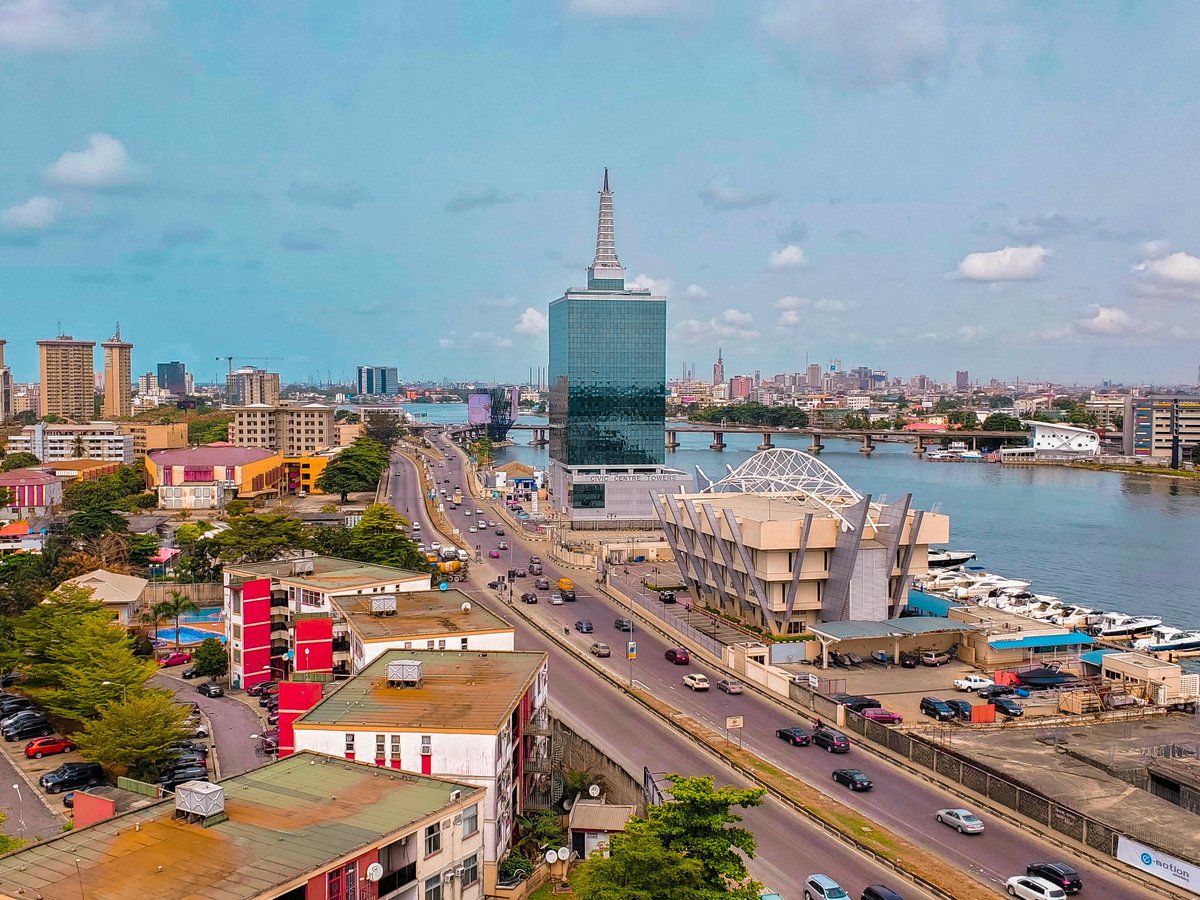
When's the best time to visit Lagos in 2026?
November through February. Lagos holds near 31°C year-round at 6°N latitude, so you're choosing between dry heat and wet heat. The Harmattan wind drops humidity from 90% to the mid-60s and cools evenings on Victoria Island to 22-24°C. June and September are the wettest months, when flooding closes major expressways for hours and turns short taxi rides into multi-hour ordeals.
November through February is when Lagos works for a first visit. The thermometer barely moves between seasons, but the Harmattan, a dry wind off the Sahara, transforms the air from something that clings to your skin into something you can move through. Evenings along the Bar Beach waterfront become cool enough for an after-dinner walk without breaking a sweat. Hotel rates on Victoria Island and Ikoyi tend to climb 15-20% in December when the Lagos diaspora returns for end-of-year celebrations, so late November or January offers the same conditions with less competition for rooms. Mind you, 'cool' is relative. You will still sweat. But the Harmattan means you can walk 2km along Ozumba Mbadiwe Avenue on Victoria Island without needing to duck into an air-conditioned mall every ten minutes.
The Harmattan brings its own trade-off. From mid-December through January, a fine reddish dust settles on your phone screen, your sunglasses, your morning eggs at a Lekki cafe. Visibility drops, and the air carries a dry, mineral smell particular to West Africa's coast during this season. Your lips will crack. Pack lip balm and a light scarf for the dust. That said, this is when the outdoor food scene hits its stride. The suya vendors along Admiralty Way in Lekki Phase 1 grill skewered beef coated in ground peanuts and cayenne over charcoal that sends smoke drifting across the road by 7pm. A full plate runs about ₦3,000 to ₦5,000, roughly $2.25 to $3.75 at the current rate of ₦1,331 to the dollar. Yaba's night markets along Herbert Macaulay Way start filling by 6pm once the rains stop, with vendors grilling plantain and corn over open flames on the roadside.
June and September are the months to avoid. Lagos receives roughly 1,600mm of rain per year, and most of it concentrates in those two months. The city's drainage has not kept pace with its population, estimated at 16 to 21 million depending on the source, and a heavy downpour can flood the Lekki-Epe Expressway for 4-6 hours. Third Mainland Bridge, the 11.8km span connecting the Islands to the mainland, grinds to a standstill. There is a brief dry spell in August, sometimes called 'August break,' that might give you a week or two of passable conditions, but it's inconsistent enough that planning a first trip around it would be a gamble.
If you're flexible on dates, late October has Felabration, a week-long music festival at the New Afrika Shrine in Ikeja honoring Fela Kuti (born October 15, 1938). It falls at the tail end of the rains, so expect afternoon showers, but evenings tend to clear enough for the open-air venue. Entry is free most nights. December brings a string of beach events along Elegushi Private Beach in Lekki, where admission runs ₦5,000 to ₦10,000 ($3.75 to $7.50). The Nigerian National Museum on King George V Road in Onikan, founded in 1957, is one of the few worthwhile indoor stops during any season, but its courtyard garden is far more pleasant in the dry months when the concrete underfoot stops radiating stored heat.
One honest note for first-timers. Lagos scores 2.8 out of 10 on TTDI's solo-traveler safety index (see the TTDI Solo-Safety Index), and the city demands more situational awareness than most West African capitals. The dry season helps with this too. Flooded roads during the wet months force detours through unfamiliar neighborhoods and stretch a ride from Murtala Muhammed International Airport to Victoria Island from a typical 45-90 minutes to something unpredictable. Get a local eSIM before you leave the arrivals hall. Mobile data is your navigation lifeline in a city where street addresses tend to be more suggestion than system. The Cathedral Church of Christ on the Marina, founded in 1946, sits near enough to Tinubu Square that it makes a reliable first-day orientation landmark on foot.
Month-by-month outlook
- Jan Ideal
- Feb Ideal
- Mar Shoulder
- Apr Shoulder
- May Avoid
- Jun Avoid
- Jul Avoid
- Aug Shoulder
- Sep Avoid
- Oct Shoulder
- Nov Ideal
- Dec Ideal
Year-round climate
Averages from the last 5 years.
| Month | Avg high (°C) | Avg low (°C) | Rainfall (mm) |
|---|---|---|---|
| Jan | 32 | 25 | 20 |
| Feb | 32 | 25 | 30 |
| Mar | 32 | 26 | 85 |
| Apr | 32 | 26 | 98 |
| May | 31 | 26 | 112 |
| Jun | 29 | 25 | 246 |
| Jul | 28 | 24 | 183 |
| Aug | 28 | 24 | 128 |
| Sep | 28 | 24 | 208 |
| Oct | 29 | 24 | 173 |
| Nov | 31 | 25 | 64 |
| Dec | 32 | 24 | 24 |
Year-round 30-33°C at 6°N. Harmattan (Nov-Feb) pulls humidity into the 60s with dry Saharan dust; wet months Jun-Sep bring heavy rainfall and routine street flooding.
Go deeper into Lagos
Last verified by automated review (v1.7.2) on . What is automated review?