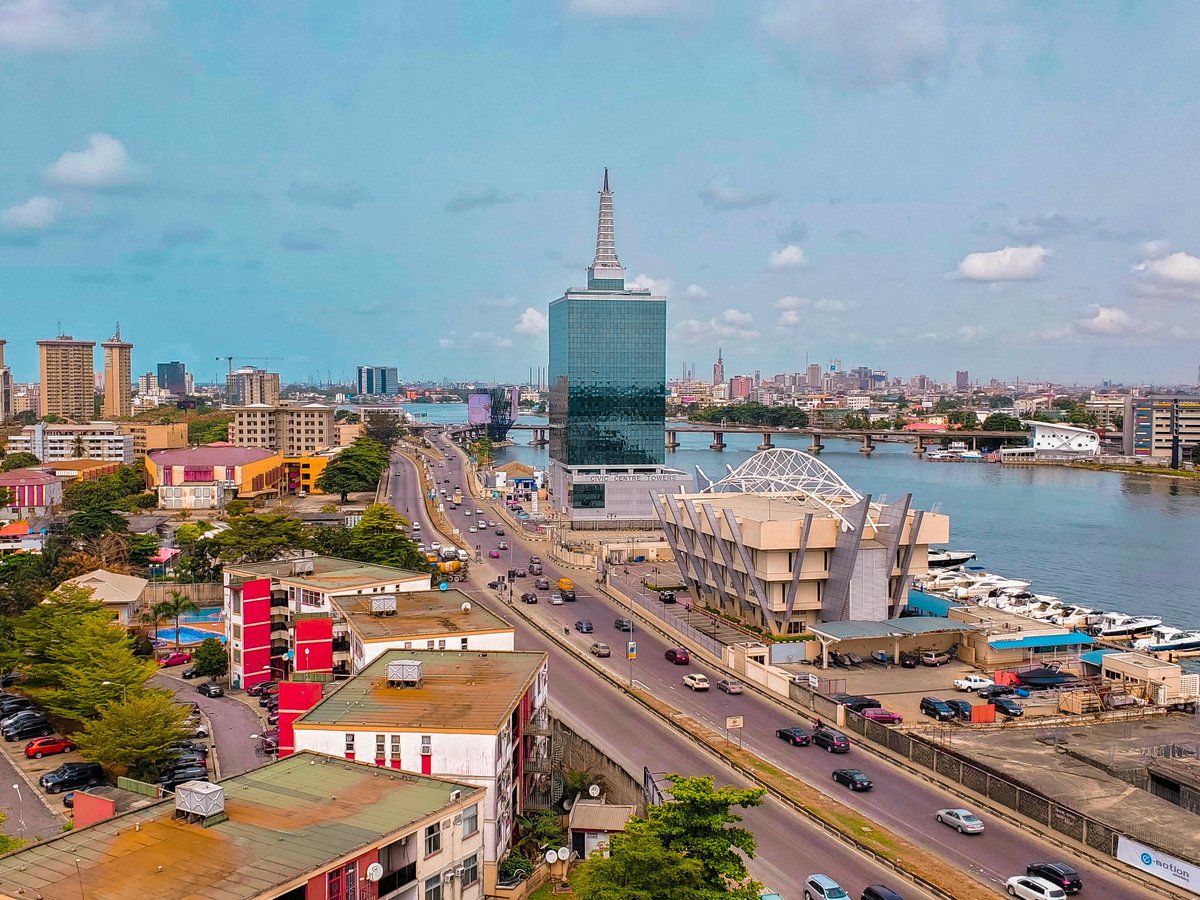
Best Time to Visit Lagos, by Season
Lagos never drops below 23.8°C or rises above 32.2°C on average, but the 4.5°C gap between February's peak heat and August's coolest readings shapes everything from hotel pricing to how the city feels on your skin. This is the window that fits each kind of traveller.
Published
1 Lagos Swings 4.5°C Between February and August, and That Small Gap Decides Everything
The ceiling fan in a Victoria Island hotel lobby works harder in February than in August. You feel the 4.5°C difference in the weight of Lagos air before checking any forecast. February's average high of 32.2°C is the year's peak. August settles at 27.7°C, with an overnight low of 23.8°C, the coolest reading Lagos records in any month. That range is the entire framework for deciding when to book a flight.
Lagos runs on two seasons. The dry season stretches from roughly November through March, when average highs sit between 30.6°C in November and 32.2°C in February. The wet season arrives around April and pulls daytime highs to 30.9°C by May, then down to 28.9°C in June and 27.7°C by August. The Harmattan wind from the Sahara keeps December and January feeling drier than their shared 31.9°C average high might suggest.
The seasons reshape how Lagos works for visitors on the ground. Victoria Island and Ikoyi stay navigable year-round, but the Lekki-Ajah expressway floods regularly between June and September, adding 30 to 90 minutes to a trip that takes 20 minutes in January. Tarkwa Bay, the boat-access beach off Lagos Island, draws weekend crowds from November through March when the Gulf of Guinea stays calm. Elegushi Beach on the Lekki coastline runs food vendors and live DJs on dry-season Friday nights. The restaurants along Admiralty Way on Victoria Island stay busy all 12 months but peak between mid-December and February.
The calendar also carries a cultural layer. Felabration fills the New Afrika Shrine in Ikeja for a week around October 15 each year. Art X Lagos, the city's contemporary art fair, opens in November. The end-of-year party season peaks between mid-December and early January on Victoria Island and across the Lekki Phase 1 corridor. The December-January window at 31.9°C carries both the best Harmattan weather and the highest hotel rates of the year.
2 December and January Lock at 31.9°C, the Peak Window Everyone Books First
The haze over the Lagos Lagoon in late December carries a sandy texture. Fine Harmattan dust from the Sahara filters the sunlight and turns the afternoon light golden over the Third Mainland Bridge. December's average high of 31.9°C matches January's 31.9°C to the decimal. Overnight lows converge at 24.4°C in December and 24.5°C in January, a gap of 0.1°C that no visitor would notice on the skin.
This two-month window is the standard recommendation for first-time visitors to Lagos, and the data supports it. The Harmattan keeps the 31.9°C afternoons more bearable than March's 31.7°C, which arrives paired with climbing humidity. December's 24.4°C overnight low falls 1.9°C below March's 26.3°C, so nights in Ikoyi cool down enough for comfortable sleep without air conditioning at full blast.
The cost of this window is competition for beds. Lagos residents working abroad fly home for the holiday season, and the city's social calendar peaks between mid-December and early January. The Eko Hotel Signature on Victoria Island and the Lagos Oriental Hotel both run premium holiday pricing. Hotels along Admiralty Way and in Lekki Phase 1 fill weeks ahead. To be fair, the Lekki-Ajah corridor hosts end-of-year events most weekends, and Victoria Island's nightlife runs at its loudest between Christmas and New Year. Elegushi Beach stages late-night concerts through December. The New Afrika Shrine in Ikeja holds Afrobeat sessions that draw hundreds.
That said, the second and third weeks of January tend to ease. The 31.9°C daytime high and 24.5°C overnight low hold steady while demand drops. Freedom Park on Lagos Island, a former colonial prison turned open-air venue, runs live music and spoken-word nights without the December crush. If your dates allow flexibility, mid-to-late January delivers the same weather at lower pressure on accommodation. The Radisson Blu in Ikeja and the Sheraton Lagos Hotel both tend to have January availability that December lacks.
December and January share 31.9°C to the decimal, with overnight lows 0.1°C apart.
3 February Hits 32.2°C, the Year's Hottest Average, but the Harmattan Has Already Left
Lagos in February smells different from Lagos in January. The Harmattan dust has thinned, the salt off the Atlantic arrives more sharply, and the air gains a heaviness that the 32.2°C number alone does not explain. February posts the year's highest average daytime temperature, 0.3°C above January's 31.9°C. Its overnight low of 25.4°C runs nearly a full degree above January's 24.5°C, a signal that moisture is building even though proper rainfall remains weeks away.
The humidity trajectory from January through April moves one way. January records 24.5°C overnight. February records 25.4°C. March and April both record 26.3°C. Each jump of roughly 0.9°C makes Lagos nights heavier on the skin.
For visitors who prefer heat and can tolerate building moisture, February has a structural advantage over the peak window. The festive-season visitors have gone home. Lagos's commercial districts on Victoria Island and in Ikoyi run at full speed. The Greenhouse Lagos on Victoria Island serves a lunch crowd of Lagos business professionals without the December tourist overspill. Eric Kayser Artisan Boulanger and Cafe Neo keep their Victoria Island locations busy. Worth noting, the gap between February's 32.2°C and December's 31.9°C amounts to only 0.3°C on the thermometer. Dry Harmattan heat at 31.9°C in December lands more lightly than humid 32.2°C heat in late February. The difference is texture, not scale.
February also sits in the sweet spot for cultural visits without wet-season complications. The Nigerian National Museum in Onikan is comfortable to walk through at 32.2°C without the added burden of July's 95% humidity. Nike Art Gallery's 6 floors in Lekki draw fewer visitors than in December. Freedom Park on Lagos Island hosts evening events, and the Cathedral Church of Christ on the Marina sits within walking distance, a route that stays dry until the wet season complicates it from June onward.
4 March Through May: Highs Slide from 31.7°C to 30.9°C as Lagos Braces for Rain
A March afternoon on Tarkwa Bay still feels like the tail of dry season. The sand holds the 31.7°C daytime heat, and the breeze off the Gulf of Guinea carries more salt than moisture. But March's overnight low of 26.3°C, shared with April, sits 1.8°C above January's 24.5°C. The nights no longer cool the way they did 8 weeks earlier.
April drops the daytime high to 31.6°C, only 0.1°C below March. May falls more noticeably to 30.9°C, crossing below 31°C for the first time since the previous November's 30.6°C. The transition is visible at Elegushi Beach, where the weekend crowds thin as April's first serious downpours arrive. By May, afternoon showers become near-daily events across the Lekki Peninsula.
For the budget-conscious visitor, this window has a pricing advantage. Hotel demand in Lagos follows the weather downward. March at 31.7°C still draws a few dry-season visitors, but April and May fall outside the standard booking window. The Sheraton Lagos Hotel and the Radisson Blu in Ikeja both soften rates between April and June. Room availability opens on Victoria Island too, where the Lagos Oriental Hotel and the Eko Hotel Signature compete for a smaller pool of guests.
The March-to-May corridor still works for specific activities. Lekki Conservation Centre's canopy walkway, a 401-metre suspended bridge above the wetland, is less crowded than in December and not yet muddied by sustained rain. Muri Okunola Park on Victoria Island hosts its midweek fitness crowds without the intensity of February's 32.2°C afternoons. Terra Kulture, the Victoria Island performance and gallery space, runs its stage calendar year-round, and a May evening show means fewer seats to compete for. Tejuosho Market keeps its pace through all 12 months, but the cooler 30.9°C May afternoons make browsing its stalls more comfortable than February's 32.2°C.
5 June Through August Drop Below 29°C, the Coolest Lagos Gets All Year
Rain on a Lagos rooftop in July hits corrugated iron with a flat, warm percussion you hear from several blocks away. July's average high of 27.9°C and August's 27.7°C are the two lowest daytime readings of the Lagos year. August's overnight low of 23.8°C is the single coolest figure the city records across all 12 months.
June opens this corridor at 28.9°C, a full 2.0°C below May's 30.9°C. That May-to-June drop is the largest month-over-month shift in the entire annual cycle. June's overnight low of 24.5°C matches January's 24.5°C on paper, though the two months feel nothing alike. January's 24.5°C arrives with Harmattan dust and dry nasal passages. June's 24.5°C sits under thick cloud cover and heavy humidity.
Lagos moves differently between June and August. Traffic on the Third Mainland Bridge crawls through standing water after heavy afternoon downpours. The Lekki-Ajah expressway floods regularly, sometimes stranding traffic for hours. The Atlantic swell makes Bar Beach rougher than at any other point in the year.
For the visitor who handles rain, these months push Lagos indoors to its strongest venues. Nike Art Gallery in Lekki fills 6 floors with over 8,000 pieces of Nigerian art. You can spend 3 hours across those floors without noticing the rain outside. Terra Kulture on Victoria Island runs theatrical performances and film screenings that peak during the wet season's quieter evenings. Freedom Park stages live music under its covered pavilion. Bogobiri House in Ikoyi pairs its small gallery with Afrobeat nights that draw a mix of Lagos artists and visitors.
For the visitor who dislikes tropical heat, August's 27.7°C might look ideal on paper. The trade-off is rainfall concentrated across Lagos between June and August. Hotel rates follow the thermometer, and the 27.7°C-to-28.9°C corridor puts both temperatures and room rates at their annual floor. The Legend Hotel near Murtala Muhammed International Airport drops to its lowest rates during this window.
August's 27.7°C is the coolest daytime reading Lagos records in any month.
6 September Through November Climb from 28.1°C to 30.6°C, and That Is When the Smart Money Books
A September morning on the Lekki Peninsula still smells like rain. Puddles sit along the road margins, and the air hangs close at 28.1°C, only 0.4°C above August's 27.7°C floor. September still belongs to the wet season in practice. But the trajectory has reversed. October climbs to 29.1°C, with an overnight low of 24.4°C. November reaches 30.6°C and 24.9°C overnight, landing firmly in dry-season territory.
The 2.5°C climb from September's 28.1°C to November's 30.6°C mirrors the May-to-July descent. October sits at the midpoint, warm enough to feel tropical but no longer carrying July's heavy downpours. October's 24.4°C overnight low matches December's 24.4°C, a preview of the Harmattan nights still 6 to 8 weeks away.
This corridor also stacks Lagos's strongest cultural events. Felabration, the week-long festival honouring Fela Kuti, takes over the New Afrika Shrine in Ikeja around October 15 each year. The Shrine's open-air stage fills nightly with Afrobeat, jazz, and spoken word from Nigerian and international artists. Art X Lagos, West Africa's largest contemporary art fair, opens in November on Victoria Island. Omenka Gallery and the National Gallery of Modern Art both time their major exhibitions to coincide with the November fair.
November is this guide's strongest single-month recommendation. At 30.6°C with a 24.9°C overnight low, November slots between October's lingering dampness and December's peak-season demand. The Harmattan has not arrived in full force, so Lagos air is cleaner than in dusty January. Holiday visitors to Lagos rarely arrive before mid-December, so November carries lighter crowds than any month from December through March. Hotels on Victoria Island, from the Eko Hotel Signature to the Lagos Oriental Hotel, tend to hold shoulder-season rates through November before the December premium. Lekki Conservation Centre's canopy walkway sits above drying wetland at 30.6°C, a more comfortable walk than February's 32.2°C peak.
November at 30.6°C is where the weather curve and the pricing curve cross in the visitor's favour.
7 The Verdict: November for Value, January for Comfort, August for an Empty City
The question is not whether Lagos is warm enough to visit. Every month on the Lagos calendar posts an average high above 27°C, and no month drops below a 23.8°C overnight low. The question is which of the 12 monthly profiles fits your tolerance for heat, rain, and crowds.
For first-time visitors who want the safest weather bet, January is the answer. The 31.9°C average high paired with a 24.5°C overnight low sits in the Harmattan's driest corridor. The December holiday rush clears after the first week. Stay on Victoria Island or in Ikoyi for walkable access to restaurants, galleries, and the Lagos Lagoon waterfront. January's runner-up is December, identical at 31.9°C with a 24.4°C overnight low, but December carries higher demand and holiday pricing at every hotel from the Eko Hotel Signature to the Sheraton Lagos.
For budget travellers, November at 30.6°C is the pick. August at 27.7°C is the runner-up. November delivers near-dry conditions before the December premium kicks in, and pairs the weather with Felabration at the New Afrika Shrine and Art X Lagos. August brings the year's coolest temperatures and a 23.8°C overnight floor, but wraps them in the heaviest rainfall. The choice between the two comes down to whether you prefer 2.9°C more heat with mild rain risk in November, or 2.9°C cooler air with guaranteed downpours in August.
For business travellers, February at 32.2°C works well. Victoria Island and Ikoyi run at full commercial capacity without the social-calendar congestion of December and January. The 25.4°C overnight low keeps evenings comfortable for dinners at The Greenhouse Lagos or Circa NonPareil on Victoria Island.
For travellers who prioritize cool air above all else, the June-through-August corridor of 28.9°C, 27.9°C, and 27.7°C is the only real option. Mind you, cooler in Lagos terms still means the high 20s Celsius. Lagos does not have a cold month. Fill those rainy afternoons at Nike Art Gallery's 6 floors in Lekki, or catch a performance at Terra Kulture on Victoria Island. Pack an umbrella and shoes that handle standing water on the Lekki-Ajah expressway. The Radisson Blu in Ikeja offers proximity to Murtala Muhammed International Airport and sits on higher ground than the flood-prone coastal strip.
Last verified by automated review (v1.7.2_onboard-lagos-flagship-2026-09-23) on . What is automated review?