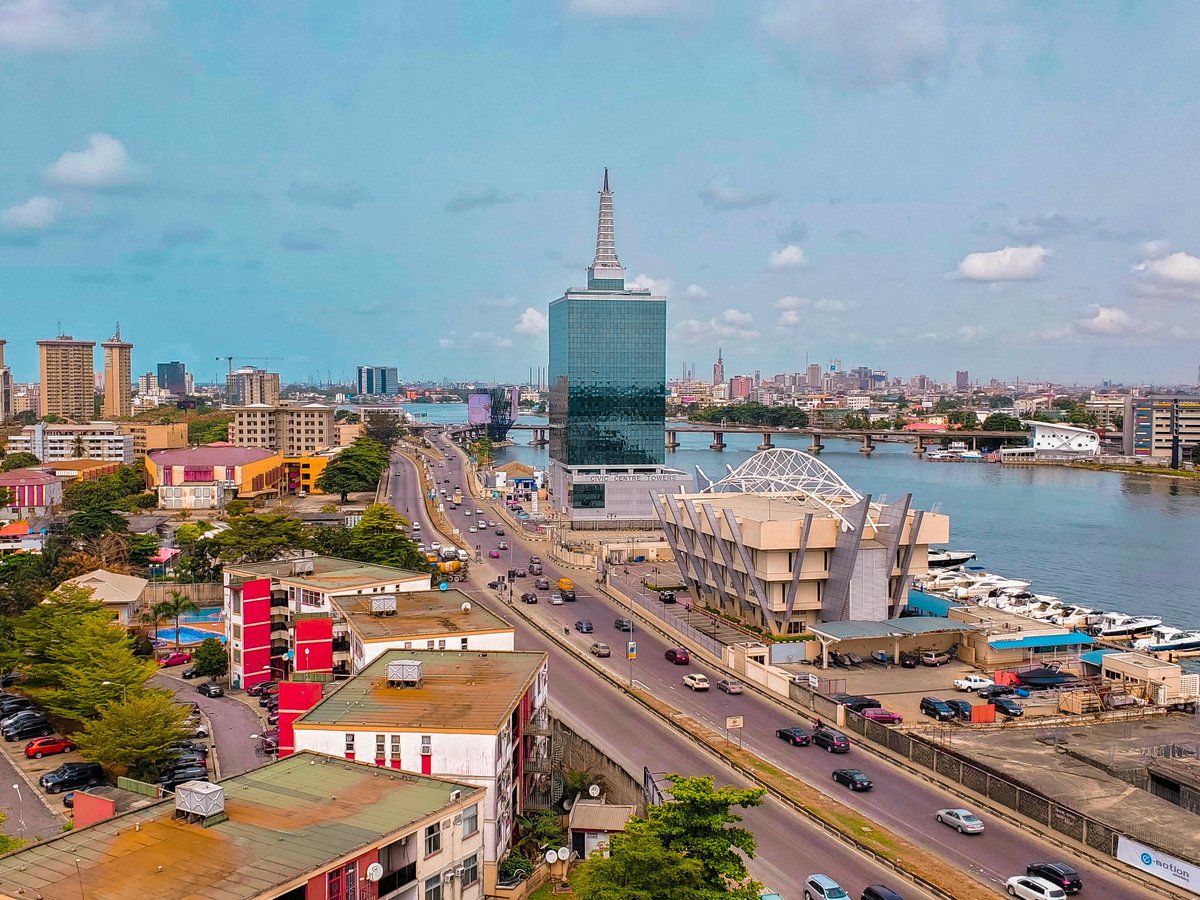
Stay in Lagos in June
20 hotels in the Trip.com pool for Lagos, from US$31 a night.
Opens Trip.com on Fri 4 Jun to Sun 6 Jun 2027; change the dates there.
June is the wettest month in Lagos. Rain arrives on most days, typically as concentrated afternoon downpours lasting 2 to 3 hours that flood low-lying roads across Lekki and parts of Victoria Island. Traffic on the Third Mainland Bridge can stall for hours after each storm. Temperatures sit at the year's lowest daytime average, roughly 3 degrees Celsius below January's peak, but the humidity makes those mild readings feel deceptive.
That said, Lagos doesn't shut down for the rain. Restaurants and galleries across Ikoyi and Lagos Island keep their usual hours, and the 22 million residents move through the downpours with practiced indifference. International tourist numbers drop compared to the November through February dry season, which tends to mean shorter waits at indoor attractions and quieter tables at popular restaurants. The one calendar date that matters is June 12, Democracy Day, when government offices close and Tafawa Balewa Square on Lagos Island hosts civic ceremonies marking Nigeria's democratic transition.
If you can tolerate getting soaked at least once a day and the 90-minute traffic delays that follow, a quieter and greener version of Lagos is waiting. But if your trip depends on beach days at Elegushi or sustained outdoor sightseeing, postpone to December.
Why visit in June
- Cooler than the dry season by about 3°C, with highs near 29°C (84°F) that make walks between storms more bearable than January's persistent 32°C heat
- Tourist numbers drop noticeably from the November through February peak, so indoor attractions and restaurants across Victoria Island feel less congested
- Hotel rates tend to fall 20-30% below the December to January peak, making upper-midrange properties more accessible
- The landscape turns a deep green after weeks of rain, and the Lagos Lagoon produces some of the year's most vivid sunsets when storm clouds break apart at dusk
Worth knowing
- The highest monthly rainfall of the year arrives across nearly every day, making sustained outdoor plans unreliable from one afternoon to the next
- Street flooding in Apapa, Surulere, and the Lekki-Ajah corridor can add 1 to 2 extra hours to any journey by car
- The persistent humidity makes time between air-conditioned spaces uncomfortable, even at the relatively mild temperatures
- Beach activities at Tarkwa Bay and along the Lekki shoreline are largely impractical due to rough Atlantic surf and persistent overcast skies
Best for
Think twice if
June sits at the heart of Lagos's wet season. Overcast mornings break into heavy downpours between 14:00 and 17:00, then the sky sometimes clears briefly before dusk. Rain falls on 26 of the month's 30 days. The showers are warm, not cold, and humidity holds at 85% around the clock. The Atlantic breeze off the coast of Victoria Island moves the air slightly in the evenings, though it rarely cuts through the saturation for long. Occasional dry mornings in the first week of June might feel promising, but by mid-month the daily pattern is relentless.
Seasonal caution
- Flash flooding occurs regularly in low-lying neighborhoods including Apapa, parts of Surulere, and the Lekki-Ajah corridor after sustained downpours. Roads become impassable for standard vehicles within 30 to 45 minutes of heavy rain.
- The Lagos Lagoon and surrounding creeks rise significantly in June. Waterfront areas on Lagos Island and Ikoyi can experience localized flooding even during moderate rainfall.
- Mosquito populations peak during the wet season. June through September carries elevated malaria risk across the Lagos metropolitan area. Prophylaxis, repellent, and sleeping under treated nets are essential, not optional.
Year-round climate
Averages from the last 5 years.
| Month | Avg high (°C) | Avg low (°C) | Rainfall (mm) |
|---|---|---|---|
| Jan | 32 | 25 | 20 |
| Feb | 32 | 25 | 30 |
| Mar | 32 | 26 | 85 |
| Apr | 32 | 26 | 98 |
| May | 31 | 26 | 112 |
| Jun | 29 | 25 | 246 |
| Jul | 28 | 24 | 183 |
| Aug | 28 | 24 | 128 |
| Sep | 28 | 24 | 208 |
| Oct | 29 | 24 | 173 |
| Nov | 31 | 25 | 64 |
| Dec | 32 | 24 | 24 |
Holidays and festivals in June
Public holidays
- Democracy Day(Democracy Day)12 June 2027
Best things to do in June
Nike Art Gallery in Lekki
cultureThis 4-story gallery in the Lekki Phase 1 area houses one of the largest private collections of Nigerian art, with over 8,000 works spread across multiple floors. Paintings, textiles, sculptures, and mixed-media installations fill every room. You can spend 2 to 3 hours here without running out of new pieces to examine.
Rain makes outdoor sightseeing unreliable, and this is the single best indoor cultural experience in Lagos. The lower visitor count in June means you can linger without crowds.Booking tipNo booking required. Go in the morning before the afternoon rains start, so your journey home stays dry.
Live afrobeat at New Afrika Shrine
nightlifeFemi and Seun Kuti perform regularly at this open-air venue in Ikeja, continuing the legacy Fela Kuti built at the original Shrine. The corrugated-roof structure keeps the rain off while the music runs from around 23:00 past midnight. The energy from the crowd and the horns section fills the space regardless of the weather outside.
June's reduced tourist presence gives the venue a more local, less performative atmosphere. Sunday sessions tend to draw the most committed crowd.Booking tipNo advance booking needed. Arrive by 22:00 for a good spot. Check the Shrine's social media for the weekly schedule, as performance dates shift.
Nigerian National Museum on Lagos Island
cultureFounded in 1957, this museum on King George V Road holds archaeological artifacts, traditional Benin bronzes, carved ivory, and exhibits on Nigeria's political history. The building itself is a piece of post-independence modernist architecture worth seeing. Allow 1 to 2 hours for the permanent collection.
Entirely indoors and cool, which matters when the alternative is standing in persistent humidity and intermittent downpours. Foot traffic drops in June, so the galleries feel private.Booking tipConfirm hours around the June 12 Democracy Day holiday, when the museum may close.
Freedom Park cultural evenings
cultureBuilt on the grounds of a former colonial-era prison on Lagos Island, Freedom Park hosts live music, spoken word, and cultural events most weekends. The covered performance areas and indoor gallery spaces keep events running through rainstorms. The surrounding streets in Onikan have some of the oldest residential architecture in the city.
The covered event spaces make Freedom Park one of the few reliable outdoor-adjacent cultural venues during the wet season. June weekends often feature acoustic sets that draw a local creative crowd.Booking tipCheck Freedom Park's schedule for weekend events. Most are free or carry a nominal cover.
Terra Kulture on Victoria Island
culturePart gallery, part theater, part restaurant, Terra Kulture on Tiamiyu Savage Street stages Nollywood-adjacent plays, art exhibitions, and film screenings. The restaurant serves Nigerian dishes in an air-conditioned dining room. You can spend an entire rainy afternoon here without stepping outside.
June rains make Terra Kulture's indoor combination of dining, theater, and art browsing particularly practical. The theater typically runs new productions through mid-year.Booking tipTheater shows sell out on weekends. Book tickets 3 to 5 days ahead for Saturday evening performances.
Lekki Conservation Centre canopy walk
natureThis 78-hectare nature reserve along the Lekki-Epe Expressway features a canopy walkway stretching over 400 meters above the wetland forest floor. The raised boardwalks keep you above the flooded ground below. Monkeys, monitor lizards, and over 100 bird species inhabit the reserve.
The wet season brings the forest to peak lushness. Bird activity rises in June as migratory species settle, and the canopy walkway keeps you above the mud.Booking tipGo on a weekday morning for the quietest experience. The walkway gets slippery in the rain, so wear shoes with grip.
Balogun Market fabric shopping
shoppingOne of West Africa's largest open-air markets, Balogun Market sells everything from ankara fabric and ready-made clothing to electronics and household goods. The market sprawls through several blocks near Eko Bridge on Lagos Island. Many stalls are covered, so trading continues through heavy rain.
Fabric vendors stock fresh ankara prints for the mid-year season, and bargaining leverage improves slightly with fewer tourists in June.Booking tipGo between 09:00 and 11:00 before the afternoon rains and peak crowds. Keep valuables secured and avoid large bags.
What to eat in June
In season: fruit
Ube (African pear)
The bush pear harvest begins in June across southern Nigeria. Street vendors in Yaba and Surulere roast ube over charcoal until the purple skin blisters and the creamy flesh softens into something rich and slightly oily. Eaten with roasted corn, this pairing defines Lagos's rainy season.
Mango
The tail end of mango season stretches into early June. Local varieties from northern Nigeria still appear at Balogun Market and neighborhood fruit stands, though quality starts declining by mid-month as the harvest winds down.
On menus now
Pepper soup
Lagos residents turn to this spicy, thin broth when the rains settle in. Made with goat, catfish, or assorted offal, the scotch bonnet and alligator pepper base generates enough heat to cut through a wet evening's chill. Restaurants across Victoria Island and Surulere each have their own variation.
Street food peaks
Agbado (roasted corn)
Fresh corn from farms in Ogun State hits Lagos markets in late May and peaks through June. Vendors grill ears over open coals along roadsides in Ikeja and Lagos Island. The sweet, smoky char carries through the damp afternoon air.
Dodo (fried plantain) with pepper sauce
Plantain harvest runs strong through the wet season. Street vendors and bukas across Yaba and Mushin fry thick-cut ripe plantain to a deep caramel color, then serve it with ground pepper and tomato sauce. The sweetness against the heat works well on a damp evening.
Regular events in June
Democracy DayFree
Nigeria's national public holiday marking the anniversary of the 1993 presidential election and the country's democratic transition. Government offices, banks, and many shops close. Civic ceremonies and cultural performances sometimes take place at public squares on Lagos Island.
June 12Sunday sessions at New Afrika Shrine
Weekly afrobeat and afro-jazz performances at the Kuti family's Ikeja venue, drawing a mixed crowd of locals and Lagos residents. Performances typically start around 23:00 and run past midnight.
Every Sunday evening throughout JuneFreedom Park weekend concertsFree
Live music and spoken-word performances at the former colonial prison site on Lagos Island. Events range from acoustic sets to full-band performances, with an emphasis on Nigerian and West African artists under covered pavilions.
Friday and Saturday evenings throughout JuneBest places this June
Lekki Conservation Centre
natureThe wetland reserve turns intensely green in June, with the canopy walkway offering the best vantage point above the flooded forest floor. Morning visits before 10:00 avoid both the afternoon rains and the weekend crowds. Bird activity is noticeably higher than in the dry months.
LekkiFreedom Park
cultureThe on-site bar and covered seating areas make this cultural space a reliable evening destination even when rain moves in. Weekend programming runs regardless of weather, and the atmosphere after a storm, with steam rising off the paving stones, has its own appeal.
Lagos IslandTafawa Balewa Square
landmarkThis large public square on Lagos Island hosts civic events around the June 12 public holiday. Outside of event days, the space and its surrounding colonial-era buildings are worth a brief walk during a dry morning window.
Lagos IslandCathedral Church of Christ
landmarkThis Anglican cathedral on Lagos Island, founded in 1946, sits near the waterfront. The stone interior stays cool even in the saturated air outside. A brief visit pairs well with a walk through the surrounding historic streets of Onikan.
Lagos IslandNew Afrika Shrine
nightlifeThe Kuti family's performance venue in Ikeja takes on a more intimate, local-heavy feel in June as tourist numbers thin out. The corrugated roof keeps rain off while the band plays, and the surrounding food vendors operate through the wet season.
Ikeja
Your packing checklist
Tick items off as you pack. Your progress saves in this browser.
All packed — have a great trip.
Insider tips
Traffic in Lagos is notorious year-round, but June flooding adds an unpredictable layer. Locals avoid scheduling anything that requires crossing from the mainland to the island after 14:00 during the wet season. If you have evening plans on Victoria Island, get there by midday and spend the afternoon at a nearby gallery or cafe.
The covered upper floors of Balogun Market stay dry and active during downpours, while ground-level stalls often close when water rises. Head upstairs for ankara fabric shopping if the rain catches you mid-visit.
Okada (motorcycle taxis) and keke (three-wheelers) move faster than cars in flooded traffic but carry significantly higher risk on wet roads. Most Lagos residents avoid okadas entirely during heavy rain. Ride-hailing apps with car options are the safer choice, though surge pricing spikes during storms.
The ube-and-corn combination sold by street vendors is the quintessential June snack. Vendors typically set up near bus stops and market entrances in Yaba and Mushin between 16:00 and 19:00. Point to both items and the vendor handles the pairing.
If you're visiting the Nigerian National Museum, pair it with a walk through Onikan, one of the quieter neighborhoods on Lagos Island. The streets around the museum have some of the oldest residential architecture in the city, and foot traffic is light enough in June to explore without the usual sidewalk congestion.
Avoid these mistakes
- Booking an outdoor boat tour to Tarkwa Bay without checking the marine forecast. Atlantic swells and rain squalls in June make the crossing rough and sometimes dangerous. Operators cancel frequently, and refund policies vary.
- Scheduling back-to-back appointments on opposite sides of Lagos on the same day. A journey that takes 40 minutes in the dry season can stretch past 2 hours in June due to flooded roads. Build 3-hour gaps between fixed commitments.
- Packing only flip-flops for a city that floods. The water pooling on Lagos streets in June carries debris, broken glass, and sewage runoff. Closed-toe waterproof shoes prevent injuries and infections that open sandals invite.
- Assuming the rain means cool weather. At the persistent humidity levels and overnight lows near 25°C, the air feels oppressively warm even under overcast skies. Visitors from temperate climates sometimes pack layers they never use.
Practical tips for June
Book accommodation on Victoria Island or Ikoyi to minimize crossings over the Third Mainland Bridge and its flood-prone approaches. Hotels in these neighborhoods cluster near restaurants and nightlife, reducing your dependence on cars during evening storms. Confirm Democracy Day closures with your hotel concierge around June 10, as banks and government offices close on the holiday. If you need to exchange currency, do it beforehand. Most upscale restaurants on Victoria Island accept card payments, but smaller establishments in Yaba, Surulere, and across Lagos Island remain cash-only. Airport transfers from Murtala Muhammed International Airport in Ikeja to Victoria Island take 45 minutes on a dry day and up to 3 hours during a June afternoon storm. Schedule arrivals for morning flights when possible. Pharmacies in Ikeja and on Victoria Island stock antimalarials, but bringing your own prescribed supply avoids the risk of counterfeit medications.
FAQ
Is June a good time to visit Lagos?
Honestly, no. June is the wettest month of the year in Lagos, with rain falling on most days and significant flooding across low-lying neighborhoods. If you have flexibility, the dry season from November through February offers far better conditions for sightseeing and beach visits. That said, if June is your only window, the city's indoor cultural scene, restaurants, and nightlife operate normally.
What is the weather like in Lagos in June?
Expect warm, saturated conditions with temperatures a few degrees below the dry-season high. Rain arrives on most days, usually as heavy afternoon downpours lasting 2 to 3 hours. The humidity is persistent enough that even overcast days feel sticky and close. Mornings tend to be drier, making them the best window for outdoor activities.
Is Lagos safe for tourists in June?
The safety challenges in Lagos exist year-round, and the wet season adds flood-related hazards including impassable streets, increased risk of waterborne illness, and reduced pedestrian activity in some neighborhoods after dark. Stick to well-known areas on Victoria Island, Ikoyi, and Lekki. Use ride-hailing apps rather than hailing taxis from the street. Travel with a local contact if possible.
What should I wear in Lagos in June?
Loose, lightweight clothing in breathable fabrics like cotton or linen. Waterproof shoes are more practical than sandals for navigating flooded streets, though sport sandals with grip work as a secondary option. Carry a rain jacket or compact umbrella at all times. Lagos dress codes for restaurants and nightlife lean smart-casual, so pack one or two nicer outfits that dry quickly.
Are there any festivals or events in Lagos in June?
The main event is Democracy Day on the 12th, a national public holiday with civic ceremonies on Lagos Island. Beyond that, June is quiet on the festival calendar. Regular weekly programming continues at venues like New Afrika Shrine in Ikeja and Freedom Park on Lagos Island. The major Lagos cultural festivals tend to cluster later in the year, from October through December.
Last verified by automated review (v1.7.2) on . What is automated review?