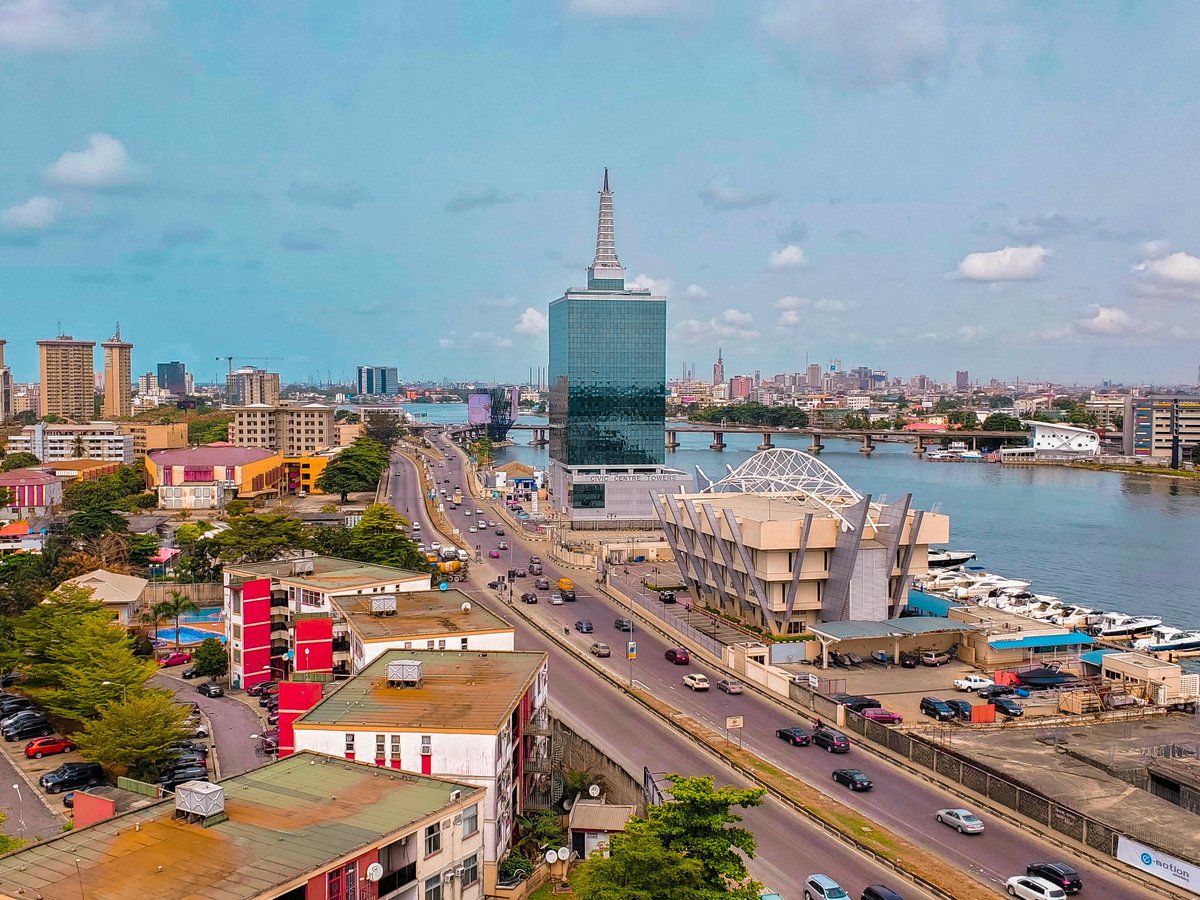
Stay in Lagos in August
20 hotels in the Trip.com pool for Lagos, from US$31 a night.
Opens Trip.com on Fri 6 Aug to Sun 8 Aug 2027; change the dates there.
August in Lagos brings the August Break, a 2-3 week lull in the wet season when rainfall drops and the perpetual overcast lifts enough for equatorial sun to warm the Victoria Island waterfront. This window typically falls in the first half of the month, making August the most forgiving stretch in the June-to-October rainy season. Daytime highs hover near 27-28°C, noticeably cooler than the 33°C heat that bakes the concrete along Allen Avenue in Ikeja and across the Mainland through January to March.
That said, Lagos in August remains deep in the wet season. Even on days without rain, the air from Lekki to Surulere sits heavy with tropical moisture, the kind of dampness that fogs your sunglasses the moment you step out of an air-conditioned lobby. Showers tend to arrive as hard afternoon downpours lasting 30-90 minutes rather than steady drizzle. Streets in low-lying Apapa and around Yaba flood within minutes of a heavy burst, and traffic on the Third Mainland Bridge and along Ikorodu Road slows to a near standstill. A rain contingency for every outdoor excursion is essential.
Lagos in August has no headline festival or public holiday to build a trip around. The cultural calendar picks up with Felabration in October, celebrating Fela Kuti's birthday, and peaks with Art X Lagos in November. What August offers instead is a quieter version of Africa's largest city. Nike Art Gallery's 5 floors in Lekki stay open year-round, and Terra Kulture on Victoria Island runs weekly theater productions and film screenings. Femi Kuti holds his Thursday residency and Seun Kuti his Sunday sessions at New Afrika Shrine in Ikeja. Corn-and-ube vendors crowd the pavement near CMS bus stop on Lagos Island, and hotels on Victoria Island that would need months-ahead booking in December are available on short notice.
Why visit in August
- The August Break opens a window for outdoor activities at Lekki Conservation Centre, Badagry, and other open-air sites that the heavier wet-season months of June, July, and September do not offer
- Cooler than any dry-season month, with daytime highs roughly 4°C below the January-to-March average across Victoria Island and the Mainland
- Lower tourism traffic means easier access to Nike Art Gallery in Lekki, Terra Kulture on Victoria Island, and live-music venues like New Afrika Shrine in Ikeja
- Hotels on Victoria Island and in Ikoyi have wider availability and shorter lead-time requirements than during the packed December-to-January window
Worth knowing
- Rain falls on roughly 22 of the 31 days in August, and the 85% average humidity makes even dry spells across Lekki and Victoria Island feel damp and sticky
- Street flooding after intense downpours brings traffic to a standstill on Ikorodu Road, Herbert Macaulay Way, and the Third Mainland Bridge approach
- Solo-traveler safety scores 2.8 out of 10 (see the TTDI Solo-Safety Index), requiring constant situational awareness across all neighborhoods
- No major festivals anchor August. Felabration (October) and Art X Lagos (November) are weeks away, leaving the cultural calendar quieter than any month from October through February
Best for
Think twice if
August sits in the wet season but benefits from the August Break, a meteorological lull where rainfall drops for a stretch in the first half of the month. The average high reaches 27.7°C (82°F) and the average low holds near 23.8°C (75°F), making it the coolest month on Victoria Island's waterfront and across the Mainland. Total rainfall is 128mm across roughly 22 days, with individual storms typically short and heavy rather than prolonged. Humidity averages around 85%, and you'll feel it most in low-lying areas around Apapa and along the lagoon edges where the moisture settles thick and visible. For context, June sees 246mm and September reaches 208mm. August falls on the lighter side of the peak wet season.
Seasonal caution
- Flash flooding affects low-lying areas including parts of Apapa and the Lagos Mainland after intense downpours. Standing water can conceal open drainage channels, making it dangerous to walk through flooded streets.
- Mosquito populations peak during the wet season. The WHO classifies Nigeria as having high malaria transmission year-round, but rainy-season breeding conditions worsen the risk. Antimalarial prophylaxis and DEET-based repellent are strongly recommended.
Year-round climate
Averages from the last 5 years.
| Month | Avg high (°C) | Avg low (°C) | Rainfall (mm) |
|---|---|---|---|
| Jan | 32 | 25 | 20 |
| Feb | 32 | 25 | 30 |
| Mar | 32 | 26 | 85 |
| Apr | 32 | 26 | 98 |
| May | 31 | 26 | 112 |
| Jun | 29 | 25 | 246 |
| Jul | 28 | 24 | 183 |
| Aug | 28 | 24 | 128 |
| Sep | 28 | 24 | 208 |
| Oct | 29 | 24 | 173 |
| Nov | 31 | 25 | 64 |
| Dec | 32 | 24 | 24 |
Best things to do in August
Lekki Conservation Centre canopy walkway
natureThe 401-meter (about 1,300-foot) elevated walkway passes through mangrove and swamp forest on the Lekki Peninsula. After months of rain, the wetlands below are at their fullest, bird populations peak with seasonal species, and the canopy overhead is dense and green.
The August Break's drier stretches offer the best wet-season window to walk the canopy without a downpour. The post-rain greenery is at its most dense.Booking tipArrive before 10:00 on weekends. Afternoon storms can close the walkway, and morning light through the canopy is worth the early start.
Rainy-season street food tour on Lagos Island
foodWalk the streets between CMS bus stop and Balogun Market sampling seasonal offerings from vendors who set up fresh each morning. The concentration of food sellers in this corridor means short distances between stops and constant variety.
August is the peak of the corn-and-ube season, when street vendor density reaches its highest and the seasonal menu is at its most varied.Booking tipGo between 09:00 and 12:00, before the afternoon rain window. Vendors start running low on fresh stock by early afternoon.
Day trip to Badagry historical sites
historyThe coastal town of Badagry sits about 60km (37 miles) west of Lagos along the Badagry Expressway. The Point of No Return monument on Gberefu Island and the first-storey building in Nigeria, dating to the 1840s, anchor a sombre but important half-day excursion through the region's slave-trade history.
The August Break makes the road to Badagry more passable than in June or July, when flooding regularly disrupts sections of the expressway.Booking tipLeave Lagos by 07:00 to beat traffic. The drive takes about 90 minutes in clear conditions, longer if rain has softened the road.
Theater performance at Terra Kulture
cultureThe Victoria Island arts center on Tiamiyu Savage Street stages plays, spoken-word events, and film screenings in its intimate theater space. The attached gallery and restaurant make it a complete evening without needing to travel between venues.
August's rainy evenings suit indoor cultural programming. The calendar tends to feature newer productions ahead of the busier October-to-December season.Booking tipCheck Terra Kulture's social media pages for the current month's schedule. Popular shows sell out by midweek.
Live Afrobeat night at New Afrika Shrine
nightlifeThis open-sided compound in the Agidingbi area of Ikeja hosts weekly live Afrobeat sessions that draw a predominantly local crowd. Performances start late, around 23:00, and run deep into the early morning hours.
Smaller August audiences create a more intimate atmosphere than the packed shows of the dry-season months. The semi-open layout handles light rain without disrupting the music.Booking tipNo advance booking needed. Arrive by 22:30 to find a good spot. The compound has food and drink vendors inside.
Live music evening at Bogobiri House
nightlifeThis boutique arts hotel in Ikoyi hosts intimate courtyard sessions most weekends, with local jazz, highlife, and Afro-soul musicians performing for a seated crowd of around 50. Nigerian contemporary art lines the interior walls, rotating every few weeks. Dinner from the on-site kitchen and the performance together fill a complete evening without crossing rain-slicked roads.
August's smaller audiences bring the performer-to-listener ratio down to something close to a private session. Cooler evening temperatures near 24°C keep the open-air courtyard comfortable.Booking tipFollow Bogobiri's social media for the weekly schedule. Performances tend to start around 20:30. Walk-ins are fine, but tables fill by 21:00 on popular nights.
What to eat in August
On menus now
Fresh corn pottage (adalu)
Boiled corn kernels cooked with palm oil, ground crayfish, and scotch bonnet peppers. August corn is at its tenderest, with milky kernels that give the dish a sweetness absent from the dried-corn versions made later in the year. Found at bukas and home kitchens across the Mainland, particularly in Surulere and Yaba.
Ogbono soup
A thick, slippery-textured soup made from ground ogbono (bush mango) seeds harvested in July and August. Buka joints in Surulere serve it thick with pounded yam, and the nuttier flavor of freshly harvested seeds is noticeable compared to the dried stock sold in the dry season.
Pepper soup
A thin, fiery broth built on scotch bonnet peppers, uziza leaves, and calabash nutmeg. Goat and catfish are the most common bases at buka joints in Yaba and across the Mainland. The heat of the soup paired with the sound of rain on a corrugated roof is the definitive August evening in the city.
Street food peaks
Roasted corn with ube (African pear)
Vendors near CMS bus stop and along Broad Street on Lagos Island grill fresh-harvested corn cobs over charcoal. They serve the corn with slices of ube, the purple-fleshed African bush pear. The smoky sweetness of the corn against the slightly bitter, buttery pear is the defining street-food taste of Lagos between July and September.
What to drink
Fresh palm wine
Tapped from raphia and oil palms, fresh palm wine has a mildly sweet, lightly fizzy quality that vanishes within a day or two as fermentation accelerates. Wet-season palms produce more sap, and vendors in Ebute Metta and Mushin sell it from morning onward in recycled containers.
Regular events in August
Femi Kuti & Positive Force at New Afrika Shrine
Femi Kuti leads his band Positive Force through extended sets of politically charged Afrobeat at the Ikeja venue built by the Kuti family.
Every Thursday night throughout AugustSeun Kuti & Egypt 80 at New Afrika Shrine
Seun Kuti, youngest son of Afrobeat pioneer Fela Anikulapo-Kuti, leads the Egypt 80 band through high-energy Sunday sessions that tend to draw a younger crowd than the Thursday shows.
Every Sunday night throughout AugustFreedom Park weekend live music
The open-air cultural space on Lagos Island hosts weekend evening performances featuring local musicians across Afrobeat, highlife, and contemporary Nigerian genres.
Friday and Saturday evenings throughout AugustBest places this August
Nigerian National Museum
museumFounded in 1957, this is Lagos's principal museum. The collection spans archaeological finds, traditional Benin bronzes, and Nigerian post-independence art across air-conditioned galleries that provide genuine relief from August humidity.
OnikanFreedom Park
cultural spaceThis cultural compound occupies the grounds of a former colonial-era prison on Lagos Island. The open-air layout includes a performance stage, exhibition spaces, and restaurants. The old cell blocks add historical weight, and covered areas provide shelter when afternoon storms roll through.
Lagos IslandNike Art Gallery
galleryFive floors of Nigerian contemporary and traditional art on the Lekki-Epe Expressway, founded by textile artist Nike Davies-Okundaye. Works span painting, sculpture, weaving, and batik. A strong indoor option when August rain disrupts outdoor plans.
LekkiBalogun Market
marketOne of West Africa's largest open-air markets, spread across several blocks near the Marina on Lagos Island. The mostly covered stalls provide shelter from rain. The sensory density of stacked fabrics, ground-spice aromas, and vendor calls is intense and particular to this market.
Lagos IslandCathedral Church of Christ
landmarkFounded in 1946, this Anglican cathedral on Marina Road is one of the older Christian landmarks on Lagos Island. The stone interior and stained-glass windows offer a cool, quiet contrast to the commercial energy of the surrounding streets.
Lagos IslandNational Arts Theatre
landmarkThe Y-shaped concrete structure in Iganmu was built for FESTAC '77, the Second World Black and African Festival of Arts and Culture. The distinctive silhouette is visible from the Western Avenue highway. Interior access may be limited during ongoing renovation, but the grounds and architecture reward a visit.
IganmuKalakuta Museum
museumThe former residence of Afrobeat pioneer Fela Anikulapo-Kuti in Ikeja, preserved since his death in 1997. The small compound displays personal effects, gold records, photographs, and documentation of the 1977 military raid that destroyed the original Kalakuta Republic. A 10-minute drive from New Afrika Shrine in Agidingbi, the two sites pair naturally for an afternoon-to-evening visit.
IkejaBogobiri House
cultural spaceA boutique arts hotel in Ikoyi with rotating exhibitions of Nigerian contemporary art on its walls and a courtyard hosting weekly live music sessions. The intimate scale, with seating for roughly 50 at evening performances, offers a different feel from the larger Shrine and Freedom Park stages. The attached restaurant serves Nigerian cuisine.
Ikoyi
Your packing checklist
Tick items off as you pack. Your progress saves in this browser.
All packed — have a great trip.
Insider tips
The August Break does not follow a fixed calendar. Some years it arrives in the first week, others not until mid-month. Check the 3-day forecast before committing to outdoor plans at Lekki Conservation Centre or Badagry rather than trusting seasonal averages.
Motorcycle taxis (called okada locally) are the fastest way to beat rain-induced traffic gridlock, but they are banned from major highways and bridges. Use them for short hops within mainland neighborhoods like Yaba or Surulere, not for crossing to the islands.
Street food vendors near CMS bus stop on Lagos Island tend to have faster turnover than those positioned near hotel clusters on Victoria Island, which means fresher stock and lower markups.
Download offline maps for Lagos before arriving. Mobile data can drop during storms, and ride-hailing apps like Bolt need a destination pin even when your signal cuts out between the Third Mainland Bridge and the Mainland.
Freedom Park on Lagos Island works as a reliable fallback when afternoon storms cancel outdoor plans. The covered sections of the former colonial prison compound stay dry, the restaurants have generator power, and Friday or Saturday evening performances run around 20:00 regardless of weather.
Avoid these mistakes
- Scheduling outdoor activities for the afternoon. Rain in August typically hits between 14:00 and 17:00. Front-load outdoor plans for the morning and keep indoor options like Nike Art Gallery or the National Museum in Onikan ready for the second half of the day.
- Attempting to drive across the Third Mainland Bridge during heavy rain. The 11.8km (7.3-mile) bridge floods at certain points and traffic halts completely. If clouds darken, delay your trip or route through the shorter Eko Bridge or Carter Bridge instead.
- Booking back-to-back outdoor excursions on consecutive days without a buffer. Even during the August Break, you will likely lose at least one planned day to unexpected rain. Build slack into the itinerary.
Practical tips for August
August is not the month for ambitious overland travel through Nigeria. The Lagos-Ibadan Expressway, roughly 130km (80 miles) to the northeast, can flood at several low-lying sections during heavy rain, adding unpredictable hours to what is normally a 90-minute drive. Book domestic flights through Murtala Muhammed Airport in Ikeja where possible. For lodging, Victoria Island and Ikoyi put you within walking distance of restaurants along Admiralty Way, galleries in Lekki, and nightlife around Adeola Odeku Street, while mainland neighborhoods like Ikeja and Surulere cost less but mean longer, rain-slowed commutes across the Third Mainland Bridge. Bolt tends to have better driver availability than Uber in Lagos, though surge pricing rises steeply when storms hit between 14:00 and 17:00. Modest dress is standard across the city, with Victoria Island venues slightly more relaxed. Lagos scores 4.2 out of 10 for digital-nomad suitability (sourced from TTDI's editorial rubric), with inconsistent power supply as the primary barrier. Confirm that your hotel or co-working space has generator backup before booking, and carry a portable WiFi device as a fallback for broadband outages.
FAQ
Is August a good time to visit Lagos, Nigeria?
August is a fair choice, not ideal. The rainy season is in full effect, with showers expected on most days. The saving grace is the August Break, a lull in rainfall that opens a window for outdoor activities in the first half of the month. No major festivals anchor the calendar, and grey skies can feel monotonous. If your schedule is flexible, the dry season from November onward offers clear skies, festivals like Art X Lagos, and noticeably higher energy across Victoria Island and the Mainland.
How bad is the rain in Lagos in August?
Less severe than June or September, but still significant. Showers tend to be intense and brief rather than all-day affairs. You might experience 2-3 hours of heavy afternoon rain followed by clearing evening skies. The August Break can deliver stretches of 4-5 consecutive dry days. The biggest practical impact is on traffic. A 45-minute Bolt ride from Victoria Island to Ikeja can become a 3-hour crawl when the Third Mainland Bridge approach roads flood.
Is Lagos family-friendly for an August visit?
Lagos scores 4.2 out of 10 on family friendliness (see the TTDI Family-Friendliness Index). The city is large, congested, and not designed for easy movement with young children. Indoor attractions like the Nigerian National Museum in Onikan and Nike Art Gallery in Lekki are manageable with kids, and the cooler August temperatures are gentler on children than the 32°C (90°F) dry-season heat. Keep travel distances short and plan around rain windows.
What is the best month to visit Lagos?
December and November sit at the top. December brings dry weather, year-end festivals, and the highest energy the city sees all year. November offers similar conditions with slightly fewer crowds. January and February are also dry, though January can bring Harmattan haze from the Sahara. August falls in the lower half of the ranking, redeemed partly by the August Break and its cooler temperatures, but held back by rain, humidity, and a quiet event calendar.
Last verified by automated review (v1.7.2) on . What is automated review?