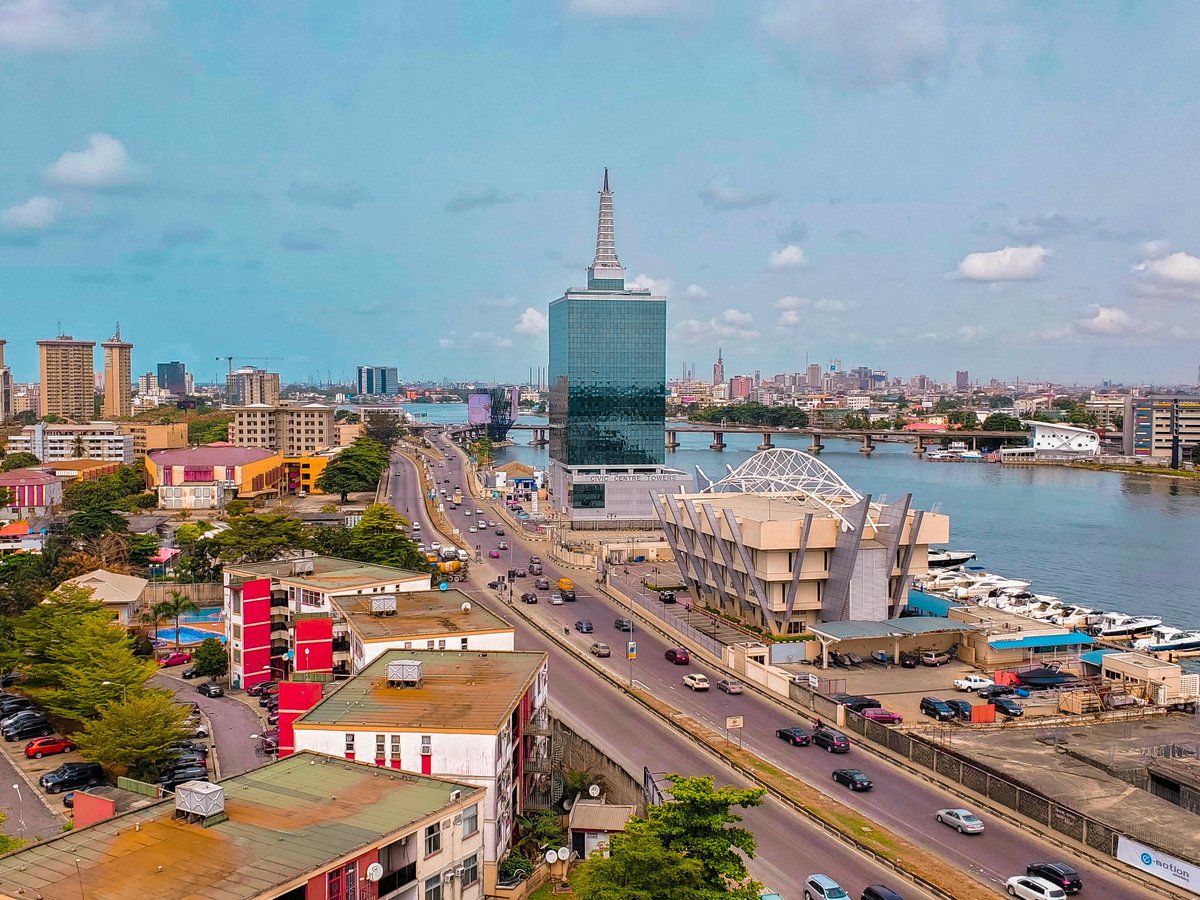
Stay in Lagos in April
20 hotels in the Trip.com pool for Lagos, from US$31 a night.
Opens Trip.com on Fri 2 Apr to Sun 4 Apr 2027; change the dates there.
April in Lagos is when the wet season announces itself. Afternoon skies darken around 14:00, and short, intense downpours land on roughly 15 of the month's 30 days. The rain tends to arrive in 30-to-45-minute bursts rather than all-day grey drizzle, but the 79% humidity it leaves behind sits on your skin for hours. Daytime temperatures reach 31.6°C (89°F) and rarely dip below 26.3°C (79°F) at night, so air conditioning becomes a necessity rather than a comfort.
Easter is the month's anchor when it falls in April. Good Friday and Easter Monday bring consecutive public holidays, and Lagos empties in a way that feels almost eerie if you've only experienced the city at full capacity. Many Lagosians travel to their family's home state, which means lighter traffic on the Third Mainland Bridge and shorter waits at restaurants in Victoria Island. Churches hold elaborate services, particularly the Cathedral Church of Christ on Lagos Island, founded in 1946. For a visitor, the quieter Easter weekend might be the best few days of the entire month.
To be fair, April is neither the best nor the worst time to visit. You've missed the dry Harmattan months of December through February, when humidity drops and the city feels almost tolerable. But you're still months away from the June peak, when rainfall reaches roughly 246mm. This is a shoulder month, and the crowd levels along the Lekki coastline reflect it.
Why visit in April
- Easter weekend thins out Lagos traffic noticeably, and restaurants in Ikoyi and V.I. that normally require reservations have open tables for walk-ins.
- Rainfall is moderate at 98mm for the month, roughly a third of what hits in June, so you get tropical atmosphere without true monsoon conditions.
- Hotel availability improves at V.I. and Lekki properties, with many offering walk-in rates rather than the advance-booking premiums that December requires.
- The first mango harvest of the year arrives in southern Nigeria markets around late March to April, with Julie mangoes at their sweetest and most fragrant.
Worth knowing
- Humidity rarely drops below 75% after a rain, which makes walking through open-air markets like Balogun Market feel draining by midday.
- Solo-traveler safety scores 2.8 out of 10 (see the TTDI Solo-Safety Index), and the Easter holiday period thins out normally crowded streets around Broad Street and Tinubu Square on Lagos Island, which can feel isolating after dark.
- Power outages increase during the early rainy season as the electrical grid strains, and not every budget hotel in Yaba or along the Ikeja corridor has a backup generator that covers guest-room outlets.
- LGBTQ+ friendliness sits at 1 out of 10 (sourced from TTDI's editorial rubric), reflecting Nigeria's Same-Sex Marriage Prohibition Act of 2014, which criminalizes same-sex relationships with prison sentences of up to 14 years.
Best for
Think twice if
April marks the shift from dry to wet across Lagos. Mornings still feel warm and mostly clear, but clouds build by early afternoon and deliver short, heavy showers on roughly half the days. Individual storms rarely last beyond 45 minutes, though the moisture they leave behind lingers well into the evening. Overnight temperatures stay warm enough that sleeping without climate control is uncomfortable for most visitors. Compared to the months ahead, April's rainfall is moderate, roughly a third of what the wettest period brings.
Seasonal caution
- Sudden afternoon thunderstorms can drop 20-30mm of rain in under an hour, flooding low-lying roads in areas like Lekki-Ajah and parts of Apapa. Avoid driving through standing water, as it often conceals open drainage channels that can swallow a wheel.
- The heat index regularly exceeds 38°C (100°F) in the early afternoon, even though the thermometer reads lower. The combination of temperature and moisture content makes heat exhaustion a real risk. Drink water aggressively and limit outdoor walking between 12:00 and 15:00.
Year-round climate
Averages from the last 5 years.
| Month | Avg high (°C) | Avg low (°C) | Rainfall (mm) |
|---|---|---|---|
| Jan | 32 | 25 | 20 |
| Feb | 32 | 25 | 30 |
| Mar | 32 | 26 | 85 |
| Apr | 32 | 26 | 98 |
| May | 31 | 26 | 112 |
| Jun | 29 | 25 | 246 |
| Jul | 28 | 24 | 183 |
| Aug | 28 | 24 | 128 |
| Sep | 28 | 24 | 208 |
| Oct | 29 | 24 | 173 |
| Nov | 31 | 25 | 64 |
| Dec | 32 | 24 | 24 |
Headline events
Easter Weekend in Lagos
Late March to mid-April, depending on the liturgical calendar. In many years, Easter falls in the first or second week of April.
Nigeria's Christian majority treats Easter as one of the year's most significant celebrations. Lagos churches hold services that draw thousands, with elaborate processions weaving through Lagos Island and Surulere. The long weekend sees the city's population visibly drop as residents travel to home states, creating a rare window of relative calm in a metropolis of over 15 million. For visitors, it is the single most distinctive cultural experience of the month.
Best things to do in April
Easter services at Cathedral Church of Christ
cultureThe cathedral on Lagos Island holds its most elaborate services of the year during Easter week. The Good Friday procession and Easter Sunday service draw worshippers from across the city. Even non-religious visitors find the choral music and dense crowd atmosphere worth experiencing. The Gothic Revival architecture is among the oldest surviving colonial-era structures on the island.
Easter services happen once a year, and the full programme of processions, vigils, and sunrise services runs only during Holy Week.Booking tipArrive 60-90 minutes early for Easter Sunday service to find a seat. Standing room fills quickly.
Canopy walkway at Lekki Conservation Centre
natureThe elevated walkway through the mangrove forest and wetland reserve becomes particularly atmospheric after April's rains. The vegetation turns greener than the dry-season brown, birdlife is more active, and the air carries the smell of damp earth and warm leaves. Fewer visitors than peak season means the walkway feels like yours alone.
Early rains green the canopy and bring migratory bird species absent during the dry Harmattan months. Lower visitor numbers than the November-February high season.Booking tipVisit on weekday mornings before 10:00 for the best wildlife sightings and to avoid school groups.
Nike Art Gallery browsing in Lekki
cultureThis five-floor gallery in Lekki displays over 8,000 works of contemporary and traditional Nigerian art, including textiles, paintings, and sculptures from artists across all 36 states. April's afternoon rains make indoor galleries a strategic choice rather than a consolation, and the air conditioning alone is worth the visit on a humid day.
Rainy afternoons create natural windows for indoor activities. Fewer international tour groups than the dry season means you can browse at your own pace.Morning beach trip to Tarkwa Bay
beachApril mornings at Tarkwa Bay offer warm, clear water and calm surf before the afternoon clouds build. The sheltered harbour-island location means wave action is gentler than at exposed mainland beaches, and weekday mornings see relatively few visitors. The sand stays clean enough to lie on without a towel.
April mornings are consistently clear and warm before the rain cycle begins. Sea conditions are calmer than the July-September swell season, making the boat crossing smoother.Booking tipArrange boat transport from the jetty before 09:00. Negotiate the return time when you hire the boat, not after you've landed on the island.
Textile shopping at Balogun Market
shoppingBalogun Market on Lagos Island is one of West Africa's largest open-air trading areas. The textile section alone could fill a morning. April is the month vendors restock ankara, adire tie-dye, and aso-oke ahead of the June-August wedding season, so the selection is at its widest and negotiation space is generous.
Pre-wedding-season restocking means fabric selection peaks. Shoulder-season foot traffic gives vendors more time to negotiate.Booking tipGo on Tuesday or Wednesday mornings for the lightest crowds. Carry small denominations of naira since many stalls do not accept card payments.
Lagos Lagoon sunset boat ride
experienceCharter a small boat from Falomo Jetty in Ikoyi for a 90-minute ride across the Lagos Lagoon as the sun drops. April's post-rain skies often produce deep orange and pink sunsets that the dry-season haze obscures. The route passes the Eko Bridge and the skyline of Victoria Island, both reflected in the water when the surface calms.
Brief rains wash particulate matter from the air, producing clearer skies and more dramatic sunsets than the hazy Harmattan months. Water levels are not yet at the dangerous heights of the deep rainy season.Booking tipBook through your hotel or a local guide rather than negotiating at the jetty. Bring a waterproof bag for electronics in case of a late shower.
Live music at Freedom Park
nightlifeFreedom Park on Lagos Island hosts live Afrobeat, highlife, and spoken-word performances on weekend evenings. The open-air venue sits among preserved walls and art installations, and the crowd is a mix of Lagos creatives, students, and visitors. A cold bottle of Star Lager, the humidity breaking after a rain, and a live band at 21:00 is about as good as a Lagos evening gets.
Post-rain evenings cool to the mid-to-high 20s°C, making the open-air venue more comfortable than dry-season nights when heat holds above 30°C past sunset.Booking tipCheck the venue's social media pages for the week's schedule. Most events start around 19:00 or 20:00.
What to eat in April
In season: fruit
Julie mango
Southern Nigeria's mango season arrives in late March and peaks through April. The Julie variety, small and intensely sweet with dense, almost custardy flesh, appears at roadside stands across Yaba and Surulere. The fragrance alone stops you mid-step.
Agbalumo (African star apple)
April is the tail end of agbalumo season in Lagos. The tart, slightly acidic fruit with its sticky latex sap disappears from markets by May. Street vendors on Lagos Island sell them in small pyramids, and locals eat them by squeezing the flesh out of the leathery skin.
Cashew fruit
Cashew season peaks in southern Nigeria during April. The bright yellow or red fruit attached below the cashew nut is too fragile to ship long distances, so finding it fresh in Lagos means catching a narrow seasonal window. The flesh tastes sweet with a slightly tannic finish. Vendors in Yaba sell it through early May only.
On menus now
Pepper soup
The onset of the rains makes pepper soup feel essential rather than optional. This thin, intensely spiced broth of goat meat or catfish, spiked with uda and uziza seeds, appears on evening menus across the city. Rainy evenings at open-air spots in Lekki Phase 1 are when it tastes best, steam rising into the damp air.
What to drink
Fresh palm wine (emu)
The early rains revive sap flow in oil palms, and April brings fresh batches of the mildly alcoholic, slightly sweet, milky-white drink. Palm wine tastes best within hours of tapping, before it ferments further into a sour, stronger version. Look for it at open-air bars in Apapa and at beachside spots near the harbour islands.
Zobo (hibiscus drink)
Brewed from dried hibiscus flowers with ginger and pineapple, zobo is Lagos's answer to the humid afternoons. Homemade versions sold in reused plastic bottles at street stalls tend to be less sweet and more tart than commercial brands. April's climbing temperatures make it the go-to refreshment.
Regular events in April
Good FridayFree
One of two consecutive public holidays forming the Easter long weekend. Lagos streets empty as residents travel or attend church services. Most businesses and government offices close for the day.
Varies yearly, between late March and mid-April.Easter MondayFree
The second holiday of the Easter weekend. Family gatherings and outdoor picnics are common, particularly at parks in Ikoyi and along the Bar Beach waterfront in Victoria Island. A quieter day than Good Friday, with many residents still away from the city.
The Monday after Easter Sunday.World Book Day celebrations in LagosFree
Lagos bookshops and libraries mark UNESCO World Book Day with readings, author signings, and children's literacy events. Bookshops on Awolowo Road in Ikoyi and in Ikeja typically host Nigerian authors. Literary organisations coordinate events across the city throughout the week.
April 23 and surrounding daysBest places this April
Nigerian National Museum
museumFounded in 1957, the museum on Awolowo Road in Onikan houses Nigerian antiquities, Benin bronzes, and traditional crafts. April's rain makes it a reliable indoor destination. The surrounding grounds include shaded gardens that smell of wet frangipani after a downpour.
Onikan, Lagos IslandLekki Conservation Centre
natureThis 78-hectare wetland reserve houses a 401-metre elevated canopy walkway, one of the longest in Africa. April's early rains bring the mangroves to life with deeper greens and more active wildlife than the brown Harmattan months.
LekkiFreedom Park
cultureBuilt on the site of a colonial-era prison on Broad Street, this venue blends preserved stone walls with modern art installations and open-air stages. The cultural programming runs most weekends, and April evenings after a rain shower are cool enough to sit outdoors without wilting.
Lagos IslandNike Art Gallery
galleryNigeria's largest private art collection, housed in a building that doubles as gallery and working studio space in Lekki. The ground-floor textile section warrants an hour on its own. Air-conditioned throughout, which matters as April's humidity climbs.
LekkiTarkwa Bay Beach
beachThis harbour-island beach requires a short boat crossing from mainland jetties, which filters out casual crowds and keeps the sand relatively quiet on weekday mornings. A handful of food vendors sell grilled fish and cold drinks on the sand. April's calmer seas make the crossing smoother than later in the year.
Lagos HarbourNew Afrika Shrine
music venueFemi Kuti's music venue in the Agidingbi area of Ikeja continues the legacy of his father, Fela Kuti. Live Afrobeat performances run on weekend nights, and the open-air space fills with a mix of Lagos regulars and curious visitors. April's post-rain evenings add a cooled-down energy that the dry-season heat does not allow.
IkejaCathedral of the Holy Cross
religiousThis Catholic cathedral, founded in 1938, holds some of the city's most attended Easter services. The neo-Gothic structure sits a few streets from the Anglican Cathedral Church of Christ, and the interior stonework alone warrants a visit even outside of service times.
Lagos Island
Your packing checklist
Tick items off as you pack. Your progress saves in this browser.
All packed — have a great trip.
Insider tips
The rain nearly always stops by 17:00, and the 2 to 3 hours of post-rain evening are the most pleasant time of day in Lagos during April. Plan your outdoor activities for this window or for early morning, and save indoor attractions for the soggy 14:00-to-17:00 slot.
Balogun Market's textile vendors on the upper floors tend to offer better prices than ground-level stalls because foot traffic drops as you climb. The best adire (tie-dye) fabrics sit on the second and third levels, away from the tourist-facing ground floor.
During Easter weekend, the Third Mainland Bridge and Lekki-Epe Expressway experience reverse traffic patterns. The usual rush-hour gridlock disappears from Friday to Monday, but returning traffic on Easter Monday evening can add 3 to 4 hours to a journey that normally takes 45 minutes.
Street-food vendors at motor parks in Ojota and Jibowu sell the freshest suya and roasted plantain in the city, since turnover is highest where commuters congregate. The versions at tourist-facing beach spots tend to sit on the grill longer.
If the power cuts at your hotel and the generator does not kick in within 10 minutes, call the front desk immediately. Backup generators at many Lagos properties are started manually, and staff may not realise your wing lost power until someone reports it.
Avoid these mistakes
- Scheduling a full outdoor itinerary for the afternoon. April rain hits between 14:00 and 17:00 on roughly half the days of the month. Visitors who plan museum visits, market time, and indoor dining for the afternoon and save outdoor excursions for morning or post-rain evening stay far more comfortable and miss less.
- Assuming ride-hailing apps will work the same during Easter weekend. Surge pricing on apps like Bolt and inDrive spikes on Good Friday and Easter Monday because fewer drivers work the holiday. Prebook any airport transfers or confirm hotel shuttle availability before the weekend begins.
- Leaving Balogun Market without negotiating. Price tags are rare, and the first number a vendor quotes a foreign-looking visitor might be 3 to 5 times the local price. Friendly, patient haggling is expected. Walking away once and returning often yields a realistic figure.
- Underestimating Lagos Island traffic on non-holiday weekdays. Easter's calm roads are not normal. On a regular April Tuesday, the 12-km drive from V.I. to Ikeja can take 2 to 3 hours in stop-and-go conditions. Build generous buffer time into every mainland journey.
Practical tips for April
April sits between peak and low season, so advance booking is optional for most hotels except during Easter weekend itself, when V.I. and Lekki properties fill with domestic tourists and returning diaspora. Book Easter-weekend accommodation at least 3 weeks ahead. Government offices and banks close on Good Friday and Easter Monday, so handle any official business or cash withdrawals beforehand. Many restaurants in Ikoyi and V.I. reduce hours or close entirely over Easter, so confirm reservations if dining out matters to your trip. Dress modestly when visiting churches, particularly during Easter services; lightweight long trousers and covered shoulders are expected. The Nigerian naira fluctuates, and many hotels and upscale restaurants work off a parallel-market exchange rate rather than the official Central Bank of Nigeria rate. Confirm which rate applies when you check in to avoid surprises at checkout. Mobile data via an MTN or Airtel SIM card is essential for navigation, since street signage in Lagos is sparse and Google Maps is the most reliable wayfinding tool available. Purchase a SIM at the arrivals hall of Murtala Muhammed International Airport or at any phone shop in Ikeja. Yellow fever vaccination certificates are checked on arrival at the airport, and the card must show vaccination at least 10 days before entry. Carry a certified copy rather than risking your original in the rain.
FAQ
Is April a good time to visit Lagos?
Afternoon downpours hit roughly 15 of the 30 days, but mornings along the Lekki coastline and Victoria Island waterfront stay warm and clear. It is a shoulder month between the comfortable Harmattan from November through February and the heavy rains from June through September. The showers are short-lived, rarely more than 45 minutes, and the rest of the day is warm and manageable. Easter adds real cultural interest when it falls in April, with processions through Lagos Island and packed services at the Cathedral Church of Christ, founded in 1946. If you have flexibility, November through January offers drier, slightly cooler conditions and is the better window overall.
What should I wear in Lagos in April?
Light, breathable cotton and linen in light colours work best for the 31°C heat and 79% humidity. Avoid dark fabrics that absorb equatorial sun. Pack at least one modest outfit with covered shoulders and long trousers for Easter church visits at the Cathedral Church of Christ or the Cathedral of the Holy Cross on Lagos Island. Closed-toe shoes with grip soles matter for the wet, uneven streets around Balogun Market and the older parts of Lagos Island after afternoon rains. A compact umbrella is more practical than a rain jacket at these temperatures.
Is Lagos safe for tourists visiting in April?
Victoria Island and Ikoyi, where most visitors stay, have visible private security and well-lit main roads that feel safer than the city's broader reputation suggests. That said, solo-traveler safety scores 2.8 out of 10 (see the TTDI Solo-Safety Index), and the numbers reflect real challenges. Phone snatching is common in crowded areas like Balogun Market and at bus stops along Broad Street. Family friendliness scores 4.2 out of 10 (see the TTDI Family-Friendliness Index), reflecting limited child-oriented infrastructure outside of private beach clubs in Lekki. Use Bolt or inDrive rather than unmarked taxis. Avoid displaying expensive electronics on the street. Stick to populated areas after dark, especially around Tinubu Square and CMS on Lagos Island, where foot traffic drops sharply during Easter. Many visitors travel safely by exercising consistent situational awareness and planning routes through V.I., Lekki, and Ikoyi.
Is Lagos crowded in April?
The Third Mainland Bridge and Balogun Market never feel empty in a city of over 20 million, but April sits outside the December-to-January peak, so visitor-oriented spots like Lekki Conservation Centre and Nike Art Gallery are noticeably quieter. Easter weekend is an exception in reverse. Lagos itself empties as residents leave for home states, and the expressways clear, but Murtala Muhammed Airport and interstate bus terminals at Ojota and Jibowu are packed on the Thursday before Good Friday and the Monday after Easter.
Do I need a visa to visit Lagos, Nigeria?
Most nationalities need a visa, and the Nigeria Immigration Service e-Visa portal handles applications for many passport holders. Processing typically takes 2 to 4 weeks. ECOWAS nationals do not need a visa. Check the Nigerian embassy or high commission in your country for current requirements, as rules shift. Apply well before your travel date, particularly around Easter when processing offices may operate on reduced schedules. On arrival at Murtala Muhammed International Airport in Ikeja, immigration officers check both the visa and the yellow fever vaccination certificate at the passport queue, so have both accessible before you reach the desk.
Last verified by automated review (v1.7.2) on . What is automated review?