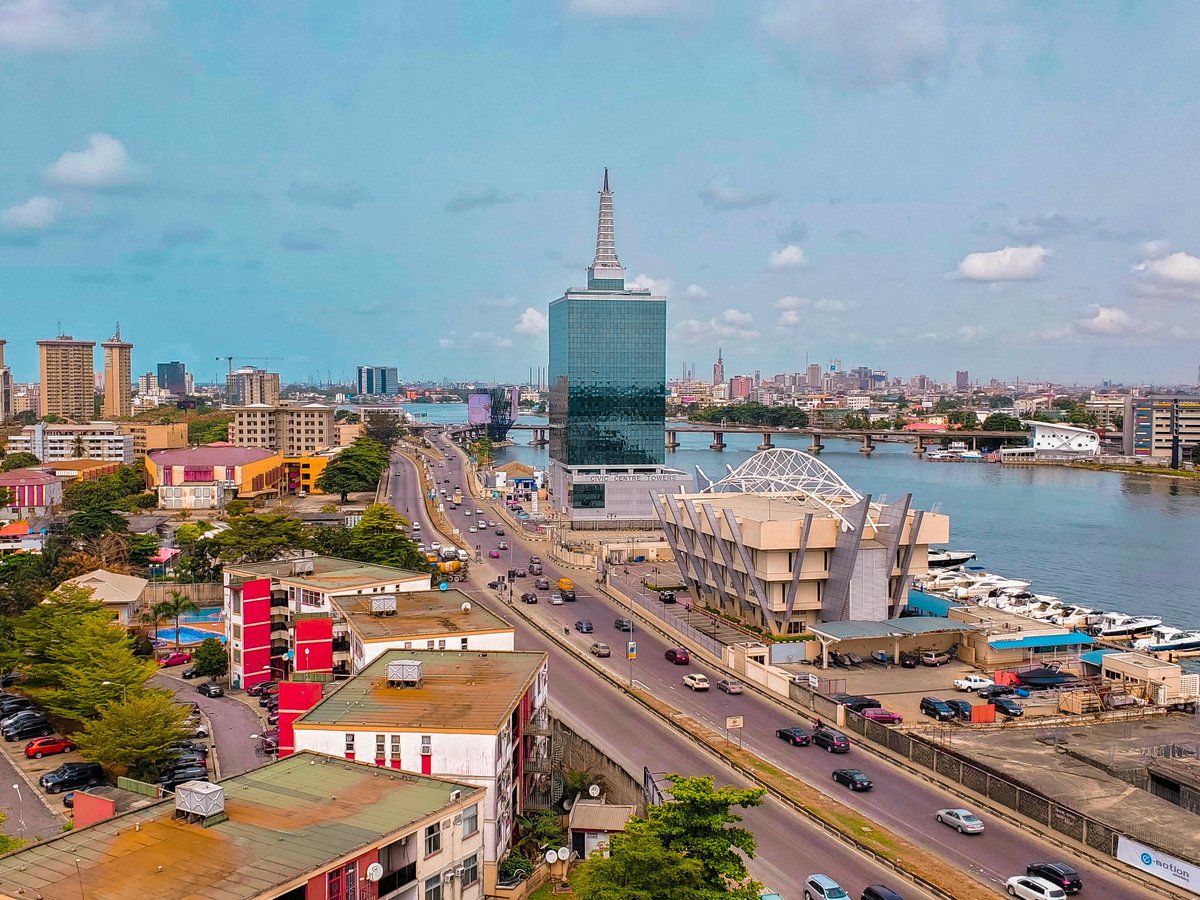
Stay in Lagos in May
20 hotels in the Trip.com pool for Lagos, from US$31 a night.
Opens Trip.com on Fri 7 May to Sun 9 May 2027; change the dates there.
May in Lagos is the month the rains stop hinting and start arriving. You'll see showers on roughly 20 of the 31 days, though most hit as sharp afternoon bursts that clear within an hour or two. Daytime temperatures sit around 30.9°C (88°F) with overnight lows near 25.8°C (78°F), which might sound manageable until you factor in 81% average humidity. Across the mainland, the air feels heavy the moment you step outside, thick with wet laterite and generator exhaust. That weight is most noticeable in low-lying neighborhoods like Apapa, Mushin, and the corridors around Oshodi, where the Atlantic breeze doesn't reach.
May occupies an interesting window in Lagos's calendar. It's wetter than April's 98mm but far lighter than June, when rainfall more than doubles. Lagos doesn't pause for drizzle. Balogun Market on Lagos Island stays packed, the Glover Court suya vendors in Ikoyi still fire up their charcoal grills at dusk, and the nightlife strip along Admiralty Way in Lekki Phase 1 keeps its late hours. Workers' Day on May 1 draws union marches through Surulere, while Children's Day on May 27 fills parks and school grounds across Yaba and Ikeja with performances.
May's lower hotel rates, 15-25% below peak, and thinner tourist crowds come with a tangible trade-off. Waterlogged roads after each storm snarl cross-city drives, particularly on the Lekki-Epe Expressway and around the Ojota interchange. LAGFERRY boats from Ikoyi to Marina often prove faster than sitting in bridge traffic on wet afternoons. A 15-minute walk in the tropical moisture leaves your shirt soaked through, and you learn to carry a spare.
Why visit in May
- Seasonal tropical fruit, including mango and ube (African pear), fills every roadside stall from Ojuwoye Market in Mushin to the supermarkets on Admiralty Way. The 'peter' mango cultivar hits its peak sweetness in May, and corn vendors fire up charcoal braziers across Surulere and Yaba for the early harvest.
- Fewer international visitors than the November-to-February dry season means shorter waits at attractions, easier restaurant reservations at places like Yellow Chilli on Victoria Island and Nkoyo at the Eko Hotel, and a less pressured atmosphere at Elegushi and Tarkwa Bay beaches.
- Hotel and guesthouse rates drop 15-25% from the dry-season peak across Victoria Island and Ikoyi, with steeper discounts on the mainland in neighborhoods like Yaba and Gbagada.
- The early rains transform Lagos's green spaces from dry-season brown to lush tropical growth. The canopy walkway at Lekki Conservation Centre is at its most photogenic when the mangrove forest is fully leafed out.
Worth knowing
- Daily afternoon downpours are the norm, often stranding you indoors for 1-2 hours and flooding low-lying streets within minutes of a heavy cell passing overhead.
- Lagos traffic, already notorious, worsens after rainstorms. A typical 45-minute trip between Ikeja and Victoria Island can stretch past 3 hours when key intersections flood.
- Mosquito populations spike with the standing water left by daily rains. Malaria-carrying Anopheles species are present throughout Lagos, and the risk rises compared to drier months.
- Persistent humidity and limited air circulation on the mainland, particularly in dense neighborhoods like Mushin and Oshodi, make outdoor activity physically draining between 11 AM and 3 PM when the air is at its stillest.
Best for
Think twice if
May sits at the front edge of Lagos's wet season. The month accumulates about 112mm of rain, nearly all as intense afternoon downpours that clear within 60-90 minutes. Mornings across Lagos tend to be dry and hazy, with cloud cover thickening through midday. Nights stay above 25°C, rarely offering relief. Ocean breezes temper conditions along the Victoria Island and Lekki coastline, but neighborhoods inland of the lagoon, from Ikeja to Mushin, sit in heavier, stiller air.
Seasonal caution
- Flash flooding occurs in low-lying areas after heavy downpours, particularly along stretches of the Lekki-Epe Expressway, in parts of Ajah, and near the Ogun River basin. Streets can go from dry to ankle-deep in under 30 minutes. Avoid driving through standing water, as drainage channels are often unmarked and concealed beneath the surface.
- Mosquito-borne disease risk rises with the standing water left by daily rains. Anopheles mosquitoes carrying malaria are present in Lagos year-round, but breeding accelerates in the wet season. Consult a travel clinic about antimalarials at least 2 weeks before departure, and use DEET-based repellent from dusk onward.
Year-round climate
Averages from the last 5 years.
| Month | Avg high (°C) | Avg low (°C) | Rainfall (mm) |
|---|---|---|---|
| Jan | 32 | 25 | 20 |
| Feb | 32 | 25 | 30 |
| Mar | 32 | 26 | 85 |
| Apr | 32 | 26 | 98 |
| May | 31 | 26 | 112 |
| Jun | 29 | 25 | 246 |
| Jul | 28 | 24 | 183 |
| Aug | 28 | 24 | 128 |
| Sep | 28 | 24 | 208 |
| Oct | 29 | 24 | 173 |
| Nov | 31 | 25 | 64 |
| Dec | 32 | 24 | 24 |
Holidays and festivals in May
Public holidays
- Workers' Day(Workers' Day)3 May 2027
- Children's Day(Children's Day)27 May 2027
Best things to do in May
Morning walks at Lekki Conservation Centre
natureThe centre's trails wind through mangrove and tropical forest along the Lekki Peninsula. The main draw is the suspended canopy walkway, 401 meters of wooden planks strung between platforms above the forest floor. Monkeys and monitor lizards appear more frequently in the wet season as the undergrowth fills in.
Early rains green up the dry-season brown. The forest canopy is fully leafed out by May, and mornings are rain-free more often than afternoons, giving a 3-4 hour window for walks.Sunset sessions at Elegushi Beach
beachElegushi is a private beach along the Lekki coastline with broad sand, rough but swimmable water in calm conditions, and vendors selling grilled fish and cold Star Lager along the shore. Weekend evenings draw a young Lagos crowd with portable speakers and barbecue setups.
May is the last month with reliably dry evenings before June's heavier rains make beach trips impractical for weeks. You'll still get 2-3 clear sunset windows per week.Rainy-afternoon galleries at the Nigerian National Museum
cultureFounded in 1957, this Onikan museum holds Benin bronzes, Nok terracottas, and traditional craft pieces in a colonial-era compound. The indoor galleries stay cool and dry regardless of the weather outside.
Afternoon downpours create windows where indoor attractions are the only sensible option. May's lower visitor numbers mean more space in the galleries than dry-season months.Nigerian Premier Football League at Teslim Balogun Stadium
sportsSurulere's 24,000-seat stadium, built in 1984, hosts league matches most weekends. The atmosphere is loud, passionate, and overwhelmingly local. Away supporters travel from across Nigeria, giving each fixture a different character.
Mid-season fixtures fall in May, with competitive games that carry standings weight. The open-air stands benefit from post-rain air cooling the evening down.Booking tipTickets are sold at the gate on match day. Arrive at least 90 minutes early for popular fixtures.
Late-night Afrobeat at New Afrika Shrine
nightlifeFela Kuti's legacy venue in Agidingbi, Ikeja, hosts live Afrobeat bands several nights a week. The open-sided structure fills with a local crowd after 11 PM, and performances run until 3 or 4 AM. The sound of the horn section carries across the parking lot before you even walk in.
May's lower tourist numbers mean the audience is overwhelmingly Lagosian rather than mixed with visitors. Post-rain evening air cools the open-air venue more than the dry-season heat allows.Seasonal produce at Mile 12 and Oyingbo markets
foodMile 12 Market near Ketu is the wholesale hub where fruit arrives by the truckload from farms across Nigeria's southwest. Oyingbo Market, closer to Lagos Island, spreads across tighter alleys but carries the same produce at retail quantities. The scent of ripe mango, the haze of charcoal smoke from corn vendors, and the calls of traders in Yoruba and pidgin create an atmosphere that no restaurant replicates.
Mango, ube arriving in late May, and early green corn from northern farms appear simultaneously. This overlap makes the market tables heavier with fresh produce than any other month.Weekend evenings at Freedom Park
cultureThis former colonial prison on Broad Street, Lagos Island, was converted into an open-air arts and events space. Weekend evenings bring live music, poetry readings, and occasional film screenings. The compound's high walls create a sheltered courtyard that handles light rain well.
The air cools noticeably after May's afternoon showers, making the open-air courtyard more comfortable than during the dry season's dustier, hotter evenings. Weekend programming tends to expand as the heat becomes less oppressive.What to eat in May
In season: fruit
Mango
Southern Nigeria's mango harvest peaks in May. The 'peter' cultivar is the sweetest and least fibrous, while 'julie' mangoes have a softer, creamier texture. Both appear at stalls across the city, from Mushin's Ojuwoye Market to Ajah.
Ube (African pear)
The dark-purple fruit arrives in Lagos markets toward late May from southeastern Nigeria. Traditionally roasted over charcoal until softened, ube has a buttery, slightly resinous flavor unlike anything in European or Asian produce aisles.
On menus now
Pepper soup
Catfish or goat pepper soup simmers in a thin, intensely spiced broth seasoned with uziza and calabash nutmeg. The dish takes on comfort-food status when you come in soaked from a May downpour. Seafood versions with whole prawns appear more frequently as lagoon fishing picks up with the rains. Buka restaurants in Surulere serve some of the most consistent bowls.
Efo riro
This Yoruba spinach stew relies on leafy greens that thrive with the early rains. May's harvest of tete (amaranth) and efo shoko (Lagos spinach) is visibly fresher and more tender than what drier months produce. The stew comes rich with palm oil, stockfish, and assorted meats. Amala joints along Herbert Macaulay Way in Yaba pair it with pounded yam.
Street food peaks
Roasted corn with ube
Green corn from the early harvest appears at roadside braziers across Lagos in May. Vendors char the cobs over coals and pair them with warm ube. The smoky sweetness of fresh corn against ube's oily richness is one of the city's signature seasonal combinations. Surulere and Yaba street corners have the highest concentration of sellers.
What to drink
Palm wine
Sap flows more freely from oil palms during the wet season, making May's palm wine noticeably fresher than the dry-season product. Tapped in the morning and fermented through the day, it ranges from sweet to tangy depending on age. Mainland spots in neighborhoods like Ebute Metta serve it at its freshest.
Regular events in May
Workers' DayFree
Nigeria's public holiday brings union marches, rallies, and speeches to major streets across Lagos. Government offices and many businesses close, while food vendors and informal markets operate at full capacity. Neighborhoods like Surulere fill with processions, and the marches typically wind down Broad Street on Lagos Island.
May 1Children's DayFree
Nigeria's national Children's Day fills school grounds, parks, and stadiums with parades, cultural performances, and sports competitions. Families turn out in large numbers across Yaba and Ikeja, and several Lagos schools organize inter-school contests that draw neighborhood crowds.
May 27Nigerian Premier Football League fixtures
League matches at Teslim Balogun Stadium in Surulere bring passionate weekend crowds to the 24,000-seat stands. The mid-season schedule typically features competitive games with meaningful standings implications, and away supporters from across Nigeria add variety to the atmosphere.
Weekends throughout MayBest places this May
Cathedral Church of Christ
historicalBuilt in 1946 near the Marina on Lagos Island, this Anglican cathedral offers a cool, quiet interior that contrasts with the noise and heat outside. May's cloud-filtered light through the stained glass creates softer, warmer tones than the harsh dry-season glare.
Lagos IslandNike Art Gallery
artFour stories of Nigerian art on the Lekki-Epe Expressway, from contemporary paintings to traditional textiles. Air-conditioned and spacious enough for a 2-3 hour visit when the rain pins you indoors. The rooftop offers views of the Lekki skyline on clear mornings.
LekkiBalogun Market
marketLagos Island's largest textile market operates largely under covered corridors, keeping it functional in any weather. May's lighter crowds compared to December mean less jostling in the narrow aisles. The fabric selection tends to be broadest before the Eid sewing rush, and May timing typically falls ahead of that window.
Lagos IslandTerra Kulture
cultureA combined art gallery, theater, and restaurant on Victoria Island. The theater hosts plays and spoken-word events most weekends. Indoor programming tends to expand in May as outdoor events become weather-dependent, giving you more evening options than drier months.
Victoria IslandTarkwa Bay Beach
beachAccessible by boat from Falomo jetty in Ikoyi, this sheltered beach sits behind the Lagos Harbour breakwater. The 15-minute crossing runs on calmer morning waters in May than during the peak wet-season swells of July and September. The beach stays cleaner than most mainland options.
Lagos HarbourGlover Court suya strip
foodA row of open-air suya vendors along Glover Road in Ikoyi fires up charcoal grills every evening around 6 PM. The thinly sliced, spiced beef is grilled to order and served wrapped in newspaper with sliced onions, tomatoes, and ground yaji pepper. After a May shower clears the air, the smoke rising from the grills mixes with the scent of wet pavement. Most regulars order 10-20 sticks at a time.
IkoyiEko Bridge
landmarkThis bridge connecting Lagos Island to the mainland offers striking perspectives of the Lagos lagoon and skyline, particularly in the soft pre-storm light that characterizes May afternoons. Pedestrian access is limited, but the views from vehicles crossing at sunset remain one of the city's more understated sights.
Lagos Island
Your packing checklist
Tick items off as you pack. Your progress saves in this browser.
All packed — have a great trip.
Insider tips
Time your cross-city trips for before 7 AM or between 11 AM and 1 PM. The Lekki-Ikoyi Link Bridge and Third Mainland Bridge corridors become parking lots by 4 PM on wet afternoons, turning a manageable commute into something that eats your entire evening.
Mango sellers near Ojuwoye Market in Mushin carry the same quality you'll find in Victoria Island supermarkets at a fraction of the markup. The market also stocks local cultivars like 'german' and 'kerosene' mangoes that the supermarkets never bother to carry.
If you're visiting Lekki Conservation Centre, arrive before 9 AM on weekdays. Saturday mornings draw large family groups to the canopy walkway, and the crowds compress the experience. Weekday mornings are calmer and more photogenic in the wet-season greenery.
Power outages increase during May storms. Hotels in Victoria Island and Ikoyi typically have generator backup, but budget guesthouses on the mainland may not. Ask about power continuity before you book.
BRT buses along the Ikorodu Road corridor are more reliable than Bolt after a heavy downpour. Surge pricing on the app pushes wait times past 45 minutes in the Ikeja-to-Victoria Island corridor, while the BRT keeps its schedule regardless of weather.
LAGFERRY boats from Ikoyi to Marina take about 15 minutes and skip bridge traffic entirely. After a May downpour, when the Third Mainland Bridge corridor locks up, the ferry is the fastest route between the islands and the mainland. Boats run from early morning until early evening.
Avoid these mistakes
- Scheduling outdoor activities for the afternoon. May's rain pattern is predictable enough to plan around. Mornings stay clear until noon or 1 PM. Booking a boat trip to Tarkwa Bay or a beach outing at Elegushi for 3 PM means watching the sky from shelter instead of enjoying the water.
- Packing only sandals and flip-flops. Streets across Surulere and Yaba flood briefly but intensely after storms. Standing water reaches ankle depth within minutes, and drainage channels overflow without warning. Water-resistant closed-toe shoes prevent an unpleasant wade through murky runoff.
- Treating dry-season traffic estimates as reliable. After an afternoon downpour, key intersections flood and gridlock spreads across the mainland-to-island bridge corridors. Build at least 90 extra minutes into any cross-city evening itinerary during May, or use LAGFERRY boats between Ikoyi and Marina to avoid the bridges altogether.
Practical tips for May
Book accommodations in Victoria Island or Ikoyi rather than the mainland if your schedule involves frequent island visits. The bridges connecting the two areas become bottlenecks after rainstorms, and the commute time difference on wet days is dramatic. LAGFERRY boats from Ikoyi to Marina bypass bridge traffic entirely and run until early evening. Carry small-denomination naira notes for danfo minibuses and okada motorcycle taxis, as digital payments remain uncommon on public transport. Bolt is the dominant ride-hailing app in Lagos and more reliable than Uber for coverage across the mainland and islands. Confirm restaurant and attraction hours around the two public holidays, since many smaller establishments close entirely on Workers' Day and Children's Day. Download offline maps for Lagos before arriving because mobile data coverage drops during heavy storms, and Bolt performs better with pre-cached map tiles. Light, long-sleeved evening wear helps against mosquitoes after dusk without overheating in the residual warmth.
FAQ
Is May a good time to visit Lagos?
May sits in the bottom half of Lagos's 12-month visitor ranking. The wet season has begun, with rain on most days, though the showers tend to be shorter and lighter than the June-through-September core. Hotel rates across Victoria Island drop 15-25% from peak season, the Nigerian National Museum in Onikan sees less foot traffic, and mango season is in full swing at mainland markets like Oyingbo and Mile 12. The trade-off is real humidity and afternoon downpours, but mornings typically stay dry enough for outdoor plans through noon.
How much does it rain in Lagos in May?
Rain falls on roughly 20 of May's 31 days, nearly always as intense afternoon downpours that clear within 60-90 minutes. Mornings are typically dry and suitable for outdoor plans across all parts of the city. The total monthly rainfall of about 112mm sits well below June's and September's heavier peaks, placing May at the front end of the wet season before the volume ramps up.
Is Lagos less crowded in May than in December?
International tourist numbers drop considerably compared to the December-February peak season. Hotels, restaurants, and attractions in Victoria Island and Lekki feel noticeably less pressured. You'll get into places like Yellow Chilli on Victoria Island or Nkoyo at the Eko Hotel without the long waits that the dry season brings. Lagos itself, home to over 20 million residents, never feels quiet, but the tourist-facing infrastructure is more accessible and less competitive for reservations.
When does Lagos's rainy season start?
Scattered showers begin appearing in March, but the consistent daily rain pattern typically establishes itself in May and runs through October. June and September tend to see the heaviest totals, while August sometimes offers a brief mid-season respite called the 'August break,' though its reliability varies from year to year.
What festivals happen in Lagos in May?
Workers' Day on May 1 and Children's Day on May 27 create long-weekend energy across the city. Union marches wind through Surulere and down Broad Street on Lagos Island, while school parades and performances fill parks in Yaba and Ikeja on Children's Day. Neither is a marquee tourist draw on the scale of Rio's Carnival or Bangkok's Songkran, but the street celebrations show you a side of Lagos that the dry-season tourist circuit misses entirely.
Last verified by automated review (v1.7.2) on . What is automated review?