Stay in Petra in March
52 hotels in the Trip.com pool for Petra, from US$10 a night.
Opens Trip.com on Fri 5 Mar to Sun 7 Mar 2027; change the dates there.
March in Petra is about one thing above all else. The temperature sits at 18°C (64°F) during the day, which means you can hike the 800-plus steps to Ad-Deir without feeling like you might collapse. That alone puts it in the top tier of months to visit. The desert floor around Wadi Musa tends to flush green after winter rains, and you might catch red anemones and wild irises scattered along the trails between the Royal Tombs and the High Place of Sacrifice. It feels like a different landscape from the scorched brown of July and August.
That said, March still carries the tail end of the rainy season. About 37mm of rain falls across roughly 6 days, and that matters here more than it would in most places. The Siq, that narrow 1.2-kilometre gorge that funnels you toward Al-Khazneh, is also a natural drainage channel. When rain falls hard in the hills above, water rushes through it fast. The Petra authorities will close the Siq entrance when flash flood risk is high, which can cost you a full day of your visit. Worth planning a buffer day into your itinerary.
Crowds are building by March. It's shoulder season tipping into high, so you'll share the Treasury viewpoint with tour groups from about 9am onward. Mornings down at 9°C (49°F) feel genuinely cold in the shade of the canyon walls, but by noon, a t-shirt is enough. Hotel rates in Wadi Musa sit above the annual average, though still well below what you'd pay in October or April. If you can handle the possibility of a rained-out morning and you prefer cool hiking weather to certainty of blue sky, March is a strong pick.
Why visit in March
- Daytime highs of 18°C (64°F) make the long hikes, including the 800-step climb to Ad-Deir and the High Place of Sacrifice circuit, comfortable rather than punishing
- Spring wildflowers, particularly red anemones and wild irises, appear across the normally bare sandstone landscape around Wadi Farasa and the trail to Little Petra
- Crowds are lighter than the October-November peak, so you can reach Al-Khazneh by 6:30am and have 30-45 minutes with fewer than a dozen other visitors
- Hotel rates in Wadi Musa run 15-25% lower than during the peak autumn months while conditions are nearly as good for sightseeing
Worth knowing
- Flash flood risk in the Siq is real. The gorge channels rainwater from the surrounding hills rapidly, and the Petra Development and Tourism Region Authority closes the entrance when storms are expected, potentially costing you a full visiting day
- Mornings at 9°C (49°F) feel cold in the deep shade of the canyon, especially if you arrive at the Siq entrance at 6am for an early start. The temperature swing of nearly 10 degrees through the day catches people off guard
- About 6 rainy days on average means roughly a 1-in-5 chance any given day gets wet, and overcast skies dull the famous rose-pink colour of the sandstone
Best for
Think twice if
March in Petra sits in the transition between the cool, wet winter and the dry spring. Days typically reach 18°C (64°F) under clear skies, though mornings start cool at 9.2°C (49°F), particularly in the shade of the canyon walls where the sun doesn't reach until late morning. Humidity averages 54%, which keeps the air from feeling dry enough to crack your lips the way summer does. Rainfall totals around 37mm across about 6 days, usually arriving as brief afternoon showers rather than all-day downpours, though the occasional heavier system moves through. Wind picks up in the afternoons, especially at exposed high points like Ad-Deir and the High Place of Sacrifice.
Seasonal caution
- Flash flooding in the Siq is the primary safety concern. The 1.2km gorge acts as a natural drainage channel, and rainfall in the hills above Petra can send a wall of water through the canyon within minutes. In November 2018, roughly 3,700 tourists were evacuated from the site after sudden flooding. The Petra authorities monitor conditions and close the Siq entrance preemptively, but if you're inside the gorge when rain starts, move to high ground immediately. Check weather forecasts each evening and have an alternative plan for rainy days.
- Night temperatures can drop to 3-4°C (37-39°F) during cold snaps, particularly in the first half of March. If you're camping at a Wadi Rum desert camp as a side trip, bring proper cold-weather sleeping layers.
Year-round climate
Averages from the last 5 years.
| Month | Avg high (°C) | Avg low (°C) | Rainfall (mm) |
|---|---|---|---|
| Jan | 14 | 7 | 33 |
| Feb | 14 | 6 | 41 |
| Mar | 18 | 9 | 37 |
| Apr | 25 | 14 | 11 |
| May | 28 | 17 | 6 |
| Jun | 31 | 21 | 0 |
| Jul | 32 | 22 | 0 |
| Aug | 33 | 23 | 0 |
| Sep | 30 | 20 | 1 |
| Oct | 25 | 17 | 4 |
| Nov | 21 | 14 | 20 |
| Dec | 16 | 9 | 35 |
Best things to do in March
Dawn walk through the Siq to Al-Khazneh
hikingEnter the Siq at 6am when the gates open and walk the 1.2km gorge with the canyon walls towering 80 metres above you. At dawn, the sandstone shifts from grey to pink to amber as sunlight creeps down. You'll reach Al-Khazneh (the Treasury) in about 25 minutes, and at that hour you might share the view with only a handful of other early risers before the tour buses arrive around 9am.
March mornings at 9°C keep the Siq cool enough for a comfortable walk that would be sweltering by June. The lower sun angle in early spring creates longer, more dramatic shadow play on the carved facades.Booking tipNo booking needed. Arrive at the Petra Visitor Centre by 5:45am to be among the first through the gate.
Full climb to Ad-Deir (The Monastery)
hikingThe 800-plus rock-cut steps from the Basin up to Ad-Deir take 40-60 minutes depending on fitness. The Monastery facade at the top is 47 metres wide, even larger than the Treasury, and far fewer visitors make it up here. A Bedouin tea stall near the viewpoint sells hot sage tea for 1-2 JOD.
At 18°C, the exposed staircase climb is strenuous but not dangerous. In July and August, when the same steps bake at 32-33°C with no shade, the climb sends several tourists to the medical station each week with heat-related illness.Booking tipStart by 7am to have the Monastery largely to yourself. Most guided groups don't arrive until after 10am.
High Place of Sacrifice and Wadi Farasa descent
hikingThe circuit hike climbs from the Street of Facades to Al-Madbah (the High Place of Sacrifice) at 1,035 metres elevation, then descends through Wadi Farasa past the Garden Tomb, the Roman Soldier Tomb, and the Lion Fountain. The full loop takes 2-3 hours and drops you back near Qasr al-Bint. In March, you'll likely spot red anemones growing between the rocks along the Wadi Farasa trail.
Spring wildflowers along Wadi Farasa peak in the second half of March. The circuit is also one of the most exposed routes in Petra, making it miserable in summer heat but ideal at 18°C.Half-day trip to Little Petra (Siq al-Barid)
sightseeingSiq al-Barid sits about 9km north of Wadi Musa. The site is a smaller version of the main Siq, roughly 350 metres long, with carved Nabataean dining rooms still showing traces of original painted frescoes on their ceilings. Entry is free, and you'll typically find the site nearly empty even when main Petra is busy.
The road from Wadi Musa passes through open hillside that's green and dotted with wildflowers in March, a landscape that's bare brown rock by May. The Beidha Neolithic village, a 10-minute walk from Little Petra, is also easier to appreciate when you're not rushing through 35°C heat.Booking tipHire a taxi from Wadi Musa for about 10-15 JOD round trip with a 1-hour wait. No advance booking needed.
Petra by Night candlelit walk
culturalOn Monday, Wednesday, and Thursday evenings, the path from the Visitor Centre through the Siq to the Treasury is lit by 1,500 candles in paper bags. Bedouin musicians play at the Treasury, and the walk takes about 25 minutes each way. The event starts at 8:30pm and runs about 2 hours.
March evening temperatures around 10-12°C are cool enough to make the walk pleasant but not so cold that you're shivering for 2 hours. The experience runs year-round, but in summer the retained heat in the canyon makes the enclosed Siq uncomfortably warm even at night.Booking tipTickets cost 17 JOD and can sell out in peak weeks. Buy at the Visitor Centre the morning of, or book through your hotel the day before.
Sunset at the Royal Tombs
sightseeingThe east-facing cliff of the Royal Tombs, including the Urn Tomb, the Silk Tomb, and the Corinthian Tomb, catches the last afternoon light. The sandstone bands shift through orange, pink, and purple as the sun drops behind Umm al-Biyara. You can sit on the carved steps of the Urn Tomb and watch the colour change over about 30 minutes.
March sunset falls around 6pm, which means you can watch the light show and still walk back through the Siq before full dark. In winter months, sunset comes too early to see the effect after a full day of exploring. The spring atmosphere also tends to be clearer than the hazy summer months.Dana to Petra segment of the Jordan Trail
hikingThe 4-day, roughly 73km hiking segment from Dana Nature Reserve to Petra crosses dramatic canyon country and remote Bedouin settlements. The trail drops from 1,500 metres at Dana down to the Wadi Araba rift valley, then climbs back up to Petra. You'll need a guide for navigation and water logistics.
March is one of only two windows (the other being October-November) when daytime temperatures along the trail sit in the safe 15-22°C range. Summer heat makes this route genuinely dangerous, and winter rains can make the wadi crossings impassable.Booking tipBook a guide through the Jordan Trail Association at least 3-4 weeks ahead. March is their busiest season for this segment.
Overnight in Wadi Rum
adventureWadi Rum sits about 100km south of Petra, roughly 1.5 hours by car. March nights in the desert drop to around 5-8°C, cold enough to make the campfire feel necessary rather than decorative. The daytime Jeep tours through sandstone valleys and natural rock bridges run at comfortable temperatures. Stars at night are extraordinary in the dry desert air.
March offers the balance between cold enough for dramatic stargazing (clear, dry air) and warm enough during the day for comfortable exploration in a t-shirt. Summer camps at Wadi Rum hit 35°C+ inside the tents and the sand burns through shoe soles.Booking tipBook a Bedouin camp at least a week in advance for March weekends. Camps range from 40-120 JOD per person depending on whether you want a basic tent or a geodesic dome with heating.
What to eat in March
In season: fruit
Loz Akhdar (green almonds)
Fresh green almonds appear in Wadi Musa market stalls from mid-March. Locals eat them whole, fuzzy shell and all, dipped in coarse salt. The flavour is tart and grassy, nothing like a dried almond. Street vendors near the Petra Visitor Centre sell small bags for about 1 JOD.
On menus now
Khubbeizeh (mallow leaf stew)
Wild mallow leaves are foraged in the hills around Wadi Musa each spring. Simmered slowly with onion, garlic, and olive oil, then served over rice. It's the kind of dish that only appears on restaurant menus for about 6 weeks, and locals treat the first batch of the season as a minor event. Try it at the guesthouses in Umm Sayhoun.
Mansaf with spring lamb
Jordan's national dish is available year-round, but March lamb from the spring grazing season tends to be younger and more tender. The dish is slow-cooked in jameed (fermented dried yogurt reconstituted into a tangy broth) and served over rice on flatbread. Restaurants in Wadi Musa serve portions for 7-10 JOD.
What to drink
Maramiyyeh (wild sage tea)
Fresh wild sage grows across the hillsides near Petra in spring. Bedouin tea stalls inside the archaeological site brew it with black tea and sugar. The flavour is more peppery and complex than dried sage, and it's a welcome warm-up on cold March mornings at 9°C inside the Siq.
In markets
Freekeh
Roasted green wheat harvested in early spring across the Levant. The grains are smoky and chewy, served as a pilaf or in soup. In March, the new season's freekeh starts appearing, and the difference between fresh and last year's stored batch is noticeable in the nuttier flavour.
Regular events in March
Petra by Night
Candlelit walk through the Siq to Al-Khazneh, held every Monday, Wednesday, and Thursday evening at 8:30pm. Not March-specific but the spring temperatures make it more comfortable than summer or deep winter sessions. Tickets 17 JOD at the Visitor Centre.
Every Monday, Wednesday, and ThursdayJordan Mother's DayFree
Observed on March 21 across Jordan. Wadi Musa restaurants and shops tend to be busier with Jordanian domestic visitors on the surrounding weekend. Not a public holiday, but you might notice local families at the Petra site in larger numbers.
March 21Arab League DayFree
Marked on March 22 as a minor observance across Jordan. Government offices may have adjusted hours, but tourist sites including Petra maintain normal opening times. You might see Jordanian flags and small displays in Wadi Musa town.
March 22Jordan Trail spring thru-hike season opening
The Jordan Trail Association's guided through-hike season typically begins in early to mid-March, with groups setting out from Um Qais in the north or tackling popular segments like Dana to Petra. The trail community is small but international, and you'll likely meet through-hikers in Wadi Musa guesthouses.
Early to mid-March through AprilBest places this March
Al-Khazneh (The Treasury)
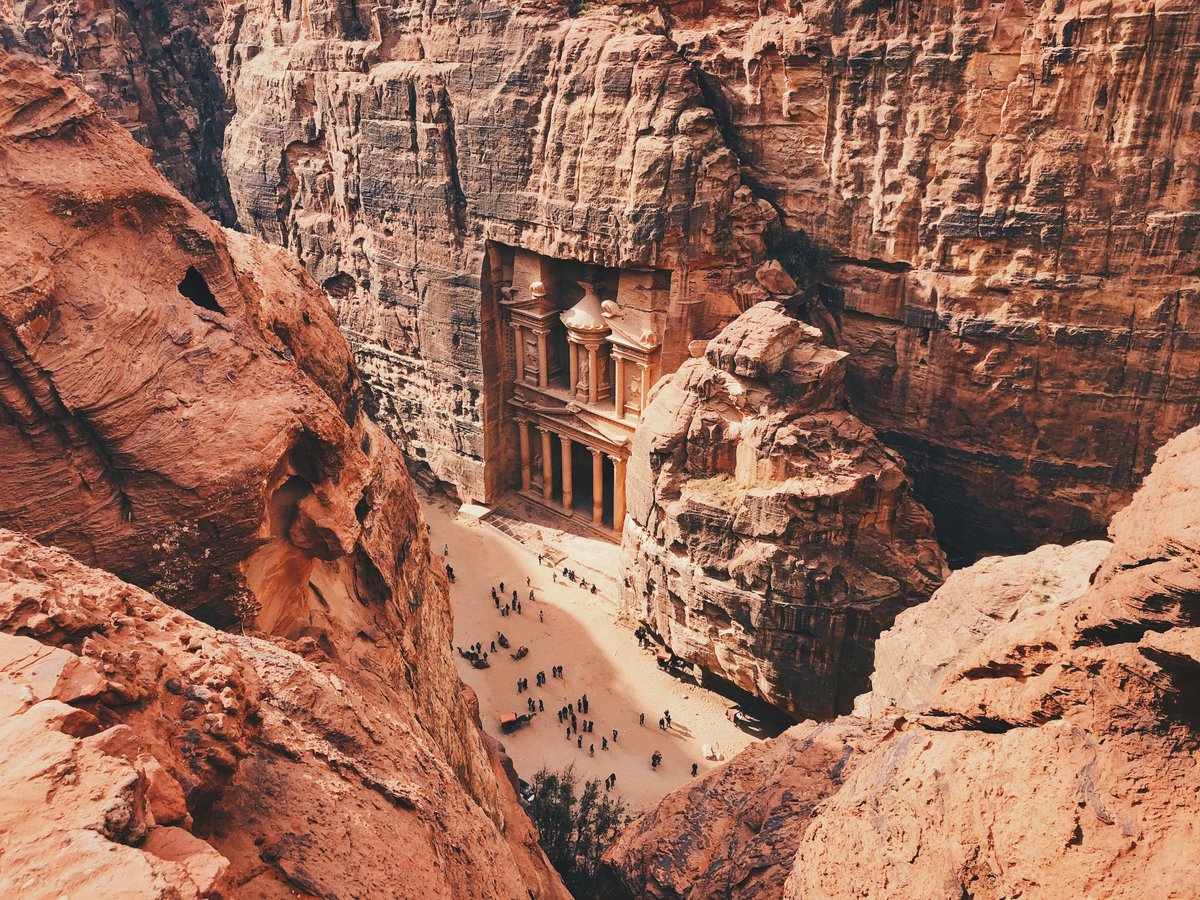
archaeological sitePetra's iconic Hellenistic facade, 40 metres tall, carved directly into the rose sandstone cliff face. In March, the morning light reaches the facade by about 9am, and the crowds stay manageable until 10am. The colour of the stone shifts noticeably with the spring sun angle compared to summer or winter visits.
Central PetraAd-Deir (The Monastery)
archaeological siteThe 47-metre-wide facade sits at the top of an 800-step climb from the Basin. In March, the surrounding plateau shows patches of green scrub and the occasional wildflower, a stark contrast to the bare rock of summer. The Bedouin tea stall at the viewpoint opposite is one of the best rest stops in Jordan.
Upper PetraWadi Farasa
hiking trailThe narrow side valley running south from the High Place of Sacrifice, passing the Garden Tomb, the Roman Soldier Tomb complex, and the Renaissance Tomb. March brings red anemones and other wildflowers to the gaps between the carved rock, and the wadi floor stays cool through midday. Fewer visitors take this descent route compared to the main trail.
Southern PetraLittle Petra (Siq al-Barid)
archaeological siteA free-entry Nabataean site 9km north of Wadi Musa with carved triclinia (dining rooms) that still show original 2,000-year-old painted frescoes on their ceilings. The short siq is about 350 metres and rarely has more than a dozen visitors at any time. March is good for combining this with a walk to the Beidha Neolithic village next door.
BeidhaThe Royal Tombs at sunset
viewpointThe east-facing cliff holding the Urn Tomb, Silk Tomb, Corinthian Tomb, and Palace Tomb catches late-afternoon light in March around 5-6pm. The layered sandstone bands glow through several colour shifts over about 30 minutes. The carved interior of the Urn Tomb, later converted to a Byzantine church in 446 AD, is worth entering for the scale of the space.
Central PetraQasr al-Bint
archaeological siteThe only free-standing building remaining in Petra, this Nabataean temple near the Basin was dedicated to the deity Dushara. Most visitors rush past it on the way to the Monastery stairs, so you can often explore it with few people around. The surrounding Basin area, with its Colonnaded Street and Byzantine Church, fills a good 1-2 hours.
The BasinBeidha Neolithic Village
archaeological siteOne of the earliest known farming settlements in the Middle East, dating to roughly 7000 BC. The circular stone foundations sit on a hillside a 10-minute walk from Little Petra. In March, the site is surrounded by green scrubland rather than dust, and the interpretive signs are easier to read without squinting in fierce summer glare.
BeidhaUmm al-Biyara summit
viewpointThe flat-topped mountain above the central valley of Petra, rising about 300 metres above the Basin floor. The climb is steep and requires some scrambling, but in March conditions it's feasible for fit hikers. The summit holds ruins of an Edomite settlement and offers a bird's-eye view of the entire Petra basin. You'll need a local guide, as the trail is not well marked.
Central Petra
Your packing checklist
Tick items off as you pack. Your progress saves in this browser.
All packed — have a great trip.
Insider tips
The Visitor Centre sells 1-day (50 JOD), 2-day (55 JOD), and 3-day (60 JOD) tickets. The price difference between 1 and 2 days is only 5 JOD, which makes the 1-day ticket poor value unless you genuinely have no choice. Two days lets you split the site into the main trail on day one and the longer hikes (High Place circuit, Monastery, Umm al-Biyara) on day two without rushing.
The back trail to Ad-Deir from Umm Sayhoun village avoids the 800-step climb entirely. It's a lesser-known route that starts from behind the village, and some Wadi Musa guesthouse owners can arrange a guide. You descend the steps instead of climbing them, which is far easier on the knees, and you reach the Monastery before the first hikers arrive from the Basin.
Bedouin tea stalls inside Petra charge 1-3 JOD for tea and simple snacks. Bringing your own lunch is fine and widely done, but buying a tea or two supports the Bedouin families from Umm Sayhoun who have operated these stalls for generations. The sage tea (maramiyyeh) at the stall near Ad-Deir uses wild-picked herbs from the surrounding hills.
If the Siq is closed due to flash flood risk, you can still enter Petra via the alternative trail from the Visitor Centre over the hill to the High Place of Sacrifice, bypassing the Siq entirely. Not all visitors know this, and the ticket office doesn't always volunteer the information. Ask specifically at the entrance.
The stretch of the Colonnaded Street near the Byzantine Church and Qasr al-Bint in the Basin area empties out after about 3pm, when most tour groups head back through the Siq. Late afternoon is the quietest time in this part of the site, and the light on the western cliffs is good.
Avoid these mistakes
- Attempting to see all of Petra in a single day. The site covers roughly 264 square kilometres of protected area, and even the core tourist trail from the Siq to Ad-Deir is a 12-15km round trip with significant elevation change. Trying to add the High Place circuit and Wadi Farasa descent on top of that turns the day into a 20km forced march. Buy the 2-day ticket for 5 JOD more and split the routes.
- Packing for 18°C and forgetting about the 9°C mornings. Visitors who enter the Siq at 6am in shorts and a t-shirt spend the first 2 hours shivering in canyon shade. The temperature swing through the day is nearly 10 degrees, and the wind chill at exposed high points like the Monastery or the High Place makes it feel colder still.
- Ignoring flash flood warnings. Some visitors see a light drizzle and decide to enter the Siq anyway, or ignore the warning signs posted at the entrance. The Siq's walls are 80 metres high and less than 3 metres wide at the narrowest point. Water from a storm in the hills above can reach the gorge floor in minutes. When the authorities close the entrance, it is not overcaution.
- Booking a Wadi Rum overnight BEFORE Petra instead of after. Your legs will be exhausted after 2 days of Petra hiking. Doing Wadi Rum first means you arrive at Petra with tired legs and sore feet. Do Petra first, then use Wadi Rum as the recovery trip. You're mostly sitting in a Jeep or lounging at camp.
Practical tips for March
Buy the Jordan Pass online before arriving. It bundles the Petra entry fee with the Jordan visa fee (40 JOD) and saves money if you're visiting at least one other paid site. The 2-day Petra Jordan Pass costs 70 JOD versus 55 JOD for a 2-day ticket alone plus the 40 JOD visa on arrival. Petra's gates open at 6am and close at 6pm in March, with last entry at 4pm. The Visitor Centre has luggage storage, toilets, and a small restaurant. ATMs are available in Wadi Musa town, about 10 minutes on foot from the entrance, but cards are not accepted at Bedouin stalls inside the site, so carry cash in small denominations (1 and 5 JOD notes). Dress modestly in Wadi Musa town, which is conservative. Inside the Petra site, hiking clothes are completely normal and expected. If you're visiting during Ramadan (dates shift annually, sometimes overlapping March), restaurants in Wadi Musa may be closed during daylight hours, though tourist hotels still serve meals. Book accommodation in Wadi Musa rather than Aqaba or Amman, both of which are 2-3 hours away. Staying within walking distance of the Visitor Centre lets you enter at gate-opening and avoid losing an hour to transport each way.
FAQ
Is March a good time to visit Petra?
March is one of the 3-4 best months for Petra. Daytime temperatures reach 18°C (64°F), which makes the long hikes to Ad-Deir and the High Place of Sacrifice comfortable rather than grueling. Wildflowers appear along the trails, and crowds are lighter than in October or November. The main trade-off is rain. About 37mm falls across 6 days, and heavy rain triggers flash flood closures of the Siq. If you build a buffer day into your itinerary, March is an excellent choice.
What is the weather like in Petra in March?
Average highs reach 18°C (64°F) and lows drop to 9.2°C (49°F). Humidity sits around 54%. Expect about 37mm of rainfall spread across 6 days, mostly as brief showers. Mornings feel cold in the deep shade of the Siq and canyon areas, warming to comfortable t-shirt weather by midday. Afternoons can be windy at exposed high points. The temperature swing through the day is nearly 10 degrees, so layering is essential.
Is Petra crowded in March?
March is medium-crowd season, noticeably busier than December through February but less packed than the peak months of October and November. You'll share Al-Khazneh with tour groups from about 9am onward, but the longer trails (High Place, Monastery, Wadi Farasa) remain relatively quiet. Arriving at the gate by 6am gives you 2-3 hours of near-solitude on the main trail. Weekdays are lighter than weekends, when Jordanian domestic visitors from Amman add to the numbers.
How many days do I need for Petra?
Two days minimum, three if you want to include Little Petra and the longer hikes like Umm al-Biyara or Jabal Haroun. The 2-day ticket costs only 5 JOD more than the 1-day ticket (55 vs 50 JOD), which makes the 1-day option poor value. Day one covers the Siq, Al-Khazneh, the Colonnaded Street, the Royal Tombs, and the Byzantine Church. Day two tackles Ad-Deir, the High Place of Sacrifice, and the Wadi Farasa circuit.
Are flash floods a real danger at Petra in March?
Yes. The Siq is a narrow gorge that channels rainwater from the surrounding hills, and it can flood with very little warning. The Petra authorities actively monitor weather conditions and close the Siq entrance when flash flood risk is elevated. This happened during a major flood event in November 2018 that required evacuating about 3,700 visitors. In March, with 37mm of rain across 6 days, closures happen periodically. Check the forecast each evening, and if the Siq is closed, use the alternative hill trail to enter the site from above.
Find a flight to Petra
Live fares to Petra appear here once cookies are accepted.
Last verified by automated review (v1.7.2) on . What is automated review?