What's happening in Petra this week?
Petra runs on an early-morning rhythm right now. The Siq opens at 6am, and the first 90 minutes before tour buses arrive are the coolest and quietest. Petra by Night lights 1,500 candles along the path to Al Khazneh on Monday, Wednesday, and Thursday evenings at 8:30pm. Plan your week around dawn starts and long midday breaks.
Petra at this time of year is a negotiation with the sun. Current overnight temperatures sit near 27°C with 46% humidity, comfortable enough for the walk in. By 11am the air reaches 36-38°C, and the sandstone walls of the Siq radiate stored heat from both sides. That 1.2km corridor to the Treasury feels like standing inside a kiln after noon. Build your days around the cool-hour windows, with a retreat to your hotel in Wadi Musa between roughly 11am and 3pm. The town sits at 1,100m elevation, which helps evenings drop to around 24°C. That midday break is not laziness. It is the local rhythm. The shops on Wadi Musa's main street close between noon and 4pm too.
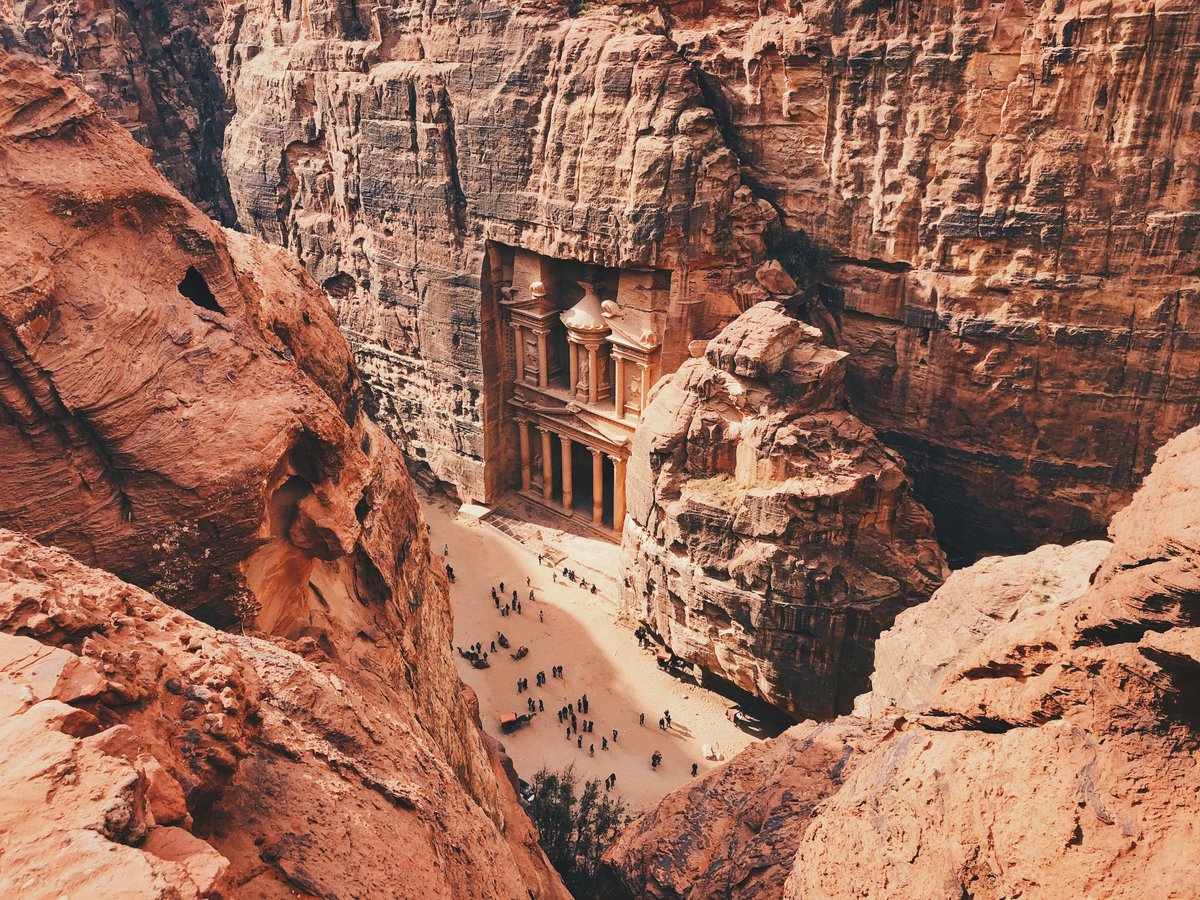
The candlelit walk to the Treasury follows the same Siq route you take by daylight, but stripped of scale in near-total darkness. No wind, no traffic. Footsteps on gravel and the occasional voice bouncing off 80-meter cliff walls. Bedouin tea is served when you reach the Treasury's plaza. Tickets cost 17 JOD on top of your regular entry. Wednesday sessions tend to draw fewer visitors than the start-of-week evening. All three nights work well. The Treasury was carved into the cliff face around 100 AD as a royal tomb, and you might see more detail by candlelight than you expect. Shadows pick out the Corinthian capitals and the erosion lines that direct sun washes flat.
For your first morning, walk past the Treasury to the Street of Facades, the Theatre carved from the cliff face, and down Colonnade Street to Qasr al-Bint, the only freestanding Nabataean temple still partly intact. This route runs about 3km one way and stays mostly flat. Save Ad Deir, the Monastery, for your second morning. The climb is roughly 800 rock-cut steps, and you want to finish before the heat builds. The Monastery sits at 1,050m and catches a breeze the valley floor does not. Sandstone up there glows copper-orange in early light. Little Petra, 9km north of Wadi Musa, is free to enter and rarely crowded. It works well on an afternoon when the painted Nabataean ceiling frescoes in the Painted Biclinium catch low-angle sun.
Food in Wadi Musa follows a limited pattern. The restaurants near the Mövenpick at the site entrance do a reliable mansaf, lamb cooked in dried-yogurt sauce over rice, for about 8-10 JOD. The Basin Restaurant inside Petra, near the end of the main trail, is the only sit-down option within the site and runs a lunch buffet for around 15 JOD. The smell of grilled chicken and cardamom tea drifts through by 11:30am. Friday is the Islamic day of rest, so some smaller shops close, though the site stays open 7 days a week. The Jordan Pass, 70-75 JOD depending on duration (roughly 99-106 USD with the dinar at 0.71 to the dollar), covers your visa fee and site entry for 1, 2, or 3 days. Buy it online before you fly. Three days is the right number. Two feels rushed past the Monastery.
No verified events are listed for this week. We publish only events we can confirm against an official source, never guesses.
Last verified by automated review (v1.7.2) on . What is automated review?