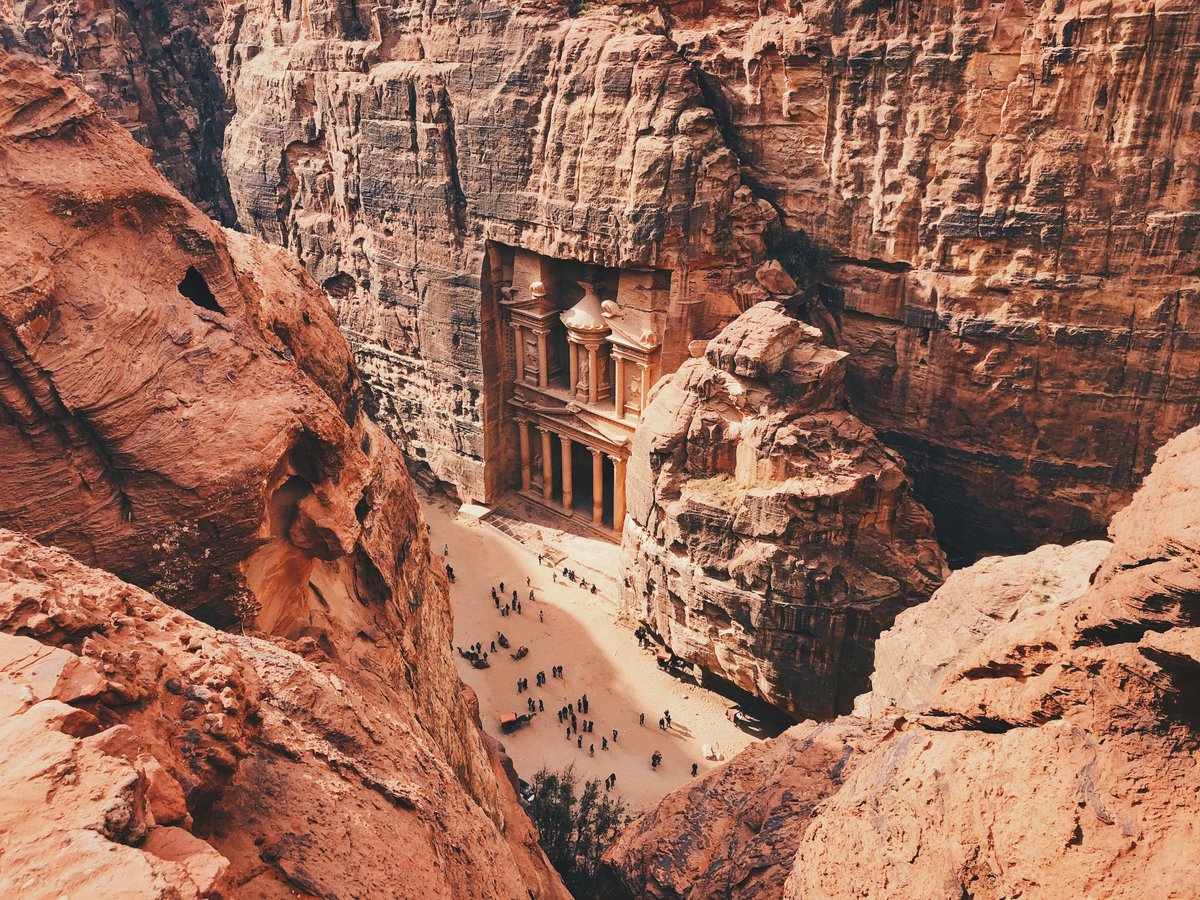
Where do locals actually go in Petra?
Wadi Musa locals gather away from the Petra entrance road, mostly in the upper town center near the Shaheed roundabout. Evening shisha cafes along the main street fill after 8pm with off-duty guides and shopkeepers. Friday mornings shift the town's gravity to the mosque district. The Bdoul Bedouin community at Umm Sayhoun, 2km north, runs on a different rhythm entirely.
Wadi Musa is a town of roughly 35,000 people that exists because of Petra, and the tourist economy dominates the lower road from the Movenpick Hotel down to the visitor center. Walk uphill instead. The upper town center around the Shaheed roundabout, about 1.5km from the site entrance, is where actual daily life happens. Grocery shops, a pharmacy, the post office, a couple of phone-repair stalls. The air smells like cardamom and diesel fumes from the minibuses. After 8pm on weeknights, the shisha cafes along the main drag between the roundabout and the Al-Rashid Mosque fill with men playing cards and watching Al Jazeera on wall-mounted screens. Women tend to gather in homes. If you're a female nomad, the mixed-gender window at most cafes is roughly 6pm to 8pm, before the all-male crowd settles in. That said, nobody will ask you to leave. The sweet black tea costs 0.25 JD. Turkish coffee, thick and gritty, runs 0.50 JD.
Friday changes the town's pulse. Shops close until after midday prayer, and the streets go quiet by 10am. The mosque district, 200 meters south of the roundabout, draws families. After prayer, around 1:30pm in summer, local families walk to Al-Wadi Restaurant or one of the three or four no-English-menu spots on the road toward Taybeh. These places serve mansaf on Fridays. The lamb fat and fermented jameed yogurt smell hits you from the doorway. A full plate runs 4-5 JD. The tourist restaurants near the Petra entrance charge 12-15 JD for the same dish with worse rice. Worth noting, Friday afternoons between 3pm and 6pm are when Wadi Musa feels most like a normal Jordanian town, not a tourism service station.
Umm Sayhoun village sits about 2km north of the Petra visitor center, on the ridge above the back trail. This is the Bdoul Bedouin community that was relocated from inside Petra in 1985. The village has its own shops, a school, and a social rhythm that runs independently of tourist season. Some Bdoul families sell tea and jewelry inside the archaeological site during the day, then return to Umm Sayhoun by 5pm. If you spend a few weeks in Wadi Musa, you'll likely meet Bdoul guides who invite you for tea at home. Accept. The tea is sage-heavy and scalding. The conversations tend to be direct, partly in English, partly in Arabic, and they'll ask about your work before you ask about theirs. The village mosque's call to prayer carries across the valley on still evenings, a sound you stop noticing after the third day and miss after you leave.
Little Petra, known locally as Siq al-Barid, is 9km north of the main site. No entry fee. On weekday mornings before 9am, you might find two or three Bdoul families there and nobody else. The carved Nabataean dining room with its 1st-century ceiling fresco still has visible paint after 1,900 years. The silence at that hour is total, no guides, no group chatter, maybe a goat bell from the ridge above. Local families from Wadi Musa picnic at the parking area on Fridays after prayer, spreading blankets on the gravel and brewing tea on portable gas stoves. The wind carries dust and thyme. If you're working remotely and need a reset from screen fatigue, a Friday afternoon here among families eating fruit and arguing about football is the antidote. No wifi though. Not even close.
Where they actually go
Shisha cafes near Shaheed roundabout
Upper Wadi Musa: Off-duty guides and shopkeepers playing cards after 8pm, Al Jazeera on the TV, thick cigarette smoke and cardamom tea. No tourists. The fluorescent lighting is harsh and the plastic chairs stick to your legs in summer.
Al-Wadi Restaurant
Wadi Musa center: Friday mansaf destination for local families. Formica tables, no English menu, lamb-and-jameed smell from the kitchen. A 4 JD plate feeds one person past comfort. Loud with family conversation by 2pm.
Umm Sayhoun village
Umm Sayhoun (2km north of visitor center): Bdoul Bedouin community relocated from inside Petra in 1985. Quieter than Wadi Musa, with its own shops and school. Tea invitations happen after a few encounters, not the first. Sage tea, direct questions, goat bells from the hillside.
Little Petra (Siq al-Barid)
9km north of Petra: Free entry, near-empty on weekday mornings before 9am. Nabataean rock-cut dining room with 1st-century ceiling paint still visible. Friday afternoons bring local families with picnic blankets, gas-stove tea, and kids running between the carved facades.
Main street bakeries
Upper Wadi Musa: Open by 6am, selling ka'ak bread rings and manakeesh flatbread for 0.15-0.30 JD. The za'atar-and-oil smell pulls you in. Workers and taxi drivers grab breakfast standing up. Gone by 8:30am on busy mornings.
Taybeh road eateries
Taybeh (south of Wadi Musa): Three or four small restaurants on the road toward Taybeh village, serving grilled chicken and hummus to a local crowd. No signage in English at most. Quieter than the town center, with valley views from the plastic terrace chairs.
Al-Rashid Mosque district
Central Wadi Musa: The social anchor on Fridays. Families walk here for midday prayer, then scatter to nearby restaurants. The streets smell like incense and fresh bread. After 1:30pm the neighborhood becomes the liveliest part of town for about three hours.
Best times to visit
Weeknight shisha cafes fill after 8pm and stay busy until midnight. Friday post-prayer from 1:30pm to 6pm is when Wadi Musa feels most like a regular town. Bakeries peak 6am-7:30am. Little Petra on weekday mornings before 9am has near-zero visitors.
Last verified by automated review (v1.7.2) on . What is automated review?